How to Choose Domestic Sewage Treatment in Fortaleza
Domestic sewage treatment in Fortaleza should be selected around the discharge destination, available footprint, verified flow data and installation constraints before comparing equipment. For sites without a centralized sewer, plausible options include a buried A/O package plant, an MBR system, a constructed wetland or vermifiltration. The selection process is to define the receiving route, establish the treatment objective, calculate demand from project inputs, then require suppliers to demonstrate that their proposed system meets those conditions. Current Fortaleza-specific discharge limits, reuse criteria and costs must be confirmed with the responsible authorities because the supplied evidence does not establish them.
Begin by resolving the receiving route. A property may connect to a public sewer, require a separate discharge authorization or intend to reuse treated wastewater for a defined purpose. Those routes impose different documentation and treatment requirements. A quotation for a packaged plant cannot answer the regulatory question by itself.
Next, separate the treatment objective from product features. Basic sanitary treatment, compact installation, reuse quality, mobility and installation below grade are distinct requirements. A unit with an attractive footprint may still be unsuitable if the discharge route demands more than the supplier has demonstrated.
The decentralization context is technically established: Kyriienko, Betin and Kuznetsova state that small sewage treatment plants serve individual houses and small facilities where no centralized sewer network exists, including small schools, restaurants and camping sites (2018-09-28). That does not transfer their Ukrainian design assumptions directly to Fortaleza.
Receiving-water assumptions also require scrutiny. The PeerJ study found direct discharge of urban domestic sewage into rivers widespread in the studied Lower Amazon context and reported limited knowledge of receiving-water self-purification, which the authors identified as a design challenge (2024). Although the geography differs, the procurement lesson applies: characterize the receiving environment rather than assuming dilution will resolve discharge impacts.
Use the comparison of packaged, buried, MBR and decentralized sewage treatment options as a shortlisting aid, but obtain Fortaleza’s current requirements directly from the responsible authorities. The supplied search evidence contains no verified Fortaleza-specific regulatory limits or procurement costs.
Decentralized Treatment Options and How They Work
A buried A/O package plant uses a defined treatment train from influent collection to final effluent routing, whereas MBR adds membrane filtration and wetland-based options require site-specific civil and ecological design.
The buried A/O package sewage treatment plant integrates influent treatment stages comprising anoxic biological treatment, aerobic biological contact oxidation, sedimentation and disinfection in one automated unit. The verified product catalog gives a capacity range of 1–80 m³/h and identifies residential communities, hotels, hospitals, factories and rural areas as intended applications. The unit may be installed below grade with landscaping above or mounted on a trailer for mobile deployment (HydropureWater verified product catalog, accessed 2026).
The integrated MBR wastewater treatment system uses activated sludge treatment followed by submerged PVDF membrane filtration. The supplied catalog lists capacities from 10–2,000 m³/day, filtration below 1 μm and effluent described as near reuse quality. It also states a 60% footprint reduction compared with conventional systems (HydropureWater verified product catalog, accessed 2026). These are supplier-catalog claims, not independently verified Fortaleza performance results.
Constructed wetlands are not interchangeable drop-in packages. The InTechOpen chapter examines constructed wetlands integrated with microbial fuel cells for domestic or municipal sewage treatment and electricity production (IntechOpen, 2021). A project-specific design must address hydraulics, treatment objectives, land, vegetation, construction and long-term maintenance.
Vermifiltration combines filtration with earthworms. The InTechOpen study examined domestic septic-tank sewage and describes the process as efficient, viable, less expertise-intensive and suitable for decentralized operation (IntechOpen, 2023). These findings support consideration of the process, not a claim of equivalent performance to packaged A/O or MBR equipment.
| Option | Evidence-based process | Verified capacity or scope | Key unresolved design inputs |
|---|---|---|---|
| Buried A/O package plant | Anoxic treatment, aerobic biological contact oxidation, sedimentation and disinfection | 1–80 m³/h, according to the HydropureWater verified product catalog | Fortaleza effluent limits, civil works, footprint, detention time and solids handling |
| MBR system | Activated sludge followed by submerged PVDF membrane filtration | 10–2,000 m³/day, with filtration below 1 μm, according to the HydropureWater verified product catalog | Reuse or discharge criteria, membrane cleaning, energy demand, replacement provisions and O&M capability |
| Constructed wetland | Site-specific wetland treatment, including research on integration with microbial fuel cells | Domestic or municipal sewage application examined by IntechOpen (2021) | Hydraulics, land area, soils, vegetation, climate and maintenance |
| Vermifiltration | Filtration combined with earthworms | Domestic septic-tank sewage studied by IntechOpen (2023) | Septic-tank interface, loading, footprint, operator requirements and local acceptance |
The supplied research contains no verified treatment-efficiency percentages for these options in Fortaleza. A buyer should therefore require site-specific performance criteria rather than importing generic removal claims.
Compare Buried A/O, MBR and Wetland-Based Systems
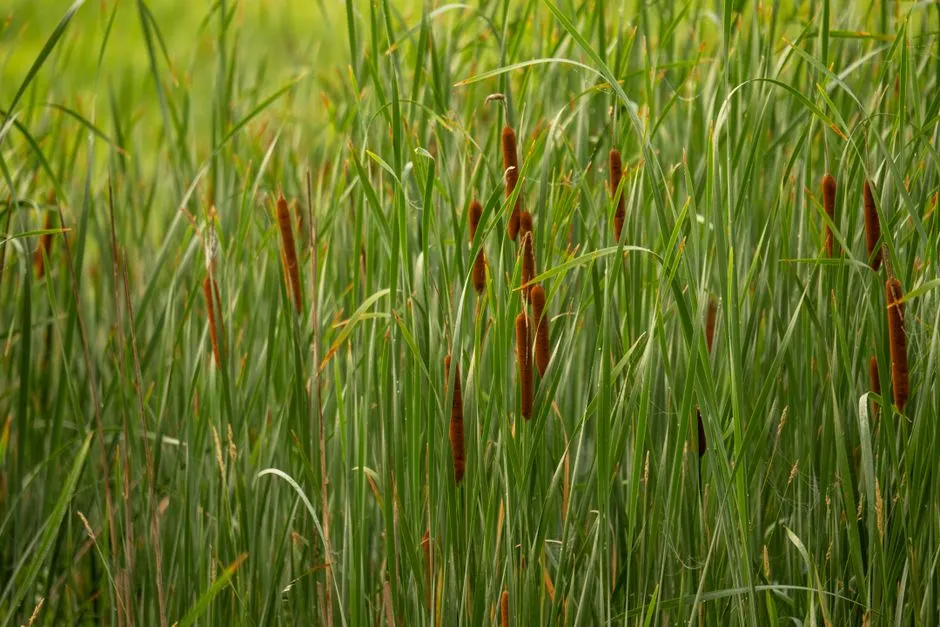
Buried A/O packages emphasize integration and installation flexibility, MBR emphasizes membrane filtration and compactness, while wetlands and vermifiltration require more project-specific land and process design; none can be treated as universally compliant without Fortaleza-specific criteria.
The clearest evidence distinction is capacity. The WSZ catalog states 1–80 m³/h, while the MBR catalog states 10–2,000 m³/day. These units must remain separate until the supplier documents the flow basis, daily throughput and peak-flow basis for each model. Converting them into a common comparison without the manufacturer’s design basis could create a false equivalence.
The WSZ evidence supports a single buried package, automated operation with no operator required, and applications including residential communities, hotels, hospitals, factories and rural areas. A trailer-mounted option provides mobile deployment. The catalog does not specify effluent limits, guaranteed removal rates, civil-work requirements or standard footprints.
The MBR evidence supports submerged PVDF membrane filtration below 1 μm, effluent described as near reuse quality and a stated 60% footprint reduction compared with conventional systems. The catalog does not provide membrane life, energy consumption, replacement cost or local O&M staffing requirements. A buyer should ask for those omissions to be resolved in the proposal rather than assume membrane systems are maintenance-light.
Wetlands and vermifiltration can support decentralized operation where conventional network infrastructure is absent, but construction, land and maintenance implications must be assessed for each site. Their process evidence comes from academic studies rather than a Fortaleza package catalogue.
This comparison of buried A/O and MBR options for housing developments offers useful acquisition context, but local authorization remains the deciding criterion.
| Decision criterion | Buried A/O package | MBR system | Wetland or vermifiltration |
|---|---|---|---|
| Process evidence | Integrated A/O contact oxidation, sedimentation and disinfection | Activated sludge and submerged PVDF membrane filtration | Research-based treatment concepts requiring project-specific design |
| Catalog capacity | 1–80 m³/h | 10–2,000 m³/day | Not supplied |
| Documented strengths | Buried or trailer-mounted deployment; automated operation without a resident operator | Filtration below 1 μm, near-reuse-quality description and stated 60% footprint reduction | Decentralized operation; vermifiltration described as less expertise-intensive |
| Unresolved at quotation | Effluent criteria, footprint, civil works and removal guarantees | Membrane life, energy use, replacement cost and local staffing | Hydraulics, land, construction, vegetation or worm management and maintenance |
Size the System from Verified Project Inputs
Sizing must begin with measured and documented sewage demand, not the largest model shown in a supplier catalogue.
- Establish connected population, occupancy patterns and wastewater-generating fixtures.
- Obtain daily sewage flow and peak-hour factors from usage records or an engineered water-balance calculation.
- Define the wastewater characteristics and any abnormal or seasonal loading.
- Map collection, equalization, treatment, disinfection and sludge-removal routes.
- Confirm the final discharge or reuse requirements before selecting equipment.
Request a capacity calculation that identifies the design flow basis, peak-flow basis, hydraulic retention assumptions, biological loading, clarification, disinfection and sludge handling. The quotation should state treatment capacity separately from tank or reactor working volume; otherwise, two commercially different offers can appear equivalent.
Use the WSZ range of 1–80 m³/h only after the supplier maps project flow to a specific model. Likewise, use the MBR range of 10–2,000 m³/day only after confirming its daily and peak-flow basis and treatment objective. The ranges are catalog evidence, not proof that either unit will meet Fortaleza requirements.
Collection design can affect the package selection. Kyriienko, Betin and Kuznetsova proposed gravity collection without electricity for small treatment facilities in space-limited locations without a centralized sewer (2018-09-28). That does not establish the complete power demand for treatment. Pumps, aeration, controls and site infrastructure must be assessed separately.
The hotel MBR sizing workflow illustrates why occupancy and usage must be converted into traceable design inputs rather than assigned to a catalogue capacity directly.
| Input to obtain | Question the supplier must answer | Evidence needed in the offer |
|---|---|---|
| Daily flow and peak-hour factor | Which model corresponds to the project demand? | Flow calculation and selected-model capacity basis |
| Occupancy and usage | How were resident, hotel or visitor demand translated into wastewater flow? | Water balance and operating assumptions |
| Wastewater characteristics | Does the process account for the expected influent? | Influent basis and process design calculations |
| Collection arrangement | Are equalization, pumping and gravity collection included? | Site and process flow diagrams |
| Treatment objective | Which discharge or reuse route drives the design? | Confirmed compliance and performance basis |
| Working volume | Is the stated capacity nominal, average or peak? | Separate capacity, volume and peak-flow statements |
Plan Installation, Controls and the Final Discharge Route
Installation design must make maintenance access, collection infrastructure, utilities, controls and the permitted discharge route explicit before equipment is ordered.
For a WSZ installation, assess burial depth, excavation, groundwater, landscaping, access covers, lifting provisions, odour control and the external collection system. The supplied research provides no numerical burial-depth criteria, so the manufacturer’s installation drawings and a site-specific civil design must govern. A statement that the biological process is automated or can use gravity collection does not establish that the complete plant requires no electrical power.
For a trailer-mounted WSZ deployment, include transport route, temporary or permanent siting, power, security, wastewater connections, access and the basis for subsequent relocation. Confirm whether transport, installation and recommissioning are included in the commercial offer.
For MBR equipment, provide safe access to membrane modules, aeration equipment, electrical supply, controls, cleaning systems and replacement provisions. Ask the supplier to define its cleaning strategy and identify replaceable components, but do not infer membrane life, energy consumption or operating labour from the catalogue alone.
If the final effluent enters a receiving water, document the receiving environment and the dilution and dispersion assumptions. The PeerJ study used a hydrodynamic model coupled to a dispersive model to study pollutant dispersion in an Amazon river reach and identified uncertain self-purification knowledge as a design challenge (2024). The exact modelling need for Fortaleza must be determined with the responsible authority and environmental specialists.
If reuse is planned, define the application, point of use and monitoring programme. The Revista Caatinga study identifies a gap in Brazil’s established policies for controlling wastewater-agricultural reuse impacts and notes the need to minimise environmental and human-health effects (2019). Local reuse requirements must therefore be confirmed rather than inferred from a phrase such as “near reuse quality.”
The discharge-compliance guide provides a useful structure for separating treatment technology from destination-specific requirements, although its jurisdictional limits do not apply to Fortaleza.
Verify Performance and Compare Supplier Proposals
A technically complete bid must show how the proposed equipment handles the project’s flow, destination, site conditions and acceptance obligations; a price alone cannot demonstrate that.
- Request a process flow diagram, capacity calculation, equipment schedule and control philosophy.
- Request installation drawings, civil interfaces, commissioning plan, operations manual and training scope.
- Require written performance criteria tied to the confirmed discharge or reuse route.
- Define sampling, witnessed testing, parameter coverage and the remedy if performance is not achieved.
- List exclusions for civil works, pumps, piping, controls, power, disinfection, sludge removal, warranty and spares.
- Confirm local technical support, maintenance intervals, replacement components and allocation of operating responsibilities.
For a WSZ proposal, verify that the integrated A/O, sedimentation and disinfection configuration remains in the offered scope. For an MBR proposal, verify submerged PVDF membrane filtration and identify the membrane-cleaning and replacement provisions. The package wastewater treatment plant supplier checklist can help structure that review, while the technical basis must remain project-specific.
The supplied evidence establishes no universal Fortaleza effluent limits, equipment prices, installation costs, operating costs or local procurement benchmarks. Ask for a priced bill of quantities with civil and electrical exclusions stated. This prevents a low equipment price from hiding omitted infrastructure or undefined acceptance obligations.
| Document to compare | Minimum decision content | Acceptable clarification |
|---|---|---|
| Capacity and design basis | Average flow, peak flow, treatment duty and working volume stated separately | Each quoted model mapped to the same project inputs |
| Process and equipment schedule | Treatment stages, disinfection, sludge route and controls | No substitution of unspecified or unlisted treatment stages |
| Performance and acceptance | Parameters, sampling method, witnesses and failure remedy | Criteria linked to the confirmed discharge or reuse route |
| Installation scope | Civil works, piping, pumps, power, access and controls | Explicit inclusions, exclusions and site interfaces |
| O&M and support | Intervals, replaceable parts, training, warranty and local support | Named responsibilities for operator, contractor and supplier |
| Commercial schedule | Equipment, freight, installation, commissioning and priced exclusions | Comparable total scope, not headline unit prices |
Frequently Asked Questions
How much does a domestic sewage treatment plant cost in Fortaleza?
No defensible price range can be stated from the supplied research because it contains no Fortaleza equipment, installation or operating-cost benchmark. Request itemized quotations showing treatment capacity, civil works, collection infrastructure, electrical works, commissioning, training, warranty, annual O&M and priced exclusions. Compare offers only after confirming that they cover the same flow basis and destination requirements.
Should I choose a buried A/O package plant or an MBR system for a site in Fortaleza?
Choose the buried A/O package when an integrated, automated and potentially below-grade installation addresses the site and treatment objectives, subject to supplier guarantees and local approval. Investigate MBR when the specified filtration and reuse-oriented treatment are required and the buyer can support membrane operation, cleaning, energy supply and replacement obligations. The catalog evidence establishes different process configurations and capacity ranges, but it does not establish which is compliant for a particular Fortaleza discharge.
What flow information does a sewage treatment supplier need for accurate sizing?
Provide connected population, occupancy and usage records, daily flow range, peak flow and peak-hour factors, wastewater characteristics, collection arrangement, treatment objective and final discharge or reuse route. Require the supplier to show how these inputs produce the selected model’s hydraulic and process design. Also require treatment capacity to be distinguished from tank or reactor working volume.
Can domestic sewage treated by a package plant be reused?
Possibly, but reuse depends on the verified treatment process, intended application and current local requirements. The MBR catalog describes near-reuse-quality effluent and filtration below 1 μm, while the WSZ catalog describes integrated disinfection; neither statement alone proves suitability for a particular reuse. Confirm the destination, applicable criteria, monitoring plan and responsibility for continued compliance before specifying reuse equipment.
Which documents should I request before accepting a supplier quotation?
Request the process flow diagram, capacity and hydraulic calculations, equipment schedule, control philosophy, installation drawing, civil and electrical scope, commissioning plan, operations manual, training scope, warranty, maintenance schedule, spare parts list, local support commitment and written performance criteria with sampling and failure remedies. Ask for all exclusions and the commercial responsibility matrix to be attached, so the quotation can be compared as a complete delivery rather than a package price alone.