Choose the Treatment Objective Before Choosing ETP or DAF
A New York factory generally selects a dissolved air flotation system when floating oil, FOG, suspended solids, or colloidal material must be removed before municipal sewer acceptance or another treatment stage. A full industrial effluent treatment plant is appropriate when biological treatment, polishing, or controlled final effluent is also required. The decision begins with the discharge objective, legally applicable route, peak flow, and wastewater analysis—not with a generic equipment list. Use the framework in the 2026 DAF unit engineering specs and decision framework to structure the inquiry.
Quora separates an effluent treatment plant into three treatment levels: primary physical and chemical treatment, secondary aerobic or anaerobic biological treatment, and tertiary treatment. DAF is not synonymous with an ETP; it is one separation barrier that may occupy the primary-treatment portion of a larger train. The correct scope depends on what the factory must remove, where the water will go, and what downstream process must be protected.
The factory should first distinguish its treatment objectives. The relevant decision is not simply “DAF or ETP,” but whether the project must: remove oil, FOG, and solids before a municipal sewer or another treatment stage; reduce biological loading; meet a defined discharge or reuse specification; or protect sensitive downstream equipment. Confirm the current New York wastewater permit, sewer pretreatment rules, or receiving-water requirements with the applicable authority. The supplied research does not establish a single New York-wide pollutant limit.
Do not combine all wastewater into one flow without understanding its origin. Continuous production flow, batch discharges, stormwater, cooling blowdown, floor washdown, and oily runoff can differ sharply in flow and composition. Segregating them can prevent an oversized unit, chemical overfeed, or an unnecessarily complex treatment train.
| Treatment objective | Primary evidence required | Likely equipment scope |
|---|---|---|
| Oily pretreatment | Oil and grease, FOG, suspended solids, emulsions | Equalization, conditioning, DAF, recovered-waste handling |
| Reduce biological loading | Oil, solids, pH, dissolved organics, flow variation | DAF followed by biological treatment where required |
| Defined discharge or reuse | Permit limits, receiving route, reuse specification | ETP with biological and tertiary stages as applicable |
| Protect downstream equipment | Target contaminants and downstream sensitivity | DAF, filtration, or other pretreatment barrier |
Identify the Pollutants That Control the Treatment Train
DAF is directly relevant when the wastewater profile is dominated by recoverable oil, FOG, suspended solids, or colloidal material. A visual assessment is not a process profile. Obtain representative analyses across normal production, cleanup cycles, and batch discharges, including suspended solids, oil and grease, FOG, pH, emulsions, dissolved organics, nutrients, metals, and any industry-specific contaminants. The selected barrier should correspond to the pollutants that control the discharge or reuse objective.
The industrial dissolved air flotation system applies to oil, FOG, suspended solids, and colloidal material, but those categories should not be treated as interchangeable. Free oil may respond to physical separation; stable emulsions may require chemical destabilization; dissolved organics will not be removed merely because particulate material is being floated.
Quora’s refinery-ETP explanation identifies DAF as a barrier after an API separator. Chemical coagulation destabilizes emulsions, after which DAF removes remaining oils and fine solids before biological reactors. The same source warns that emulsified oil entering biological treatment can coat bacteria, prevent oxygen transfer, and damage the microbial population. That makes adequate oil and solids removal a pretreatment requirement, not an optional polishing step.
If the objective includes dissolved organics, nutrients, metals, or other pollutants not addressed by flotation alone, plan for biological and tertiary stages where appropriate, or confirm an approved external treatment route. Chemical conditioning should be specified only after the wastewater profile shows that it is needed. The associated PLC-controlled chemical dosing system should therefore follow an identified treatment need and receive defined chemical, storage, containment, and control requirements.
| Wastewater characteristic | Relevant treatment consideration | Procurement evidence to request |
|---|---|---|
| Free oil and recoverable FOG | Potential recovery by physical separation and flotation | Oil and grease results, recovery route, skimming arrangement |
| Stable emulsion | May require conditioning before flotation | Emulsion characterization, chemical trial, mixing basis |
| Suspended solids and colloids | DAF may provide solids removal when properly conditioned | Solids results, particle behavior, performance criteria |
| Dissolved organics | Requires a biological or other approved route | Organic loading data, biological design basis, final treatment scope |
| Metals or regulated constituents | May require specific chemical or tertiary treatment | Constituent-specific analysis and treatment objective |
Understand How DAF Fits Into an Industrial Treatment Plant
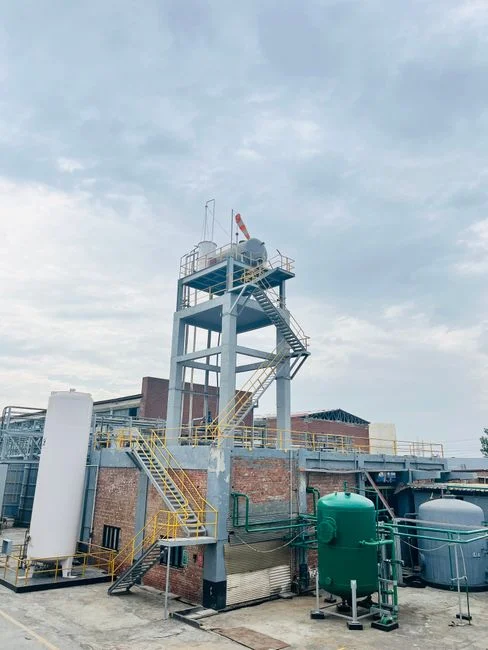
DAF separates oil and solids by attaching air bubbles to particles, reducing their effective settling density, and lifting them to the surface for skimming. In the process described by Quora’s refinery-ETP answer, a portion of clarified effluent is pressurized and saturated with air in a dedicated drum, then returned to the flotation tank. The pressure drop releases microbubbles that attach to suspended solids and oil droplets.
Quora describes those bubbles as typically measuring between 10 and 100 microns in diameter. This is a sourced operating description from that refinery-ETP answer, not a universal procurement specification. The accumulated froth and sludge form at the surface, where a mechanical skimmer removes them to a holding or sludge route. Clarified water exits below an overflow weir.
A factory treatment train may therefore comprise pretreatment and equalization, optional chemical conditioning, DAF, sludge handling, biological treatment where required, and final disinfection or polishing where required. Quora’s general ETP description identifies settling, pH control, and flocculation as primary-treatment concepts, but not every factory requires all three before DAF. The required sequence follows from the wastewater profile and the receiving route.
Evaluate quotations as process trains rather than isolated tanks. Confirm where equalization occurs, how conditioning is introduced, how the recycle stream is managed, how oil and sludge are removed, and where treated water goes. If recovered solids require further separation, a plate-and-frame filter press may form part of the solids-handling scope. Its inclusion should follow the required dewatering duty and waste route, not an assumption that every DAF installation needs it.
Compare DAF, Full ETP, and Combined Treatment
Standalone DAF is credible when the treatment objective is dominated by recoverable oil, FOG, suspended solids, and colloidal material. A full ETP is the broader option when the objective spans several treatment stages, including biological treatment and final polishing. Combined DAF and ETP treatment is appropriate where oil and solids must be removed before a sensitive biological process or where the factory wants both a separation barrier and downstream treatment.
Commercial comparison should cover the entire scope. A low equipment price can be offset by omitted chemical dosing, civil works, sludge handling, automatic controls, installation, commissioning, or utility requirements. Ask each supplier to identify the treatment stage being supplied and to state what remains outside its scope.
The supplied evidence supports DAF’s contaminant-removal role but does not provide a universal purchase cost, footprint, efficiency, or New York regulatory threshold. HydropureWater’s DAF specification states a capacity range of 4–300 m³/h across 13 standard models, with automatic skimming and application to food processing, pulp and paper, textile, metalworking, petrochemical, and municipal pretreatment duties. Treat that catalog range as a selection envelope, not proof of performance for a particular wastewater.
Use the manufacturer’s guide to DAF selection and efficiency to interrogate operating assumptions and application evidence. The comparison should also test whether a DAF-first train gives the factory a practical route to its permit or reuse objective. If the objective requires more than flotation, a full or combined ETP is the more defensible scope.
| Decision item | Standalone DAF | Full ETP | Combined DAF and ETP |
|---|---|---|---|
| Best-fit profile | Oil, FOG, suspended solids, colloids | Broader treatment involving multiple stages | Oil and solids removal before sensitive biological treatment |
| Pretreatment and chemical dosing | Include only what the profile requires | Define primary conditioning and feed preparation | DAF conditioning plus downstream treatment |
| Biological and tertiary treatment | Not inherently included | Include where the objective requires it | Include after DAF |
| Sludge and recovered-oil handling | Define collection, storage, and disposal route | Define handling across all treatment stages | Define DAF sludge and downstream residuals separately |
| Controls and installation | Specify automatic skimming, controls, utilities, and skid or civil works | Specify controls, utilities, installation, and commissioning for the full train | Define interfaces and responsibilities between DAF and ETP |
| Evidence to request | Design basis, process guarantee, application evidence | Stage-by-stage process and performance obligations | Integrated flow diagram, interface controls, and performance criteria |
Size the System from Peak Flow and Water Quality
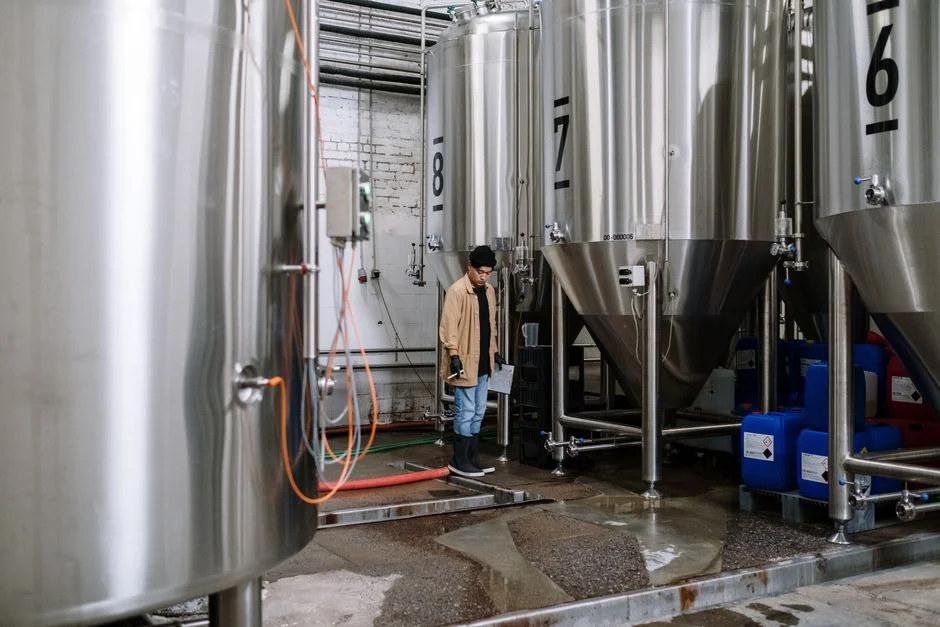
Industrial wastewater system sizing should use peak hydraulic demand and the wastewater quality at that condition, not average daily flow alone. Request average and peak hourly flow, batch-discharge volume and duration, operating schedule, retained wastewater volume, and planned production changes. Include stormwater, cooling blowdown, floor washdown, and oily runoff only after deciding whether each stream belongs in the treatment train.
Representative wastewater analysis should cover the target pollutants, pH, temperature where relevant to the selected process, and variation across production conditions. A single clean-water sample can produce a misleading design basis. Batch chemistry, persistent emulsions, and changing production can make treatment performance variable even when hydraulic flow remains stable.
Check whether the proposed duty falls within HydropureWater’s stated 4–300 m³/h range across 13 standard DAF models, then verify skid dimensions, maintenance access, utilities, waste routing, and installation constraints at the New York factory site. The range identifies available catalog capacity; it does not establish that a standard model will meet a required effluent specification.
The supplier should state the design basis, selected model, hydraulic loading assumptions, chemical-use assumptions, control philosophy, and expected performance criteria. Require measurable acceptance criteria tied to the factory’s wastewater and treatment objective. Where characteristics are variable, emulsions are persistent, or the application falls outside standard catalog conditions, request a trial or manufacturer-supported performance check before committing to performance.
| Sizing input | Procurement requirement | Reason it matters |
|---|---|---|
| Average and peak hourly flow | Provide measured or production-based values | Defines hydraulic duty and equalization need |
| Batch volume and duration | Provide discharge schedule and production sequence | Controls peak loading and treatment mode |
| Wastewater quality | Provide representative analyses across operating conditions | Determines whether flotation alone is credible |
| Selected model and design basis | State capacity, loading assumptions, controls, and criteria | Makes the proposal technically auditable |
| Site constraints | Provide dimensions, access, utilities, and waste route | Identifies installation and operating conflicts |
Plan Controls, Sludge, Installation, and New York Compliance
Compliance is determined by the legally applicable discharge route, not by the treatment technology or its catalog description. Verify current requirements with the receiving sewer, treatment plant, permitting authority, or other authority that controls the discharge. The supplied research contains no New York-specific numerical discharge limits, so a New York wastewater permit or pretreatment requirement must be confirmed rather than inferred from generic ETP guidance.
Evaluate operating controls as part of the process. Request automatic skimming, PLC controls, pump redundancy, local instrumentation, operator interface, electrical requirements, and maintenance access. Clarify alarm, fail-safe, level-control, and chemical-dosing responsibilities. These items affect operability and whether the factory can maintain the intended treatment condition between operator interventions.
Define the sludge and recovered-oil route in the quotation. Collection, storage, transfer, dewatering, disposal, and material classification can otherwise become exclusions. Where recovered solids require further separation, include the plate-and-frame filter press as a possible dewatering step, with the actual duty determined by solids characteristics.
When coagulants, flocculants, pH adjusters, or specialty chemicals are required, address storage, dosing, containment, secondary containment, and safe handling. A PLC-controlled chemical dosing system should be tied to the chemical program and controls narrative rather than listed without its operating basis.
New York should therefore be treated as a site-specific compliance check. The correct treatment still depends on wastewater composition, peak flow, receiving route, and applicable requirements, but no supplied source supports one universal equipment choice for every New York factory.
| Project area | Items to define | Buyer check |
|---|---|---|
| Controls and operation | Automatic skimming, PLC, instruments, redundancy, interface | Do duties and alarm responses match the operating plan? |
| Sludge and oil | Collection, storage, dewatering, disposal route | Is any residue excluded from the quotation? |
| Chemicals | Type, storage, dosing, containment, handling | Are consumption assumptions and safety scope stated? |
| Installation | Skid, civil work, utilities, electrical, access | Does the proposed arrangement fit the actual site? |
| Compliance | Permit, sewer rules, receiving route, evidence submittals | Has the applicable authority confirmed the requirement? |
Build the Request-for-Proposal Data Pack
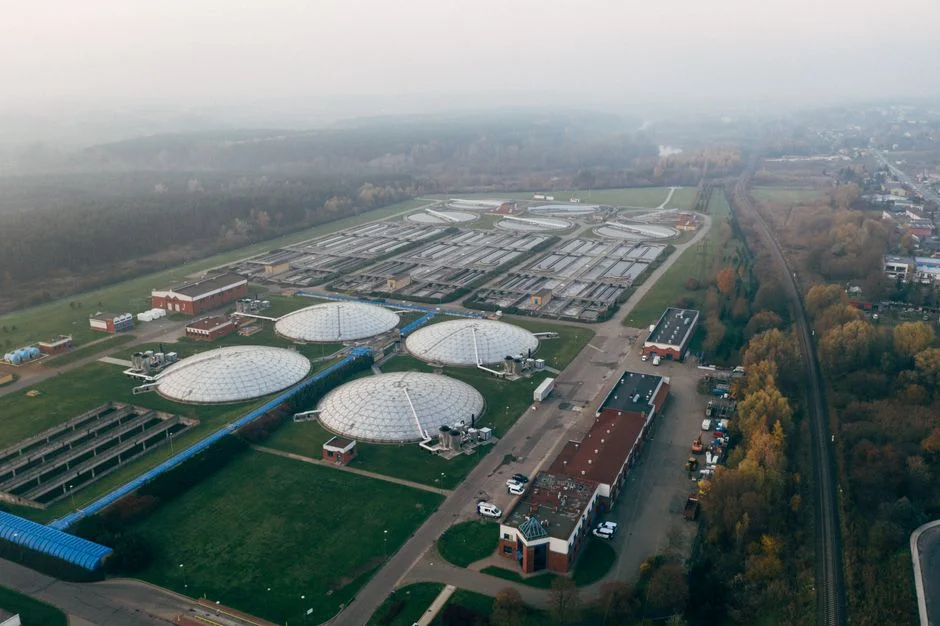
A comparable quotation starts with a shared wastewater and site basis. Trinity Enviro’s DAF guidance recommends identifying the water type, sharing relevant data, and comparing quotes before ordering. For a New York factory, the data pack should include wastewater analyses, process descriptions, stream segregation, average and peak flows, batch schedules, discharge destination, permit or sewer limits, and reuse targets.
Ask every supplier to identify the proposed treatment stage, equipment model, design flow, duty, chemical requirements, controls, utilities, civil work, sludge route, commissioning tasks, and warranty scope. Request a process flow diagram, equipment layout, control narrative, operating plan, maintenance requirements, and measurable acceptance criteria. The 2026 DAF operating cost breakdown can help structure the operating inputs a supplier should disclose.
Do not compare quotations on headline price until the scope, design basis, site works, chemical consumption, sludge handling, and performance obligations are aligned. Ask which costs are fixed, which depend on operating hours or wastewater chemistry, and which are excluded. A procurement decision becomes defensible when the buyer can trace each price to a stated duty and each performance promise to an agreed test method and wastewater condition.
Frequently Asked Questions
What industrial ETP or DAF system does a factory in New York, United States need?
The need is determined by the wastewater profile, peak flow, treatment objective, and receiving route. Choose DAF when oil, FOG, suspended solids, and colloidal material are the dominant separation requirements; choose a full ETP when biological and tertiary stages are also required; choose a combined train when those stages protect or follow a sensitive biological process.
How should the factory size a DAF system for industrial wastewater treatment?
Use peak flow and wastewater quality as the controlling inputs, including batch volume and duration, production changes, and variation across operating conditions. HydropureWater states a catalog range of 4–300 m³/h across 13 models, but that range does not guarantee treatment performance. Require the supplier to map the selected model to a stated design flow, loading basis, and measurable acceptance criteria.
How should the factory compare budget and pricing for a DAF or ETP system?
Separate and compare equipment, chemical dosing, sludge handling, controls, civil work, installation, commissioning, and operating inputs. Ask for the assumptions behind each line and identify exclusions. No supported New York quotation is available in the supplied research, so request a site-specific quotation using the same wastewater and design-basis package for every supplier.
What should the factory verify when selecting an equipment supplier?
Require a stated design basis, defined scope boundary, process guarantee, measurable acceptance criteria, and supporting application evidence. Also verify who owns controls integration, civil work, commissioning, training, maintenance, and performance responsibility. A catalog capacity statement alone is not enough to demonstrate suitability for the factory’s wastewater.
Does a New York wastewater permit or DAF specification establish regulatory compliance?
No. Confirm the current requirements of the receiving sewer, treatment plant, or discharge authority because the supplied research provides no universal New York numerical limit. Compliance depends on the applicable route and the final effluent quality demonstrated under the permitted or sewer-required conditions, not merely on the selected equipment model.