
What Changes When Pulp and Paper Wastewater Meets MBR or CAS
For a New Century pulp and paper mill, the better choice depends on the wastewater stream, required effluent quality, reuse target, available land, and fouling risk—not on a generic MBR-versus-CAS benchmark. MBR replaces the secondary clarifier with membrane solids separation and generally produces better BOD, TSS, and turbidity quality, but fibers, FOG, color, lignin-derived organics, chlorinated compounds, temperature, and load variation determine whether that advantage is achievable. CAS may remain more practical for stable, lower-load streams where clarification is reliable and no reuse requirement justifies added membrane complexity. The supplied research contains no New Century influent dataset, permit limit, reuse target, footprint, or utility cost, so these inputs must be established before selecting a process.
The comparison should begin by segregating streams rather than blending them into one average wastewater. Recycled-fiber streams can carry substantial fines and variable suspended solids; Kraft and bleach-plant streams can contain color, lignin-derived organics, and chlorinated compounds; CTMP streams can differ in temperature and organic loading. Each stream requires its own load profile, treatability assessment, and fouling test.
The biological objective may be similar in both routes, but the solids-retention mechanism differs. CAS retains biomass in an aeration basin and captures it in a gravity clarifier. MBR retains biomass with microfiltration or ultrafiltration membranes. The Membranes review, published in 2023, reports that MBR generally operates with lower HRT and higher SRT than CAS, changing biological operating flexibility while eliminating settleability as the final solids-separation step. The MBR wastewater treatment cost per m³ guide provides a broader framework, but site data must still drive the New Century decision.
How Conventional Activated Sludge Retains Solids
CAS separates biomass by gravity settling after biological treatment, so clarifier hydraulics and sludge settleability directly control solids capture. Aeration provides the biological environment for degrading biodegradable organics, while the secondary clarifier concentrates and returns sludge to the biological reactor. Suspended solids that escape the clarifier become part of the effluent rather than retained biomass.
That dependence creates recognizable failure modes. Bulking, poor floc, temperature effects, and sudden load or hydraulic changes can reduce capture and increase TSS carryover. The issue is not simply that “clarifiers fail”; it is that the clarifier’s settling and overflow behavior becomes the bottleneck when influent characteristics change or biological conditions alter floc properties.
CAS remains rational when the existing basin and clarifier have adequate capacity, the stream is relatively stable, and land is available. It avoids membrane-specific obligations such as cleaning chemistry, membrane replacement, scour aeration, and membrane-failure exposure. A clarifier may also tolerate some hydraulic upsets without immediately damaging a membrane train, although an upset can still cause biological loss or solids carryover.
Low TSS, color, or reuse requirements may add tertiary filtration to CAS. Whether that is the lowest-cost route depends on the required quality, available filter capacity, chemical use, sludge production, and the cost of downstream polishing. It should not be assumed that adding tertiary filtration makes CAS equivalent to MBR in footprint, operation, or reuse readiness.
For solids handling, the comparison must include the complete chain rather than tank effluent alone. CAS commonly produces waste sludge that may require polymer-assisted clarification or dewatering; MBR changes sludge concentration and handling requirements rather than eliminating them. A plate-and-frame filter press for sludge dewatering can be evaluated with the selected solids route, but its duty must be based on representative sludge properties and the mill’s disposal terms.
No supplied research establishes a universal CAS removal rate, specific energy value, or New Century performance. Those quantities require site influent, operating-history, and pilot data.
How MBR Changes Biological Treatment and Solids Separation

MBR combines biological treatment with membrane separation, replacing the clarifier function with a physical barrier that retains solids in the membrane tank. The 2023 Membranes review reports generally better BOD, suspended-solids, and turbidity effluent quality than CAS, together with a smaller footprint requirement. Those are literature findings about the technology comparison, not New Century guarantees.
The solids barrier changes biological operation. The same review states that MBR can operate with lower HRT and higher SRT than CAS. Higher SRT may support treatment of slowly biodegradable material, but it does not establish how a particular mill stream’s lignin derivatives, chlorinated organics, color, or FOG will behave. Those constituents require stream-specific testing, including biological response and any downstream polishing needs.
Configuration also affects system design. According to the 2023 Membranes review, submerged MBR handles lower permeate flux with lower power demand, while side-stream MBR handles higher permeate flux with greater power demand. A New Century comparison should therefore ask bidders to state the configuration, design flux, membrane area, aeration arrangement, and energy calculation rather than compare both under the generic label “MBR.”
The integrated MBR wastewater treatment system is described in the HydropureWater verified product catalog as combining activated sludge with submerged PVDF membrane filtration. Supplier claims include filtration below 1 μm, a 60% smaller footprint than conventional systems, and an application range of 10–2,000 m³/day. These are catalog claims, not independent research findings or a basis for sizing the mill without design.
A reported 97–98% TCOD removal is identified as a literature benchmark in source S3, dated 2025-05 in the supplied comparison. It is not a guaranteed New Century result. The buyer should require a bidder to demonstrate comparable removal on representative mill wastewater under a defined test protocol before accepting that figure as a contractual basis.
Head-to-Head Performance for Mill Decision-Making
The decision hinges on whether MBR’s effluent-quality and reuse benefits justify fouling control, added equipment, and lifecycle cost at the New Century site. The 2023 Membranes review found that CAS with tertiary treatment can consume energy similar to MBR, so neither route should be labeled inherently lower-energy before a site-specific balance is prepared.
| Decision factor | Conventional activated sludge | MBR | Evidence required |
|---|---|---|---|
| Effluent quality and reuse | Quality depends on biological performance, clarifier capture, and any tertiary filtration. | 2023 Membranes review reports generally better BOD, TSS, and turbidity quality than CAS. | Current permit, reuse specification, and pilot results on each mill stream. |
| Solids separation | Gravity settling; vulnerable to bulking, poor floc, temperature effects, and hydraulic overload. | Physical membrane barrier; no dependence on final gravity settling. | Clarifier or membrane solids-capture data under representative loading. |
| Footprint | Requires biological basin, clarifier, and potentially tertiary-treatment civil works. | HydropureWater catalog claims 60% smaller footprint than conventional systems. | Bidder’s reference layout, site constraint, foundations, access, and future expansion. |
| Hydraulic response | May tolerate some disturbances, but overload can cause carryover or biological upset. | Variable flow and foulants can reduce flux and increase cleaning demand. | Equalization performance and pilot response to peak flow and load. |
| Sludge | Clarifier waste sludge, potentially dilute; polymer and dewatering may be required. | Concentrated membrane-retention sludge characteristics differ from CAS sludge. | Representative solids concentration, dewatering test, labor, and disposal route. |
| Fouling and cleaning | No membrane cleaning or replacement obligation. | Source S3 comparison reports a 30–95% permeability-loss reference band; actual loss depends on membrane material, influent, and controls. | Permeability trend, cleaning frequency, recovery method, and normalized pilot data. |
| Energy | May be similar to MBR when tertiary treatment is included, according to the 2023 Membranes review. | Scour aeration and permeate production contribute to power demand. | Installed blower load and specific energy in kWh/m³ under defined flow. |
| Capital cost | Clarifiers, aeration, equalization, tertiary filtration if needed, civil works, and controls. | Modules, blowers, controls, scour aeration, pretreatment, and spare-module strategy. | Supplier quotation tied to one common site design basis. |
| Operating cost | Power, polymer, filter media or membranes if applicable, labor, sludge handling. | Power, CIP chemicals, membrane replacement, labor, downtime, and sludge handling. | Lifecycle estimate using mill-specific energy, chemical, labor, and disposal costs. |
| Reliability | Clarifier, blower, and biological-train failure modes. | Source S3 comparison cites a study-specific 21–42% operational-failure range; it is not a universal probability. | MTBF, redundancy, alarms, bypass design, spare parts, and comparable references. |
The 21–42% range should be treated as a prompt for diligence, not a forecast for New Century. Its scope and methodology must be established before it informs a probability, bid evaluation, or guarantee. The integrated MBR wastewater treatment system is one supplier scope for the equipment named in the comparison; it does not replace site-specific design and testing.
Fouling Control Starts Before the Membrane Tank
Membrane viability depends on controlling suspended solids, colloids, FOG, fibers, and biological fouling before the membrane tank. A defensible process train begins with equalization and screening or fiber removal, then uses DAF where applicable, followed by biological treatment, MBR solids separation, and downstream polishing or reuse treatment if required.
Source S3’s supplied comparison gives a 30–95% permeability-loss range as a fouling-risk reference. It is not a New Century prediction. The actual result depends on membrane material, influent type, operating temperature, flux, scour aeration, relaxation, cleaning, and upstream pretreatment.
Each control has a specific job:
- Equalization: dampens flow and load peaks before biological treatment and membrane loading.
- Screening and fiber removal: prevents long fibers and debris from obstructing equipment or forming deposits.
- DAF: removes suspended solids, colloids, FOG, oil, and grease where the stream requires it.
- Scour aeration and relaxation cycles: limit accumulated deposits and support stable permeability.
- Temperature control: protects biological activity and observes the membrane manufacturer’s temperature limits.
- Cleaning: defines the trigger, chemical, duration, recovery result, and effect on module life.
- Flux selection: uses conservative site conditions rather than catalog peak capacity.
| Control point | Wastewater or operating driver | Verification required |
|---|---|---|
| Equalization | Variable flow, COD, TSS, and temperature | Continuous flow and temperature record; composite sampling across production conditions. |
| Screening or fiber removal | Recycled-fiber fines, CTMP fibers, debris | Screen or fiber-removal performance and extracted solids characterization. |
| DAF pretreatment | Suspended solids, colloids, FOG, oil, and grease | TSS, FOG, and turbidity before and after DAF; pilot membrane-fouling response. |
| Biological treatment | BOD, biodegradable organics, color, and slowly biodegradable material | Stream-specific biological response and residual soluble organic characterization. |
| MBR solids separation | Flux, temperature, membrane material, relaxation, and scouring | Normalized permeability, transmembrane pressure, cleaning intervals, and recovery. |
| Downstream treatment | Permit limits or reuse quality | Final effluent testing against the actual discharge or reuse specification. |
The HydropureWater catalog identifies a DAF pretreatment for pulp and paper wastewater for removing suspended solids, FOG, oil and grease, and colloidal material before MBR treatment. That is a supplier application claim, not proof that every New Century stream requires DAF. The bid should establish the measured pretreatment benefit and its effect on membrane cleaning demand.
Build a Mill-Specific Total Cost of Ownership
A defensible MBR-versus-CAS cost comparison requires one common mill design basis and separate treatment of documented capital, operating, and avoided costs. The supplied research does not provide New Century utility tariffs, sludge-disposal terms, vendor prices, or a universal treatment price, so it does not support a defensible dollar comparison.
Use 24-hour composite sampling and flow monitoring to establish average and peak daily flow, COD, BOD, TSS, color, temperature, and stream-by-stream load variation. These data should also define the biological loading and membrane-area basis. Where flows or constituents are intermittent, include the operating condition that produced the sample rather than averaging away the fouling event.
| Cost element | CAS inputs | MBR inputs | Commercial basis |
|---|---|---|---|
| Equalization and pretreatment | Existing or expanded basin, screening, grit or fiber control, and any required oil/FOG removal | Equalization, screening, fiber removal, DAF if justified, and associated equipment | Quoted scope and site civil-work estimate. |
| Biological treatment | Aeration basin, diffusers, blowers, controls, and clarifier | Biological tank, membrane modules, scour aeration, blowers, and controls | Installed equipment and civil costs. |
| Tertiary treatment | Filtration or other polishing required for TSS, color, or reuse | Residual polishing if required beyond membrane permeate quality | Quality-defined scope, not an assumed unit rate. |
| Operating resources | Electricity, polymer, filter media, labor, and instrumentation | Electricity, CIP chemicals, membrane replacement, labor, and instrumentation | Mill-specific rates and supplier consumption data. |
| Sludge | Polymer, thickening, dewatering, transport, and disposal | Sludge concentration, dewatering, transport, and disposal | Representative solids tests and actual disposal terms. |
| Avoided cost or scope | Avoided new clarifier or tertiary filter only if documented | Avoided civil footprint, clarifier, or tertiary filter only if demonstrated | Traceable project estimate; no assumed credit. |
| Reliability and downtime | Clarifier, blower, and biological-train availability | Spare modules, redundancy, cleaning downtime, and membrane life | MTBF and supplier maintenance commitments. |
Run each option for the same evaluation period and include replacement, cleaning, downtime, labor, and sludge disposal. Add avoided costs only when engineering documents support them—for example, avoiding a planned tertiary filter or eliminating a new clarifier. A water-reuse benefit likewise requires a documented receiving process and value, not an assumption that all permeate will be reused.
The MBR wastewater treatment cost per m³ guide can structure the calculation, while the plate-and-frame sludge dewatering option can be included as a scoped downstream item. The procurement recommendation should compare present or lifecycle cost using mill-specific quotations and the mill’s actual disposal route.
Use a Decision Tree for New Century Mills
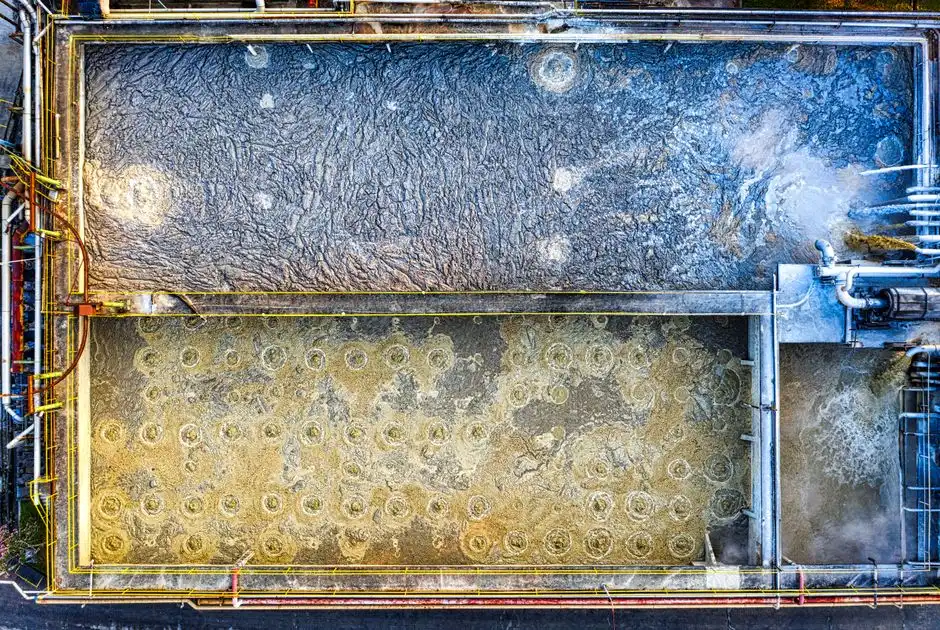
The first decision is whether the site actually needs a change in solids-separation performance. Retain or optimize CAS when the stream is relatively low-load and stable, land is available, the clarifier reliably meets TSS requirements, and there is no reuse target that justifies added membrane complexity.
Favor MBR when low TSS or near-reuse-quality effluent is required, color or turbidity constraints make tertiary polishing unavoidable, or available land cannot accommodate a biological basin plus clarifier and associated civil works. These conditions favor the technology reported in the 2023 Membranes review, but they do not eliminate the need to validate stream-specific biological response and fouling.
Require pretreatment and pilot testing before recommending MBR for highly fibrous, FOG-rich, variable, or hot wastewater. A favorable literature benchmark cannot answer whether New Century fibers will blind the membranes, whether DAF will control the relevant colloids, or whether hot effluent will exceed the selected membrane’s temperature rating.
Consider a partial MBR retrofit only when the existing biological train, equalization, pretreatment, hydraulics, and sludge-handling capacity can support the changed solids-retention mechanism. Converting a clarifier-based train to membranes is not simply an equipment substitution: flux, aeration, controls, hydraulics, redundancy, and downstream solids capacity must be reconciled.
The final recommendation should be conditional on five inputs: current permit limits, reuse economics, site footprint, redundancy requirements, and demonstrated lifecycle performance. An industrial-sector comparison of MBR versus activated sludge for industrial wastewater supplies a useful decision structure, but the New Century recommendation must use pulp-and-paper wastewater data.
What to Test Before Procurement
A procurement decision based only on catalog capacity and literature removal rates is not auditable. The RFQ should require a common characterization and pilot protocol so bidders demonstrate performance under the same conditions.
| Package element | Required information or test | Acceptance discipline |
|---|---|---|
| Influent characterization | 24-hour composite samples and continuous flow monitoring across relevant production conditions; COD, BOD, TSS, color, temperature, fibers, FOG, and discharge- or reuse-relevant constituents. | Cover each relevant stream or an explicitly justified combined basis. |
| Pilot objectives | Solids removal, biological response, fouling tendency, cleaning frequency, achievable flux, temperature effects, and pretreatment effect. | Use representative wastewater and report raw data, not only removal percentages. |
| Hydraulic design | Peak daily flow, membrane area, module count, design flux, train allocation, and redundancy. | Reconcile capacity against average and peak site conditions. |
| Mechanical and control design | Scour aeration, relaxation cycles, CIP chemicals and frequency, blower sizing, specific energy in kWh/m³, alarms, and bypass philosophy. | Define operating limits and the response to power loss or high transmembrane pressure. |
| Reliability | MTBF, spare-module strategy, critical spares, controls philosophy, and at least two comparable pulp-and-paper references. | Check references under the same wastewater and operating conditions. |
| Footprint | Dimensioned layout reconciled with the New Century site constraint, including foundations, access, equalization, pretreatment, and future expansion. | Do not accept the 60% smaller catalog claim without identifying the reference layout. |
| Performance claims | Side-by-side pilot results using the same sampling and calculation protocol. | Do not convert the 97–98% TCOD benchmark into a guarantee without representative demonstration. |
Ask bidders to provide the pilot protocol before acceptance rather than allowing each to use a different influent condition or flow basis. The MBR wastewater treatment cost per m³ guide can support the commercial model, but the RFQ must attach the site characterization and pilot protocol to every price.
For a mill with segregated streams, the pilot scope should preserve that segregation unless the engineering rationale demonstrates that combined treatment is acceptable. Otherwise, a successful blended pilot may conceal the fouling or biological risk associated with recycled fiber, Kraft, CTMP, bleach-plant, or other troublesome contributions.
Frequently Asked Questions
Is MBR always cheaper than CAS for a New Century pulp and paper mill?
No. The supplied research does not establish MBR as generally cheaper, and the 2023 Membranes review found that CAS with tertiary treatment can have energy consumption similar to MBR. Request lifecycle quotations on one design basis, including membranes, blowers, controls, scour aeration, CIP, replacement, downtime, tertiary treatment, polymers, labor, and sludge handling.
How should a New Century mill size an MBR?
Size it from representative stream data, peak daily flow, temperature, foulant loading, pilot-derived flux, required redundancy, and the applicable effluent or reuse specification. Do not apply the HydropureWater catalog range of 10–2,000 m³/day without checking the proposed module area, design flux, configuration, and treatment objectives.
Which supplier information reduces compliance and operating risk?
Require a defined performance guarantee tied to the permit or reuse target, representative pilot evidence, MTBF, redundancy, alarm setpoints, bypass strategy, CIP procedures, and comparable pulp-and-paper references. Also require the bidder to reconcile its proposed design with the actual New Century footprint and applicable permit; no permit limits are supplied in the research.
When does CAS remain preferable to MBR?
CAS remains a defensible choice for relatively stable, lower-load wastewater when land is available, the existing clarifier reliably achieves the required TSS, no reuse target justifies membrane complexity, and the mill prefers fewer membrane-specific operating obligations. A rehabilitation or optimization project may then cost less than conversion to MBR.
Is DAF required before every MBR installation?
No. DAF is not universally required, but the supplied comparison identifies it as an effective upstream control for suspended solids, FOG, oil, grease, and colloidal material that can worsen membrane fouling. Require the bidder to demonstrate the measured need through stream characterization and pilot comparison rather than specifying DAF by assumption.
Related Equipment
- DAF pretreatment for pulp and paper wastewater — specifications, capacity range, and technical data