Why Davao Needs Local Domestic Sewage Treatment
Domestic sewage treatment in Davao requires a decentralized solution because the city lacks a centralized wastewater management system, and more than 90% of households depend on private or communal septic systems. The right equipment depends on the source and characteristics of the wastewater, available land, treatment objectives, and discharge route. A buried A/O package plant is suitable for many residential, hotel, hospital, and rural applications, while MBR is an option where compactness or advanced solids separation is important. Nature-based systems may fit suitable sites, but they require careful evaluation against local discharge and environmental requirements.
The International Journal of Environmental Research and Public Health study of Davao City reported that untreated and inadequately treated sewage from private and communal septic tanks could reach rivers and creeks through direct discharge and surface runoff. The same study, published in 2022, stated that more than 90% of households relied on private or communal septic systems. These conditions make site-level treatment a practical consideration for developments and facilities that cannot connect immediately to a central network.
The environmental basis for treatment is substantial. A December 2024 review by the International Journal of Progressive Research in Engineering Management and Science identified nutrients, pathogens, organic and inorganic pollutants, and hazardous chemicals in untreated domestic wastewater. It also noted that the Philippine Clean Water Act and local interventions had been reviewed as part of its Davao assessment.
Decentralization requires careful investigation of specific site needs. A hotel kitchen drain, a hospital’s clinical stream, and a residential septic-tank outlet may require different pretreatment, controls, and solids management. Buyers should therefore treat decentralized sewage treatment options for Philippine communities as a decision framework rather than a single-equipment recommendation.
Characterize the Wastewater Before Choosing Equipment
A defensible equipment selection begins with identifying the actual source stream and documenting how its flow and quality change over time. The 2022 Davao study reports that sewage flow is generally greatest during the morning and evening, and that a 24-hour composite sample can capture peak flows while providing more reliable mean levels. For a Davao project, this supports representative sampling across normal and peak operating periods instead of relying on one grab sample.
Map every relevant discharge before selecting equipment. The 2022 study distinguishes Mintal, which received domestic wastewater, from Matina Crossing, 23-C, and Bucana, which received mixtures of domestic and industrial wastewater. A stream containing industrial wastewater requires its own characterization and may require pretreatment; it should not be assigned the same biological loading, materials, or controls as domestic sewage without evidence.
| Buyer input | What to establish | Why it affects selection |
|---|---|---|
| Flow | Average, peak and minimum flow; current and future service scenarios | Determines hydraulic and biological capacity, equalization and standby requirements |
| Water quality | BOD, COD, TSS, oil and grease, coliform and pH | Defines biological loading, solids separation, pretreatment and disinfection needs |
| Source composition | Domestic-only or domestic-industrial mix; septic-tank origin; kitchen, laundry and lift-station inputs | Changes the process train and operating controls |
| Site and discharge | Footprint, soil, groundwater, flood exposure, power, maintenance access and receiving route | Determines installation method, pumping, protection and reuse or discharge preparation |
The December 2024 Davao review identifies BOD, COD, TSS, oil and grease and coliform among the parameters used to assess untreated domestic sewage, with pH also relevant to process conditions. Collection points should be selected by a competent wastewater engineer, with the sampling plan covering normal operation and relevant peaks.
Compare Buried A/O, MBR, and Nature-Based Treatment
Buried A/O and MBR packages address different project priorities, while nature-based treatment depends more heavily on land, climate, receiving conditions and local approval. The following comparison reflects supplied equipment specifications and research; capacity does not by itself establish suitability.
| Option | Supplied scope and configuration | Strongest fit | Buyer checks |
|---|---|---|---|
| Buried A/O package | The WSZ combines anoxic/aerobic biological contact oxidation, sedimentation and disinfection in one buried unit. It is fully automated, requires no operator, handles 1–80 m³/h, and can be installed below grade or mounted on a trailer for mobile deployment. | Residential communities, hotels, hospitals, factories and rural sites where installation flexibility and contained treatment are priorities | Confirm hydraulic and organic loading, soil and groundwater conditions, access for maintenance, utilities, sludge removal and the required effluent standard |
| MBR | HydropureWater’s integrated MBR combines activated sludge with submerged PVDF membrane filtration below 1 μm and is specified from 10–2,000 m³/day. | Municipal sewage, industrial process water and reuse applications where compactness or advanced solids separation is important | Validate the project-specific footprint, membrane maintenance, power demand, controls, sludge handling and performance against the reuse or discharge specification |
| Nature-based treatment | The IntechOpen study describes vermifiltration as decentralized treatment combining filtration with earthworms and applied to domestic septic-tank sewage. | Sites with suitable land and environmental conditions | Confirm site suitability, maintenance capability, local environmental and discharge requirements, and performance under the project’s actual effluent objectives |
For a constrained site, the buried A/O sewage treatment plant can preserve usable ground area because landscaping may remain above the buried unit; trailer mounting is another deployment option. Where the objective is tighter solids separation or a reuse application, evaluate the integrated MBR wastewater treatment system against the project brief rather than treating its nominal capacity as the decision.
Product information states that the MBR system has a 60% smaller footprint than conventional systems. That is a manufacturer specification, not a Davao-site guarantee, so it should be checked through project-specific drawings and selection calculations. For every option, compare influent variability, footprint, treatment objectives, automation, maintenance access, solids handling and the receiving environment.
Follow the Treatment Process from Inlet to Discharge
The treatment sequence moves from inlet and preliminary conditioning through biological treatment, solids separation and disinfection before discharge or reuse preparation. Industrial contaminants require pretreatment before the biological stage because package sizing alone cannot correct an inappropriate feed.
In the WSZ configuration, anoxic and aerobic biological contact oxidation provide the biological treatment stage. Sedimentation follows within the integrated package to separate biological solids, while disinfection addresses the final microbiological barrier before the treated flow is discharged. The supplied WSZ product information states that the unit operates automatically; this does not eliminate maintenance, inspection, sampling or solids-removal duties.
In the MBR configuration, activated sludge provides biological treatment and the submerged PVDF membrane provides the physical solids barrier associated with effluent below 1 μm in the product specification. Buyers should confirm how membranes are cleaned, accessed and replaced, and how residual sludge is removed.
The Davao study’s observation of morning and evening flow peaks has direct design implications. Domestic sewage biological treatment processes must be evaluated with hydraulic equalization, peak-capacity selection and controls that respond to the actual diurnal pattern. Do not select final disinfection or reuse equipment from a generic promise; define the applicable project effluent and reuse requirements first.
Plan Sizing, Installation, and Procurement
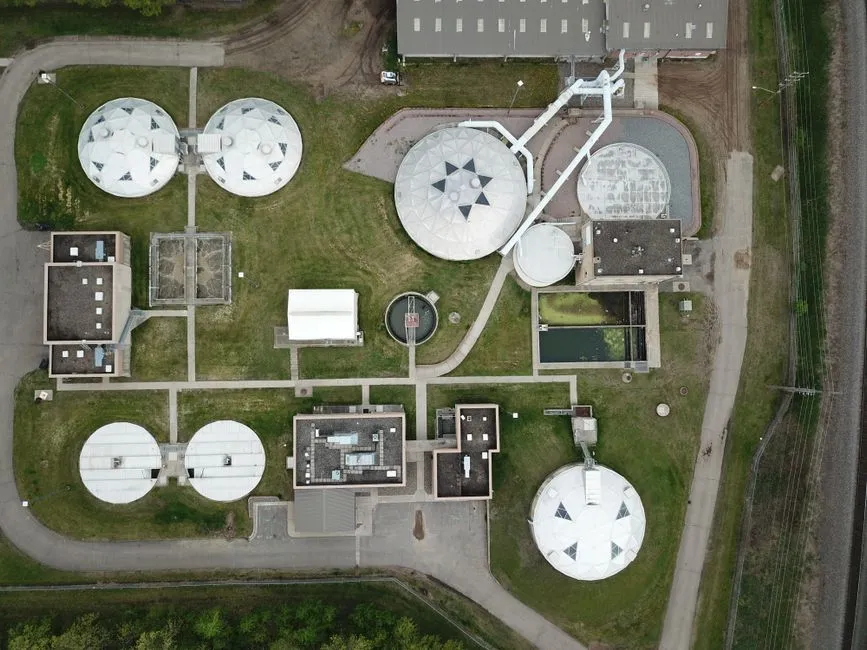
Procurement should proceed as a documented sequence that links wastewater evidence, regulatory requirements, site constraints and operating arrangements. Package-plant sizing examples for London housing and Birmingham housing can help structure the tender, but they do not establish Davao flow, permit or site conditions.
| Step | Procurement action | Required deliverable |
|---|---|---|
| 1 | Define the service population, current sources and future flow scenarios | Design-basis memorandum with measured and forecast scenarios |
| 2 | Run representative sampling, including a 24-hour composite where morning and evening peaks are significant | Analytical results and sampling record |
| 3 | Confirm the receiving water, reuse objective, Philippine and Davao requirements and owner-specific specification | Permit and compliance matrix naming the applicable authority and required evidence |
| 4 | Document excavation access, groundwater, flooding, utilities, odor control, maintenance access and landscaping or trailer requirements | Survey, geotechnical information, site plan and utility requirements |
| 5 | Compare WSZ and MBR packages against flow, objectives, footprint, utilities, automation, maintainability and solids handling | Project-specific drawings, selection calculations and performance guarantees |
| 6 | Plan commissioning, training, monitoring, spares, preventive maintenance and septic-tank receiving contingencies | Commissioning protocol, O&M scope, responsibility matrix and contingency plan |
The December 2024 Davao review states that the Philippine Clean Water Act and local interventions were reviewed during its assessment. That review does not replace confirmation of the current requirements applying to a particular site or discharge. Obtain that confirmation before ordering, and define who will secure the sewage discharge permit, monitor results and respond to noncompliance.
The tender should also distinguish equipment supply from civil works, electrical installation, controls, testing, sludge disposal, reuse infrastructure and site restoration. A supplier’s selection should be checked against the measured design basis rather than accepted because it falls within the stated flow range.
Control Costs and Long-Term Operating Risks
The supplied research does not contain a verified equipment price for Davao, so no responsible generic price can be stated. Request a site-specific quotation that separates package equipment, civil works, installation, electrical controls, commissioning, monitoring, sludge removal or disposal, reuse infrastructure and site restoration. The comparison should also identify exclusions, payment milestones, acceptance tests and the party responsible for each permit.
Budget allocation is relevant to the infrastructure context but is not a supplier quotation. The December 2024 review, citing DENR-EMB (2020), reports that only 3% of the Philippine water and sanitation budget was allocated to sewage treatment. This confirms that public infrastructure cannot be assumed to solve every site’s service requirement, but it should not be converted into a project price.
Compare lifecycle exposure rather than purchase price alone. The relevant entries include energy use, biological and chemical consumption, maintenance attendance, membrane or media replacement where applicable, sludge removal, control-system maintenance and landscape or surface-area restoration. Include commissioning samples, operator training, monitoring equipment, critical spares and a defined maintenance response plan in the procurement scope. For any septic-tank receiving station, also price the receiving arrangement, solids management and contingency operating mode.
Frequently Asked Questions
What is the best sewage treatment system for a property in Davao?
There is no defensible single answer before the wastewater source, peak flow, treatment objective, footprint and discharge route are known. A buried A/O package may fit a constrained site or decentralized community application; MBR may fit where compactness or advanced solids separation is required; vermifiltration may be considered where land and environmental conditions support it. Select only after representative sampling and project-specific review.
How much does a domestic sewage treatment plant cost in Davao?
The supplied research provides no verified Davao equipment price. Request a site-specific quotation covering the treatment package, civil and electrical installation, controls, commissioning, monitoring, sludge handling, reuse or discharge works, and site restoration. Ask the supplier to state exclusions and acceptance conditions so quotations use the same scope.
When should a Davao project choose MBR instead of a buried A/O package plant?
Consider MBR when the treatment objective calls for advanced solids separation or reuse, the available footprint is constrained, and the owner can support membrane operation, cleaning and replacement. The supplied MBR specification covers 10–2,000 m³/day and submerged PVDF filtration below 1 μm; these are selection limits, not proof of site suitability. Require project-specific drawings, utility requirements and performance guarantees.
How do I size a sewage treatment system for a septic-tank receiving station?
Measure the receiving flow and characterize its BOD, COD, TSS, oil and grease, coliform and pH under normal and peak conditions. The 2022 Davao study identifies morning and evening peaks and supports use of a 24