What Istanbul Factory Wastewater Usually Determines
An Istanbul factory needs a DAF system when wastewater contains removable oil, grease, FOG, colloids, or settleable solids that must be captured before biological treatment or sewer discharge. It needs a full ETP when wastewater has a significant biodegradable COD/BOD load and the permitted route requires biological treatment. Many factories need both: screening and equalization, pH control, DAF, clarification, biological treatment, and sludge handling. A September 2024 Intertek Turkey report for a Gaziantep textile factory listed 2,200 m3/day of wastewater, indirect discharge through the municipal sewage system, and an ETP train incorporating DAF and activated sludge.
Start with the discharge route, because it determines the treatment objective. A factory discharging indirectly to a municipal sewer must satisfy its discharge permit and any municipal sewer pretreatment or CETP agreement. A direct-discharge factory must assess the receiving-body route instead, while an internal reuse destination may require a different quality specification entirely. These routes should not be treated as interchangeable.
DAF primarily captures floatable oil, FOG, colloids, and suspended solids. A biological ETP becomes relevant when the authorized treatment objective includes a biodegradable organic load measured through COD and BOD. The decision therefore depends on both wastewater composition and the legally or contractually authorized outlet, rather than on equipment capacity alone. The 2026 DAF selection and decision framework provides a useful equipment-selection reference.
For a local benchmark, Intertek Testing Services Turkey’s Softlines Wastewater Testing Test Report, sampled on 25 September 2024, documented a Gaziantep textile factory with indirect discharge, municipal-sewer routing, and an ETP comprising DAF, sedimentation or clarification, and activated sludge. This is one factory’s treatment configuration, not a universal legal or equipment requirement for every Istanbul factory.
Evidence From a Turkish Textile Factory ETP
Intertek Testing Services Turkey’s Softlines Wastewater Testing Test Report for Zafer Tekstil Sanayi ve Ticaret A.Ş. provides the strongest available local process evidence in the supplied research. The sample was taken on 25 September 2024, the reporting date was 30 September 2024, and the audit firm was Intertek Turkey.
The report recorded average industrial wastewater generation of 2,200 m3/day. That figure belongs to the cited Gaziantep factory and must not be transferred to an Istanbul site as a default. Its value here is to demonstrate why measured flow, discharge route, treatment boundaries, and existing-plant condition belong in a project specification.
| Documented item | Evidence from the Intertek Turkey report |
|---|---|
| Factory | Zafer Tekstil Sanayi ve Ticaret A.Ş., Gaziantep, Turkey |
| Sampling and reporting | Sampled 25 September 2024; reported 30 September 2024 |
| Average wastewater generation | 2,200 m3/day for this factory |
| Discharge route | Indirect discharge through the municipal sewage system |
| Existing treatment | ETP present; revision work under way |
| Treatment train | Screening, sieving and grit removal; pH correction; homogenization; coagulation/flocculation; DAF; sedimentation or settler/clarifier; activated sludge |
The ETP condition is an operational clue: an existing factory may need capacity and condition assessment rather than complete replacement. The report also states that revision work was under way at the treatment plant. A supplier should therefore be asked whether its offer is new-build, retrofit, hydraulic expansion, or process upgrade.
The report’s treatment table uses ZDHC WWSG v2.1 reference targets, including Foundational, Progressive, and Aspirational levels. These must not be presented as Istanbul legal limits. The Intertek report explicitly says its results were not to be used for regulatory-compliance purposes, and it notes that local legal requirements were referenced to the discharge permit or contractual agreement with the CETP supplied by the applicant.
Choose DAF, ETP, or a Combined Treatment Train
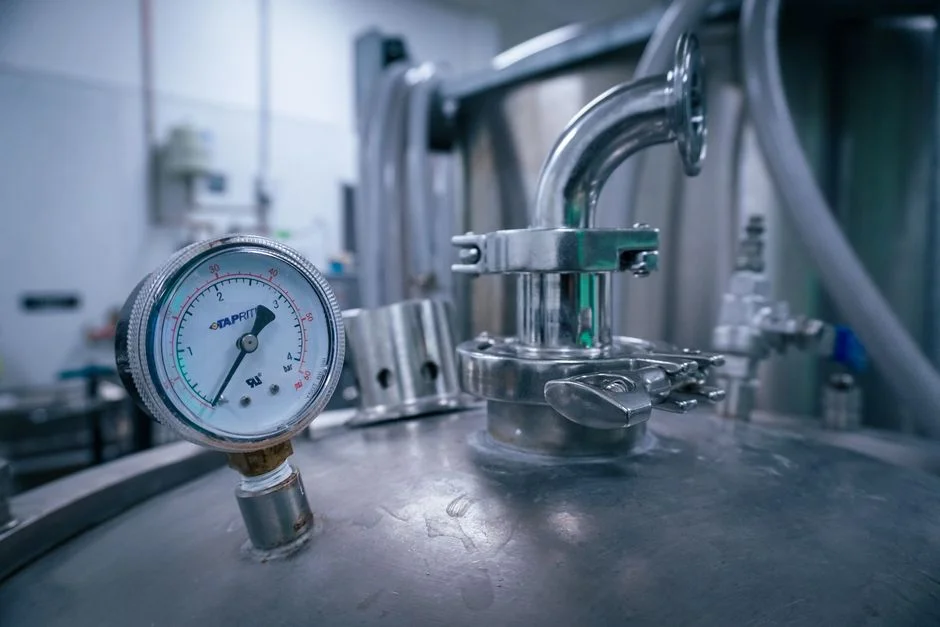
The correct process architecture follows from the wastewater constituents and the authorized discharge objective: DAF alone, a broader ETP, or pretreatment followed by biological or advanced treatment.
| Option | Use when the evidence supports it | Process scope to evaluate | Main procurement risk |
|---|---|---|---|
| DAF | The priority is removal of floatable oil, FOG, colloids, or suspended solids. | Equalization, pH correction where needed, chemical dosing, coagulation/flocculation, micro-bubble flotation, and skimming. | Equipment selected from average flow without a peak-flow and contaminant-loading basis. |
| Full ETP | The treatment objective includes biodegradable COD/BOD removal or multiple treatment stages. | Physical pretreatment plus the biological and advanced treatment steps required by the permit or sewer agreement. | Assuming biological treatment is necessary without establishing the organic load and discharge duty. |
| Combined train | DAF pretreatment protects downstream biological or advanced treatment, or the permit requires separate solids and organic-load control. | DAF followed by clarification and justified downstream treatment, with a defined sludge route. | Leaving downstream treatment, controls, or sludge handling outside the quoted scope. |
Use this sequence:
- Characterize the wastewater. Identify production, washing, cleaning, laboratory, and sanitary streams.
- Confirm the permit or sewer limits. Use the discharge permit or CETP agreement as the controlling document.
- Select pretreatment. Decide whether DAF is needed for removable contaminants and solids capture.
- Establish the hydraulic basis. Measure average, peak, batch-discharge, and operating profiles.
- Select final treatment and the sludge route. Define what DAF cannot accomplish alone and where captured solids will go.
For DAF, equalization limits hydraulic shock, pH correction supports chemical dosing, coagulation/flocculation prepares contaminants for capture, and micro-bubble flotation separates the formed float before automatic skimming removes it. The industrial dissolved air flotation system should be selected only after that duty is established.
For a full ETP, biological treatment should be included only where biodegradable COD/BOD and the process requirements justify it. The documented Gaziantep train combined DAF with activated sludge, but that example does not establish the same configuration for an Istanbul factory. Where a more compact biological stage is being evaluated, an integrated MBR wastewater treatment system should be assessed against the actual duty and constraints.
Size the System From Measured Wastewater Data
Industrial ETP sizing should be based on measured hydraulic and contaminant duties, not floor area, production output, or average flow alone.
The minimum information package includes average flow, peak flow, batch-discharge profile, operating hours, wastewater temperature, pH, COD, BOD5, TSS, oil and grease, and any priority pollutants identified by the permit or CETP agreement. The textile DAF sizing guide explains why peak hydraulic conditions and contaminant loading must be considered together.
| Parameter | Before treatment in the cited report | After-treatment reference target | Source and scope |
|---|---|---|---|
| TSS | 50 mg/L | 15 mg/L | Intertek Turkey report, 30 September 2024; ZDHC WWSG v2.1 reference table |
| COD | 150 mg/L | 80 mg/L | Intertek Turkey report, 30 September 2024; ZDHC WWSG v2.1 reference table |
| BOD5 | 30 mg/L | 15 mg/L | Intertek Turkey report, 30 September 2024; ZDHC WWSG v2.1 reference table |
| Total nitrogen | Not stated as an untreated value | 10 mg/L | Intertek Turkey report, 30 September 2024; after-treatment reference target |
| Total phosphorus | Not stated as an untreated value | 0.5 mg/L | Intertek Turkey report, 30 September 2024; after-treatment reference target |
| Oil and grease | Not stated as an untreated value | 2 mg/L | Intertek Turkey report, 30 September 2024; after-treatment reference target |
| pH | Not stated as an untreated value | 6–9 | Intertek Turkey report, 30 September 2024; after-treatment reference target |
| Foam | Not stated as an untreated value | Not visible | Intertek Turkey report, 30 September 2024; after-treatment reference target |
These figures came from the ZDHC WWSG v2.1 table in the Intertek Turkey report. They are useful as reference benchmarks for checking a proposal’s treatment logic, but they do not replace the factory’s Istanbul discharge permit or CETP agreement.
Equipment range is not a sizing study. HydropureWater lists DAF models from 4–300 m3/h and MBR systems from 10–2,000 m3/day, but neither range should be selected before the hydraulic basis and treatment objectives are confirmed. The duty must cover the measured peak and batch releases, not merely the daily average.
Sludge is part of the process boundary. DAF float and biological sludge can require thickening, dewatering, storage, and a permitted disposal route. A plate-and-frame filter press can be evaluated as part of that route, but its selection also depends on measured solids characteristics and disposal requirements.
Build a Supplier-Ready Equipment Specification
A defensible quotation should state the treatment duty, not just the equipment name and nominal flow.
Require the supplier to identify the wastewater source, average and peak flow, operating schedule, batch-discharge assumptions, final discharge route, wastewater characterization used for sizing, required removal objectives, and each treatment stage’s performance responsibility. State whether the quotation covers equipment only or a complete installed train, including civil works, piping, electrical installation, controls, commissioning, and operator training.
For DAF, request the surface-aeration arrangement, saturation basis, recycle-flow design, solids-separation method, skimming arrangement, control philosophy, materials of construction, and installation-utility requirements. Chemical dosing should be included where it forms part of the operating duty; the industrial DAF system pricing guide explains why quotation boundaries materially affect cost comparisons.
Ask each bidder to state which objectives DAF achieves and which remain for biological, tertiary, or permit-specific treatment. This prevents a solids-removal guarantee from being mistaken for a complete ETP performance guarantee.
| Required submission | Decision it should support |
|---|---|
| Process flow diagram and general arrangement | Confirm process boundaries, equipment sequence, access, and site fit. |
| Design duty and operating philosophy | Confirm average, peak, batch, and continuous operation. |
| Utilities consumption | Check electrical, compressed-air, water, and chemical requirements. |
| Controls and instrumentation | Assess automation, interlocks, monitoring, and operator workload. |
| Commissioning and acceptance tests | Define sampling, analytical methods, test duration, and acceptance criteria. |
| Training, spares, warranty, and O&M support | Establish the operating and maintenance commitment after handover. |
| Sludge handling scope | Close the separation-to-disposal obligation. |
The cited 2,200 m3/day figure illustrates why flow profiling belongs in the specification, but it is not the Istanbul factory’s flow. Obtain that factory’s own flow record or measured profile before ordering. For clarification and gravity-separation alternatives, a high-efficiency sedimentation tank should be compared as a defined duty rather than substituted for DAF by assumption.
Implementation Roadmap for an Istanbul Factory
A 90-day procurement sequence can reduce the risk of selecting equipment before the permit, wastewater, and existing-plant condition are understood.
First 30 days: establish the legal and wastewater basis
Obtain the discharge permit and any municipal sewer pretreatment or CETP agreement. Identify the final discharge route, map every production, cleaning, laboratory, and sanitary wastewater source, and record operating hours and batch releases. Collect representative samples across production and cleaning cycles rather than relying on one grab sample. Ask Intertek or another qualified laboratory to identify parameters relevant to the permit and process selection.
Days 31–60: develop and compare the process
Complete COD/BOD5, TSS, oil and grease, pH, temperature, and priority-pollutant testing. Establish average and peak flow from records and measurements. Compare DAF, full ETP, and combined configurations against the authorized treatment objectives. Prepare the supplier-facing specification, process flow diagram, site utility survey, and sludge-disposal assessment. The DAF overload and emergency-treatment guide is useful for reviewing hydraulic resilience, while the DAF oil-water separation guide supports oil-removal boundary checks.
Days 61–90: procure, install, and verify
Procure the selected train, freeze the approved drawings, confirm installation readiness, schedule operator training, and define commissioning samples and acceptance criteria tied to the permit or CETP agreement. For an existing ETP, perform a condition and capacity assessment before replacing equipment. The Turkish mill’s reported revision work demonstrates why current-condition review is essential.
Acceptance testing should use independently defined influent and effluent parameters, sampling points, analytical methods, and operating conditions. A supplier-selected demonstration condition is not sufficient to establish compliance with the factory’s actual discharge route.
Frequently Asked Questions
What does an industrial ETP or DAF system cost for a factory in Istanbul, Turkey?
No defensible installed price can be given without the wastewater flow profile, treatment objectives, existing site conditions, and quotation boundary. Request separate pricing for DAF or MBR equipment, tanks and pumps, electrical and controls, civil works, installation, commissioning, training, and sludge handling. The industrial DAF system pricing guide explains the inputs needed for a comparable budget.
How much wastewater flow is needed to size an industrial ETP?
Average flow alone is insufficient. The supplier needs average and peak flow, batch-discharge timing, operating hours, and contaminant loads including COD, BOD5, TSS, oil and grease, and pH. The selected process must be checked against the peak and batch conditions, not simply the daily total.
Which wastewater limits should an Istanbul factory use for permit compliance?
Use the factory’s discharge permit or its municipal sewer pretreatment/CETP agreement. The Intertek Turkey report explicitly referenced the applicable local legal standard to the permit or contractual agreement provided by the applicant. ZDHC WWSG v2.1 values in that report are reference targets, not substitutes for the controlling Istanbul requirements.
What documents and guarantees should be requested when comparing ETP and DAF suppliers?
Request the wastewater characterization, design flow profile, process flow diagram, general arrangement, utilities consumption, controls philosophy, commissioning test plan, operator training, warranty, O&M support, and sludge-handling scope. Ask each supplier to define measurable influent and effluent acceptance criteria and clearly separate DAF performance from downstream biological or permit-specific treatment. The 2026 DAF selection and decision framework supports a consistent technical comparison.
Related Equipment
- industrial dissolved air flotation system — specifications, capacity range, and technical data