
Start with the permit and the three layers of Tampa requirements
Petroleum plants near Tampa meet sewer pretreatment limits by applying the facility’s wastewater discharge permit together with federal categorical standards, City of Tampa local limits, and the prohibitions against pass-through and interference. They characterize tank-bottom, wash-rack, loading-drip, and stormwater streams; remove free oil, emulsified oil, suspended solids, and dissolved pollutants with appropriately sequenced equipment; control pH, temperature, flow, and batch slugs; and preserve monitoring and reporting records. The City of Tampa Technical Manual states that the June 2012 manual, as amended, has the force and effect of law, but the site permit controls the facility’s actual conditions.
Begin the permit review with three layers: prohibited discharges, applicable federal or state categorical pretreatment standards, and local limits or permit conditions. The prohibitions in 40 CFR 403.5 apply even when the permit does not cite a numerical limit for the offending pollutant. The EPA’s Local Limits Development Guidance explains that a POTW’s pretreatment program must address national categorical standards, local limits, and prohibited discharges, and that the controlling permit or regulatory requirement governs the discharger.
The Wastewater Discharge and Industrial Pretreatment Standards Technical Manual, June 2012 edition, as amended, is the controlling local reference. Check the current manual, permit amendments, applicable categorical standards, and any approved variance before finalizing a treatment design. The City of Tampa’s 2026 technical manual states that wastewater may not exceed 60°C (140°F) unless a specific temperature condition appears in the wastewater discharge permit.
The Director may impose equivalent mass or concentration limits under 40 CFR 403.6(c) and Florida Administrative Code 62-625.410(4), so a concentration-only permit provision does not necessarily eliminate mass-based control. The City manual also distinguishes daily maximum limits expressed as mass from those expressed as concentration.
Use the City’s 350 mg/L for BOD/TSS and 1,000 mg/L for COD only as manual benchmarks. The City manual directs users to the facility permit for exact numerical limits; confirm whether each applicable requirement is mass-based, concentration-based, or otherwise expressed. For related process context, see how industrial plants translate sewer requirements into treatment and monitoring decisions.
| Requirement layer | What the engineer must establish | Design implication |
|---|---|---|
| Prohibited discharges | Whether the waste can cause pass-through, interference, sewer hazards, or prohibited releases | Source control and pretreatment may be necessary even without a numerical facility limit |
| Categorical standards | Whether petroleum refining, bulk storage, or another applicable category adds federal or state requirements | Determine pollutant-specific limits before selecting a process |
| Local limits and permit conditions | Exact parameters, units, averaging periods, monitoring frequency, temperature provisions, and reporting deadlines | Translate the permit into measurable design and operating targets |
Characterize every petroleum wastewater stream before choosing equipment
Equipment selection should follow a measured waste-by-waste mass balance, because petroleum wastewater can combine incompatible contaminant forms and short-duration loading events. The inventory should include tank-bottom water, API separator or coalescer dumps, truck and rail loading drip, vehicle wash-rack wastewater, hydrostatic-test water, and stormwater that contacts product-handling areas. Each source requires a defined route to treatment or an approved disposal or discharge point.
Do not treat “petroleum wastewater” as one uniform stream. Characterize free oil separately from emulsified oil, identify suspended solids and colloidal material, and quantify dissolved hydrocarbons and pH variability. Loading-arm drip may be predominantly free oil, while wash-rack water may contain detergents that stabilize smaller oil droplets. Tank and coalescer dumps create transient loads that can differ sharply from the daily average.
- List each source and its normal operating and batch-discharge pattern.
- Measure flow, oil and grease or HEM, TSS, pH, and any locally regulated metals or organic parameters required by the permit.
- Record peak instantaneous flow and pollutant mass loading for tank drops, separator dumps, and wash operations.
- Sample across representative operating states before final sizing or performance guarantees.
The City of Tampa’s 2026 technical manual supports the use of representative local limits, while the supplied research does not establish petroleum influent values that can be generalized to every Tampa-area site. A vendor should therefore request site-specific analytical results rather than assume an oil, TSS, or HEM concentration. The DAF versus clarifier selection for petroleum wastewater provides a useful process comparison, but it cannot replace site characterization.
| Characteristic or source | Engineering question | Data required |
|---|---|---|
| Free oil | Is a large separable fraction entering the train? | Representative oil concentration, droplet condition, and dump frequency |
| Emulsified oil and FOG | Will flotation or chemical conditioning be needed to separate stable droplets? | Oil and grease or HEM, emulsification tendency, and TSS |
| Suspended and colloidal solids | Which unit removes solids without becoming the system bottleneck? | TSS, settleability, particle distribution, and solids characterization |
| Dissolved pollutants | Are biological, precipitation, or polishing steps required? | COD, BOD, metals, pH, and permit-specific organic parameters |
| Slug generation | Can equalization and treatment absorb the release? | Peak instantaneous flow, volume, duration, and release frequency |
Match the treatment train to the contaminant and failure mode
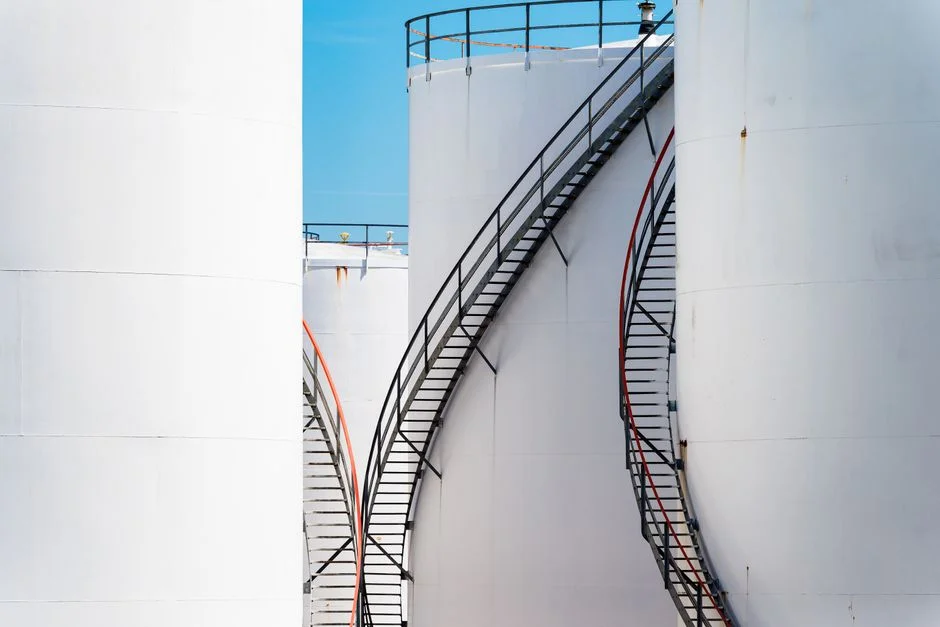
Source segregation is the first treatment control: keep hydrocarbon-contaminated product-handling areas and dumps out of clean stormwater and reduce the load entering the treatment train. This lowers hydraulic demand and prevents concentrated oil from overwhelming downstream units. It is a design requirement, not a substitute for treatment.
Use primary oil-water separation—such as an API gravity separator or corrugated-plate interceptor—to remove free oil before flotation. A DAF should not be expected to absorb every free-oil slug. The published petroleum-bulk-plant guidance identifies a CPI or API primary stage ahead of DAF as standard practice and notes that DAF alone is vulnerable to free-oil blankets during coalescer dumps. That sequence addresses the actual failure modes: free oil should be separated by gravity or coalescence, while flotation removes emulsified oil, FOG, suspended solids, and colloidal matter.
The commercial equipment reference lists 4–300 m³/h across 13 standard models for DAF systems. Those are catalog values, not site sizing. Use the site’s peak hydraulic duty, oil and solids loading, and required residual concentration to select the applicable model and operating envelope.
When dissolved metals require removal, use chemical precipitation followed by a lamella clarifier. The same reference lists 20–40 m/h surface loading and up to 30% lower chemical consumption for its lamella clarifiers. These are supplier-stated figures, not independently verified Tampa performance.
For pH and coagulation control, use PLC-controlled dosing where batch production causes fluctuations. The Tampa guidance identifies a 6–9 pH influent range for discharge to the POTW. A PLC-controlled automatic chemical dosing system can coordinate reagent addition with flow and pH, but its operating envelope still needs to match the wastewater chemistry.
Consider MBR where high COD or BOD, biological treatment, or water-reuse objectives justify the added complexity. The supplied MBR catalog range is 10–2,000 m³/day, with stated effluent below 1 μm; neither figure establishes discharge compliance by itself. Filtration and RO should remain polishing or reuse steps after oil and solids removal, not substitutes for primary separation. For a broader sequence, compare DAF and clarifier applications and chemical-precipitation design considerations.
| Failure mode or target | Primary or polishing function | Decision gate |
|---|---|---|
| Separable free oil | API separator or corrugated-plate interceptor | Does upstream segregation remove the largest oil concentration before DAF? |
| Emulsified oil, FOG, TSS, and colloids | DAF | Are representative loads, peak flow, and air-saturated solids duty defined? |
| Precipitated metals | Chemical precipitation and lamella clarification | Does the wastewater matrix support the stated precipitation chemistry? |
| Variable pH | PLC-controlled chemical dosing | Are flow-paced control, interlocks, and operating records provided? |
| High COD/BOD or reuse objective | MBR, followed by polishing where required | Is biological loading and the reuse specification sufficiently defined? |
Control slugs, temperature, and pH before a sewer release
A treatment train can remain within its normal capacity and still create a sewer discharge violation if a slug, temperature excursion, or pH excursion passes through it. For a significant industrial user operating a batch process, 40 CFR 403.8(f) requires a slug-load control plan. The plan should define equalization volume, automated flow and pH monitoring, and written batch-release protocols.
Treat startup, shutdown, tank dumps, coalescer discharges, and upset conditions as design release scenarios. For each scenario, identify the source flow, expected pollutant mass, receiving equalization capacity, treatment capacity, release rate, operator decision, and stop-release criteria. The plan should prevent a short-duration hydraulic or mass surge from overwhelming the treatment works or the collection system.
Apply the City of Tampa temperature condition of 60°C (140°F) unless the facility wastewater discharge permit contains a different specific condition. Temperature protection may require cooling, segregated discharge scheduling, or another engineered control; a permit variance should not be assumed.
Use automatic PLC-controlled dosing and remote monitoring to identify pH excursions and preserve defensible operating records. Interlocks should be able to stop or hold a batch release when flow, pH, or equipment status falls outside its approved window. Automation supports the procedure; it does not replace equalization, operator training, sampling, or corrective action.
Dilution is prohibited as a substitute for adequate treatment under 40 CFR 403.6(d). The compliance basis must remain treatment and control, not increased clean-water flow used to lower a measured concentration.
Build a monitoring program that can withstand a compliance review

An auditable pretreatment program links each permit parameter to a sampling method, frequency, monitoring location, operating record, and corrective-action pathway. First determine whether the facility is a significant industrial user. The supplied criteria include categorical-standard coverage, an average of 25,000 gpd of process wastewater, or contribution of 5% or more of the POTW’s average dry-weather hydraulic or organic capacity.
If the facility is an SIU, address the Baseline Monitoring Report and 90-day compliance reporting requirements under 40 CFR 403.12. For Tampa, the City’s 2026 technical manual also identifies required pretreatment reports and failure to report timely required reports as grounds for significant noncompliance.
Use the parameter-specific monitoring frequencies stated in the permit for oil and grease or HEM, TSS, pH, and site-specific pollutants. Preserve sampling methods, flow records, calibration documentation, chain-of-custody records, operator logs, equipment-control trends, and corrective-action records. A treatment skid should be sampled where the permit defines the monitoring point, not at an arbitrary location selected for convenience.
Evaluate adverse trends before they become significant noncompliance. Under the City of Tampa Technical Manual, 2026, chronic violations occur when 66% or more of measurements over six months exceed a numerical limit. Technical Review Criteria violations occur when 33% or more of measurements for a pollutant equal or exceed the applicable limit multiplied by the TRC factor. The multipliers are 1.4 for BOD, TSS, and total oil and grease, and 1.2 for all other pollutants except pH.
| Record or control | What it must demonstrate | Review focus |
|---|---|---|
| Representative sampling | Samples reflect the permit monitoring point and required method | Method, timing, flow-proportionality where required, and chain of custody |
| Flow and equipment records | Mass loading and hydraulic duty are defensible | Calibration, timestamp continuity, alarms, downtime, and bypass events |
| Operational records | Dosing, skimming, backwash, and equalization followed written procedures | Operator entries, set points, actual results, and corrective action |
| Trend review | Adverse movement is addressed before an enforcement threshold | Permit limits, TRC-adjusted thresholds, and chronic-violation frequency |
Choose equipment by compliance risk, hydraulic duty, and operating control
Equipment selection should be a documented risk decision, not a comparison of generic removal claims. Each alternative must be matched to the contaminant, peak hydraulic duty, mass loading, operating staff, sludge-handling route, monitoring requirements, and the residual concentration that must be demonstrated at the permit point.
Use DAF when emulsified oil, FOG, TSS, and colloidal matter dominate the treatment problem and a compact pretreatment step is appropriate. Use a lamella clarifier where chemical precipitation produces settleable solids and compact clarification is advantageous. The supplied lamella clarifier values are 20–40 m/h surface loading and up to 30% chemical reduction. Use MBR where biological removal and reuse-oriented effluent quality justify greater process complexity; the supplied catalog capacity is 10–2,000 m³/day.
Require PLC control, remote monitoring, and the automated operating features relevant to the selected process—such as skimming for oil-removal equipment or backwash for filtration. Also require a documented spare-parts plan, maintenance access, operator training, sludge disposition, and service scope. For procurement, request a site-specific proposal based on the wastewater matrix, permit limits, flow profile, equalization requirements, controls, sludge handling, and delivery scope. A generic performance statement cannot resolve site-specific compliance risk.
Cost comparisons should include chemical consumption, residuals, power, operator attention, maintenance, monitoring, and the consequence of a failed release. No supported quotation is available in the research for a Tampa-area project of this scope, so a buyer should request an itemized proposal rather than rely on a generic equipment price.
| Selection factor | DAF | Lamella clarifier | MBR |
|---|---|---|---|
| Primary target | Emulsified oil, FOG, TSS, colloids | Solids generated by chemical precipitation | Biological load and reuse-oriented treatment |
| Key upstream dependency | Primary free-oil separation | Reliable precipitation chemistry | Controlled feed after oil and solids removal |
| Hydraulic decision | Peak flow and air-to-solids duty | Surface-loading and floc-settling conditions | Daily biological capacity and peak equalization |
| Operating decision | Skimming, recycle, air saturation, and chemical conditioning | Reagent control and sludge withdrawal | Biofilm operation, membrane cleaning, and reuse criteria |
| Procurement evidence | Performance at the site’s oil and solids loading | Clarifier loading and solids-removal basis | Effluent claim tied to the actual wastewater matrix |
Frequent Frequently Asked Questions
What rules control petroleum-plant sewer discharge near Tampa?
The controlling framework includes the facility’s wastewater discharge permit, applicable federal or state categorical standards, City of Tampa local limits, and the pass-through and interference prohibitions. The City of Tampa Technical Manual, June 2012 edition, as amended, supplies local requirements, but the current permit and applicable amendments must be checked for site-specific conditions.
Which treatment unit should remove free oil and emulsified oil?
Use primary oil-water separation for free oil and DAF for emulsified oil, FOG, TSS, and colloidal matter. A DAF should not be assigned the full burden of a free-oil slug because that failure mode can impair flotation performance. Confirm the sequence against representative site wastewater.
How should a petroleum pretreatment system be sized?
Size on peak instantaneous flow, pollutant mass loading, batch and upset conditions, and required residual concentration—not daily average flow alone. The buyer should provide representative wastewater testing, source-discharge data, permit limits, and slug-release scenarios before requesting a final equipment capacity or performance guarantee.
How should procurement teams compare DAF, lamella clarification, and MBR systems?
Compare DAF for emulsified oil and solids, lamella clarification for precipitated solids, and MBR for biological load or reuse quality. Require each supplier to price the same scope, including controls, residuals, installation, commissioning, monitoring, training, maintenance, and service support. No supported project quotation is available, so the appropriate next step is a site-specific written proposal with an itemized cost breakdown.
Does automatic dosing and remote PLC monitoring prove compliance?
No. Automation can reduce pH excursions and create an operating record, but it does not replace equalization, written procedures, representative sampling, flow records, calibration documentation, or corrective-action records. The complete audit file must connect equipment status to the permit condition it was intended to protect.
Related Equipment
- DAF system for petroleum wastewater pretreatment — specifications, capacity range, and technical data
Further Reading
Frequently Asked Questions
What pretreatment limits apply to a petroleum plant discharging to the City of Tampa sewer?
Petroleum facilities must comply with City of Tampa Industrial Wastewater Discharge Permits, which typically enforce local limits based on the City's Municipal Code Chapter 26. Common parameters include a pH range of 5.5 to 10.5 standard units, a maximum Oil and Grease (O&G) limit of 100 mg/L, and strict mass-based limits for heavy metals such as Lead (0.69 mg/L), Zinc (2.61 mg/L), and total Petroleum Hydrocarbons (TPH) often capped at 50-100 mg/L depending on the specific industrial category.
Facilities are also subject to Federal Categorical Pretreatment Standards under 40 CFR Part 419 (Petroleum Refining Point Source Category), which may impose more stringent requirements for Phenolic compounds, Ammonia, and Total Suspended Solids (TSS) regardless of local municipal variance.
Should a Tampa petroleum plant use DAF, a lamella clarifier, or an MBR system?
The choice depends on the specific waste stream composition, but Dissolved Air Flotation (DAF) is the industry standard for removing emulsified oils and suspended solids, typically achieving 85-95% removal efficiency for free-phase petroleum hydrocarbons. Lamella clarifiers are best suited for high-solids loading after chemical flocculation but provide poor oil separation compared to DAF systems.
Membrane Bioreactors (MBR) offer the highest effluent quality, capable of meeting stringent discharge standards for dissolved organics and TPH that DAF units cannot reach. However, MBR systems are significantly more sensitive to chemical upsets and high-temperature tank bottoms, necessitating a DAF unit as a mandatory pretreatment step to prevent membrane fouling.
How should a petroleum wastewater pretreatment system be sized for tank dumps and batch slugs?
Pretreatment systems must be sized based on the maximum anticipated batch dump volume rather than average daily flow, utilizing an equalization tank with a minimum capacity of 1.5 times the largest single tank dump volume. This equalization tank should feature automated pH adjustment and integrated mixing to dampen concentration spikes before the water enters the downstream treatment units.
Design engineers should apply a hydraulic safety factor of at least 20% over the peak hourly flow rate to prevent bypass during simultaneous operations. For batch slugs containing high concentrations of surfactants or solvents, the system must include a surge volume capable of holding the entire slug for controlled, metered discharge over 12 to 24 hours.
What should I request from a wastewater equipment supplier before approving a Tampa pretreatment proposal?
You must request a comprehensive process flow diagram (PFD) that includes mass balance calculations for each stage of the treatment train, verifying that the proposed equipment can achieve effluent concentrations at least 20% below the City of Tampa's maximum allowable limits. Additionally, demand a pilot study report or performance data from a similar regional petroleum facility to validate removal efficiencies for your specific hydrocarbon profile.
Ensure the proposal includes a detailed chemical consumption estimate, a list of instrumentation for real-time compliance monitoring (such as continuous pH and flow logging), and a guarantee of service response times within 24 hours to prevent permit violations that could lead to City-issued fines or sewer service termination.
Can a petroleum plant dilute wastewater to meet Tampa sewer limits?
No, dilution is explicitly prohibited as a method to achieve compliance under both City of Tampa sewer use ordinances and EPA pretreatment regulations (40 CFR 403.6(d)). The use of potable water, cooling water, or uncontaminated storm water to reduce the concentration of regulated pollutants is considered an illegal discharge practice.
Compliance must be achieved through physical or chemical treatment processes that remove the pollutants from the waste stream. Any facility found using dilution to meet numeric limits will be subject to enforcement actions, including potential revocation of the industrial discharge permit and mandatory installation of flow-proportional sampling equipment to verify compliance.