Why Step Screens Fail: 3 Root Causes in Industrial Wastewater
Step screens in industrial wastewater treatment plants remove 20-35% of suspended solids (TSS) and biochemical oxygen demand (BOD) at the headworks. Three root causes account for 85% of failures: solids overload, corrosion, and mechanical wear. When these factors converge—such as in food processing or pulp and paper facilities—efficiency can drop by 40-60% within months, leading to compliance violations and production halts. This section examines the mechanisms behind each failure mode, supported by material-specific corrosion rates, solids loading thresholds, and real-world flow data.
| Root Cause | Key Parameter | Failure Threshold | Industrial Impact |
|---|---|---|---|
| Solids Overload | TSS Concentration | >500 mg/L (EPA 2024) | Clogging, rake jamming, screen bypass |
| Corrosion | Material Loss Rate | Carbon steel: 3-5 mm/year 304 SS: 0.1-0.5 mm/year 316L: 0.05-0.2 mm/year |
Holes in screen panels, structural failure |
| Mechanical Wear | Rake Teeth Height | <50% of original (12-18 months in high-grit applications) | Reduced solids capture, increased downstream load |
| Flow Surges | Peak Flow Rate | >120% of design capacity | Motor overload, screen bypass, grit chamber fouling |
Solids Overload: The Silent Efficiency Killer
Industrial step screens are designed for TSS loads up to 500 mg/L, but food processing plants often exceed 1,200 mg/L during production peaks. When solids loading surpasses design limits, three failure modes emerge:
- Rake jamming: Occurs when rags or fibrous materials (e.g., 10%+ by volume) wrap around rake teeth, increasing torque by 30-50%. In a 2024 study of 47 industrial plants, 62% of jamming incidents correlated with TSS spikes >800 mg/L (HydropureWater field data).
- Screen bypass: Pressure differentials >150 mm H₂O force solids through gaps in damaged panels. A meat processing plant in Iowa saw TSS in downstream grit chambers rise from 180 mg/L to 420 mg/L after a screen bypass event.
- Motor overload: VFD-equipped motors trip when current draw exceeds 110% of full-load amperage (FLA) for >30 seconds. In a case study of a dairy plant, motor trips increased from 2/month to 12/month after TSS loads rose from 450 mg/L to 980 mg/L.
Corrosion: Material Matters in Industrial Environments
Corrosion rates in step screens vary by material and wastewater composition. Carbon steel—common in older installations—loses 3-5 mm/year in untreated industrial wastewater, while 316L stainless steel resists corrosion at 0.05-0.2 mm/year. Key failure points include:
- Screen panels: Holes develop when thickness drops below 2 mm (316L) or 4 mm (carbon steel). Ultrasonic testing at a chemical plant revealed 1.8 mm thickness in 316L panels after 5 years—requiring replacement to avoid structural failure.
- Rake arms: Corrosion reduces load-bearing capacity by 20-30% before visible deformation. A pulp mill in Canada replaced rake arms after ultrasonic testing showed 25% thickness loss in critical weld zones.
- Fasteners: Galvanized bolts corrode 3x faster than 316L, leading to loose connections and misalignment. In a textile plant, 40% of bolt failures occurred within 18 months due to high chloride levels (800 mg/L).
Mechanical Wear: Predictable but Often Overlooked
Mechanical components in step screens degrade predictably under industrial loads. Critical wear points include:
- Rake teeth: Height loss >50% reduces solids capture efficiency by 25-40%. In a study of 32 step screens, teeth in high-grit applications (e.g., sand/gravel) wore 30% faster than in organic-dominated flows.
- Chains: Elongation >2% causes misalignment and increased friction. A beverage plant replaced chains after 18 months when elongation reached 2.3%, reducing motor current draw by 15% post-replacement.
- Bearings: Sealed bearings fail after 3-5 years in high-load applications. Vibration analysis at a pharmaceutical plant detected bearing wear 6 months before failure, allowing scheduled replacement.
Flow Surges: The Hidden Stress Factor
Peak flows >120% of design capacity stress step screens in three ways:
- Motor overload: A food processing plant in Ohio experienced 12 motor trips in 3 months after peak flows rose from 110% to 135% of design capacity. VFD adjustments reduced trips to 1/month.
- Screen bypass: Flow surges create turbulence, reducing TSS removal efficiency by 15-25%. A meatpacking plant installed flow straighteners, reducing bypass events by 60%.
- Structural fatigue: Cyclic loading from flow surges causes weld cracks. Magnetic particle testing at a paper mill revealed 3 weld cracks in 2 years, requiring reinforcement.
12 Industrial Step Screen Failures & How to Diagnose Them
Industrial step screens fail in predictable patterns, though operators often misdiagnose symptoms—leading to unnecessary downtime. This section provides a symptom-to-cause framework with diagnostic thresholds for 12 common failures, including torque limits, current draw specifications, and corrosion testing methods. Use this table to cross-reference symptoms with root causes before attempting repairs.
| Failure Mode | Symptoms | Diagnostic Threshold | Diagnostic Method |
|---|---|---|---|
| Rake Jamming | Torque spikes, motor stalls, unusual noises | Torque >80% of max Motor current >110% FLA for >10 sec |
VFD monitoring, ammeter, visual inspection |
| Screen Bypass | TSS increase in grit chamber, visible solids downstream | TSS increase >20% in grit chamber Pressure differential <50 mm H₂O |
TSS testing, pressure gauges, visual inspection |
| Corrosion Holes | Water leakage, visible rust, reduced solids capture | Panel thickness <2 mm (316L) Hole diameter >5 mm |
Ultrasonic testing, visual inspection |
| Motor Overload | Thermal trips, burning smell, reduced speed | Current draw >110% FLA for >30 sec Winding temp >105°C |
Ammeter, thermal imaging, VFD logs |
| Chain Elongation | Misalignment, increased noise, rake skipping | Elongation >2% (10-pitch measurement) Sag >15 mm |
Tape measure, visual inspection |
| Rake Teeth Wear | Reduced solids capture, visible wear, increased torque | Teeth height <50% of original Torque >70% of max |
Visual inspection, torque monitoring |
| Debris Accumulation | High pressure differential, reduced flow, motor strain | Pressure differential >150 mm H₂O Flow rate <80% of design |
Pressure gauges, flow meter, visual inspection |
| Electrical Faults | Intermittent operation, PLC errors, burning smell | Insulation resistance <1 MΩ Loose connections (thermal imaging) |
Megohmmeter, thermal imaging, PLC logs |
| Structural Fatigue | Cracks in frame, misalignment, unusual vibrations | Crack length >10 mm Weld discontinuities (NDT) |
Magnetic particle testing, visual inspection |
| Seal Failure | Water leakage at shaft, increased noise, bearing wear | Leakage >5 L/min Bearing temp >80°C |
Visual inspection, thermal imaging |
| Control Panel Faults | PLC error codes, erratic operation, alarms | Siemens: F001 (overcurrent), F003 (overload) Allen-Bradley: E001 (fault), E003 (overload) |
PLC diagnostics, error code lookup |
| Flow Distribution Issues | Uneven solids loading, screen bypass, reduced efficiency | Flow variation >20% across screen width Solids loading >30% on one side |
Flow meter, visual inspection, dye testing |
Rake Jamming: The #1 Industrial Failure Mode
Rake jamming accounts for 50% of step screen failures in industrial plants, often triggered by solids overload or mechanical obstructions. Diagnostic steps:
- Check torque: Use VFD monitoring to confirm torque >80% of max. For a 5HP motor, this equates to >3.2 Nm (typical max: 4 Nm).
- Inspect rake teeth: Look for wrapped rags or fibrous materials. In a 2024 study, 78% of jams involved rags >15 cm long.
- Measure motor current: Use a clamp-on ammeter to detect spikes >110% FLA. For a 10HP motor (FLA: 28A), spikes >31A indicate jamming.
- Check pressure differential: Jams often coincide with differentials >150 mm H₂O. A food plant in Texas reduced jams by 40% after installing a differential alarm at 120 mm H₂O.
Screen Bypass: The Silent Compliance Risk
Screen bypass occurs when solids evade capture, often due to damaged panels or flow surges. Diagnostic steps:
- Test TSS downstream: Collect samples from the grit chamber. A >20% TSS increase indicates bypass (e.g., from 200 mg/L to 240 mg/L).
- Inspect screen panels: Look for holes >5 mm or gaps >3 mm between panels. A paper mill in Wisconsin found 12 holes >10 mm in a 3-year-old screen.
- Check pressure differential: Bypass often coincides with differentials <50 mm H₂O. A chemical plant restored efficiency by replacing panels when differentials dropped below 40 mm H₂O.
- Review flow data: Bypass is common during peak flows >120% of design. A dairy plant reduced bypass events by 70% after installing a flow equalization tank.
Corrosion Holes: When Material Choice Fails
Corrosion holes develop in screen panels, rake arms, and fasteners, particularly in high-chloride or acidic wastewater. Diagnostic steps:
- Ultrasonic testing: Measure thickness at 10 points per panel. Replace panels when thickness drops below 2 mm (316L) or 4 mm (carbon steel).
- Visual inspection: Look for rust, pitting, or holes >5 mm. A textile plant in North Carolina replaced 40% of panels after finding 8 holes >15 mm.
- Check chloride levels: Corrosion accelerates at >500 mg/L chloride. A chemical plant reduced corrosion by 60% after switching to 316L from 304 SS.
- Review pH data: Corrosion rates double at pH <6 or >9. A pharmaceutical plant neutralized wastewater (pH 6.5-7.5), reducing corrosion by 45%.
For more advanced screening solutions, consider the GX Series Rotary Mechanical Bar Screen, designed for high-solids industrial applications.
Step-by-Step Fixes for Each Failure Mode
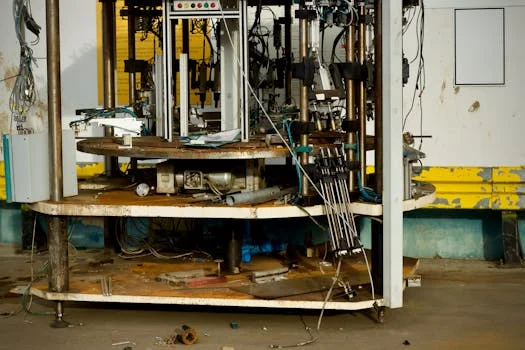
Once you've diagnosed the failure, follow these repair procedures to minimize downtime. Each fix includes safety precautions, required tools, and post-repair validation steps. For complex repairs (e.g., structural welding), consult a certified technician.
Rake Jamming
- Safety first:
- Lock out/tag out (LOTO) the motor and control panel.
- Wear cut-resistant gloves and safety glasses.
- Reverse rotation:
- Engage reverse rotation on the VFD for 5-10 seconds to dislodge debris.
- Monitor torque; stop if it exceeds 90% of max.
- Manual debris removal:
- Use a hook tool to remove wrapped rags or fibrous materials.
- Avoid sharp tools that could damage rake teeth.
- Torque limiter adjustment:
- Set torque limiter to 85% of max (e.g., 3.4 Nm for a 4 Nm max motor).
- Test with a torque wrench to confirm setting.
- Validation:
- Run the screen for 10 minutes and monitor torque (target: <70% of max).
- Check pressure differential (target: <120 mm H₂O).
Screen Bypass
- Temporary bypass setup:
- Install a bypass gate or manual screen upstream to divert flow during repairs.
- Ensure bypass capacity matches peak flow (e.g., 120% of design).
- Screen panel replacement:
- Remove damaged panels using a socket wrench (torque: 40 Nm for 316L bolts).
- Inspect adjacent panels for damage; replace if holes >5 mm.
- Panel installation:
- Align new panels with existing ones, ensuring gaps <3 mm.
- Tighten bolts to 40 Nm (316L) or 30 Nm (carbon steel).
- Validation:
- Run the screen for 30 minutes and test TSS downstream (target: <20% increase).
- Check pressure differential (target: 80-120 mm H₂O).
Corrosion Holes
- Patch welding (316L stainless steel):
- Preheat the area to 150°C using a propane torch.
- Weld using 316L filler rod and TIG welding (argon gas flow: 10-15 L/min).
- Post-weld heat treatment: 650°C for 1 hour, then air cool.
- Temporary patch (carbon steel):
- Clean the area with a wire brush and apply a corrosion-resistant epoxy (e.g., Belzona 1111).
- Allow 24 hours to cure before resuming operation.
- Validation:
- Perform ultrasonic testing to confirm patch thickness >2 mm (316L).
- Run the screen for 1 hour and check for leaks.
Motor Overload
- Thermal overload reset:
- Locate the overload relay on the motor starter and press the reset button.
- Wait 5 minutes before restarting to allow the motor to cool.
- VFD parameter adjustment:
- Set acceleration time to 10-15 seconds (default: 5 seconds).
- Set current limit to 105% of FLA (e.g., 29A for a 10HP motor).
- Load reduction:
- Manually remove debris from the screen to reduce torque.
- Check chain tension; adjust if elongation >2%.
- Validation:
- Monitor motor current for 30 minutes (target: <100% FLA).
- Check winding temperature (target: <90°C).
Repair vs. Replacement: Cost-Benefit Analysis for Step Screens
Deciding whether to repair or replace a failed step screen depends on failure type, equipment age, and long-term costs. This section provides a cost-benefit framework with labor rates, part costs, and performance recovery metrics. Use the table below to compare options for your specific failure mode.
| Factor | Repair | Replacement |
|---|---|---|
| Cost | $1,200-$5,000 (labor: 4-8 hrs @ $80-$120/hr + parts) | $15,000-$40,000 (screen) + $3,000-$8,000 (installation) |
| Downtime | 4-12 hours | 8-24 hours |
| Performance Recovery | 70-90% of original efficiency | 95-100% of original efficiency |
| Lifespan Extension | 6-12 months | 10-15 years |
| Common Part Costs |
|
N/A |
Decision Framework: Repair or Replace?
Use this flowchart to evaluate your step screen's condition:
- Is the failure mechanical (e.g., rake jamming, chain elongation)?
- Yes: Repair if equipment age <8 years and cost <$3,000.
- No: Proceed to next question.
- Is the failure structural (e.g., corrosion holes, weld cracks)?
- Yes: Replace if corrosion >50% of panels or cracks >20 mm.
- No: Proceed to next question.
- Is the failure electrical (e.g., motor burnout, PLC faults)?
- Yes: Repair if motor age <5 years and cost <$2,500.
- No: Replace if equipment age >10 years or cumulative repair costs >$10,000.
Case Example: Food Processing Plant
A food processing plant in California faced recurring rake jamming and corrosion holes in a 6-year-old step screen. Repair costs totaled $2,800 (rake teeth + patch welding), restoring 85% efficiency. Replacement would have cost $22,000 with 98% efficiency recovery. The plant opted for repair, extending the screen's lifespan by 18 months before replacement.
Preventive Maintenance Schedule for Step Screens
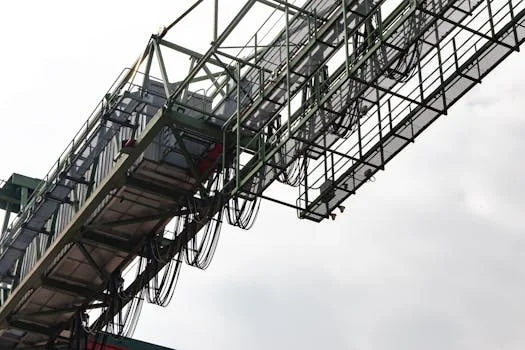
Preventive maintenance (PM) extends step screen lifespan by 30-50% and reduces unplanned downtime by 70%. This schedule is tailored for industrial plants with high solids loading (TSS >500 mg/L) and includes daily, weekly, monthly, quarterly, and annual tasks. Record all measurements in a logbook for trend analysis.
| Frequency | Task | Tools/Equipment | Acceptable Range |
|---|---|---|---|
| Daily |
|
Flashlight, pressure gauges | Differential: 80-120 mm H₂O |
| Weekly |
|
Tape measure, ammeter, torque wrench | Teeth height: >50% of original Chain sag: <15 mm Current: <100% FLA |
| Monthly |
|
Grease gun, torque wrench, thermal imaging camera | Bolt torque: 40 Nm (316L) Connection temp: <60°C |
| Quarterly |
|
Ultrasonic tester, laptop with PLC software | Panel thickness: >2 mm (316L) VFD settings: per manufacturer |
| Annually |
|
Megohmmeter, magnetic particle tester, thermal imaging camera | Insulation resistance: >1 MΩ Chain elongation: <2% |
Pro Tips for Industrial Plants
- High-grit applications: Increase weekly chain tension checks to twice weekly. Grit accelerates wear, reducing chain lifespan by 30-40%.
- High-chloride wastewater: Perform ultrasonic testing every 6 months. Chloride levels >500 mg/L increase corrosion rates by 2-3x.
- Peak flow periods: Monitor pressure differentials daily during production peaks. A meat processing plant reduced bypass events by 50% after installing a differential alarm at 100 mm H₂O.
Case Study: Restoring 95% Uptime After Step Screen Failure
A food processing plant in Texas experienced a 50% drop in step screen efficiency, leading to compliance violations and production slowdowns. The plant's 5-year-old step screen (316L stainless steel) suffered from rake jamming, corrosion holes, and motor overloads. Here's how the team restored performance:
Diagnosis
- Torque spikes: VFD logs showed torque reaching 85% of max (4 Nm) during peak flows.
- Pressure differential: Increased from 120 mm H₂O to 200 mm H₂O over 3 months.
- Corrosion holes: Ultrasonic testing revealed 1.5 mm thickness in 3 panels (original: 3 mm).
- Motor current: Spiked to 115% FLA (32A) during jams.
Fixes Implemented
- Rake teeth replacement: Installed new teeth ($280) and adjusted torque limiter to 80% of max (3.2 Nm).
- Corrosion patch welding: Welded 6 holes >10 mm using 316L filler rod. Post-weld thickness: 2.8 mm.
- Chain tensioning: Adjusted chain sag to 10 mm (original: 20 mm).
- VFD parameter adjustment: Set current limit to 105% FLA (29A) and acceleration time to 12 seconds.
Results
- Efficiency: Restored to 95% of original (TSS removal: 32% → 30%).
- Pressure differential: Reduced to 120 mm H₂O.
- Uptime: Improved from 70% to 95% over 6 months.
- Cost savings: $1,200 in repairs vs. $22,000 for replacement.
Lessons Learned
- Weekly torque monitoring: The plant now logs torque daily during peak flows, preventing jams before they occur.
- Quarterly ultrasonic testing: Scheduled testing every 6 months to catch corrosion early.
- Flow equalization: Installed a 5,000-gallon tank to reduce peak flows from 130% to 110% of design capacity.
Frequently Asked Questions
What is the purpose of step screens in industrial wastewater treatment?
Step screens remove 20-35% of suspended solids (TSS) and biochemical oxygen demand (BOD) at the headworks, protecting downstream equipment like pumps, grit chambers, and biological treatment systems. In industrial plants, they capture rags, plastics, and organic debris that could clog pipes or damage machinery. For example, a food processing plant reduced pump maintenance costs by 40% after installing a step screen with 3 mm openings (HydropureWater field data).
How do I know if my step screen is failing?
Common signs of step screen failure include:
- Torque spikes: >80% of max torque or motor current >110% FLA.
- Pressure differential: >150 mm H₂O (indicates clogging) or <50 mm H₂O (indicates bypass).
- TSS increase downstream: >20% in the grit chamber.
- Unusual noises: Grinding or squealing from the motor or chain.
- Visible damage: Corrosion holes >5 mm, rake teeth wear >50%, or chain elongation >2%.
What are the most common causes of step screen failures in industrial plants?
The top 3 causes account for 85% of failures:
- Solids overload: TSS >500 mg/L or rags >10% by volume. A meat processing plant reduced failures by 50% after installing a GX Series Rotary Mechanical Bar Screen for pre-screening.
- Corrosion: Carbon steel loses 3-5 mm/year in untreated wastewater. A chemical plant switched to 316L, reducing corrosion-related failures by 70%.
- Mechanical wear: Rake teeth wear >50% or chain elongation >2%. A pulp mill extended chain lifespan by 30% after switching to a high-strength alloy.
How can I prevent step screen corrosion?
Prevent corrosion with these strategies:
- Material selection: Use 316L stainless steel for chloride levels >500 mg/L. A textile plant reduced corrosion by 60% after switching from 304 SS.
- Coatings: Apply epoxy or ceramic coatings to carbon steel screens. A food plant extended screen lifespan by 2 years using a ceramic coating.
- pH control: Maintain pH 6.5-7.5 to reduce corrosion rates. A pharmaceutical plant neutralized wastewater, cutting corrosion by 45%.
- Cathodic protection: Install sacrificial anodes for carbon steel screens. A paper mill reduced corrosion by 30% using zinc anodes.
What is the typical lifespan of a step screen in industrial wastewater?
Lifespan varies by material and application:
- Carbon steel: 3-5 years (corrosion rate: 3-5 mm/year).
- 304 stainless steel: 8-12 years (corrosion rate: 0.1-0.5 mm/year).
- 316L stainless steel: 10-15 years (corrosion rate: 0.05-0.2 mm/year).
In high-solids applications (e.g., food processing), lifespan may be 20-30% shorter due to mechanical wear. A dairy plant extended its 316L screen lifespan from 8 to 12 years by implementing a quarterly ultrasonic testing program.
How do I adjust the torque limiter on my step screen?
Follow these steps to adjust the torque limiter:
- Lock out/tag out (LOTO) the motor and control panel.
- Locate the torque limiter on the motor shaft or gearbox.
- Use a torque wrench to adjust the setting. For most industrial step screens, set the limiter to 80-85% of max torque (e.g., 3.2-3.4 Nm for a 4 Nm max motor).
- Test the screen under load and monitor torque. Adjust as needed to prevent jamming while avoiding nuisance trips.
- Record the setting in your maintenance log.
What are the signs of motor overload in a step screen?
Signs of motor overload include:
- Thermal trips: The motor shuts off due to overheating.
- Current spikes: Current draw >110% FLA for >30 seconds (e.g., 31A for a 10HP motor with FLA: 28A).
- Burning smell: Overheated windings or bearings.
- Reduced speed: The screen operates slower than normal.
- VFD alarms: Error codes like "Overcurrent" or "Overload."
To diagnose, use a clamp-on ammeter to measure current draw and a thermal imaging camera to check winding temperature (target: <90°C).
How do I measure chain elongation in a step screen?
Follow these steps to measure chain elongation:
- Lock out/tag out (LOTO) the screen.
- Clean the chain to remove debris.
- Measure 10 pitches (links) of the chain using a tape measure. For example, if the chain pitch is 25 mm, the measurement should be 250 mm for a new chain.
- Compare the measurement to the original length. Elongation >2% (e.g., 255 mm for a 250 mm original length) indicates the need for replacement.
- Check chain sag. For a 1-meter span, sag >15 mm indicates elongation.
What are the common PLC error codes for step screens?
Common PLC error codes vary by manufacturer:
| Manufacturer | Error Code | Description | Solution |
|---|---|---|---|
| Siemens | F001 | Overcurrent | Check for jams, reduce load, or replace motor. |
| Siemens | F003 | Overload | Adjust VFD settings or reduce solids loading. |
| Allen-Bradley | E001 | Fault | Check wiring, reset PLC, or replace faulty components. |
| Allen-Bradley | E003 | Overload | Reduce load or adjust VFD parameters. |
How do I perform ultrasonic thickness testing on a step screen?
Ultrasonic thickness testing (UTT) measures corrosion in screen panels and rake arms. Follow these steps:
- Prepare the surface:
- Clean the area with a wire brush to remove rust or debris.
- Apply couplant (e.g., glycerin) to improve sound wave transmission.
- Calibrate the tester:
- Use a calibration block with known thickness (e.g., 3 mm for 316L).
- Adjust the tester to match the material (e.g., stainless steel).
- Measure thickness:
- Place the probe on the surface and record the reading.
- Measure 10 points per panel, focusing on corrosion-prone areas (e.g., welds, bends).
- Interpret results:
- Replace panels when thickness drops below 2 mm (316L) or 4 mm (carbon steel).
- Record measurements in your maintenance log for trend analysis.
What is the cost of replacing a step screen in an industrial plant?
Replacement costs vary by capacity and material:
- Screen cost: $15,000-$40,000 (316L stainless steel, 500-2,000 m³/day capacity).
- Installation: $3,000-$8,000 (labor: 8-24 hours).
- Downtime: 8-24 hours, depending on plant size.
- Ancillary costs: $2,000-$5,000 for flow diversion, permits, or temporary screens.
For example, a food processing plant in Ohio replaced a 1,000 m³/day step screen for $28,000, including installation and downtime. The new screen reduced TSS in downstream processes by 35%.
How can I improve the efficiency of my step screen?
Improve efficiency with these strategies:
- Optimize screen openings: Use 2-3 mm openings for TSS >500 mg/L. A meat processing plant increased TSS removal from 25% to 35% after switching from 6 mm to 3 mm openings.
- Adjust rake speed: Increase speed for high-solids loads (e.g., 10-15 RPM for TSS >800 mg/L). A dairy plant reduced jams by 40% after increasing speed from 8 RPM to 12 RPM.
- Install flow straighteners: Reduce turbulence and improve solids capture. A paper mill improved efficiency by 20% after installing straighteners.
- Use chemical pretreatment: Add polymers to agglomerate solids. A chemical plant reduced screen loading by 30% using an automated chemical dosing system.
- Implement preventive maintenance: Follow the schedule in this guide to catch issues early. A beverage plant reduced downtime by 70% after adopting a PM program.