What is changing in Nha Trang’s sewage infrastructure in 2026?
Domestic sewage treatment in Nha Trang is moving toward greater separation of sewage and stormwater. VnEconomy reported that Decision No. 3402/QD-UBND approved investment intent for a project costing more than VND 232 billion, with implementation planned for 2026–2028 in northern and southern Nha Trang. Báo Khánh Hòa reported in June 2026 that the Southern Plant serves 40,000 m³/day and the Northern Plant more than 14,000 m³/day. Property-level decisions still depend on connection availability, timing, site constraints and the required discharge route.
The decisive change is not simply additional treatment capacity. The approved project is intended to separate and collect domestic sewage currently travelling through combined sewers and convey it to the northern and southern wastewater treatment plants. VnEconomy describes new or renovated separation chambers and pumping stations, together with separate sewer routes and changes to stormwater outfalls. This is a network intervention: it depends on public works, pumping and conveyance before a property can discharge into the separated system.
Existing municipal capacity also does not establish site-level serviceability. Báo Khánh Hòa’s June 2026 report identifies the Southern Nha Trang Wastewater Treatment Plant at 40,000 m³/day and the Northern Nha Trang Plant at more than 14,000 m³/day. Both reportedly treat domestic wastewater to discharge standards within an eight-hour cycle, but that cycle describes the municipal plants and should not be transferred to a package system without a project-specific guarantee.
For a hotel, residence or commercial development, the infrastructure programme should trigger an early connection check rather than an immediate equipment order. Ask the responsible authority whether a connection point exists or is planned, the expected availability date, applicable connection procedures, and whether the receiving system can accept the proposed flow and load. Until those answers are documented, an on-site system may need to remain as the design basis. The broader domestic sewage treatment equipment selection guide is useful for process screening, but it cannot replace a site-specific connection confirmation.
Central sewer connection or an on-site treatment plant?
Central sewer connection is the preferred route only where a usable connection is technically available, the receiving network can accommodate the proposed load, and the applicant accepts the applicable process and obligations. If any of those conditions fails, decentralized sewage treatment transfers collection, operation, maintenance, effluent-discharge and compliance responsibility to the property owner or its appointed operator.
The World Bank’s Nha Trang City Subproject Environmental and Social Impact Assessment shows why treatment capacity and site serviceability must be considered separately. Its investment components included drainage and flood control, wastewater collection, pumping stations and wastewater treatment. A property can therefore be close to a treatment plant yet still lack a gravity sewer, adequate hydraulic capacity, a legal connection point or timely network delivery. The assessment also describes Nha Trang as a coastal-city project where drainage, collection and pumping must operate as an integrated system.
The 2026–2028 works provide planning evidence, not a guarantee of immediate access for every northern or southern property. VnEconomy reports area-specific construction involving separation chambers, pumping stations and sewer conveyance. A developer should obtain the applicable connection approval and schedule before treating the public network as the project’s discharge solution.
| Decision factor | Centralized sewer connection | On-site treatment plant |
|---|---|---|
| Connection feasibility | Requires a physically available or planned connection point and confirmation from the responsible authority. | Can serve a site without waiting for central sewer availability, subject to site, permit and discharge-route approval. |
| Collection infrastructure | Public network, local pumping and conveyance must provide the required service. | Owner must provide local collection, pumping where needed, treatment and final effluent disposal. |
| Operating responsibility | Central facilities operate the municipal network; the property retains connection and downstream obligations. | Owner or operator assumes treatment-plant operation, maintenance, sludge removal, monitoring and permit compliance. |
| Main procurement risk | Connection timing, connection charges or procedures, and unconfirmed network capacity. | Incorrect sizing, civil-work cost, odor, sludge handling, power reliability and discharge compliance. |
| Best fit | A serviced site with confirmed access, suitable load and an accepted connection process. | A decentralized site needing controlled treatment or a specific reuse/discharge solution. |
Process screening follows this decision. A buried A/O package sewage treatment plant can serve a development unable to obtain a practical central connection. An MBR wastewater treatment system warrants separate evaluation where compactness or higher-quality reuse is central to the brief. Neither route should be selected before the discharge route and design duty are defined.
Compare package A/O, MBR and conventional biological treatment

Package A/O and MBR should be compared by process duty, physical footprint, required effluent use, operator involvement and expansion provisions—not by membrane status alone. The key technical difference is how much treatment and solids separation occur within the packaged footprint.
HydropureWater’s verified catalog describes the WSZ configuration as anoxic/aerobic contact oxidation, sedimentation and disinfection integrated in one buried package unit. It is fully automated and has a published handling range of 1–80 m³/h. Its value in a Nha Trang development is the integration of multiple treatment stages in a below-grade unit, but that does not remove the need for local collection, power, sludge removal, odor control and an authorized effluent route.
The catalog describes the MBR alternative as activated sludge combined with submerged PVDF membrane filtration. It states filtration below 1 μm, a 60% smaller footprint than conventional systems and a capacity range of 10–2,000 m³/day. These are product-catalog attributes, not site guarantees. An MBR may be appropriate where compactness or high-quality reuse dominates, but it requires evaluation of membrane maintenance, pretreatment needs, controls, energy use and operator capability.
| Selection criterion | Buried package A/O | MBR | Conventional biological treatment |
|---|---|---|---|
| Process definition | Anoxic/aerobic contact oxidation with sedimentation and disinfection in one buried package unit. | Activated sludge with submerged PVDF membrane filtration. | Biological treatment, settling and associated auxiliary systems implemented as a broader installation. |
| Catalogued capacity | 1–80 m³/h. | 10–2,000 m³/day. | No supplied catalog range for comparison. |
| Footprint proposition | Buried installation can leave landscaping above the unit. | Catalog states 60% smaller footprint than conventional systems. | No comparative footprint figure was supplied. |
| Effluent and reuse focus | Package A/O with disinfection; suitability depends on the required standard and use. | Catalog states filtration below 1 μm; reuse suitability still requires project verification. | Treatment and clarification are generally established project functions. |
| Main buyer checks | Local loading, odor, sludge withdrawal, controls and discharge route. | Solids management, membrane maintenance, power, pretreatment and monitoring. | Civil footprint, process integration, staffing and future expansion. |
Conventional biological treatment remains relevant when the development has sufficient land, a clear operating model and an established effluent specification. Package A/O may reduce above-ground congestion for decentralized medium-scale duties. MBR may justify closer scrutiny when space or reuse is the governing constraint.
For compliance, the World Bank ESIA names QCVN 14:2008/BTNMT as the domestic-wastewater technical regulation. Because that document is an older reference, buyers must confirm the current applicable regulation, any superseding requirement and the discharge permit for the specific project. A supplier’s statement that its equipment “meets standards” is not a substitute for checking the receiving point and current legal basis.
Size the system from actual wastewater demand
A correctly sized plant starts with a documented design flow and loading basis, not floor area or a catalogue capacity selected by appearance. The sizing brief should reconcile average daily flow, peak demand, wastewater characteristics, operating pattern, retention needs and projected growth.
For a hotel or resort, request occupancy forecasts and seasonal operating data; the selected system must reflect peak periods rather than annual averages alone. For residential developments, obtain unit and population projections. For commercial properties, request peak staffing and customer-flow information. Also document water-saving fixtures or other changes that materially alter wastewater generation.
The published ratings use different units: HydropureWater’s WSZ catalog states 1–80 m³/h, while its MBR catalog states 10–2,000 m³/day. Buyers must ask each bidder to demonstrate how its rating relates to the design duty, including whether the published figure is a throughput, treatment-cycle or other catalog parameter. The figures must not be compared as if they were identical capacity definitions.
| Required sizing input | Information the buyer must obtain | Design consequence |
|---|---|---|
| Occupancy and demand | Hotel occupancy, residential population, commercial staffing and customer-flow forecasts. | Establishes expected and peak wastewater generation. |
| Wastewater characteristics | Expected domestic wastewater composition and any discharge or reuse requirement. | Defines treatment objectives, loading and monitoring needs. |
| Operating pattern | Operating hours, seasonal variation and acceptable treatment flexibility. | Determines process sizing, equalization and control requirements. |
| Site and growth | Available footprint, future expansion, access, power and utility constraints. | Checks physical feasibility and maintainability. |
| Residuals and utilities | Sludge-removal route, odor-control basis, backup-power requirement and effluent-monitoring plan. | Prevents the treatment unit from being treated as the complete system. |
Sludge handling is part of sizing because clarification and membrane or biomass processes generate residuals requiring collection, storage and removal. Odor control, reliable power, backup strategy and effluent monitoring also belong in the design brief. The supplied research contains no site-specific flow, loading or retention values for Nha Trang, so any numerical design would be invented until the developer supplies operating data.
A package sewage treatment plant comparison can help structure the tender, while a plate-and-frame filter press may be relevant to the broader residuals-handling design. Neither substitutes for the site’s mass-balance and hydraulic calculations.
Design for Nha Trang’s coastal site conditions
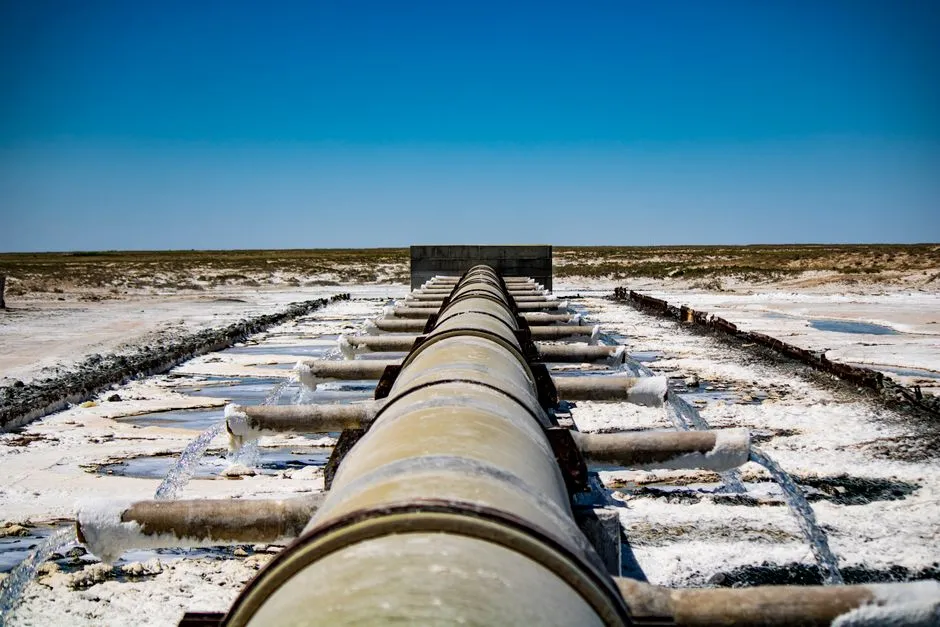
Coastal siting determines whether an otherwise suitable treatment unit can be installed, drained, maintained and operated reliably. The World Bank’s Nha Trang ESIA addresses flooding, drainage, pumping and wastewater collection within a coastal-city context, making flood levels, groundwater, access and utility routes mandatory design checks.
No supplied source establishes current site-specific flood elevations, groundwater levels or drainage conditions for an individual property. Those values must come from surveys and authoritative site information. The design should examine whether excavation and below-grade tanks interact with groundwater, whether stormwater can enter the process, where overflow would go, and whether power and access routes remain usable under local conditions.
HydropureWater’s verified WSZ catalog states that the package can be installed below grade with landscaping above or mounted on a trailer for mobile deployment. Below-grade installation can reduce surface congestion, but it also makes waterproofing, access, lifting provisions, odor control and sludge extraction more important. A mobile configuration does not remove the need for a compliant collection and discharge arrangement.
Before ordering equipment, resolve these site and permitting questions:
- Identify the proposed discharge point, receiving water and route from the plant to that point.
- Establish flood levels, groundwater conditions, excavation needs and stormwater separation requirements.
- Set the odor setback and confirm where vents, screens, sludge removal and maintenance access can be located.
- Map power, controls, telemetry and emergency-power arrangements.
- Confirm vehicle and equipment access for maintenance and residual removal.
- Check the discharge permit pathway for the specific receiving point and intended reuse, if any.
Coarse screening equipment may form part of the train where the wastewater characteristic requires it. The catalogued rotary mechanical bar screen can be evaluated as part of pretreatment, but the need and hydraulic duty must be established by the design rather than added automatically. The buried A/O package sewage treatment plant should remain a configurable proposal whose civil arrangement reflects the surveyed site.
Build a procurement-ready treatment and compliance plan
A procurement document should make bidders demonstrate the complete treatment solution, including the basis of design and evidence supporting compliance. Product selection, price and delivery terms should follow that technical review rather than substitute for it.
Request the proposed process, duty basis, hydraulic and organic loading assumptions, equipment dimensions, materials, power demand, automation, odor controls, sludge handling, commissioning tests and O&M support. Also require site-specific drawings covering collection, process equipment, pumping, piping, controls, drainage, access and discharge. A supplier that cannot explain how its rating maps to the project’s peak and average demand has not supplied a complete offer.
For compliance evidence, require the proposed discharge route and permit to be mapped to the current Vietnamese regulatory framework. The World Bank ESIA identifies QCVN 14:2008/BTNMT for domestic wastewater, but the current permit position for the specific discharge point must be confirmed. Include applicable discharge limits, sampling methods, monitoring frequency, reporting and corrective-action duties. Supplier certificates and generic laboratory results should be separated from evidence that the proposed installation can meet the permit.
Báo Khánh Hòa’s June 2026 statement that the two municipal plants treat domestic wastewater to discharge standards within eight hours is useful only as a description of those plants. Do not convert it into an eight-hour treatment guarantee for package equipment or use it to infer site-specific performance.
| Procurement stage | Required records | Acceptance focus |
|---|---|---|
| Pre-tender | Design-flow basis, occupancy or population forecast, site survey, discharge-route assessment and connection correspondence. | The duty and compliance route are defined before equipment selection. |
| Tender evaluation | Process proposal, calculations, drawings, equipment data, power demand, automation, odors, sludge handling and O&M plan. | Technical compliance and whole-life responsibilities are clear. |
| Installation | Civil-works records, pipe and pump records, electrical and control schematics, inspection results and as-built drawings. | Installed equipment and utilities match the approved design. |
| Commissioning | Hydraulic testing, biological start-up, controls check, alarm testing, operator training and sampling records. | The complete train operates safely and meets the agreed acceptance criteria. |
| Handover and O&M | Manuals, certificates, spare parts, monitoring plan, contact responsibilities and maintenance schedule. | Ownership, monitoring, sludge removal and corrective actions are transferred formally. |
For operating support, compare owner-controlled operation with outsourced wastewater plant operation services. The service scope should identify who monitors performance, performs routine maintenance, removes sludge, responds to alarms and provides regulatory records. These responsibilities must be assigned before handover, not left implicit.
Frequently Asked Questions
Is it better in Nha Trang to connect to the municipal sewer or install a private sewage treatment plant?
Choose the municipal sewer when the responsible authority confirms a connection point, acceptable load and a workable delivery date, and the property can meet the applicable connection process. Consider on-site treatment when that access is unavailable or impractical, provided the owner accepts responsibility for collection, O&M, sludge removal, discharge and compliance. The 2026–2028 separation programme may improve access, but it does not establish immediate service for every parcel.
How much does a domestic sewage treatment system cost in Nha Trang?
The supplied research provides no defensible project quotation. Request a price based on design flow, peak demand, treatment process, excavation, collection piping, pumping, controls, odor controls, sludge removal, commissioning, permit support and O&M. Ask bidders to separate equipment, civil works, electrical works, installation, commissioning and recurring operating costs; otherwise the offers will not be comparable.
Which treatment system fits a hotel or resort with seasonal occupancy?
Model seasonal peak demand and the required effluent use before selecting a process. A package A/O system may fit a decentralized medium-scale duty, while MBR needs a separate assessment where compactness and high-quality reuse dominate. For both options, verify the process duty at peak occupancy and confirm that the treatment and storage configuration remains workable during lower-demand periods.
How do I verify that an Nha Trang supplier’s equipment complies with local wastewater rules?
Request a permit review for the proposed receiving point, confirmation of the currently applicable standard, design calculations, equipment data, commissioning records and monitoring results. QCVN 14:2008/BTNMT is named in the World Bank ESIA, but the buyer must verify the current legal and permit position. A generic compliance certificate does not demonstrate that the proposed discharge route is permitted.
How long should a packaged sewage treatment plant take to install in Nha Trang?
The supplied research provides no delivery or installation period. Obtain separate commitments for manufacturing, shipping, civil works, mechanical and electrical installation, commissioning, operator training and permit dependencies. The contractual programme should state which party controls each dependency and what constitutes acceptance. The package sewage treatment plant selection reference can support process framing, but it is not evidence of a Nha Trang delivery time.