What Wastewater Streams a Valenzuela Data Center Must Treat
A Valenzuela data center needs source-segregated treatment rather than one generic industrial effluent treatment plant. Cooling-tower blowdown, RO reject, generator cooling water, floor wash, humidifier bleed, sanitary wastewater and typhoon runoff have different chemistry, flow patterns and disposal routes. The technical basis is the site water balance, the receiving-water classification and the intended reuse destination—not a generic cooling-load template. A Valenzuela project should therefore begin by metering each stream, confirming seasonal source-water quality and identifying the permitted outfall before selecting equipment.
Cooling-tower blowdown is normally the largest stream. It may contain 1,200–6,000 mg/L TDS, 10–50 mg/L suspended solids, residual biocides, scale inhibitors and corrosion products (HydropureWater field data, 2026). The blowdown ratio is calculated as 1/(CoC−1): 25% at 4 cycles of concentration (CoC) and 20% at 6 CoC (Genesis Water Technologies, 2026). These are theoretical ratios; the operating design must use measured makeup, evaporation and discharge data.
RO reject should normally remain visible as a high-salinity stream. Generator cooling water, floor wash and humidifier bleed may contain oil and should pass through oil-removal pretreatment before membrane treatment. An oil-removal and flotation stage can protect downstream equipment where these streams are segregated. Typhoon runoff needs equalization and suspended-solids removal because its flow and solids load are episodic. Sanitary wastewater requires its own treatment and should not be diluted into an industrial reuse train without an approved process basis.
| Design stream | Principal concern | RFQ treatment requirement |
|---|---|---|
| Cooling-tower blowdown | TDS, suspended solids, treatment-chemical residuals | Equalization, filtration and quality-based recovery assessment |
| RO reject | Concentrated dissolved solids | Segregated flow measurement; defined blend or separate treatment route |
| Generator cooling water, floor wash and humidifier bleed | Oil, hydrocarbons and suspended solids | Oil removal before membrane systems |
| Sanitary wastewater | Organic matter and pathogens | Separate sanitary treatment and disposal route |
| Typhoon runoff | High suspended solids, debris and variable flow | Equalization, screening and TSS removal |
Why Valenzuela’s Tropical Operating Conditions Change the Treatment Design
Metro Manila’s mean annual relative humidity of 78–85% suppresses evaporative cooling efficiency and concentrates blowdown faster than dry-climate benchmarks (HydropureWater, 2026). This is a regional baseline, not a Valenzuela site measurement. The design implication is that source-water chemistry, cooling-loop operating temperature, evaporation and chemical programme must be verified before a recovery target is fixed.
Philippine guidance reports Manila Bay salinity intrusion during February–May, when surface-intake TDS reaches 300–600 mg/L, and states that concentration at 4–6 CoC can produce 1,200–6,000 mg/L blowdown TDS (HydropureWater, 2026). A Valenzuela source may not behave like a Manila Bay intake, but the seasonal range shows why a single initial sample is insufficient. Dry- and wet-season testing should cover TDS, hardness, silica and chloride.
Warm, biologically active water increases the risk of membrane fouling. A practical pretreatment sequence is multi-media filtration followed by UF pretreatment for data center cooling blowdown, then RO where dissolved-solids removal is required. UF provides a physical barrier before RO, while multi-media filtration captures larger solids and reduces the load carried into the UF stage.
Energy must be considered alongside water recovery. In the modeled wastewater-reuse scenario, treatment had approximately twice the global warming potential of the freshwater case, and treatment energy accounted for roughly 80% of the difference (Open Engineering Inc., 2026). Higher cycles of concentration may reduce blowdown and chemical consumption, but the selected train must demonstrate a net advantage under the actual site operating profile.
Compare the Four Treatment Trains for Cooling Blowdown
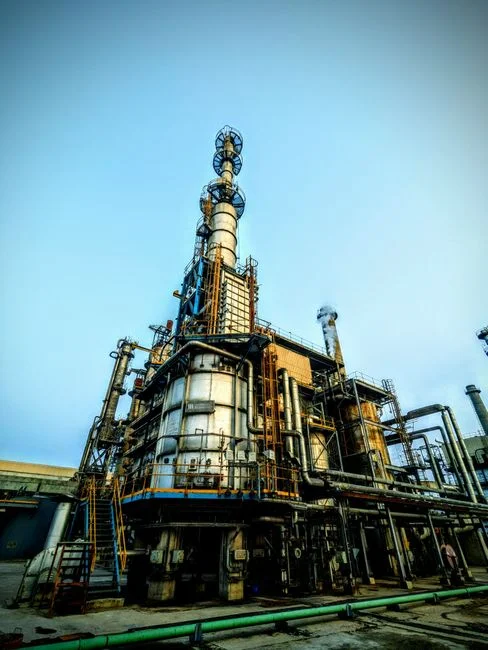
Filtration, UF plus RO, NF polishing and zero liquid discharge solve different problems. The correct train follows the confirmed treatment objective: suspended-solids control, TDS reduction, hardness-selective removal or complete liquid-waste elimination. It should not be selected from a generic data-center template.
Option 1 uses a 10–25 μm self-cleaning side-stream filter on 1–5% of circulation flow to hold suspended solids below 15 mg/L (HydropureWater, 2026). It does not reduce TDS. It can improve cooling-loop control but cannot resolve a confirmed TDS exceedance by itself.
Option 2 combines multi-media filtration, UF and RO. The supplied Philippine figures are 50–85% recovery, 10–50 mg/L permeate TDS and $1.50–$3.00 per 1,000 gallons operating cost (HydropureWater, 2026). This is the baseline option where untreated blowdown exceeds the confirmed discharge limit or reuse to cooling makeup is required. The industrial RO system for blowdown recovery should be sized only after measured stream flows and source-water testing are available.
Option 3 adds NF where hardness, rather than total TDS, is the binding constraint. NF operates at 75–150 psi, recovers 70–85% of feed and produces permeate at 30–50% of feed TDS (HydropureWater, 2026). Membrane-compatibility testing is still necessary because NF and RO brine chemistry, scaling tendency and disposal route must be evaluated together.
Option 4 adds MVC brine concentration for zero liquid discharge (ZLD). The supplied values are 95–98% recovery, distillate below 10 mg/L TDS and 15–25 kWh per 1,000 gallons (HydropureWater, 2026). This option is justified when liquid discharge is restricted or a tenant contract requires ZLD; it is not the default response to ordinary blowdown volume.
Scale also affects commercial feasibility. Hyperscale RO and ion-exchange infrastructure may not be economical for smaller enterprise or colocation facilities because its capital and operating complexity may not fit available staffing (Genesis Water Technologies, 2026). Modular equipment right-sized to measured Valenzuela flows may be more practical.
| Option | Supplied performance basis | Appropriate use | Main limitation |
|---|---|---|---|
| Side-stream filtration | 10–25 μm filter; 1–5% of circulation flow; suspended solids below 15 mg/L | Cooling-loop solids control where no TDS exceedance exists | Does not reduce TDS |
| UF + RO | 50–85% recovery; 10–50 mg/L permeate TDS; $1.50–$3.00 per 1,000 gallons | TDS reduction, discharge compliance and cooling reuse | Requires pretreatment and site-water validation |
| UF + RO + NF | NF at 75–150 psi; 70–85% recovery; permeate at 30–50% of feed TDS | Hardness or sulfate controls the required recovery | Adds capital, energy and brine-management requirements |
| UF + RO + MVC | 95–98% recovery; distillate below 10 mg/L TDS; 15–25 kWh per 1,000 gallons | Restricted discharge or contractual ZLD | Material electrical demand and solids-disposal obligation |
Build a Valenzuela-Compliant Water Reuse and Discharge Strategy
The applicable discharge limit cannot be selected from a national standard alone. The supplied typical DENR DAO 2021-19 industrial-effluent TDS ceiling is about 1,500 mg/L, but the receiving-water classification and local permit must also be checked, along with parallel chloride, sulfate and biocide-residual controls (HydropureWater, 2026).
The supplied reference to DENR Administrative Order 2016-08 describes a generally applicable Class C TDS standard of 1,000 mg/L and permits stricter local limits (HydropureWater, 2026). The 2021-19 and 2016-08 references should be reconciled with the regulator rather than treated as interchangeable. The buyer should obtain the outfall location, receiving-water classification, current discharge permit and any basin-specific conditions before finalizing the process basis.
Reuse water has a different quality requirement from discharge water. The supplied targets for cooling-tower makeup are TDS 500–1,500 mg/L, suspended solids 10–25 mg/L, pH 6.5–8.5 and silica below 150 mg/L (HydropureWater, 2026). UF plus RO can supply process water or cooling makeup when its permeate meets the tenant’s chemistry specification. Advanced ZLD is justified only when restricted discharge or a contractual zero-liquid-discharge requirement makes it necessary.
Water-saving claims should be tested against energy and chemical effects. A 2026 life-cycle assessment found an approximately 0.93 L/m³ indirect water penalty from upstream electricity and chemical inputs in the reuse train—less than 0.1% of the direct displacement benefit (Open Engineering Inc., 2026). That penalty does not eliminate reuse, but energy, chemical production and concentrate management remain decision variables.
| Compliance or reuse question | Evidence to obtain | Design consequence |
|---|---|---|
| Which discharge limit applies? | Receiving-water class, outfall, current permit and local conditions | Sets the required TDS and parameter targets |
| Can treated blowdown become cooling makeup? | Tenant chemistry specification and scaling assessment | Determines whether UF + RO is sufficient or further polishing is required |
| Is ZLD mandatory? | Permit terms and tenant contractual requirements | Adds MVC and requires an electrical-demand review |
| What is the water-balance benefit? | Measured makeup, evaporation, blowdown and recovered reuse flow | Supports both treatment sizing and ROI |
Size the Equipment with Site Data Rather than a Generic Template
Final equipment sizing requires measured water balance and seasonal chemistry, not IT load alone. The RFQ data package should include 12 months of influent data covering dry- and wet-season TDS, hardness, silica and chloride. These parameters determine membrane recovery, antiscalant selection and pretreatment requirements.
Cooling-system measurements should include makeup, evaporation, blowdown, chemical dosing, CoC and peak discharge. Calculate actual blowdown from the measured water balance and compare it with the theoretical 1/(CoC−1) ratio. For the receiving side, provide the outfall location, receiving-water classification, local permit and baseline flow for each stream.
Recovery claims must be checked against actual source-water temperature and chemistry. Conventional BWRO is described as generally limited to 75–80% recovery before silica and calcium-sulfate scaling becomes unmanageable (HydropureWater, 2026). This is a procurement warning, not a Valenzuela guarantee; laboratory or pilot evidence must establish the achievable recovery for the selected source.
Controls should provide automatic chemical dosing, silica-aware antiscalant control and a disinfection strategy suitable for the cooling loop. The supplied Philippine guidance identifies chlorine dioxide or UV as options. An automatic chemical dosing system should be sized from measured blowdown flow, chemical residuals and the approved cooling-water programme rather than catalogue flow.
| Required input | Minimum content | Why it changes the design |
|---|---|---|
| Seasonal source-water analysis | TDS, hardness, silica and chloride across dry and wet periods | Sets recovery, pretreatment and antiscalant basis |
| Measured cooling water balance | Makeup, evaporation, blowdown, CoC and peak discharge | Sets hydraulic capacity and storage requirements |
| Stream segregation data | Flow and chemistry for each wastewater stream | Prevents incompatible co-treatment and omission of front-end units |
| Receiving-water information | Outfall, water classification, permit and baseline conditions | Sets the binding discharge specification |
| Reuse and tenant criteria | Intended destination, water-quality specification and ZLD obligation | Determines whether polishing beyond UF + RO is required |
Compare Capital Cost, Operating Cost and Procurement Risk
The supplied 50,000 GPD BWRO benchmark is $250,000–$500,000 CapEx and $1.50–$3.00 per 1,000 gallons OpEx; the ZLD overlay is estimated at $3–$8 million plus $5–$15 per 1,000 gallons (HydropureWater, 2026). These are comparison benchmarks, not Valenzuela quotations. Scope, source quality, recovery, tanks, buildings, disposal and electrical infrastructure can materially change the result.
ROI should include avoided water purchases and avoided discharge fees, but no Valenzuela tariff or discharge-fee value is supplied. Both must be confirmed through current utility records and the relevant local authority or permit terms before a payback calculation is presented.
Bidders should price source segregation, equalization, oil removal, multi-media filtration, UF, RO, optional NF or MVC, disinfection, controls, sludge handling and standby requirements separately. This avoids hiding a membrane skid behind a turnkey subtotal that omits pretreatment, concentrate or residual-solids management.
Tropical operating conditions create a procurement risk when pretreatment is incomplete. The supplied Philippine benchmark reports membrane-replacement intervals falling from 3–5 years to 12–18 months when essential pretreatment is omitted (HydropureWater, 2026). Guarantees should therefore state nameplate permeate TDS, recovery, electrical load, cleaning intervals and performance at site-water temperature—not only catalogue conditions at 25°C.
| Comparison item | Supplied benchmark | Buyer check |
|---|---|---|
| 50,000 GPD BWRO | $250,000–$500,000 CapEx; $1.50–$3.00 per 1,000 gallons OpEx | Request a site-specific quotation and excluded-work list |
| ZLD overlay | $3–$8 million; $5–$15 per 1,000 gallons OpEx | Confirm electrical demand, concentrate handling and distillate use |
| Membrane life | 3–5 years with effective pretreatment versus 12–18 months when omitted | Ask for cleaning and replacement assumptions under site chemistry |
| ROI inputs | Avoided purchases and discharge fees | Obtain current Valenzuela bills and permit fees before calculating payback |
Decision Framework for Selecting the Right Treatment Package
- If the objective is suspended-solids control and no TDS exceedance exists: evaluate side-stream filtration and cooling-loop operating optimization first.
- If untreated blowdown exceeds the confirmed discharge limit or reuse to cooling makeup is required: evaluate UF plus RO as the baseline treatment train.
- If hardness or sulfate prevents the permitted recovery target: evaluate NF polishing and conduct membrane-compatibility testing.
- If the permit prohibits liquid discharge or a tenant contractually requires ZLD: evaluate UF plus RO plus MVC, then verify the electrical demand against the site supply.
- If recovery, antiscalant dose or equipment capacity remains uncertain: require laboratory and pilot evidence using the Valenzuela source-water chemistry before freezing the design.
This sequence also defines the RFQ boundary: bidders should price the same stream inventory, reuse target, receiving-water basis, measured water balance and performance guarantees. A process should not advance because a modular system is convenient; it should advance because it resolves the confirmed water-quality or reuse constraint.
Frequently Asked Questions
Can filtration alone resolve a cooling-blowdown TDS exceedance?
No. The supplied side-stream filtration option holds blowdown suspended solids below 15 mg/L but does not reduce TDS (HydropureWater, 2026). Use it when the objective is loop clarification, while adding UF plus RO—or another verified desalination step—when the confirmed limit or reuse specification requires dissolved-solids removal.
What budget should a Valenzuela data center use for a 50,000 GPD treatment train?
Use the supplied $250,000–$500,000 BWRO CapEx benchmark and $1.50–$3.00 per 1,000 gallons OpEx only for initial comparison (HydropureWater, 2026). Request a Valenzuela-specific quotation based on measured flows and source chemistry, with sludge handling, electrical works, buildings, controls and concentrate disposal itemized separately. Do not treat the benchmark as a local quotation.
How should suppliers be shortlisted?
Ask each supplier to demonstrate performance using the actual source-water temperature and chemistry, guarantee recovery and permeate TDS, provide tropical-service operating evidence and itemize the complete pretreatment scope. Also request cleaning intervals, membrane-replacement assumptions, electrical demand and site-temperature performance rather than 25°C catalogue ratings.
Should the system be sized from IT load or cooling-tower cycles of concentration?
Use measured water balance and maximum-hour flows. IT load may support cooling-demand estimates, but it does not establish wastewater flow, peak discharge or blowdown chemistry. The final size should reconcile measured makeup, evaporation, blowdown, chemical dosing, CoC and actual stream flows with the theoretical 1/(CoC−1) ratio.
What must be confirmed before choosing between RO and ZLD?
Confirm the receiving-water classification, current discharge permit, local basin conditions and any tenant reuse or zero-liquid-discharge requirement. UF plus RO should be evaluated where high-quality reuse or ordinary permitted discharge is sufficient; MVC should be added only where the verified permit or contract requires it.