Why Norway’s Wastewater Infrastructure Needs Package Treatment Plants
Norway’s 350,000 small-scale treatment plants serve approximately 800,000 people in remote areas, yet aging infrastructure and maintenance gaps pose significant compliance risks under the 2027 EU Urban Waste Water Directive deadline. While the country operates roughly 2,500 municipal wastewater treatment plants, only 400 currently hold discharge permits from County Governors, leaving the majority under municipal oversight where standards for smaller agglomerations are tightening. The EU Urban Waste Water Directive (91/271/EEC) mandates secondary treatment for all agglomerations above 2,000 PE, a requirement that Norwegian authorities must fully implement by 2027 per the EEA 2023 report. For engineers and planners, package plants offer a strategic advantage, reducing the physical footprint by up to 60% compared to conventional activated sludge systems. This is particularly relevant for WSZ series underground package plants for Norwegian municipal projects, which allow for subterranean installation to preserve the aesthetic and environmental integrity of sensitive fjord regions. these systems are engineered for climate resilience, featuring insulated enclosures and internal heating elements designed to maintain biological activity even during sustained -20°C operations in Northern Norway. The urgency for these upgrades is exemplified by the Fuglevik Wastewater Treatment Plant upgrade, which utilizes modular design principles to meet the stringent environmental targets of the Oslo Fjord, serving a population equivalent of 84,000 while maintaining a compact operational profile.
Package Wastewater Treatment Plant Types for Norwegian Projects
Membrane Bioreactor (MBR) systems currently represent the highest tier of effluent quality in the Norwegian market, achieving 95–99% BOD and COD removal through sub-micron filtration. These systems, such as MBR systems for high-efficiency nutrient removal in sensitive fjord areas, are specifically selected for projects where water reuse or discharge into nitrogen-sensitive waters is required. For industrial applications, particularly in Norway’s robust fish processing and pulp sectors, Dissolved Air Flotation (DAF) units are the standard for pre-treatment. DAF systems for industrial wastewater treatment in Norway’s food processing and mining sectors effectively remove 92–97% of COD and up to 99% of Fats, Oils, and Grease (FOG), preventing the fouling of downstream municipal biological processes. In contrast, Anoxic/Aerobic (A/O) biological plants are the workhorse for residential developments and remote cabins, handling flows from 1 to 80 m³/h with a focus on ease of operation and 90–95% BOD removal. Hybrid systems, combining biological treatment with advanced membrane filtration, are increasingly mandated for coastal discharges to meet Norwegian PRTR (Pollutant Release and Transfer Register) data requirements for nutrient reduction. The following table details the technical process parameters for the primary package plant types utilized in Norwegian projects.
| Parameter | MBR (Membrane Bioreactor) | DAF (Dissolved Air Flotation) | A/O Biological (WSZ) |
|---|---|---|---|
| Primary Use Case | High-purity reuse / Sensitive fjords | Industrial FOG/TSS removal | Remote cabins / Small towns |
| BOD/COD Removal | 95% – 99% | 70% – 85% (Pre-treatment) | 90% – 95% |
| Footprint (m² per 100 m³/d) | 15 – 25 m² | 10 – 20 m² | 40 – 60 m² |
| Energy Use (kWh/m³) | 0.8 – 1.5 kWh/m³ | 0.2 – 0.5 kWh/m³ | 0.4 – 0.7 kWh/m³ |
| Maintenance Frequency | High (Chemical cleaning 3-6 mos) | Medium (Mechanical inspection) | Low (Sludge removal 6-12 mos) |
| Filtration Level | Ultrafiltration (< 0.1 μm) | N/A (Physical separation) | Secondary Clarification |
Norway’s Regulatory Compliance Checklist for Package Plants
The Norwegian Environment Agency mandates that all wastewater treatment facilities must comply with the Pollutant Release and Transfer Register (PRTR) reporting requirements, which track the annual discharge of nitrogen, phosphorus, and heavy metals from approximately 400 major plants. Compliance for package plants is governed by a dual-tier authority system: the County Governor (Statsforvalteren) oversees plants in sensitive areas or those exceeding specific population equivalents, while the municipality (Kommune) manages smaller installations. Under the EU Urban Waste Water Directive (91/271/EEC), secondary treatment is the minimum standard for agglomerations over 2,000 PE discharging to freshwater or fjords. However, for "sensitive areas" like the Oslo Fjord, tertiary treatment focusing on nutrient removal (specifically phosphorus and nitrogen) is often required. For installations in Northern Norway, climate resilience is a regulatory necessity; equipment must be certified to operate at ambient temperatures of -20°C, requiring specific engineering solutions such as insulated GRP or stainless steel enclosures and heat-traced piping. The permitting timeline typically spans 6 to 12 months and requires a comprehensive environmental impact assessment for any project exceeding 10,000 PE. Additionally, many Norwegian municipalities now require integrated post-treatment techniques such as biofilter ditches, constructed wetlands, or advanced membrane filtration to further polish effluent before it enters the groundwater or coastal ecosystems.
- 91/271/EEC Compliance: Ensure secondary treatment for >2,000 PE and tertiary for sensitive zones.
- PRTR Reporting: Verify if the plant falls under the 400 facilities required to report annual pollutant loads.
- Municipal Thresholds: Confirm authority (Municipality for <2,000 PE in freshwater; <10,000 PE in coastal).
- Cold-Climate Engineering: Document insulation R-values and freeze-protection for all external components.
- Nutrient Limits: Target <1.0 mg/L Phosphorus and <15 mg/L Nitrogen for sensitive fjord discharges.
Cost Breakdown: Package Wastewater Treatment Plants in Norway (2025)
Capital expenditure for a 50–500 PE MBR system in Norway typically ranges from NOK 5 million to NOK 15 million, driven largely by the high cost of membrane modules and automated control systems required for Norwegian regulatory reporting. In contrast, DAF vs. sedimentation cost comparison for industrial wastewater shows that DAF systems (NOK 1.2M – 8M) offer a lower entry point for industrial pre-treatment but carry higher chemical costs due to the necessity of coagulants and flocculants. Operational costs (OPEX) are heavily influenced by Norway's energy prices and the logistical challenges of servicing remote sites. MBR systems incur the highest OPEX at NOK 1.5–3.0 per m³, primarily due to the energy required for membrane scouring and the periodic cost of chemical cleaning agents. A/O biological systems remain the most cost-effective for small communities, with operational costs ranging from NOK 0.5 to 1.5 per m³. Lifecycle costs over a 20-year period (TCO) show that while MBR has a higher CAPEX and OPEX, the potential for water reuse in industrial processes can offset 20–40% of these costs. Engineers must also budget for "hidden" costs, including permitting fees (NOK 100K–500K) and climate-specific adaptations like insulated enclosures, which can add 10–20% to the initial equipment price.
| Plant Type | CAPEX (NOK) | OPEX (NOK/m³) | Energy (kWh/m³) | Major Replacement Cycle |
|---|---|---|---|---|
| MBR (50-500 PE) | 5M – 15M | 1.5 – 3.0 | 0.8 – 1.5 | Membranes (5–8 years) |
| DAF (4-300 m³/h) | 1.2M – 8M | 0.8 – 2.0 | 0.2 – 0.5 | Scraper/Pump (7–10 years) |
| A/O Biological | 2M – 10M | 0.5 – 1.5 | 0.4 – 0.7 | Diffusers (5–7 years) |
| Modular Hybrid | 8M – 20M | 1.2 – 2.5 | 0.6 – 1.2 | Varies by module |
Supplier Selection Framework: Local vs. International Vendors
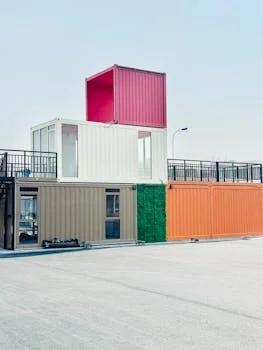
International vendors like HydropureWater provide a 20–30% capital cost saving compared to local Norwegian manufacturers while offering modular scalability up to 2,000 m³/day. However, the selection between a local and international supplier must be balanced against the need for local permitting expertise and long-term maintenance support. Local vendors often have pre-established relationships with County Governors and a deeper understanding of Netherlands’ package plant standards and cost benchmarks which are frequently compared to Nordic requirements. International suppliers excel in providing turnkey, containerized solutions that are factory-tested and ready for rapid deployment, which is critical for remote industrial sites like mining camps or fish farms. When evaluating an international vendor, the presence of a local partner for 24/7 remote monitoring and emergency onsite service is non-negotiable. Key evaluation criteria should include CE marking for all electrical components, documented testing of biological processes at temperatures below 5°C, and a clear framework for nutrient recovery (e.g., struvite harvesting), which can turn a waste stream into a potential revenue source.
| Selection Criteria | Local Norwegian Vendors | International Vendors (e.g., HydropureWater) |
|---|---|---|
| Cost Efficiency | Higher (Local labor/materials) | Lower (Scale of manufacturing) |
| Permitting Support | Direct experience with County Governors | Requires local engineering partner |
| Climate Adaptation | Standard "off-the-shelf" for Norway | Customized modular insulation packages |
| Lead Times | 8–16 weeks | 12–20 weeks (including shipping) |
| Technology Access | Focused on standard biological | Advanced MBR, DAF, and Hybrid systems |
Case Study: Package Plant Deployment in a Norwegian Fjord Municipality
A municipality in the Vestland region recently replaced a failing 30-year-old septic network with a modern package plant to address rising nitrate levels in a protected fjord. The project involved the installation of a WSZ series underground package plant for Norwegian municipal projects designed to serve 1,500 PE with a peak flow of 50 m³/h. The primary challenge was the limited footprint available on the rocky coastline and the requirement to maintain biological activity through winters where temperatures frequently drop to -15°C. By opting for an underground biological A/O system, the municipality achieved a 95% reduction in BOD and 90% nutrient removal, significantly exceeding the requirements of the EU Urban Waste Water Directive. The system utilized high-density insulation and an automated sludge return cycle to maintain process stability during low-flow winter months. The project was completed within 14 months, with 8 months dedicated to the County Governor’s permitting process. Lessons learned from this deployment highlighted that early engagement with environmental authorities and the use of modular, insulated components were critical to avoiding delays and ensuring compliance in the harsh industrial wastewater treatment in harsh climates typical of the Norwegian coast.
Frequently Asked Questions
What are the specific discharge limits for package plants in the Oslo Fjord?For plants serving over 2,000 PE in the Oslo Fjord region, discharge limits are strictly enforced under the "sensitive area" designation. Typically, this requires Phosphorus (P) levels below 1.0 mg/L and Total Nitrogen (N) below 15 mg/L. Package plants utilizing MBR technology are often preferred here as they can consistently meet these tertiary standards without the need for large-scale chemical dosing basins.
How do package plants handle the extreme temperature fluctuations in Northern Norway?Package plants for Norwegian use are engineered with "Arctic Packages," which include R-30 equivalent insulation for the tank walls, heat-traced piping for all external lines, and submersible heaters within the biological reactors. These systems ensure that the mixed liquor suspended solids (MLSS) remain within the 10–20°C range necessary for effective nitrification, even when ambient temperatures reach -20°C.
Can industrial package plants in Norway be used for water reuse?Yes, particularly in the food processing and mining sectors. By combining DAF pre-treatment with MBR secondary treatment, facilities can produce effluent that meets Norwegian standards for process water reuse. This can reduce freshwater intake by up to 40%, providing a significant ROI and helping facilities meet their sustainability targets under the Norwegian PRTR framework.