
What Makes Slaughterhouse Wastewater Difficult for UASB Treatment?
A UASB reactor can treat slaughterhouse wastewater, but it normally needs effective solids and FOG control before biological loading. In Wageningen University and Research work, a flocculent UASB handled 3.5 kg COD m−3 day−1 at an 8-hour retention time and 20°C; granular sludge supported 11 kg COD m−3 day−1 at 30°C and 7 kg COD m−3 day−1 at 20°C. A modified reactor study reported 95% COD removal at an OLR of 10 g L−1 day−1 and 24-hour HRT, while a conventional reactor fell to 48%. These results are configuration-specific, so final sizing should follow wastewater characterization, equalization, pretreatment, temperature correction, and pilot validation rather than rely on a generic efficiency claim.
The wastewater can change enough between production shifts that a single design COD is inadequate. The PMC cattle-slaughterhouse study reported a COD range of 3,000–30,000 mg/L, while the 2024 Water review reported a biochemical oxygen demand range of 5,000–10,000 mg/L. The Wageningen thesis found that approximately 50% of the COD in unsettled slaughterhouse wastewater was coarse insoluble COD. That fraction can enter through the feed, settle poorly in a UASB, or accumulate around the sludge blanket.
Fats are a separate biological constraint. Wageningen attributed deterioration in methanogenic activity to inhibitory long-chain fatty acids released from neutral fats. This makes fats, oils and grease pretreatment a design requirement rather than an optional polishing step. The 2024 Water review also records UASB COD-removal results of 55%–75% for slaughterhouse wastewater, but those values depend on wastewater composition and treatment configuration; they are not stand-alone guarantees.
| Design input | Why the buyer needs it |
|---|---|
| Flow and diurnal profile | Establishes hydraulic loading, equalization duty, and peak-rate effects. |
| COD and BOD | Defines organic strength and the required anaerobic reaction capacity. |
| Suspended solids | Indicates solids capture demand and the risk of blanket or sludge-bed accumulation. |
| FOG | Identifies inhibition and pretreatment requirements. |
| Temperature | Sets the relevant loading benchmark and heating demand. |
| pH and alkalinity | Supports process stability and bicarbonate-demand assessment. |
| Nutrients | Identifies potential supplementation requirements. |
| Process-water fraction | Separates dilution effects from actual production wastewater. |
The Treatment Train That Protects the UASB Reactor
A defensible treatment train places physical protection and flow control ahead of anaerobic digestion, then removes or treats the remaining pollutants downstream. The practical sequence is source segregation, coarse screening, equalization, DAF for suspended solids and FOG, UASB digestion, gas handling, and downstream solids or nutrient treatment. A UASB should not be used as a substitute for upstream solids capture.
Coarse material should be removed before it reaches pumps, valves, gas equipment, or reactor internals. Rotary screening for slaughterhouse wastewater addresses rags, plastics, and fibrous debris. Equalization follows or overlaps this stage, depending on the plant layout, so that production peaks and batch discharges do not pass directly to the anaerobic reactor.
The key upstream unit is DAF pretreatment for slaughterhouse wastewater. The equipment specification lists 4–300 m3/h capacity across 13 standard models and automatic skimming. That catalog range is equipment information rather than a treatment-performance guarantee, so each proposal must still demonstrate expected suspended-solids and FOG capture for the specified wastewater.
The 2024 Water study reported its highest total COD removal—94%—for a UASB-plus-wetland train at a 7.5-day hydraulic retention time and an average volumetric organic loading of 2.4 kg/m3. That result belongs to the complete hybrid train, not to a stand-alone UASB. It demonstrates why performance claims must identify the system boundary.
Equalization and temperature data must be reviewed before final hydraulic and organic loading calculations. The supplied research does not establish a universal equalization time, so the selected detention period must follow the measured diurnal flow, load, and temperature profile rather than a generic rule.
| Process stage | Primary function | Information needed for sizing |
|---|---|---|
| Screening | Removes rags, plastics, and fibrous material. | Debris type, flow, and required capture. |
| Equalization | Reduces flow and load peaks. | Diurnal flow, COD, FOG, and temperature. |
| DAF | Removes suspended solids, FOG, oil and grease, and colloidal matter. | Influent load, skimming duty, and wastewater characteristics. |
| UASB | Converts soluble and biodegradable COD to biogas. | Flow, COD, temperature, HRT, OLR, and sludge type. |
| Gas handling | Captures, cleans, uses, or safely destroys methane-rich biogas. | Expected gas flow, methane fraction, pressure, and safety requirements. |
| Post-treatment | Addresses residual solids and nutrients. | Required effluent quality and applicable discharge limits. |
Published UASB Performance: What the Numbers Actually Show
The reported results define operating envelopes, not universal guarantees: reactor configuration, wastewater, temperature, HRT, OLR, and post-treatment all affect the outcome. Wageningen’s one-stage flocculent UASB handled unsettled slaughterhouse wastewater at up to 3.5 kg COD m−3 day−1 with an 8-hour liquid retention time at 20°C. Its granular-sludge reactor reached optimal loading rates of 11 kg COD m−3 day−1 at 30°C and 7 kg COD m−3 day−1 at 20°C.
The PMC study tested 12 L laboratory-scale conventional and modified UASB reactors at 35 ± 1°C using cattle slaughterhouse wastewater. At an OLR of 10 g L−1 day−1 and 24-hour HRT, the modified reactor achieved 95% COD removal and produced 27 L/day of biogas with 89% methane; the conventional reactor declined to 48% COD removal. At OLRs of 14 and 16 g L−1 day−1, modified-reactor removal was 72% and 68%, compared with 45% and 43% for the conventional reactor.
The 2024 BMC Biotechnology pilot study examined an internal-circulation anaerobic granular-sludge reactor under ambient conditions. COD removal exceeded 74%, 67%, and 68% at 24-, 12-, and 8-hour HRTs, while average methane contents were 80%, 76%, and 72%, respectively. By contrast, the 2024 Water study’s 94% COD removal applies to UASB plus wetland at 7.5-day HRT.
| Source | Configuration and wastewater scope | Temperature | HRT or OLR | Reported performance |
|---|---|---|---|---|
| Wageningen University and Research | Flocculent UASB; unsettled slaughterhouse wastewater | 20°C | 8-hour liquid retention; up to 3.5 kg COD m−3 day−1 | Satisfactory handling at the reported loading. |
| Wageningen University and Research | Granular UASB; slaughterhouse wastewater | 30°C | Optimal 11 kg COD m−3 day−1 | Maximum COD reduction and high COD-to-methane conversion at the optimum. |
| Wageningen University and Research | Granular UASB; slaughterhouse wastewater | 20°C | Optimal 7 kg COD m−3 day−1 | Lower-temperature optimum identified. |
| PMC | Modified and conventional 12 L UASBs; cattle slaughterhouse wastewater | 35 ± 1°C | 10 g L−1 day−1; 24-hour HRT | Modified: 95% COD removal, 27 L/day biogas, 89% methane. Conventional: 48% COD removal. |
| PMC | Modified and conventional 12 L UASBs; cattle slaughterhouse wastewater | 35 ± 1°C | 14 and 16 g L−1 day−1; 24-hour HRT | Modified: 72% and 68% COD removal. Conventional: 45% and 43%. |
| 2024 BMC Biotechnology | Pilot internal-circulation granular-sludge reactor; cattle slaughterhouse wastewater | Ambient | 24, 12, and 8 hours | COD removal above 74%, 67%, and 68%; methane averages of 80%, 76%, and 72%. |
| 2024 Water | UASB plus wetland | Mesophilic range | 7.5-day HRT; average VOL of 2.4 kg/m3 | 94% total COD removal for the hybrid train. |
How to Size the Reactor Without Overstating the Evidence
A preliminary UASB size requires two independent design bases: design flow and wastewater COD for the organic loading rate, and hours of hydraulic retention for reactor-volume checks. Express the organic loading rate as kg COD m−3 day−1, while retaining HRT in hours. The influent COD used in the calculation must represent the wastewater entering the UASB after upstream solids and FOG removal, not the raw discharge.
Wageningen’s 20°C granular-sludge optimum of 7 kg COD m−3 day−1 is a documented low-temperature benchmark, not a universal design value. The study found that liquefaction of adsorbed insoluble colloidal material was the controlling factor at lower temperatures. Because liquefaction slows as temperature falls, seasonal temperature data must be included in the design basis rather than relying on an annual average.
Loading above the applicable optimum can deteriorate specific methanogenic activity. Wageningen observed that substrate accumulation can lead to sludge flotation and potentially complete loss of the active biomass. That risk matters because a high short-term COD-removal result may reflect physical capture as well as biological conversion; the Wageningen work specifically found entrapment important for coarse suspended solids and adsorption important for colloidal and soluble fractions.
The cited literature does not support one universal reactor volume. Wastewater composition, reactor design, HRT, OLR, temperature, sludge type, and post-treatment differ among the cases. Use a pilot trial with actual slaughterhouse wastewater when the design case falls outside the cited 20°C and 30°C evidence envelope, or when FOG and suspended solids fluctuate substantially.
| Sizing step | Engineering action | Decision output |
|---|---|---|
| Characterize | Measure flow, COD, BOD, solids, FOG, temperature, pH, alkalinity, and nutrients across production cycles. | Design-period influent range. |
| Establish pretreatment performance | Quantify solids and FOG capture after screening, equalization, and DAF. | UASB influent COD and loading range. |
| Select loading benchmark | Use temperature- and configuration-specific evidence; distinguish flocculent and granular systems. | Provisional OLR and HRT. |
| Check hydraulics | Confirm upflow velocity, separation, sludge retention, and peak-flow behavior for the proposed geometry. | Reactor volume and internals. |
| Validate | Pilot-test actual wastewater where seasonal, FOG, or loading uncertainty is material. | Confirmed design basis and startup criteria. |
Conventional, Modified, or High-Circulation UASB: Making the Selection
Reactor selection should follow the hydraulic and biological demands of the wastewater, not nominal volume. A conventional UASB may be appropriate where pretreatment is consistent and the design loading remains within demonstrated limits; a modified configuration adds design features intended to improve mixing or solids handling; an internal-circulation granular-sludge reactor offers stronger internal hydrodynamics but requires a different capital, maintenance, and energy assessment.
The PMC divergence is decisive evidence against selecting by volume alone. At an OLR of 10 g L−1 day−1, the modified reactor maintained 95% COD removal while the conventional reactor declined to 48%. This does not establish that every modified reactor will outperform every conventional design, but it shows that nominal volume cannot replace configuration-specific testing.
The 2024 BMC Biotechnology pilot evidence supports internal circulation as a viable scale-up option for cattle slaughterhouse wastewater. It operated at 24-, 12-, and 8-hour HRTs under ambient conditions, with COD removal above 74%, 67%, and 68%. Buyers should evaluate that hydrodynamic performance against capital cost, mixing energy, mechanical maintenance, and the actual wastewater solids load.
| Decision condition | Conventional UASB | Modified UASB | Internal-circulation granular-sludge reactor |
|---|---|---|---|
| Solids handling | Requires effective upstream capture and careful sludge-bed management. | Modified internals may improve mixing or solids behavior, subject to the specific design. | Internal circulation must be evaluated against the wastewater solids load. |
| Mixing | Relies on influent momentum, reactor geometry, and gas-driven mixing. | Modification addresses a defined mixing or separation limitation. | Higher internal liquid circulation is central to the configuration. |
| Loading evidence | PMC conventional reactor declined at 10 g L−1 day−1 under its tested conditions. | PMC modified reactor retained 95% COD removal at the same reported OLR and HRT. | 2024 pilot operated across three HRTs with the reported COD and methane results. |
| Monitoring emphasis | Sludge-bed condition, VFA, alkalinity, gas composition, and solids inventory. | Same core parameters plus the modified internals and their mechanical condition. | Core parameters plus internal-circulation operation and mechanical maintenance. |
| Selection constraint | Acceptable only with a demonstrated design basis and adequate pretreatment. | Specify the modification and its scale-up evidence explicitly. | Justify added capital and operating requirements through the treatment objective. |
The final choice is conditional on FOG pretreatment, temperature, required effluent quality, reactor footprint, utilities, and biogas economics. COD-removal percentage is only one variable because the complete train may determine the final discharge performance.
Commissioning and Operating Controls for Stable Biogas Production
Stable operation depends on controlled startup and a defined escalation procedure. Startup should begin with seed sludge, low organic loading, and confirmation that pretreatment, gas handling, heating, mixing, and effluent withdrawal are ready before load increases. The operator then increases loading in defined steps while comparing COD removal, biogas production, methane fraction, VFA, alkalinity, and sludge-bed behavior.
The operating dashboard should include influent and effluent COD, HRT, OLR, temperature, pH, alkalinity, VFA, methane fraction, biogas flow, sludge-bed condition, and scum observations. The PMC modified reactor maintained total VFA below 100 mg/L across the reported loading rates, but that is a study reference rather than a universal alarm limit. The same reactor retained an alkalinity ratio below 0.3 at those rates, which supports trend monitoring but does not establish a universal compliance threshold.
DAF performance must remain visible in operations because a change in slaughterhouse production can change the solids and FOG load reaching the UASB. Automatic skimming from the DAF pretreatment system for slaughterhouse wastewater should be verified against discharge observations and upstream production changes.
Escalation should begin when VFA rises, methane fraction falls, scum accumulates, or the sludge bed becomes unstable. Wageningen reported that prolonged overload can cause sludge flotation and complete biomass loss. The response should reduce or hold influent loading, check temperature and equalization, verify DAF performance, and inspect reactor mixing and solids inventory before increasing load again.
| Operating phase | Primary checks | Action on deterioration |
|---|---|---|
| Startup | Seed condition, gas system, temperature, mixing, pretreatment, and loading rate. | Hold loading until biological and mechanical conditions are confirmed. |
| Controlled loading | COD removal, OLR, HRT, VFA, alkalinity, methane fraction, and sludge condition. | Reduce the next loading increment and investigate the trend. |
| Steady state | Complete operating dashboard plus DAF capture, gas flow, and maintenance status. | Apply the plant upset procedure and identify the affected process step. |
| Preventive maintenance | Gas piping, condensate removal, DAF skimming, pumps, valves, heating, and odor control. | Apply manufacturer intervals and site maintenance records. |
Evaluate Biogas as an Energy Offset, Not Guaranteed Savings
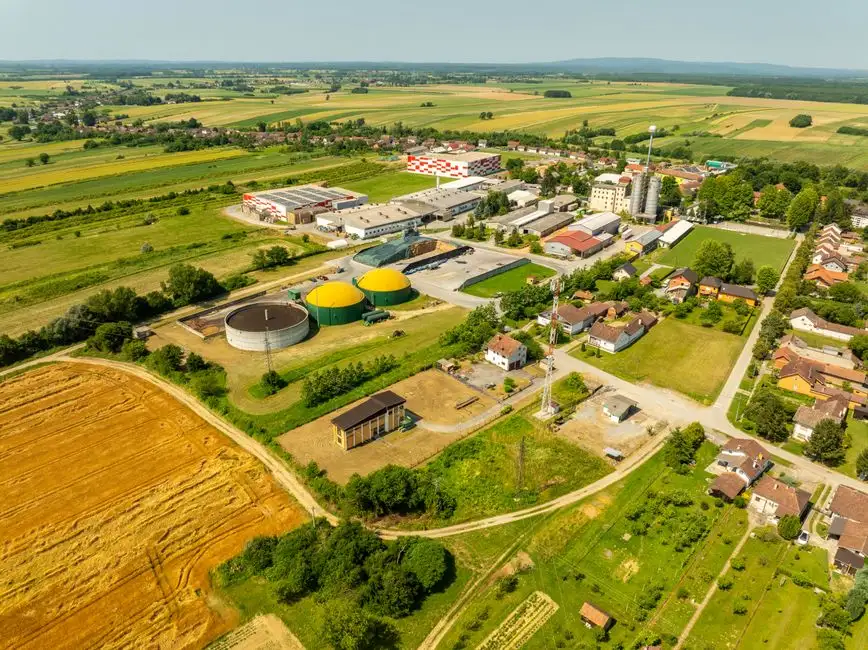
Recovered methane can offset operating energy, but only after reactor heating, internal liquid circulation, pumping, gas cleaning, and maintenance are deducted. The University of Sri Jayewardenepura study identified reactor heating and liquid circulation as the major UASB energy requirements and concluded that methane production determines the energy benefit. A project therefore needs a gas balance, not an estimated COD-removal percentage.
The PMC modified reactor produced 27 L/day of biogas with 89% methane at an OLR of 10 g L−1 day−1 and 24-hour HRT. That was a 12 L laboratory-scale experimental reference, not a commercial-scale production guarantee. Actual gas yield must be evaluated under the selected reactor’s load, temperature, wastewater characteristics, and operating stability.
Each supplier should state expected biogas flow and methane content together with energy consumption for mixing, heating, pumping, gas cleaning, and odor control. Gas safety, flare or utilization equipment, condensate management, and odor controls must also be allocated within the commercial scope. The supplied research provides no universal capital-cost or payback figure, so a business case cannot be established from the cited performance percentages alone.
| Energy or gas item | Information required | Reason for the request |
|---|---|---|
| Biogas production | Expected flow and methane fraction at the agreed load and temperature. | Establishes the gross energy resource. |
| Reactor utilities | Mixing, heating, and pumping consumption. | Defines operating demand. |
| Gas treatment | Cleaning, condensate handling, utilization, or flare requirements. | Completes the gas system boundary. |
| Odor control | Expected equipment and operating requirement. | Addresses site impacts and operating cost. |
| Net assessment | Useful energy value and maintenance assumptions for the actual plant. | Prevents gross biogas production from being presented as net savings. |
Questions to Ask Before Ordering a Slaughterhouse UASB System
The bid should define both the evidence and the equipment boundary. A supplier claiming high COD removal must state whether the result applies to a stand-alone UASB or to a multi-stage arrangement such as the published UASB-plus-wetland system. The guarantee must also identify the wastewater characterization, temperature, HRT, OLR, reactor configuration, and sludge type used to substantiate it.
Ask how the proposed design controls FOG-related inhibition, sludge flotation, washout, and loss of active biomass. The answer should connect specific design features to the operating controls and pretreatment performance—not merely list equipment names. Monitoring scope should cover the operating dashboard, while startup support, training, spare parts, maintenance intervals, and biogas or flare equipment should be identified explicitly in the commercial schedule.
Scale-up methodology is another decisive check. Where the proposed load lies outside the published 20°C and 30°C evidence envelope, require a pilot plan using actual slaughterhouse wastewater. Also ask how seasonal temperature, production-driven FOG changes, and equalization performance are incorporated into the final loading and HRT calculations.
| Supplier question | Acceptable evidence | Scope risk if unanswered |
|---|---|---|
| What system produced the quoted removal? | Stand-alone reactor or clearly defined treatment train. | Attribution of hybrid or physical-removal results to the UASB alone. |
| Under what conditions was performance demonstrated? | Wastewater, temperature, HRT, OLR, configuration, and sludge type. | Application outside the demonstrated operating envelope. |
| How are FOG, flotation, and biomass loss controlled? | Design measures linked to operating parameters and pretreatment. | Uncontrolled inhibition or reactor instability. |
| What is included after reactor selection? | Defined monitoring, startup, training, maintenance, gas, flare, and odor-control scope. | Capital and operating-cost omissions. |
| How will scale uncertainty be tested? | Pilot plan using actual wastewater when outside the cited envelope. | Unverified extrapolation from laboratory or pilot evidence. |
Frequently Asked Questions
What size UASB reactor does slaughterhouse wastewater require?
Size the reactor from design flow, UASB-influent COD after pretreatment, temperature, hydraulic retention time, and the selected configuration’s demonstrated loading limit. Wageningen’s 7 kg COD m−3 day−1 granular-sludge optimum at 20°C is a documented benchmark, not a universal value. If actual wastewater or seasonal temperature falls outside the cited envelope, conduct a pilot trial before finalizing reactor volume.
How much does a UASB reactor for slaughterhouse wastewater cost?
A defensible price request must itemize the complete scope: screening, equalization, DAF pretreatment, UASB reactor and internals, heating, mixing, pumping, gas cleaning, utilization or flare equipment, controls, odor control, post-treatment, installation, commissioning, and training. The supplied research provides no universal quotation or payback figure. Ask suppliers to state their pricing assumptions, performance boundary, exclusions, and warranty conditions against the actual wastewater characterization.
How should a supplier be selected for a slaughterhouse UASB?
Select against configuration-specific evidence and a clear treatment-train scope. Require the bid to state the wastewater, temperature, HRT, OLR, sludge type, startup criteria, and whether performance is for the reactor alone or the full train. For higher-circulation systems, also require maintenance assumptions, internal-circulation performance evidence, and energy consumption so that the comparison covers mechanical and utility implications.
Can a UASB reactor alone meet the facility’s discharge permit?
Do not assume that it can. A UASB is an anaerobic treatment component, and the 2024 Water study’s highest reported COD-removal result applied to a UASB-plus-wetland train. Permit compliance depends on the applicable discharge limits, actual effluent quality, and performance of the complete treatment train, including residual solids and nutrient treatment.