What Changes When Unilever Acquires a Malaysian Plant?
When Unilever acquires a plant in Malaysia, the wastewater requirements depend on the site’s existing environmental permit, sewer or discharge route, process wastewater characteristics and treatment systems in place at closing. The acquisition does not create a new generic treatment standard; it places the site within two overlapping layers: Malaysian legal and receiving-system obligations, and Unilever’s environmental-governance requirements for controlled operations. Unilever’s Environmental Policy 2025 requires compliance with relevant legislation and internal Standards, environmental-management improvement, transparent reporting and incident and near-miss investigation. During due diligence, verify permit validity and transferability, pretreatment duties, monitoring, sludge handling and outstanding compliance issues before accepting the plant’s wastewater liabilities.
The design basis remains site-specific: manufacturing process, current permit, discharge route, influent variability, receiving-system capacity and existing asset condition. The plant-acquisition wastewater diligence guide uses a similar acquisition sequence, but the Malaysian site still needs a locally verified legal file. The supplied Unilever sources establish corporate governance and environmental expectations; they do not provide Malaysian discharge limits, environmental permit-transfer rules, sewer pretreatment procedures or a mandatory acquisition treatment technology.
Accordingly, the transaction test is not simply whether the plant has a treatment system. The deal team must determine whether the system can be shown to comply at handover and whether Unilever’s future monitoring, reporting and water-stewardship requirements create material operating or capital needs.
Unilever's Environmental Requirements After Completion
Unilever’s Environmental Policy 2025 applies to operations under its direct control, including manufacturing, non-manufacturing and logistics sites, and to joint ventures where it has operational control.
The Policy requires compliance with relevant environmental legislation and internal Unilever Standards. It also requires continuous improvement of environmental management systems and processes, transparent annual reporting against public goals, and reporting of all incidents and near misses with thorough investigation, follow-up and communication of lessons learned. It commits Unilever to reducing and preventing pollutant releases to air, land and water, advancing water stewardship and driving zero non-hazardous waste to landfill (Unilever Environmental Policy 2025, January 2025).
| Requirement | Confirmed corporate obligation | Mal-plant diligence implication |
|---|---|---|
| Legal compliance | Comply with relevant environmental legislation and internal Unilever Standards. | Verify the operative permit, sewer conditions, discharge route and open enforcement matters. |
| Management systems | Continuously improve environmental management systems, supported by clearly defined metrics. | Test operating controls, maintenance, laboratory support, records and responsible personnel. |
| Incident control | Report all incidents and near misses; investigate, follow up and communicate lessons learned. | Reconcile the site’s incident register with Unilever reporting and escalation processes. |
| Water stewardship | Advance water stewardship and implement programmes at 100% of production sites in water-stressed areas by 2030. | Confirm the site’s water-stress classification and establish a site baseline after handover. |
Unilever’s Sustainability Statement covers 1 January to 31 December 2025 and focuses on its four continuing Business Groups after the Ice Cream demerger on 6 December 2025. It receives external limited assurance from KPMG LLP under ISAE (UK) 3000 (Unilever Sustainability Statement 2025).
The same statement says Unilever reviews baseline values, base years and targets for material changes, including significant acquisitions, disposals, structural changes or assumption updates, applying a 5% review threshold when accurate and reliable data are available. For the plant’s data room, request available historical source-water, production, wastewater-volume, reuse, energy, chemical and sludge records. Treat at least three years as a diligence request where available, not as a Unilever-mandated review period, and check this against the industrial acquisition wastewater compliance checklist.
Build the Malaysian Permit and Discharge Due-Diligence File
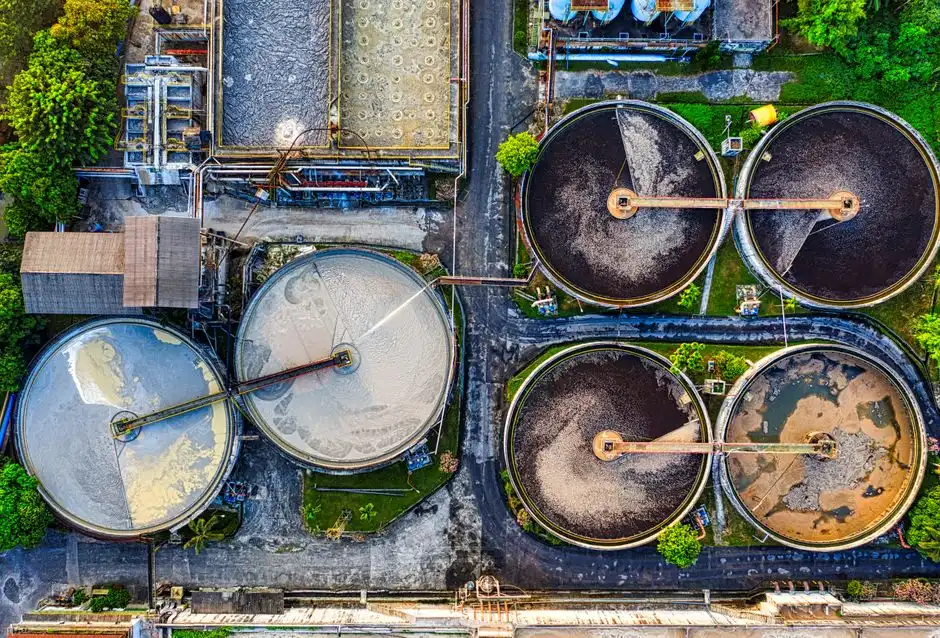
The permit file must establish whether the site’s authority is valid, consistent with actual operations and capable of remaining effective through the transaction.
- Request the current environmental licence or approval, permitted discharge points and parameters, validity dates, renewal history, permit conditions, reporting deadlines, notices of non-compliance and enforcement records.
- Confirm the receiving route: direct discharge, public sewer, industrial wastewater treatment plant or another controlled treatment arrangement. Obtain the relevant Malaysian authority or sewer-operator documentation; do not infer the obligation from corporate policy.
- Obtain the original design basis, hydraulic and organic loading records, effluent results, calibration certificates, laboratory reports, incident records, chemical inventories and sludge disposal or reuse records.
- Ask the relevant authority whether ownership, operating-process changes, production expansion or contract production could require permit review, amendment or a new consent. The supplied research does not specify a Malaysian transfer procedure, so this remains a confirmation item.
- If the site discharges to a sewer, obtain the applicable pretreatment approval and sewer-control requirements. Check whether actual flow, pH, suspended solids, oil and grease, COD and other relevant loads remain within those requirements.
- Verify sampling points, flow meters, recording systems, calibration frequency, laboratory accreditation and reporting responsibilities against the actual permit and Unilever’s internal standards.
| Document or confirmation | Evidence required | Decision supported |
|---|---|---|
| Environmental approval | Current instrument, schedules, validity and compliance correspondence | Is there a valid authority for present operations? |
| Receiving-system consent | Authority or sewer-operator requirements and connection records | Is the stated discharge route legally and technically available? |
| Pretreatment approval | Approval conditions, accepted characteristics and monitoring records | Can the plant discharge to sewer as currently operated? |
| Transfer or consent confirmation | Written regulator position on the proposed transaction and any material operating change | Will closing or integration trigger further consent? |
| Operating evidence | Calibration, laboratory, incident and maintenance records | Does actual performance support the permit representation? |
Any unresolved answer should remain an explicit assumption in the acquisition model. The related reported wastewater-plant siting dispute illustrates why receiving-system and consent questions should not be reduced to a generic national compliance statement.
Characterize the Wastewater Before Choosing Treatment
Treatment selection begins with the purchased product line and the actual wastewater streams, not with a preferred machine.
Map each process, wash, cleaning, boiler, cooling, laboratory, domestic and stormwater source to its flow, seasonality, batch profile and eventual discharge point. Run a campaign covering normal production, cleaning cycles, peaks and representative upset conditions. Request laboratory methods, detection limits and quality-control records; a single grab sample will not establish the acquisition design basis.
Once the relevant streams are identified, evaluate flow, pH, temperature, suspended solids, COD, BOD, oil and grease, surfactants, cleaning chemicals, nutrients, toxicity and any site-specific regulated parameter. The required parameter set must come from the permit, pretreatment requirements and process chemistry rather than a generic checklist.
| Observed or expected condition | Treatment question | Evidence needed before selection |
|---|---|---|
| High soluble organic load | Is biological treatment required? | Representative COD and BOD profiles, biodegradability information and hydraulic peaks |
| Oils, grease, FOG or floatable solids | Is physical separation required before biological treatment? | Fractionated oil and grease results and source identification |
| Batch cleaning discharges | Will equalization and shock loading control prevent permit breach? | Batch flow, concentration and discharge timing records |
| Reuse or tight final-effluent requirement | Does the specification justify membranes or other polishing? | Reuse destination, required quality, membrane fouling and operating evidence |
| Site-specific regulated constituent | Can the selected train reliably meet the applicable limit? | Permit or sewer limit, monitoring method and treatment demonstration |
Match the treatment train to the required objectives. High-strength soluble organic loads may justify biological treatment. Oils, FOG and floatable solids may require a DAF system for industrial pretreatment. Membrane separation should be justified by the required reuse or final-effluent specification, not selected by default. This follows the site-specific logic in the sewer-limit engineering guide.
Review equalization, screening, primary removal, biological or membrane treatment, polishing, disinfection where relevant, residuals handling, odor control, reuse and final disposal. Do not inherit a design based only on average flow. Peak hydraulic load, batch discharges, shock loading, bypass risk, standby requirements and the consequence of treatment failure must be priced into the risk assessment.
Compare Treatment Options Against the Acquisition Case
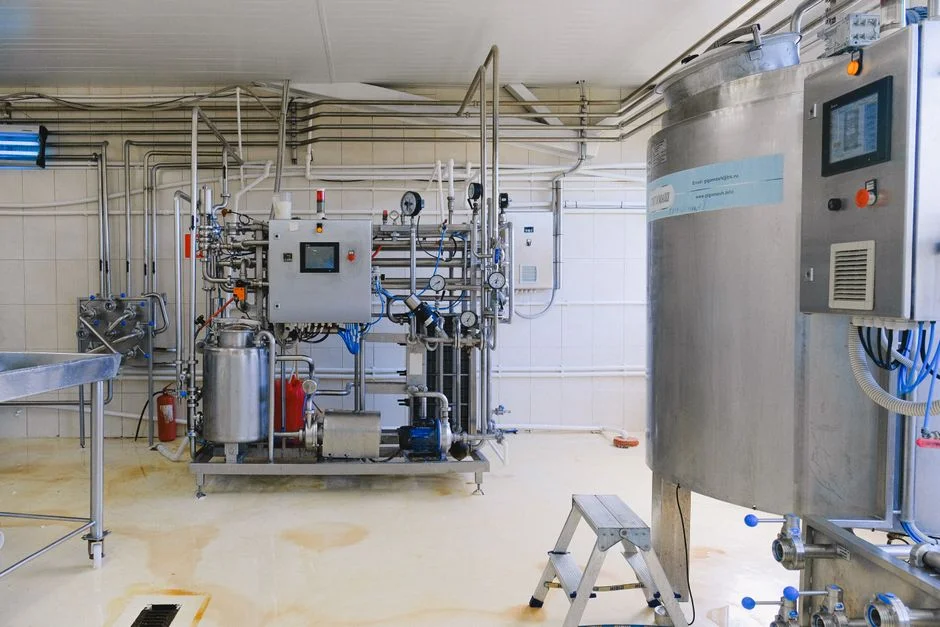
Choose the treatment route that resolves the verified site risk with the lowest lifecycle burden and manageable operating complexity.
DAF is relevant where oil, grease, FOG, suspended solids or colloidal material control the risk. MBR combines biological treatment with fine solids separation and may support reuse where the quality requirement justifies it. Packaged integrated sewage treatment may suit smaller or simpler flows. Automatic chemical dosing supports pH, coagulation or flocculation control. These are functional classes, not automatic recommendations.
The acquisition-market evidence supplied from Seven Seas Water Group distinguishes decentralized and centralized wastewater operations, including MBR and conventional activated-sludge systems, as well as process-water plants and assets requiring compliance upgrades. That supports treating MCR assets as distinct diligence classes rather than a single equipment category.
| Option | Primary fit | Key diligence risk | Decision evidence |
|---|---|---|---|
| DAF | Oil, grease, FOG, floatable or colloidal removal | Wrong load basis or poorly managed residuals | Source-resolved oil and grease data, hydraulic profile and sludge route |
| MBR | Compact biological treatment, fine solids separation and potential reuse | High lifecycle demand or reuse quality not commercially justified | Organic loading, reuse specification, fouling history, energy and membrane replacement assumptions |
| Packaged integrated treatment | Smaller or relatively simple treatment duties | Package capacity does not cover peak or batch conditions | Verified peak flow and load, expansion needs and installed-condition assessment |
| Automatic chemical dosing | pH, coagulation or flocculation control | Chemical handling, dose control and residual quality | Control sequence, chemical inventory, safety provisions and effluent response data |
Every option needs a no-regret baseline: reliable flow measurement, documented operating controls, maintenance access, critical spares, operator competence, alarm handling, effluent monitoring and a defined contingency for an upset. Compare capital cost, operating cost, footprint, energy demand, chemical consumption, sludge volume, reuse potential, implementation disruption, supplier support and compliance risk using site data. The supplied research provides no defensible Malaysian cost figures, so any budget requires a site-specific quotation.
Separate compliance and safety upgrades from discretionary capacity expansion. Expand only when verified flows, loads, product plans or permit conditions support the investment. More detail on this comparison is available in the DAF and clarifier comparison and the MBR cost breakdown, but neither replaces local sizing and pricing.
Convert Due Diligence Into a Closing and Integration Plan
Wastewater findings must enter the acquisition model as defined conditions rather than unpriced operating assumptions.
Set the permitted wastewater flow, effluent characteristics, treatment reliability and monitoring programme as explicit acquisition assumptions or protections. Classify each finding as a closing condition, pre-closing remediation requirement, post-closing capital work, operational integration item or monitoring action. Assign a named owner, required evidence and approval date.
| Classification | Typical wastewater evidence | Transaction treatment |
|---|---|---|
| Closing condition | Invalid authority, unresolved consent, material permit exceedance or transfer restriction | Require closure, regulator confirmation or a specific contractual protection before completion |
| Pre-closing remediation | Calibration, sampling, monitoring or record deficiencies that can be corrected before handover | Price completion criteria, responsible party and evidence required |
| Post-closing capital work | Verified reliability, capacity, pretreatment or residual-handling gap | Define scope, estimate class, approval gate and delivery plan |
| Operational integration | Incident escalation, maintenance, laboratory and permit-management gaps | Integrate into Unilever systems and assign post-closing verification |
| Monitoring item | Missing parameter history, flow reconciliation or lab quality-control evidence | Carry as a residual risk until closed by verified data |
After handover, establish a baseline using Unilever’s sustainability reporting process and assess whether the acquisition meets its 5% review threshold for baseline values, base years or targets when accurate and reliable data are available (Unilever Sustainability Statement 2025). This threshold is a corporate reporting review rule, not a Malaysian permit rule.
For a production site in a water-stressed area, compare the site’s exposure with Unilever’s target to implement water-stewardship programmes at 100% of production sites in such areas by 2030. Unilever reported 29 programmes implemented since 2021 by the end of 2025 (Unilever, “Protecting and regenerating nature,” 2025). Determine whether the Malaysian site falls within Unilever’s defined high or extremely high baseline-water-stress methodology before committing to scope.
Integrate permit and wastewater data into the site management system, incident reporting, maintenance planning, laboratory programme, supplier management and annual environmental reporting controls. Preserve unresolved regulator questions, residual non-compliance, capital estimates and operating assumptions in the final investment record. The broader context in the Negeri Sembilan water-plant project report should not be treated as evidence of the acquired plant’s own obligations.
Frequently Asked Questions
Does the Unilever acquisition automatically change the Malaysian discharge limits or require a particular wastewater treatment technology?
No. The applicable discharge requirements and pretreatment obligations must be established from the site’s current permit, sewer or receiving-system conditions, process wastewater and Malaysian regulator confirmations. The supplied Unilever sources do not state Malaysian limits or prescribe an acquisition treatment technology. Determine the required outcome first, then assess whether the existing asset or a DAF system for industrial pretreatment or integrated MBR wastewater treatment system can meet it.
How should the buyer size treatment capacity for the acquired Malaysian plant?
Size against verified production plans, source-by-source flow, batch profiles, peak hydraulic conditions, constituent loads and the receiving-system or permit requirements. Do not size from average flow or a single sample. Ask the seller for operating records and then confirm whether proposed product, production or contract-manufacturing changes could require a permit or pretreatment review. The plant-acquisition wastewater diligence guide provides the broader transaction sequence.
What should the wastewater budget include before the transaction price is finalised?
Request site-specific quotations covering equipment, installation, civil works, utilities, controls, commissioning, operator training, maintenance, monitoring, residuals handling, contingency and implementation disruption. Separate mandatory compliance and safety work from capacity expansion. The supplied research contains no defensible Malaysian price, so a total-cost estimate cannot be stated without the verified flow, load, treatment objective and supplier quotation.
How should the buyer select a wastewater treatment supplier during acquisition due diligence?
Ask each supplier to demonstrate sizing against the verified duty, worst-case batch conditions, permit or sewer criteria, residuals route and Unilever operating controls. Require a reference list, commissioning scope, operator training, maintenance support, critical-spares availability and performance obligations. Check whether proposed equipment creates future permit exposure or energy, chemical and residual-management commitments that the acquisition model has not captured.
Which unresolved regulatory questions should be confirmed with the Malaysian authority or sewer operator?
Confirm permit validity, whether the transfer or change of ownership affects the approval, any required amendment or new consent, the permitted discharge route and applicable pretreatment conditions. Ask which process, production-expansion or contract-manufacturing changes would trigger review. Keep the written authority position, supporting documents and closure status in the final investment record rather than relying on the seller’s verbal assurance.