
Start with the discharge decision and the actual blowdown chemistry
A Kumamoto data center needs a treatment train designed around its cooling-blowdown chemistry, seasonal makeup-water quality, chemical program and legal destination. At 4 cycles of concentration (CoC), blowdown is 25% of makeup; at 6 CoC, it falls to 20%, but actual blowdown can run 15–30% above theory. Engineers should characterize conductivity or TDS, pH, suspended solids, silica, biocides, corrosion inhibitors and metals before selecting treatment. Kumamoto-specific requirements must be confirmed with the responsible authorities; final equipment selection depends on the chosen discharge or reuse endpoint.
Cooling-tower blowdown is the controlled purge required because evaporation leaves salts and treatment chemicals behind in recirculating water (University of Georgia Cooperative Extension TP-121, June 2026). It is industrial process wastewater, not sanitary sewage from restrooms and kitchens. The two streams require separate characterization and regulatory pathways (RSP Engineers, 2026).
The first decision is whether the water will enter a municipal sewer, be directly discharged to surface water, or be reused onsite. Sewer discharge requires industrial pretreatment approval; direct surface-water discharge requires environmental review; reuse converts the project into a treatment and distribution system with its own water-quality requirements. Confirm the current rules with the responsible Kumamoto authorities before fixing the chemistry or buying equipment.
| Design input | Why it controls the treatment train | Project evidence required |
|---|---|---|
| Legal destination | Determines whether the objective is sewer pretreatment, environmental compliance or reuse quality. | Written requirements from the relevant Kumamoto authority. |
| Makeup and blowdown chemistry | Defines solids, dissolved-solids, scaling, corrosion and residual-chemical risks. | Seasonal analyses for conductivity or TDS, pH, suspended solids, silica, hardness, temperature, biocides, inhibitors and metals. |
| CoC and actual flow | Sets the preliminary blowdown volume and concentrated contaminant load. | Water balance plus metered operating cases. |
| Local source water | Establishes the real scaling baseline; Kyoto source-water assumptions are not transferable. | Kumamoto makeup analysis, including seasonal silica. |
For preliminary sizing, Genesis Water Technologies (2025) gives the blowdown-to-makeup relationship as 1/(CoC−1): 25% at 4 CoC and 20% at 6 CoC. This is a water-balance starting point, not a permit basis. Use the regional cooling-blowdown treatment framework to structure the same destination-first logic for Kumamoto.
Quantify Kumamoto blowdown flow before selecting equipment
Flow and contaminant loading must be established from the actual cooling configuration, not from the data center’s IT load alone. The Kyoto guide citing KETOS (2025) reports that open-loop evaporative systems lose 20–30% of withdrawn water as liquid blowdown. At the industry-average WUE of 1.8 L/kWh used in that guide, that produces an industry-derived screening estimate of approximately 0.36–0.54 L/kWh of IT load. Neither figure is a Kumamoto design flow.
Closed-loop and hybrid arrangements have a different balance: the same Kyoto guide cites 90–95% of withdrawal returning as wastewater, with only 5–10% consumed by evaporation. The returning stream is smaller but more concentrated, so volumetric sizing and load sizing must remain separate. See the supplied data center water-treatment and cooling-loop design guide for the configuration-dependent approach.
Genesis Water Technologies (2025) reports that actual blowdown commonly exceeds theoretical calculations by 15–30% because of unmeasured losses and emergency dumps. Install independent meters for makeup and blowdown, plus conductivity, pH and temperature measurements on the recirculating loop. These data should reconcile water use, evaporation and purge instead of treating WUE as proof that the discharge volume is understood.
| Case | Flow basis | Equipment-design consequence |
|---|---|---|
| Low | Stable seasonal makeup and controlled CoC. | Establishes the minimum continuous treatment rate. |
| Normal | Measured operating flow and representative chemistry. | Sets the nominal hydraulic and contaminant load. |
| Peak | Maximum expected evaporation and purge response. | Tests equalization, pumps, filtration and controls. |
| Emergency dump | Contingency discharge outside normal control. | Determines storage, routing and response safeguards. |
Do not issue an equipment schedule from the CoC equation alone. The valid preliminary envelope is the measured or mass-balanced blowdown flow, checked against seasonal operation and emergency conditions, with treatment capacity assigned to each case.
Choose the endpoint that matches Kumamoto's regulatory and reuse constraints
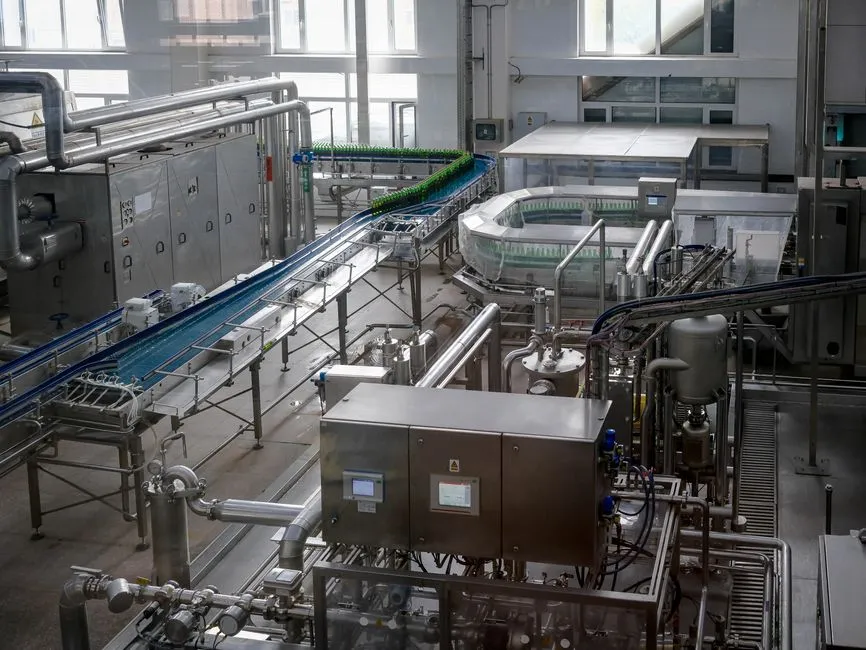
Municipal sewer discharge, direct surface-water discharge and onsite reuse impose different acceptance tests on the same blowdown. The correct route is the one the responsible Kumamoto authority will accept at the actual flow and chemistry; it cannot be selected from a generic treatment train.
For municipal sewer discharge, obtain the current pretreatment standards, connection conditions, temperature and salinity expectations, monitoring duties and restrictions on chemical residuals from the responsible Kumamoto sewer authority. The Kyoto guide’s pH range of 5.0–9.0 and temperature limit below 45°C are Kyoto-source references, not Kumamoto limits. The same applies to its BOD 160 mg/L, daily-average BOD 120 mg/L, SS 200 mg/L, TDS below 2,000 mg/L and conductivity range of 2,000–3,000 µS/cm: these cannot be represented as Kumamoto requirements without confirmation.
For direct surface-water discharge, evaluate BOD, COD, suspended solids, nitrogen, phosphorus, metals, residual oxidant and thermal-discharge constraints with the competent Kumamoto authorities. This route requires a discharge-specific environmental assessment rather than a sewer pretreatment design. A reusable process-wastewater compliance framework illustrates the need to distinguish national rules, local conditions and destination-specific controls.
For onsite reuse, separate low-grade and high-grade demands rather than polishing the entire blowdown to the highest standard. Toilet flushing and landscape irrigation can be candidates for a lower-grade stream, while cooling-tower makeup requires the most demanding polishing. The Kyoto guide cites MLIT reclaimed-water criteria for toilet flushing as turbidity below 2 degrees, pH 5.8–8.6 and zero detectable E. coli per 100 mL. Verify the requirements applicable to Kumamoto and the intended reuse class rather than treating those reference values as automatic approval.
| Endpoint | Primary treatment question | Key confirmation |
|---|---|---|
| Municipal sewer | What pretreatment is required before connection? | Kumamoto sewer authority’s current rules, permitted flow and residual limits. |
| Surface water | Can the discharge meet receiving-water and thermal constraints? | Competent Kumamoto environmental requirements and receiving-water conditions. |
| Low-grade reuse | Which non-potable demand can accept the treated stream? | Internal water-quality specification and distribution-system requirements. |
| Cooling-makeup reuse | What polishing is needed for scaling, corrosion and biological control? | Real feed chemistry, RO scaling projection, concentrate route and cooling-loop limits. |
Domestic sewage cannot be used as a substitute route for concentrated cooling blowdown. Keep sanitary and process wastewater separate in the civil design, calculations and permit application, as recommended by RSP Engineers (2026).
Build a treatment train around the contaminants
The minimum viable treatment train depends on what the blowdown contains and what the receiving destination requires. A robust sequence begins with measurement and equalization, then removes solids, conditions the water if necessary, and adds polishing only where reuse quality or downstream membrane protection demands it.
- Measurement and equalization: meter makeup, blowdown, conductivity, pH, temperature and flow. Provide equalization for variable blowdown and emergency dumps rather than sizing every downstream unit only for the normal average.
- Physical removal: use side-stream filtration to remove suspended solids originating from scale flakes, dust and biological growth. Consider a DAF system for cooling-blowdown pretreatment when analysis confirms oils, colloids, biological floc or solids that require clarification.
- Clarification: a lamella clarifier can remove remaining suspended solids and provide a manageable sludge stream before filtration or RO.
- Conditioning: apply controlled pH adjustment, coagulation or flocculation only where required. Excess chemical additions increase dissolved-solids loading and downstream treatment costs (Genesis Water Technologies, 2025). An automatic chemical dosing system for pH and pretreatment control should operate from measured demand rather than fixed feed.
- Polishing: use multi-media filtration to protect membranes. An ultrafiltration system for blowdown polishing and RO pretreatment provides a 0.03 µm barrier with automatic backwash and air scour, but its suitability still depends on feed quality and the required endpoint.
Industrial RO can support blowdown-to-cooling-makeup reuse, but it is not justified by TDS alone. Recovery, silica scaling, pretreatment, concentrate disposal, cleaning and energy use must be demonstrated with real Kumamoto analyses. The relevant data center wastewater treatment roadmap shows why chemical characterization must precede the selected process.
Do not add disinfection automatically. Use chlorine dioxide only where on-site microbial control or final disinfection is required and permitted. Open Engineering’s 2026 life-cycle study found that the wastewater scenario had about twice the global warming potential of the freshwater case, with treatment energy accounting for roughly 80% of the difference. In the UF+RO scenario, wastewater energy use grew to more than five times the freshwater case. Energy and chemical consumption therefore belong in the business case, not merely in equipment-comparison sheets.
| Stage | Contaminant or objective | Potential equipment | Design input |
|---|---|---|---|
| 1 | Flow variability and emergency discharge | Flow metering, analysis, equalization | Low, normal, peak and dump cases. |
| 2 | Suspended solids, colloids, oil or biological floc | Side-stream filter and DAF | Solids, oil, colloid and biology characterization. |
| 3 | Remaining settleable solids | Lamella clarifier | Hydraulic loading and sludge characteristics. |
| 4 | pH, coagulation and flocculation demand | Automatic chemical dosing | Destination limits and chemical-residual constraints. |
| 5 | Fine solids, bacteria and dissolved salts | Multi-media filter, UF and, where justified, RO | Reuse specification, scaling analysis and concentrate route. |
Separate site requirements from generic catalog capability
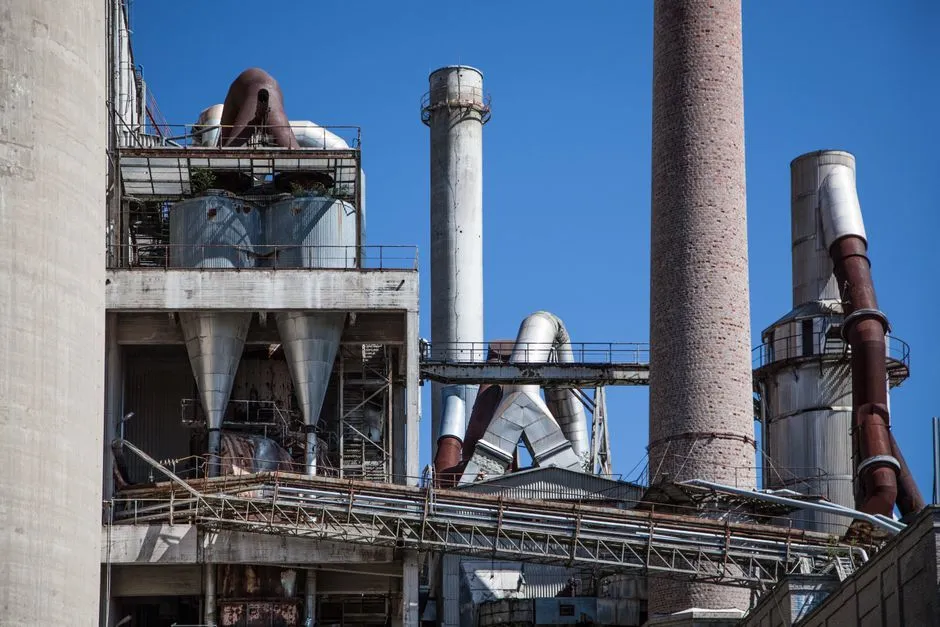
Catalog capacity describes what a standard unit can accommodate; it does not establish the Kumamoto design duty. Final hydraulic loading, chemical dose, recovery and treatment performance must be verified against the measured blowdown flow and analysis.
| Equipment | Catalog capability | Where it fits | Final site design value |
|---|---|---|---|
| DAF | 4–300 m³/h across 13 standard models. | Removal of suitable suspended solids, oils, grease, FOG or colloids. | Actual flow, contaminant load, flotation loading and sludge handling. |
| UF | 2,000–40,000 L/h; 0.03 µm PVDF membranes; automatic backwash and air scour; turbidity up to 300 ppm. | Polishing or RO pretreatment for solids, colloids and microorganisms. | Feed analysis, recovery, cleaning, membrane life and required permeate quality. |
| RO | Recovery rates up to 95%. | High-grade reuse requiring dissolved-solids reduction. | Feed chemistry, temperature, scaling, recovery, concentrate disposal and energy demand. |
| Automatic dosing | PLC-controlled injection for pH, coagulation, flocculation or specialty conditioning. | Stabilized treatment chemistry. | Verified dose range, chemical compatibility, storage and containment. |
| Plate-and-frame press | Sludge dewatering equipment. | Sludge from DAF or clarification requiring disposal or beneficial use. | Sludge volume, solids fraction, polymer demand and disposal route. |
Use the plate-and-frame filter press for DAF sludge only after DAF or clarification has produced a dewaterable residue. For the RO option, an industrial RO system for cooling-tower makeup reuse should remain an option subject to the site water balance and pretreatment results.
Reserve skid space, chemical storage, spill containment, drainage, maintenance access and sample points in the site plan from the beginning. RSP Engineers (2026) identifies early civil coordination as necessary to avoid late redesigns, permit delays and treatment-area conflicts.
Size for operating cost, reliability and compliance risk
The commercial case must compare total lifecycle cost with the value of displaced makeup water, not capital expenditure against water savings alone.
The Kyoto guide gives a modular treatment-system benchmark of ¥45,000,000–¥85,000,000 for a 5–10 MW data center and a 3–5 year payback range. These are planning benchmarks from the Kyoto guide, not Kumamoto quotations; they depend on the actual flow, contaminants, filtration, RO integration and controls. Require a Kumamoto-specific offer with capacity, performance guarantees, installation scope and exclusions.
Include treatment energy, chemicals, membrane replacement, sludge disposal, operator labor, sampling and monitoring in the operating-cost model. Open Engineering’s 2026 LCA reports an indirect water penalty of approximately 0.93 L/m³ for wastewater reuse, less than 0.1% of the direct displaced-freshwater benefit, while treatment energy and chemical production remain important environmental impacts.
For enterprise and colocation facilities, the Kyoto and Genesis guides recommend modular systems targeted to actual contaminants rather than copying a hyperscale RO and ion-exchange template. Procurement should require Kansai technical support, Japanese-standard PLC and BMS integration, local spare-parts and membrane availability, commissioning validation and permit-ready performance reporting. The data center wastewater procurement framework provides a broader site-specific planning reference.
Frequently Asked Questions
What budget should a Kumamoto data center expect for cooling-blowdown treatment?
The cited ¥45,000,000–¥85,000,000 is a Kyoto-guide benchmark for a modular system serving a 5–10 MW data center, not a Kumamoto quotation. Ask each bidder for a priced scope covering measured normal and peak flow, chemical characterization, equalization, filtration, optional RO, sludge handling, controls, commissioning and monitoring. Require separate pricing for each reuse configuration because the RO and concentrate-disposal scope can change the commercial result substantially.
What evidence should I request when selecting a treatment-system supplier?
Ask for documented Japanese industrial-discharge experience, evidence of Kansai technical support, PLC/BMS integration details, local spare-parts and membrane availability, commissioning validation and monitoring support. The supplier should also provide a process guarantee tied to the project’s confirmed influent chemistry and intended destination. Generic catalog capacity is not evidence that the system will satisfy a Kumamoto permit or reuse specification.
Why are preliminary CoC calculations insufficient for sizing?
The CoC relationship gives a useful theoretical balance, but Genesis Water Technologies (2025) reports actual blowdown 15–30% above theory because of unmeasured losses and emergency dumps. Equipment sizing should therefore combine theoretical CoC with metered data, seasonal makeup variation, maximum purge response and an explicit emergency case. Equalization, treatment rate and storage should be checked against all four conditions.
Can equipment be selected before confirming the Kumamoto discharge and reuse requirements?
No. Sewer discharge, direct surface-water discharge and onsite reuse create different water-quality targets, documentation requirements and residual-management constraints. Obtain the current requirements from the responsible Kumamoto authorities and define the chemical program at the same time. If those inputs remain unresolved, the project can compare technical options, but it cannot responsibly fix the final chemistry, duty, recovery or compliance guarantee.