
What wastewater profile should determine the Colombo factory’s treatment choice?
A factory in Colombo should choose between an industrial effluent treatment plant and a DAF system from its wastewater profile, treatment objective and final-use requirements—not from nominal flow alone. Choose DAF when the immediate duty is removing suspended solids, oil and grease, FOG or colloidal material before biological treatment or reuse. Choose a broader ETP when dissolved biodegradable load and downstream treatment are also required. Water Lanka reports flotation capacities of 3–12 US gallons per minute per square foot, compared with 1–2 for conventional sedimentation, and flotation retention of 2–4 minutes versus approximately 60–100 minutes for sedimentation. Final sizing must follow representative wastewater testing, peak flow and confirmed discharge or reuse conditions.
Begin with a sampling plan that covers normal production, cleaning, shutdown and peak-discharge periods. A single grab sample can miss batch discharges and dilute concentrations that determine chemical demand, equalization requirements and equipment size. Record average flow, peak flow, production shifts, batch-release timing, available footprint and the intended effluent destination. The discharge pathway—direct discharge, sewer pretreatment, process reuse, cooling-water reuse or cleaning-water reuse—changes the required treatment train.
Request laboratory analysis for suspended solids, oil and grease, FOG, COD, BOD, pH and colloids, together with any sector-specific contaminants. Require the analytical method, sampling point, flow condition and laboratory report so that results can be compared. The Sri Lanka DAF engineering guide can help structure supplier questions, but the wastewater analysis remains the sizing basis.
| Wastewater profile | Likely treatment role | Decision question |
|---|---|---|
| Suspended solids, oil and grease, FOG or colloidal material dominates the removal duty | DAF clarification, possibly followed by biological or polishing stages | Will DAF recover enough solids to protect downstream treatment or meet the specified reuse condition? |
| Biodegradable COD and BOD remain after physical separation | Combined DAF–biological ETP | What organic-load range and operating variation must the biological stage accept? |
| Reuse requires solids removal beyond the clarification stage | DAF or ETP with filtration and other required polishing | What are the documented final-water quality limits for the intended use? |
Use the industrial process and batch pattern to place DAF correctly. It may serve as pretreatment before an existing biological system, as the primary clarification stage, or as the front end of a combined DAF–ETP train. The 2026 DAF unit selection framework is useful for translating the assessment into a supplier brief; it cannot substitute for the factory’s own wastewater data.
When is DAF the right primary treatment for a factory?
DAF is appropriate when the primary treatment objective is physical separation of suspended solids, oil and grease, FOG or colloidal material from wastewater. Water Lanka describes the mechanism as follows: water under pressure absorbs air and becomes supersaturated when pressure is released, causing millions of small bubbles to form. The bubbles attach to particles, reduce their effective density and carry them to the surface for collection, leaving clarified water below. This makes dissolved air flotation in Colombo relevant where those particulate or emulsified contaminants are immediate operating targets.
The treatment objective matters more than the factory’s sector label. HydropureWater identifies food processing, pulp and paper, textile, metalworking, petrochemical and municipal pretreatment among DAF application areas, but those categories do not establish the required duty. A supplier must still show how the proposed unit handles the factory’s measured wastewater characteristics and discharge profile.
DAF is not a substitute for every treatment mechanism. It does not remove dissolved contaminants simply because they are present in the wastewater. Dissolved biodegradable load may require biological treatment; other dissolved contaminants may require adsorption, membrane or chemical treatment. This distinction prevents an equipment-only recommendation: an industrial DAF system is most defensible when the required output is clarified water and the remaining treatment objectives are defined.
Hydraulic design also affects separation. Water Lanka states that excessive flow turbulence can hinder flotation because it disrupts the rise and collection of bubble-attached solids. The design should therefore address inlet distribution, recirculation, residence, sludge withdrawal and surface skimming rather than compare tank volume alone. The mechanism and design questions are explained further in how DAF systems work.
Use DAF where physical separation is the stated duty; add downstream treatment where dissolved load, reuse quality or discharge conditions require it.
How does a DAF unit compare with conventional settling?
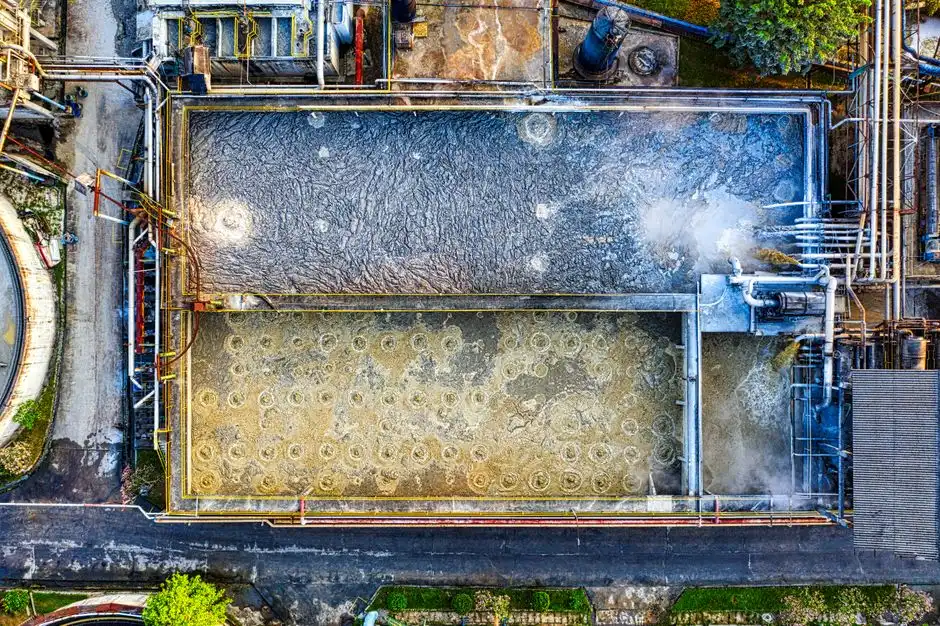
Water Lanka reports that modern flotation units can process 3–12 US gallons per minute per square foot of available clarifier area, compared with 1–2 US gallons per minute per square foot for conventional sedimentation. It also reports flotation operation at a depth as low as 16 inches, compared with approximately 80 inches for sedimentation, and flotation retention of 2–4 minutes versus approximately 60–100 minutes for sedimentation. These are manufacturer-published design comparisons, not guaranteed results for a Colombo factory.
| Design parameter | Flotation | Conventional sedimentation |
|---|---|---|
| Reported clarification capacity | 3–12 US gallons per minute per square foot | 1–2 US gallons per minute per square foot |
| Reported operating depth | As little as 16 inches | Approximately 80 inches |
| Reported retention time | 2–4 minutes | Approximately 60–100 minutes |
| Water Lanka comparison | DAF described as operating with one-quarter the time and 20 times faster than settling | |
Those comparisons make DAF worth screening for suspended solids clarification where footprint, retention or oil and grease removal is important. They do not establish the best treatment route by themselves. The proposed surface loading, hydraulic profile and expected wastewater characteristics must be checked against the factory’s average and peak loads.
Water Lanka also states that bubbles in the 30–60 micron range produce the best flotation of solids. Each DAF installation requires a dissolved-air generation method and a treatment vessel; these may use a pressure tank, tube or special pump, depending on the manufacturer. The vessel may be rectangular, circular or cylindrical and may include plates or other flotation-enhancing devices.
The practical question is therefore whether the proposed hydraulic basis fits the measured wastewater and available site—not whether DAF has a generic advantage over settling. Use the 2026 DAF unit selection framework to test capacity claims against peak flow, and compare any settling alternative using the same flow basis and required effluent quality.
When does a factory need a full ETP instead of DAF alone?
A factory needs a broader industrial effluent treatment plant when DAF cannot address the complete effluent objective. An ETP should be defined as an integrated treatment train, not a fixed package. If suspended solids and FOG must be removed before a substantial biodegradable COD or BOD load is treated biologically, a DAF–biological arrangement is a logical sequence. If the treated water must satisfy a defined reuse condition, filtration, disinfection or another polishing step may also be necessary.
| Decision sequence | Engineering output |
|---|---|
| 1. Characterize the wastewater | Representative analysis, average and peak flow, batch profile and contaminants |
| 2. Define the final-use target | Discharge, sewer pretreatment, process reuse, cooling reuse or cleaning reuse |
| 3. Select physical separation | DAF where suspended solids, oil and grease, FOG or colloids are primary targets |
| 4. Address dissolved biodegradable load | Biological treatment when required by the measured COD and BOD duty |
| 5. Add final polishing where required | Filtration, disinfection or advanced treatment matched to the end-use specification |
| 6. Resolve residuals | Equalization, sludge withdrawal, thickening, dewatering and disposal routes |
The decision flow should be applied without skipping the wastewater analysis. DAF is a physical separation step. Biological treatment addresses biodegradable dissolved and particulate load after suitable preparation; the required process configuration depends on the wastewater and effluent objectives. Filtration and disinfection are not automatic additions, but they become necessary where the reuse or discharge specification requires a further barrier.
Sludge handling must be evaluated from the first process drawing. A DAF or biological stage generates concentrated solids that require withdrawal, storage, thickening and a dewatering route. Failure to include that route can shift cost and operating risk into an area that was absent from the initial equipment quotation.
Do not label the proposed train “compliant” until the applicable Colombo and national conditions are confirmed for the factory’s sector, receiving point and intended disposal or reuse route. Requirements may differ between direct discharge and sewer pretreatment. The buyer should obtain the applicable conditions and any pretreatment agreement before finalizing the equipment scope.
How should the Colombo treatment train be sized and configured?
A Colombo treatment train should be sized from average flow, peak flow, batch-discharge profile and operating redundancy—not from a single nominal flow. A supplier’s calculation should show how equalization handles batch releases, how the selected DAF hydraulic basis responds to peak conditions, and whether the wider ETP remains stable when wastewater composition changes. The enquiry should define the treatment duty and final-use target in the same words used for the permit, sewer agreement or reuse specification.
| Supplier submission | Information required |
|---|---|
| Design basis | Average and peak flow; batch profile; representative wastewater analysis; required effluent quality |
| DAF design | Proposed surface loading, retention time, pressure-air generation method, recirculation arrangement, hopper, skimming and sludge withdrawal |
| ETP design | Complete process flow, hydraulic calculations, aeration concept, sludge handling, controls, materials, utility duty points and treatment guarantees |
| Site boundary | Equalization, feed conditioning, chemical dosing, electrical supply, sludge dewatering and waste-disposal interface |
| Commercial scope | Drawings, commissioning, training, spares, consumables and local service support |
For DAF, ask how the supplier applies the 3–12 US gallons per minute per square foot flotation range reported by Water Lanka and why the proposed duty point is appropriate for the factory’s wastewater. Request the dissolved-air generation method, recycle arrangement, automatic skimming, sludge withdrawal and control philosophy. Capacity alone cannot be compared between suppliers when the hydraulic basis is missing.
For a complete ETP, require the entire process flow and utility demand. Include feed conditioning and chemical dosing as part of the installed scope. A PLC-controlled chemical dosing system may form part of that scope, but its capacity and control strategy must follow the measured dosing demand.
HydropureWater’s catalogue range covers 4–300 m³/h across 13 standard DAF models, with micro-bubble technology and automatic skimming. Use those boundaries to screen offers against preliminary flow data, not to bypass wastewater testing or project-specific design.
Sludge handling must remain inside the quotation. A plate-and-frame filter press can be presented as a dewatering option for suitable sludge, but the supplier must define the feed basis, duty, cake-handling arrangement and disposal assumption. Also request the build and delivery assumptions, utility requirements, transport, installation sequence, commissioning plan, operator training and local support.
What should a Colombo factory compare in supplier quotations and compliance risk?
Supplier quotations should be normalized around the same wastewater duty and site boundary. The cheapest equipment price can exclude the civil works, electrical installation, controls, chemicals, utilities, sludge handling, commissioning or warranty obligations that the factory must actually fund. Require each bidder to state what its performance claim covers and identify the operating conditions on which that claim depends.
| Comparison item | Evidence to request from each supplier |
|---|---|
| Treatment fit | Proposed process flow, design basis and final-effluent or reuse objective |
| Performance evidence | Comparable wastewater applications, test conditions, acceptance method and measured results |
| Mechanical scope | DAF pressure and recycle arrangement, bubble generation, skimming, sludge withdrawal and controls |
| Installed scope | Civil works, electrical scope, utilities, installation, commissioning, training, warranty and spares |
| Operating resources | Chemical demand, compressed air or recycle power, maintenance, sludge handling and consumables |
| Local delivery | Service capability, critical-path schedule and responsibility for completion |
For comparable references, ask the supplier to identify the treatment objective, wastewater characteristics, test conditions and acceptance method. A photograph or general reference is not enough to establish that a unit will treat the Colombo factory’s wastewater. The 2026 DAF unit selection framework can support the same enquiry structure for DAF and broader treatment trains.
Place permit and sewer-acceptance risk with a named buyer responsibility. Before final selection, obtain the applicable national and Colombo discharge or sewer conditions, confirm the receiving point, and determine whether a pretreatment agreement applies. Supplier compliance statements should be checked against those documents rather than accepted as substitutes.
Use a weighted decision matrix for treatment fit, verified evidence, total installed scope, operating resources, local service, warranties and commercial terms. Set the weights before opening the technical and commercial responses, and record why each offer was accepted or rejected. Cost comparison should include sludge disposal and utility demand over the intended operating period, not only purchase price.
The final recommendation should be traceable: representative wastewater data, final-use objective, process train, hydraulic basis, performance evidence, complete scope, compliance conditions and supplier assumptions should all connect. If any of these are missing, the quotation is not yet comparable.
Frequently Asked Questions
How much does a DAF or industrial ETP cost for a Colombo factory?
Do not select from equipment price alone. Request a total installed and operating-cost comparison covering civil work, chemicals, compressed air or recycle power, sludge handling, maintenance, spares and local service. The supplier should identify exclusions and the wastewater, flow, operating-hours and utility-price assumptions behind each estimate. If no firm quotation is available, provide the same design inputs to every bidder so the returned scopes can be compared.
How should suppliers size the DAF or ETP?
Require sizing to be based on representative wastewater analysis, average flow, peak flow and any batch-discharge profile. The supplier should show the proposed hydraulic basis, operating envelope and treatment objectives, including how peak conditions and sludge withdrawal affect performance. Accept a size only when the calculation can be traced to the factory’s documented wastewater and site constraints.
Which supplier qualifications should be checked before ordering?
Request comparable wastewater applications, defined acceptance criteria, measurable performance evidence, warranty boundaries, local service capability and complete drawings. For DAF, also verify the pressure and recycle arrangement, dissolved-air generation method, automatic skimming, sludge withdrawal and controls. These checks are more useful than a capacity statement without a test basis.
How can compliance risk be reduced before equipment selection?
Obtain the applicable Colombo and national discharge or sewer conditions and receiving-point requirements before finalizing the treatment train. Confirm whether sewer pretreatment is governed by an agreement, then verify that the proposed DAF or ETP scope addresses every relevant parameter. Do not rely on a general supplier statement that the equipment is “compliant.”
What should the supplier’s delivery schedule include?
Request a critical-path schedule covering design approval, fabrication, civil work, utilities, transport, installation, commissioning and operator training. Identify approval responsibilities, acceptance tests, spare-parts delivery and local commissioning support. Delivery dates should be linked to site readiness and the factory’s operating shutdown window rather than treated as a standalone equipment date.