What IFAS Brings to Domestic Sewage Treatment
IFAS combines suspended activated sludge with microorganisms attached to floating or fixed carrier media, increasing biomass while retaining the settling and treatment functions of conventional activated sludge. For domestic sewage, it is especially useful when a compact or retrofit installation must improve carbon oxidation, nitrification, denitrification, shock-load tolerance, or sludge separation. A 2026 simulated rural-sewage study using inverted AAO+IFAS reported average effluent COD of 38.5 mg/L and 61.19% total inorganic nitrogen removal. However, these results depend on reactor configuration, carrier selection, loading, and operating control; project design should begin with wastewater characterization and pilot verification rather than assume a universal removal rate.
The integrated fixed-film activated sludge process creates two biological populations in the same reactor: suspended sludge and carrier-attached biofilm. The attached population supports higher biomass retention, while the suspended population remains important for solids handling and clarification. Biofilm thickness can create aerobic, anoxic, and anaerobic microenvironments, allowing simultaneous treatment pathways that are useful for enhanced nitrogen removal.
That makes IFAS for domestic sewage wastewater a potential fit when footprint, retrofit complexity, nitrogen removal, or shock-load resilience is the principal constraint. It is not a complete treatment train. Headworks, primary clarification where applicable, nutrient management, solids separation, disinfection, and reuse or discharge requirements must still be defined.
The August 2025 Journal of Water Process Engineering review identifies carrier geometry, mass transfer, fluidization, biofilm stability, and microbial regulation as central engineering variables. These are not vendor selections to be made after reactor sizing; they determine whether the process will behave as designed.
What the 2026 Research Shows for Domestic Sewage
The 2026 evidence supports IFAS as a configurable biological process, but it does not support one universal effluent value for domestic sewage. The two studies summarized here used different water, reactor configurations, objectives, and scales. One used simulated rural wastewater in a 154.1 L reactor; the other treated real municipal wastewater in a five-stage pilot.
| Evidence | Test basis | Reported result | What it supports |
|---|---|---|---|
| Inverted AAO+IFAS study, International Journal of Frontiers in Engineering Technology, 2026 | Simulated rural domestic sewage; 154.1 L total effective reactor volume; anoxic, anaerobic, and aerobic zones | Average effluent COD of 38.5 mg/L during the final 21-day evaluation; 61.19% total inorganic nitrogen removal | A zone-specific proof of concept under the stated study conditions |
| Multi-stage IFAS pilot, Bulletin of Environmental Contamination and Toxicology, 15 March 2026 | Real municipal wastewater; anaerobic, anoxic-1, aerobic IFAS, anoxic-2, and re-aeration stages | 99.8 ± 0.1% BPA removal, 97.7 ± 1.0% BPS removal, and an 83.2% decrease in estrogenicity | Trace-contaminant removal in a real-wastewater pilot; the aerobic IFAS stage was the main degradation contributor after more than 90% biomass loss |
In the inverted AAO+IFAS study, simulated wastewater entered the anoxic and anaerobic zones by point injection. The anoxic zone used MBBR media at 9% packing density with an elliptical-flow arrangement; the aerobic zone used flexible media at 20% packing density. Following 17 days of carrier pre-inoculation, 52 days of continuous operation and optimization, and a subsequent 21-day evaluation, average effluent COD was 38.5 mg/L. Later-stage averages were 6.5 mg/L ammonia nitrogen, 0.9 mg/L nitrite nitrogen, and 4.6 mg/L nitrate nitrogen, with 61.19% total inorganic nitrogen removal, according to the International Journal of Frontiers in Engineering Technology study published in 2026.
Simulated-water results, pilot results, and full-scale operating experience are not interchangeable. A performance guarantee should therefore identify the influent, loading envelope, reactor configuration, carrier system, operating controls, and final effluent or reuse criterion.
How an IFAS Domestic Sewage Process Flow Works
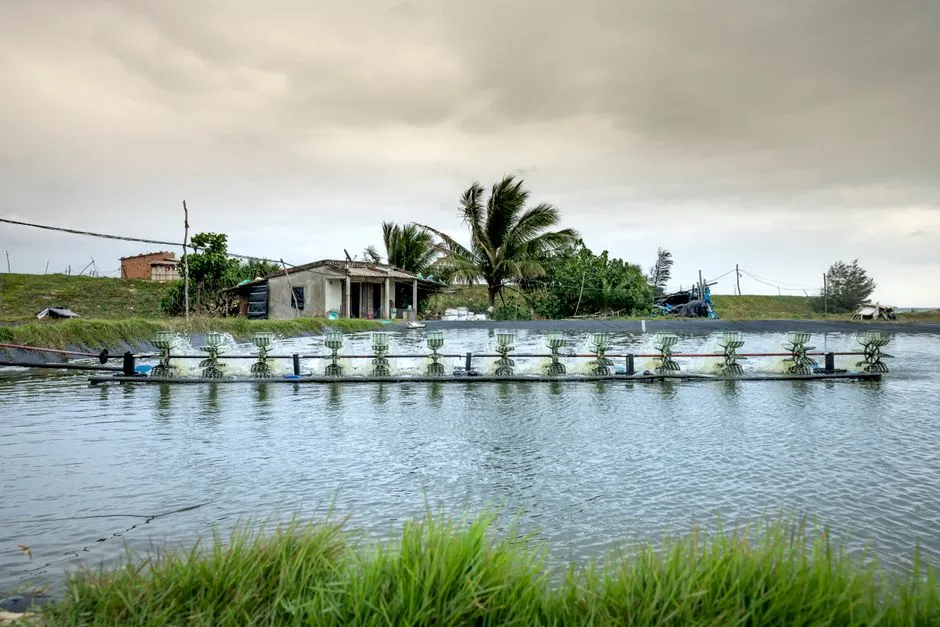
A defensible IFAS design starts with the complete sewage train, not with a reactor drawing. The sequence below is a procurement framework; the biological zone arrangement must then be matched to the treatment objective.
- Preliminary screening and, where required, flow equalization.
- Grit or solids removal.
- Biological treatment with the required anoxic, aerobic, and other redox zones.
- Secondary solids separation.
- Disinfection.
- Reuse preparation or compliant discharge.
Screening protects pumps, media, and biological equipment from rags, plastics, fibrous debris, and suspended solids. The GX rotary mechanical bar screen is specified for that upstream duty rather than as an IFAS component.
In the 2026 inverted AAO+IFAS study, point injection regulated carbon delivery to the anoxic and anaerobic zones. Elliptical flow in the anoxic zone supported MBBR media retention and denitrification, while the aerobic zone’s flexible carrier arrangement was intended to support nitrification stability. That is one tested configuration, not a universal zoning rule.
Carrier choice must match zone function, mixing, fill fraction, mechanical strength, effective surface area, biofilm development, and downstream separation. Mixing must keep the selected carrier in its intended flow regime without creating excessive shear; the carrier percentage alone does not specify a working reactor.
| Process stage | Primary design question | Failure if omitted |
|---|---|---|
| Screening and solids removal | Are debris and suspended solids controlled before media and biological equipment? | Damaged carriers, blocked flow paths, blocked pumps, or unstable biological operation |
| Equalization where required | Does the flow and load equalizer protect the biological envelope? | Hydraulic and organic shock loading |
| IFAS biological reactor | Do redox zones, carrier type, aeration, mixing, and recycle satisfy the treatment objective? | COD, nitrogen, or solids-control targets may not be maintained |
| Secondary separation | Which solids-retention mechanism delivers the required effluent and reuse quality? | Carryover of suspended solids and biomass to downstream treatment |
| Disinfection | Is pathogen control included for the intended discharge or reuse? | Incomplete treatment even if biological targets are met |
Secondary separation closes the process design. Clarification may be appropriate where the required effluent permits it; an MBR membrane bioreactor system is relevant where compact equipment and membrane solids separation are priorities. Membrane separation and IFAS carrier-based biomass retention are different functions and should not be treated as equivalent.
Choosing Carrier Media and Reactor Zones
Carrier selection must begin with the treatment zone, not with a preferred material. The August 2025 Journal of Water Process Engineering review identifies large specific surface area, high mechanical strength, rich pore structure, roughness, durability, effective mass transfer, and reliable fluidization as the principal carrier criteria. These properties determine whether biofilm can establish, remain attached, and receive the substrates needed for the intended reaction.
MBBR media, flexible media, and higher-fluidization approaches create different mixing and biofilm conditions. Conventional MBBR carriers and flexible media are distinct configurations; powder-carrier bio-fluidized beds are a derivative process rather than a drop-in alternative. The 2025 review notes that larger conventional carriers can face suboptimal mass transfer, intensive energy consumption, and constraints on functional microbial enrichment.
Biofilm stability is also biological rather than purely mechanical. The 2025 review identifies extracellular polymeric substances and quorum sensing as contributors to biofilm stability and functional microbial regulation. Surface chemistry, pore structure, and hydrodynamics therefore influence which organisms establish and how the carrier performs over time.
| Selection item | Evidence or engineering basis | Information to request |
|---|---|---|
| Zone-specific carrier | The 2026 study assigned MBBR media to the anoxic zone and flexible media to the aerobic zone | Zone-specific carrier rationale and mixing arrangement |
| Packing density | 9% in the anoxic zone and 20% in the aerobic zone of one 154.1 L study | Definition of packing basis, reactor volume, and operating envelope |
| Carrier construction | Mechanical strength, roughness, pores, durability, and mass transfer govern the 2025 review criteria | Material, effective surface area, dimensions, density, and mechanical design life |
| Biofilm compatibility | EPS and quorum sensing influence stability and microbial regulation | Surface properties, biofilm-development evidence, and startup method |
| Hydraulics | Carrier geometry, density, fill fraction, and mixing must operate together | Documented mixing regime, minimum energy approach, and carrier-retention method |
Geometry, density, fill fraction, mixing regime, and sludge-return arrangement must be engineered as one system. A carrier percentage by itself does not define reactor capacity or effluent performance. For additional application guidance, see IFAS carrier media and reactor design and IFAS design for industrial wastewater.
Designing for Nitrogen Removal and Stable Settling
Nitrogen removal depends on reactor zoning and carbon availability, not simply on the presence of carrier media. Biofilm microenvironments can support simultaneous nitrification and denitrification, but carbon must still reach the organisms performing denitrification, and each redox zone must remain hydraulically and biologically functional.
The 2026 inverted AAO+IFAS study used point injection and an elliptical-flow arrangement in the anoxic zone to manage carbon distribution. Its later-stage averages were 6.5 mg/L ammonia nitrogen, 0.9 mg/L nitrite nitrogen, and 4.6 mg/L nitrate nitrogen. The study reported 61.19% total inorganic nitrogen removal during the evaluated operating sequence, according to the International Journal of Frontiers in Engineering Technology publication in 2026.
The August 2025 Journal of Water Process Engineering review identifies biofilm–sludge synergy and multi-pathway denitrification as reasons IFAS is considered for enhanced nitrogen removal. It also identifies carrier recycling as relevant to stability, phosphorus removal, and microbial renewal. These mechanisms support process selection, but they do not establish a plant guarantee.
| Control or design issue | Evidence to verify during pilot operation | Design input required |
|---|---|---|
| Nitrification stability | Ammonia nitrogen and nitrite response through load changes and temperature conditions | Hydraulic loading, organic loading, temperature, pH, and alkalinity |
| Denitrification performance | Nitrate and nitrite trends, carbon balance, and total nitrogen removal | Carbon-to-nitrogen ratio, feed-carbon distribution, and recycle arrangement |
| Settling and solids separation | Mixed-liquor solids behavior, sludge blanket development, and effluent suspended solids | Sludge age, wasting strategy, recycle arrangement, and solids-separation criterion |
| Carrier durability | Carrier loss, wear, biofilm condition, and recovery after operation | Mechanical design life and documented operating envelope |
The design basis should state carbon-to-nitrogen ratio, hydraulic and organic loading, temperature, pH, alkalinity, recycle arrangements, and the applicable discharge or reuse specification. Where the research does not establish limits, the buyer should obtain those values from the project authority and verified influent data rather than importing them from another study.
Comparing IFAS with Competing Domestic Sewage Options
IFAS is most defensible when biological treatment intensity, footprint, retrofit suitability, or enhanced nitrogen-removal potential justifies carrier-system complexity. Conventional activated sludge remains the simpler baseline where those constraints are not decisive. A comparison should use the same influent, treatment objective, footprint, reuse target, and local discharge conditions.
| Decision factor | IFAS | Conventional activated sludge | MBR | Packaged biological plant |
|---|---|---|---|---|
| Core treatment approach | Suspended activated sludge plus carrier-attached biofilm | Suspended activated sludge | Biological treatment with membrane solids separation | Package-integrated biological, settling, and disinfection equipment |
| Primary distinction | Biofilm–sludge synergy and enhanced biological treatment | Established baseline with fewer carrier-specific controls | Compact equipment and membrane-based solids separation | Integrated package concept suited to defined deployments |
| Retrofit relevance | Potentially suitable where additional biomass or nitrogen-removal capacity is required | May require more footprint or additional process capacity | Requires treatment and membrane-system integration | Requires package siting and connection to the surrounding works |
| Key interface | Carrier, mixing, aeration, sludge separation, and recovery | Sludge handling, settling, and aeration | Membrane fouling, cleaning, and solids separation | Influent, discharge, solids removal, controls, and maintenance access |
| Best selection question | Does the biological constraint justify added carrier and mixing complexity? | Can the simpler baseline meet the project constraints? | Is membrane solids separation justified by the required footprint and effluent quality? | Does the package’s defined process scope match the project? |
The WSZ integrated sewage treatment plant provides a packaged alternative based on anoxic/aerobic biological contact oxidation, sedimentation, and disinfection. The HydropureWater product catalog states that the WSZ series handles 1–80 m³/h and can be installed below grade.
For higher-capacity or compact separation, the MBR membrane bioreactor system should be assessed on membrane requirements rather than treated as merely another carrier arrangement. To compare package-plant applications, see compare packaged sewage treatment options for housing developments.
Pilot Testing, Procurement, and Supplier Evaluation
A pilot should test the operating envelope that matters to the buyer, not merely demonstrate one favorable effluent result. Suppliers should first state design flow, influent characterization, operating envelope, expected effluent targets, zone configuration, carrier specification, aeration concept, mixing concept, and separation method.
The 2026 inverted AAO+IFAS study provides a useful protocol precedent: 17 days of carrier pre-inoculation, 52 days of continuous operation with multiple optimization rounds, and a subsequent 21-day evaluation. That sequence separates biofilm establishment, operational optimization, and performance assessment. A buyer should adapt it to local wastewater and include the project’s actual temperature and loading conditions.
| Procurement area | Required submission | Reason for acceptance |
|---|---|---|
| Design basis | Flow, influent characterization, loading, treatment targets, footprint, discharge or reuse basis | Prevents comparison of proposals built on different assumptions |
| Carrier system | Material, effective surface area, dimensions, density, mechanical design life, fill basis, and operating envelope | Defines what is being supplied rather than referring to an untraceable media name |
| Startup and operations | Wetting, biofilm establishment, odor and aerosol control, carrier recovery, fouling, wear, and sludge wasting | Addresses the operating risks that generic performance claims omit |
| Pilot evidence | COD, ammonia nitrogen, nitrite, nitrate, total nitrogen, total phosphorus, suspended solids, settling, energy use, and carrier condition | Tests biological, separation, and mechanical performance together |
| Contractual controls | Performance criteria, monitoring methods, corrective actions, maintenance, spare parts, and startup support | Connects supplier responsibilities to verified operating results |
For decentralized or onsite domestic sewage, the supplier scope should also address pathogen removal and site constraints. University of Florida IFAS guidance identifies pathogens, nutrients, and trace organic chemicals among the contaminants carried by wastewater. Its Florida-wide septic-system figures describe the scale of onsite-treatment responsibility in that state and should not be applied as universal project statistics.
Contractor and supplier comparisons should also distinguish equipment supply from process engineering. Ask who owns the hydraulic design, carrier selection, biological guarantees, startup responsibility, operator training, maintenance procedures, and corrective-action obligations.
Frequently Asked Questions
What is the capital cost of IFAS for domestic sewage treatment?
The supplied research does not establish a universal price. Request a quote tied to design flow, influent loading, treatment targets, carrier quantity and type, reactor configuration, aeration and mixing, solids separation, civil works, controls, installation, and site conditions. Compare quotations on the same scope; otherwise the capital-cost comparison will not be meaningful.
How do I choose an IFAS supplier for domestic sewage?
Require comparable wastewater evidence, a defined carrier and reactor design, startup support, monitoring obligations, maintenance provisions, and contractual performance criteria. Ask specifically for carrier material, effective surface area, dimensions, density, mechanical design life, fill basis, mixing concept, and the operating envelope covered by the supplier’s data. Also verify who is responsible for pilot interpretation, operator training, corrective action, and carrier recovery.
How much IFAS carrier media is required?
No defensible universal percentage can be given from the supplied research. The 9% and 20% packing densities in the 2026 study applied to different media in different zones of one 154.1 L reactor and cannot be transferred directly to another plant. Require the supplier to state the packing-volume basis, active media volume, carrier properties, mixing regime, and complete reactor calculation.
Is IFAS better than an MBR or packaged sewage treatment plant?
IFAS prioritizes biofilm–sludge synergy and enhanced biological treatment; MBR prioritizes membrane-based solids separation; the WSZ package integrates biological contact oxidation, sedimentation, and disinfection in a compact unit. Choose against the same effluent or reuse objective, influent, footprint, site constraints, and maintenance capability. For site-specific packaged options, compare WSZ integrated sewage treatment plant and MBR membrane bioreactor system on those common criteria.
What should be tested during an IFAS pilot?
Use the 2026 study’s sequence of carrier pre-inoculation, continuous operation and optimization, and a defined evaluation period. Add monitoring for COD, ammonia nitrogen, nitrite, nitrate, total nitrogen, total phosphorus, suspended solids, settling behavior, energy use, and carrier condition. Test the expected hydraulic and organic variations, then require the supplier to explain how results support the final design and performance guarantee.