Which Packaged Treatment Plant Fits a Kaohsiung Housing Development?
The best packaged sewage treatment plant for a Kaohsiung housing development is usually either a buried WSZ-style A/O unit or an MBR package, selected from the confirmed wastewater route—not from headline capacity alone. A buried A/O plant integrates biological treatment, sedimentation, and disinfection for direct integration beneath residential land. An MBR package is appropriate when membrane separation, compactness, or reuse readiness justifies added process complexity. Final selection requires flow data, sewer or reuse destination, site constraints, treatment objectives, and confirmation from Kaohsiung authorities.
Make three decisions before shortlisting equipment. First, establish whether the wastewater will enter a public sewer, receive an approved on-site discharge, or serve a reclaimed-water demand. Second, determine whether the package serves the occupied first phase or the complete development. Third, define the treatment objective: public-sewer acceptance, receiving-water compliance, landscape irrigation, toilet flushing, or another reuse application.
The treatment package is only the process core. The development design must also cover collection sewers, pumping, flow equalization, pretreatment where required, effluent conveyance, monitoring, sludge or solids handling, odor control, utilities, and permanent maintenance access. Capacity selection based only on unit count, population, or supplier catalogue data will not establish a defensible design basis.
For typical residential integration, shortlist the buried WSZ A/O sewage treatment package. Shortlist a packaged MBR membrane bioreactor when the agreed treatment or reuse specification makes membrane separation worthwhile. AECOM’s Kaohsiung Linhai project provides regional context rather than a housing design template: its first phase was designed for 55,000 CMD of household sewage and 33,000 CMD of reclaimed water (AECOM, Kaohsiung Linhai Water Resource Centre).
Kaohsiung Context: Treatment Capacity and Water Reuse
Kaohsiung’s Linhai and Fengshanxi projects show that wastewater planning can serve both sewer infrastructure and water-reuse objectives, but neither municipal facility establishes the capacity or regulatory route for a housing development. AECOM reports that Linhai entered operation at the end of 2021 and was the first Taiwanese wastewater treatment plant to combine wastewater treatment and reclaimed-water facilities in one plant.
The Linhai first phase was designed to treat 55,000 CMD of household sewage and produce 33,000 CMD of reclaimed water for five industrial users in the Linhai Industrial Zone. AECOM states that the facility can expand to 100,000 CMD of wastewater treatment and 60,000 CMD of reclaimed-water production. The design therefore links treatment, production, distribution, and identified users rather than treating reuse as an optional by-product of plant capacity.
Stantec reports that Fengshanxi’s reclamation facility could provide 25,000 CMD after construction and reach 45,000 CMD by the end of 2019. A dedicated pipe transported the reclaimed water to industrial users in Linhai Industrial Park, again showing that distribution and demand are integral to a viable reuse project.
For a housing development, these precedents support three specific checks. Confirm whether the public sewer can legally and hydraulically accept the proposed flow. If not, identify the receiving route and its approval requirements before selecting a treatment process. If reuse is proposed, identify the customer, demand profile, water-quality objective, distribution route, and whether the authority will recognize the intended use.
Stantec cites an 11:1 ratio between rainy-season and dry-season rainfall in Kaohsiung, based on Central Weather Administration statistics from the preceding decade, and links that seasonal imbalance to dry-season water-allocation pressure. The figure supports the strategic relevance of reliable wastewater and reclaimed-water infrastructure; it does not set a housing project’s treatment capacity or reuse rate.
Compare Buried A/O and MBR Packages
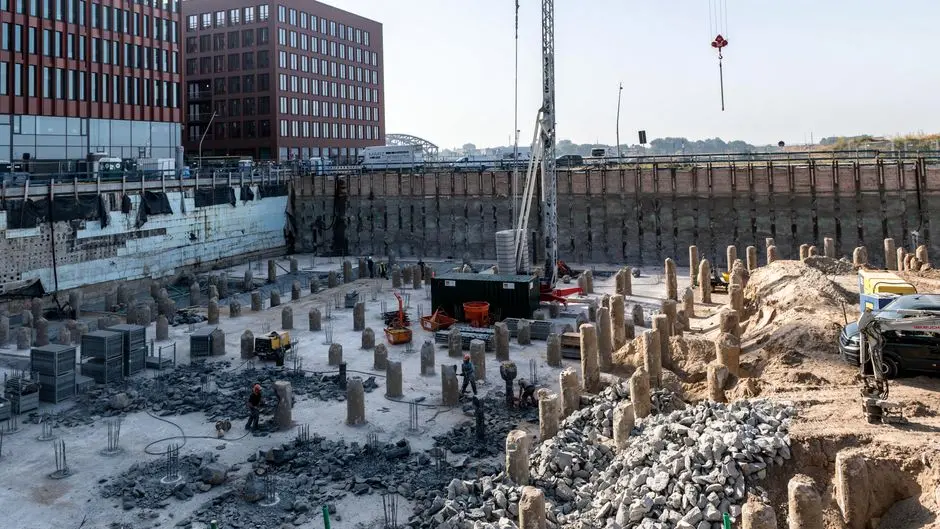
Buried A/O and MBR packages differ most in process separation, site integration, maintenance requirements, and how directly they support a defined reuse objective. The comparison below uses only the supplied catalogue and project information.
| Decision factor | Buried WSZ A/O package | MBR membrane bioreactor |
|---|---|---|
| Treatment configuration | Anoxic/aerobic biological contact oxidation, sedimentation, and disinfection combined in one buried package | Activated sludge combined with submerged PVDF membrane filtration |
| Catalogue capacity | 1–80 m³/h | 10–2,000 m³/day |
| Land integration | Installed below grade with landscaping above | Catalogue states a 60% smaller footprint than conventional systems |
| Filtration feature | Not specified in the supplied research | Filtration below 1 μm |
| Operating proposition | Automatic operation and no operator requirement are catalogue features; local access, power, odor, and solids handling still require review | Applications identified as municipal sewage, industrial process water, and water-reuse projects |
| Principal selection test | Can the integrated biological-sedimentation-disinfection route meet the agreed residential-development objective? | Does the required effluent or reuse quality justify membrane separation and its associated maintenance? |
The WSZ architecture offers a direct fit where land availability is constrained and an integrated biological, sedimentation, and disinfection process is sufficient. Its catalogue capacity spans 1–80 m³/h, but that range does not replace project flow analysis. Automatic operation and the stated absence of an operator requirement also do not remove the need to provide safe equipment access, reliable power, and a solids-removal plan.
The MBR architecture combines activated sludge with submerged PVDF membrane filtration and is listed at 10–2,000 m³/day. The catalogue identifies filtration below 1 μm and a 60% smaller footprint than conventional systems. Those characteristics can strengthen the case for a compact installation or a defined reuse train, but membrane filtration is not automatically required by Taiwan law. The project must have an agreed effluent or reuse specification before that specification is used to select MBR.
TWES lists installed MBR-module projects at 5,000 CMD and 70,000 CMD. These figures demonstrate the available deployment scale of packaged MBR systems; neither is a recommendation for an individual housing development. Further housing-specific process comparisons are available in the guides to compare buried A/O, MBR, and biofilm package plants for housing developments and regional packaged sewage treatment options for housing developments.
Size the Plant from Flows, Not Marketing Capacity
Package capacity should be derived from measured and projected wastewater flows, then checked against the treatment process’s hydraulic and biological design. The supplied research provides no approved population-per-capita factor for this Kaohsiung development, so no defensible flow can be calculated from dwelling count alone.
- Request the current and fully built-out wastewater flow, daily wastewater generation, average flow, peak-hour flow, peak-hour factor, and the approved local design basis.
- Identify groundwater infiltration, stormwater inflow, leaking sewers, backwash water, and reject-water contributions that could affect the treatment duty.
- Define separate present, next-phase, and ultimate design cases, including the occupancy and wastewater route for each phase.
- Apply the approved flow basis to the selected process, then check peak hydraulic loading, equalization, pumping, treatment capacity, and future expansion.
- Define measurable commissioning and sustained-performance criteria before equipment procurement.
| Sizing input | What the developer or engineer must establish | Procurement consequence |
|---|---|---|
| Present phase | Measured or forecast flow, peak profile, occupancy assumptions, and route | Equipment sized for the first commissioned stage, with expansion interfaces defined |
| Next phase | Expected flow increase and any change in wastewater composition or destination | Module, pipe, pump, and control provisions remain compatible with expansion |
| Ultimate case | Fully built-out flow and agreed reserve | Reserve is documented without requiring premature installation of all ultimate equipment |
| Infiltration and inflow | Separate wastewater basis from stormwater or groundwater entry | Adequate hydraulic and biological capacity, with monitoring and corrective actions |
| Verification | Performance test method, sampling plan, and sustained-operation period | Contractual acceptance linked to measured treatment performance |
Community Sewer describes a residential-project sequence of information gathering, regulatory research, engineering design, factory construction and shipment, installation, startup, and a follow-up assessment after twelve weeks. It also states that modular design allows phased development rather than purchasing the whole system at the outset. These are useful workflow precedents, not Kaohsiung regulatory requirements; project-specific milestones and acceptance tests remain necessary.
The approach to compare packaged and cast-in-place treatment approaches can support procurement planning, but the comparison must be adapted to the housing development’s sewer network, phased build-out, land constraints, and approved discharge route.
Integrate Collection, Reuse, and Site Constraints
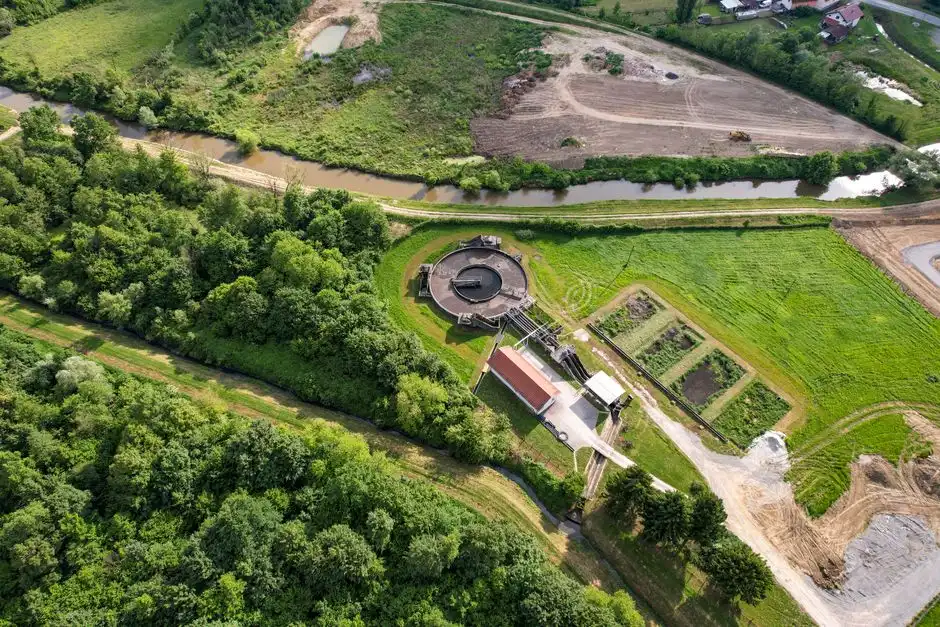
A packaged treatment plant cannot perform reliably if the surrounding process route, utilities, and maintenance provisions are left undefined. Map the complete hydraulic and treatment train from the domestic collection system to its final destination: domestic collection; grit and screening where required; equalization and pumping; biological treatment; clarification or membrane separation; disinfection; effluent storage and conveyance; and discharge or reuse.
For a buried unit, reserve permanent access for pumps, aeration and control equipment, media or membrane maintenance, sludge removal, and safe lifting. Coordinate access doors, vehicle routes, drainage, ventilation, odor control, and lifting points with the development layout. Burial may reduce the visible plant footprint, but inaccessible equipment can turn routine maintenance into major civil work.
Reuse requires its own engineering workstream. First identify the receiving demand and applicable water-quality objective. Only then define whether the treatment package alone is sufficient or whether additional UF or reverse-osmosis pretreatment is required. The catalogueued UF system for reclaimed-water pretreatment handles 2,000–40,000 L/h and removes bacteria, colloids, and suspended solids, but adding it must follow the confirmed reuse specification rather than an assumed need for more treatment.
The Linhai and Fengshanxi precedents show what a reuse concept involves. AECOM reports that Linhai supplied five industrial users through an integrated reclaimed-water system; Stantec reports that Fengshanxi used a dedicated pipe to serve industrial users in Linhai Industrial Park. Treatment capacity alone did not establish those reuse systems: production, distribution, users, and operating management were all included.
Coordinate the package with flood level, subsurface geology, available power, drainage, odor pathways, vehicle access, phased construction, and the final sewer or receiving-water route. A development served across several build phases should also confirm how temporary flows, partial commissioning, and future connections will affect the initial plant.
Build a Tender-Ready Selection and Procurement Checklist
A technically feasible package becomes permit-ready only when the wastewater route, design basis, approvals, performance tests, and surrounding civil works are documented. Issue the same information package to every bidder so quotations remain comparable.
- Provide the approved flow basis, phase-by-phase development plan, process requirements, effluent or reuse objectives, site drawings, geotechnical information, available utilities, delivery constraints, access requirements, testing requirements, and commissioning criteria.
- Require bidders to state design flow, process train, treatment guarantees, performance-test method, applicable energy or media consumption, controls, remote functions, spare parts, operator training, and maintenance support.
- Request the local regulatory interface in writing: sewer-acceptance or discharge route, required plan approvals, construction and operating conditions, sampling and monitoring, sludge handling, and controls for the selected reuse route.
- Compare lifecycle costs rather than equipment price alone. Include installation, site works, pumping, power, controls, chemicals, aeration, membrane or media replacement, sludge handling, inspections, and scheduled performance verification.
- Require factory testing, site acceptance testing, operator training, as-built documentation, warranties, spares, and a sustained performance-verification period before final acceptance.
| Tender document | Minimum information to request | Reason it matters |
|---|---|---|
| Design basis | Approved flows, phase sequence, infiltration and inflow, treatment objective, and discharge or reuse destination | Prevents each bidder from sizing to a different development scenario |
| Process and performance schedule | Design flow, treatment guarantees, sampling method, test conditions, and acceptance criteria | Creates measurable technical and contractual obligations |
| Scope and site interface | Civil works, utilities, access, controls, odor provisions, solids handling, and delivery responsibilities | Excludes costs or interfaces that the package supplier may otherwise omit |
| Compliance schedule | Approvals, sewer or discharge acceptance, monitoring, sludge route, and reuse controls | Distinguishes equipment compliance from a permit-ready development |
| Lifecycle and support schedule | Consumables, replacement items, inspections, training, spares, warranty, and performance verification | Makes operating commitments comparable across quotations |
Community Sewer’s documented sequence—planning, build and shipment, installation and startup, then assessment after twelve weeks—provides a useful procurement checkpoint, but it should not replace project-specific contractual milestones. The broader water treatment infrastructure CAPEX and OPEX drivers should be used to identify cost items for comparison, not to create an unsupported Kaohsiung price.
Frequently Asked Questions
How much does a packaged sewage treatment plant cost for a Kaohsiung housing development?
The supplied research provides no project-specific price for a Kaohsiung housing development. Request quotations using the same design flow, treatment target, sewer or reuse route, site conditions, civil works, pumping, controls, utility requirements, commissioning tests, and O&M terms. Compare installed and lifecycle scopes rather than accepting catalogue or equipment-only prices as equivalent.
Should a Kaohsiung housing development choose WSZ A/O or MBR?
Choose WSZ A/O when its integrated biological, sedimentation, and disinfection process satisfies the agreed objective and direct burial suits the residential site. Choose MBR when the confirmed effluent or reuse specification justifies membrane separation and its additional process and maintenance requirements. A smaller footprint or filtration below 1 μm is not, by itself, a reason to select MBR.
How do I size a packaged sewage plant for a housing development?
Request actual and design flows, peak-hour flow and factor, groundwater infiltration and inflow, backwash or reject-water contributions, and phase-by-phase occupancy. Use an approved local design basis because the supplied research contains no population-per-capita factor. Confirm the treatment process, hydraulic response, and modular expansion sequence before selecting equipment.
Can Kaohsiung’s reclaimed-water projects be used as a direct design template for housing?
No. AECOM reports Linhai first-phase capacities of 55,000 CMD for household sewage and 33,000 CMD for reclaimed water, while Stantec reports 25,000 CMD of Fengshanxi reclaimed-water capacity after construction. These municipal precedents demonstrate integrated treatment, distribution, and reuse, but each housing project must confirm its own approved route, demand, quality objective, and regulatory requirements.
Which documents should I request from a packaged-plant supplier?
Request the design basis, process description, performance guarantees, factory and site test procedures, monitoring plan, O&M manuals, operator training, warranties, spare-parts schedule, controls documentation, and performance-verification schedule. Also require a clear allocation of responsibilities for sewer connection, pumping, civil works, utilities, sludge handling, approvals, and compliance monitoring.