What Treatment Does a Cagayan de Oro Data Center Actually Need?
A data center in Cagayan de Oro needs separate treatment decisions for cooling-tower blowdown, RO reject, humidifier or generator cooling-water bleed, floor wash, and sanitary wastewater. The plant concept should control discharge quality, recover blowdown, protect cooling equipment, and document water consumption; WUE alone cannot distinguish returned water from consumed water. Cooling blowdown is usually the largest reusable stream: theoretical discharge is 25% of makeup water at 4 CoC and 20% at 6 CoC, while actual blowdown may run 15–30% above theory. CDO-specific permit limits, source-water chemistry, tariffs, and receiving-water classification must be verified before final sizing.
The defensible sequence is: measure and characterize each stream; repair leaks and optimize controls; remove suspended solids; treat dissolved solids where the reuse target requires it; then monitor the discharge and reuse streams. Genesis Water Technologies defines water usage as water withdrawn, used, and returned, while consumption includes evaporation and incorporation into products. A data center can therefore report an acceptable WUE while discharging a large untreated blowdown stream.
Do not transfer a Manila design basis to Cagayan de Oro. HydropureWater’s Philippines cooling-blowdown treatment reference discusses DENR DAO 2016-08 and DAO 2021-19, but it does not establish their site-specific application in CDO. The supplied research contains no verified CDO discharge limits, source-water analysis, sewer tariffs, or receiving-water classification. Those documents and representative samples are mandatory design inputs, not administrative details to be filled in after equipment selection.
Build a Complete CDO Data-Center Water Balance
Genesis Water Technologies gives the theoretical relationship as blowdown ratio = 1/(CoC−1). At 4 CoC, 25% of makeup flow exits as blowdown; at 6 CoC, 20% exits. Moving from 4 to 6 CoC therefore reduces theoretical blowdown by 5 percentage points of makeup flow, or 20% relative to the 4-CoC volume—not 50%.
The operating allowance cannot be inferred from that equation alone. Genesis Water Technologies reports that measured blowdown can exceed theoretical calculations by 15–30% because of unmeasured losses and emergency dumps. Its 2026 article also warns that fouling, microbiologically influenced corrosion, and scaling risks increase above 5–6 CoC without advanced treatment. Optimization must therefore balance reduced discharge against equipment protection.
Instrument makeup, blowdown, evaporation, conductivity, pH, suspended solids, and operating CoC before changing the chemical program or installing recovery equipment. These measurements distinguish evaporation, intentional blowdown, leakage, and emergency dumping. A water-monitoring framework for industrial buyers can support this baseline, but it does not replace CDO site data.
| Balance item | Evidence or design treatment |
|---|---|
| Theoretical blowdown at 4 CoC | 25% of makeup-water flow, from Genesis Water Technologies |
| Theoretical blowdown at 6 CoC | 20% of makeup-water flow, from Genesis Water Technologies |
| Change from 4 to 6 CoC | 5 percentage points of makeup flow; 20% less blowdown than the 4-CoC case |
| Measured operating blowdown | May exceed theory by 15–30%, according to Genesis Water Technologies |
| Illustrative 10 MW case | 15 million gallons monthly makeup at 4 CoC implies 3.75 million gallons monthly theoretical blowdown; this is not a CDO design value |
For a Cagayan de Oro data center water balance, report flows and water quality separately for cooling, process-water treatment, floor drainage, generator cooling, and sanitary services. The resulting mass balance becomes the common basis for every equipment quotation and reuse scenario.
Segregate Wastewater by Chemistry and Flow
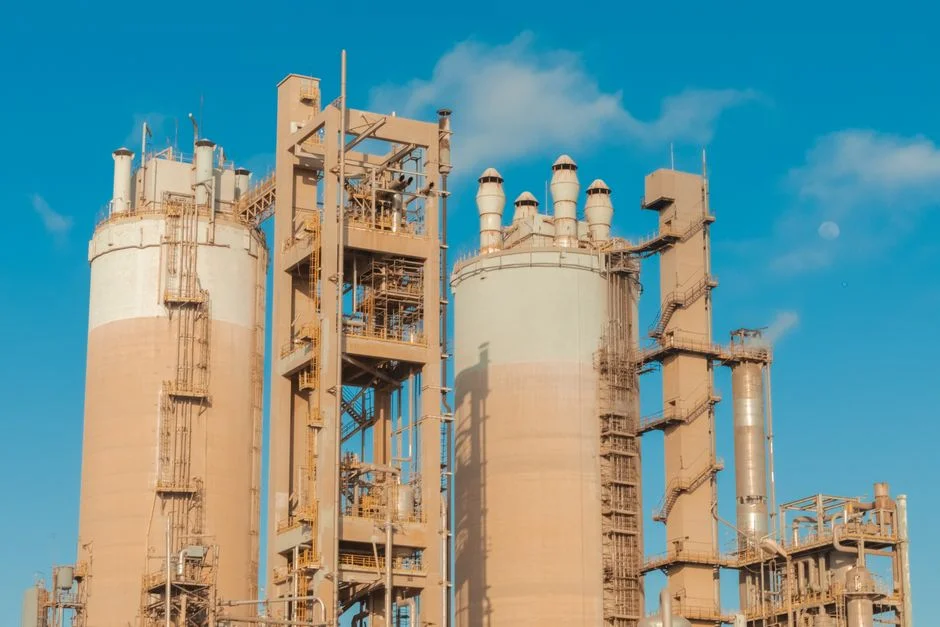
Cooling-tower blowdown should be identified as the principal recovery stream, not automatically routed to the same equipment as every other wastewater. It contains concentrated dissolved solids, suspended matter, residual biocides, scale inhibitors, and corrosion products. Its value depends on recovering water without transferring the concentrated solids into the cooling loop, irrigation system, or discharge point.
RO reject and humidifier or process-water polishing reject need separate characterization because their flow and scaling profiles may differ from cooling blowdown. Floor wash and generator cooling-water bleed should also remain outside the main membrane train until oil and grease, suspended solids, and episodic contaminants are characterized and removed. A sudden oil carryover can damage UF and RO equipment even when routine bulk chemistry looks suitable.
Sanitary wastewater is a separate treatment problem. HydropureWater’s underground integrated sewage-treatment system covers 1–80 m³/h for facilities such as factories and residential communities. That stated capacity does not establish suitability for a CDO data center; sanitary peak flow, occupancy, septicity, local sewer requirements, and receiving infrastructure still govern selection.
| Stream | Primary concern | Routing decision |
|---|---|---|
| Cooling-tower blowdown | Dissolved solids, suspended matter, residual treatment chemicals | Evaluate as the main recovery stream; define the receiving use and water-quality target first |
| RO, NF, or process-water reject | Elevated dissolved solids and potentially different scaling profile | Characterize separately; do not combine solely because both are membrane concentrates |
| Floor wash | Suspended solids, cleaning chemicals, episodic contamination | Retain in segregated collection and batch or equalization review |
| Generator cooling-water bleed | Oil and grease and intermittent flow | Provide dedicated oil and solids removal before common treatment |
| Sanitary wastewater | Organic load, solids, hydraulic peak | Assess through a separate sanitary train and local sewer or discharge pathway |
For each stream, obtain average and peak flow, seasonal variation, temperature, pH, conductivity, TDS, TSS, oil and grease, hardness, silica, chloride, sulfate, and residual treatment chemicals. Flow and chemistry should be paired, because a low average flow with a high contamination event can determine equipment size and equalization requirements.
Compare Practical Treatment Trains
Start with the objective: solids control, dissolved-solids recovery, or complete disposal. Side-stream filtration can remove suspended solids and support cleaner cooling operation or higher CoC, but it does not remove dissolved solids and cannot establish complete discharge compliance by itself.
Where recovered blowdown must feed UF or RO, use filtration according to the measured feed condition. HydropureWater’s multi-media filtration system is intended to condition source water before downstream treatment. Its stated provision of SDI values suitable for RO protection must be checked against the selected media and CDO feed analysis rather than accepted without testing.
HydropureWater’s UF system for blowdown pretreatment uses 0.03 micron PVDF membranes, accepts turbidity up to 300 ppm, and includes automatic backwash and air scour. If dissolved-solids recovery is justified, an industrial RO system for dissolved-solids recovery provides automated PLC control and recovery rates up to 95%. These are equipment characteristics, not guarantees for an uncharacterized CDO stream.
| Treatment train | Appropriate use | What the buyer must verify |
|---|---|---|
| Side-stream filtration | Suspended-solids control and support for cleaner cooling operation | Filtration rating, solids loading, backwash waste, effect on CoC, and whether dissolved-solids compliance remains unresolved |
| Multi-media filtration plus UF | Protection of UF or RO from suspended and colloidal material | SDI performance, turbidity, cleaning method, cartridge or membrane life, and feed chemistry |
| DAF | Removal of suspended solids, FOG, oil, or colloidal material before membranes or reuse | HydropureWater states a 4–300 m³/h range; confirm hydraulic loading, contaminant capture, sludge handling, and CDO application |
| UF plus RO | Dissolved-solids recovery for a defined internal demand | Permeate quality, recovery, scaling, concentrate route, energy, controls, and redundancy |
| RO, NF, or ZLD | Engineered high-recovery or zero-liquid-discharge alternatives | CDO permit, energy, brine disposal, receiving-water constraints, and demonstrated site-specific economics |
HydropureWater’s DAF system for industrial pretreatment is relevant where oil, FOG, suspended solids, or colloidal material must be removed. RO, NF, or ZLD should remain engineered options until CDO discharge and brine constraints are confirmed; the supplied research verifies no CDO-specific requirement for them.
Scale also matters. Genesis Water Technologies describes a modular 100–300 GPM blowdown-treatment concept for smaller facilities and warns against automatically applying hyperscale complexity. The wider data-center wastewater treatment planning guide can support process framing, but its location-specific assumptions do not establish CDO requirements.
Control Microbial Growth Without Creating a New Waste Problem
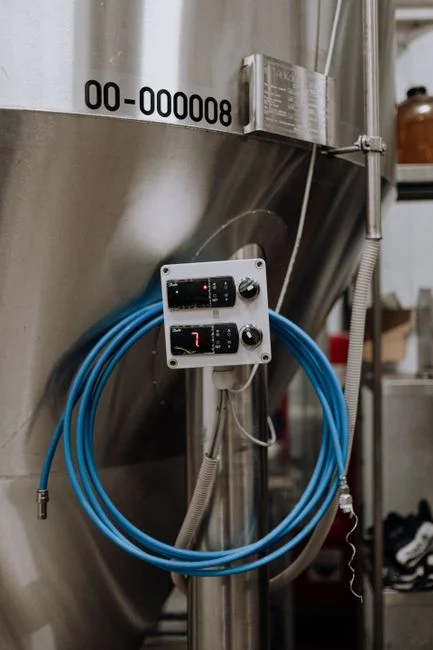
Disinfection must be selected against the receiving process and the downstream treatment train. HydropureWater’s chlorine dioxide generator options range from compact manual units to fully automated systems rated at 20,000 g/h. On-site generation may suit facilities requiring microbial control in industrial cooling loops, but the residual profile, chemical demand, safety requirements, and effect on membranes must be reviewed together.
A UV sterilization system is an alternative when chemical-free treatment and control of chlorine-resistant Cryptosporidium and Giardia are priorities. HydropureWater offers full-pipeline and open-channel UV-C configurations. UV does not provide a residual, so downstream storage, distribution, and recontamination risks must be evaluated.
Compare residual-generating and non-residual approaches rather than treating them as equivalent. A residual can protect a distribution system but may accumulate or affect membrane treatment; UV does not add a residual but requires defined contact conditions and a controlled receiving system. Neither disinfection replaces solids removal, scale control, or corrosion management.
Coordinate the cooling chemical program with membrane-prevention strategy. Additional biocide may control microorganisms, but it cannot substitute for removing suspended solids or preventing scaling. Verify compatibility among the existing cooling-water chemicals, proposed disinfection method, pretreatment media, membranes, and any reuse application.
Size the System from Verified Site Inputs
System sizing should start with measured flows, not a generic module capacity. Submit average and peak makeup, blowdown, RO reject, floor-wash, generator-bleed, and sanitary flows to the designer. Include seasonal variation, emergency-dump frequency, planned IT load, cooling configuration, future expansion, and the designer-selected design margin.
Provide source-water and circulating-loop analyses covering conductivity, TDS, TSS, pH, hardness, silica, chloride, sulfate, oil and grease, temperature, and residual treatment chemicals. Record operating CoC, evaporation, leakage history, and any once-through cooling. These data determine whether the objective is simply blowdown reduction, recovery for non-critical uses, or high-quality reuse.
| RFQ package | Required content | Decision supported |
|---|---|---|
| Water balance | Average and peak flows by stream, evaporation, leakage, emergency dumps, CoC, and expansion | Hydraulic and recovery-train sizing |
| Water analysis | Source, cooling-loop, reject, floor-wash, generator-bleed, and sanitary data as applicable | Filtration, UF, RO, DAF, and disinfection selection |
| CDO compliance basis | Receiving water, sewer or drainage connection, permit classification, discharge points, temperature and TDS requirements, monitoring, and brine restrictions | Discharge route and treatment intensity |
| Commercial basis | Installed scope, utilities, chemicals, membranes, labor, waste handling, commissioning, warranty, and delivery schedule | Comparable lifecycle cost |
Confirm the CDO regulatory basis with the relevant authorities. The supplied research provides no verified CDO equipment cost, discharge ceiling, sewer tariff, or lead time. Capital ranges in the Manila guide must not be transferred to CDO. Obtain project-specific quotations, including installation, utilities, chemicals, membrane replacement, labor, and sludge or brine handling. Equipment scope can be refined through a structured review of treatment parts, valves, and filter media.
Build the Business Case and Select a Supplier
The business case should include avoided freshwater, avoided wastewater charges, chemical savings, reduced blowdown, recovered-water value, energy, membrane replacement, chemical consumption, labor, and sludge or brine handling. Water savings alone can overstate returns because a recovery train adds equipment, utilities, maintenance, controls, and concentrate management.
Genesis Water Technologies’ 2026 illustrative case provides a method, not a CDO quotation: a 15 MW facility recovers 60% of 3 million gallons annually through a $200,000 capital system, producing a stated 6.7-year simple payback before omitted costs. Use the same verified CDO water balance and commercial assumptions for every bidder rather than importing that case’s capital or economics.
Require bidders to guarantee treatment flow and output quality, recovery rate, power demand, chemical consumption, membrane life, redundancy, controls scope, installation boundary, commissioning protocol, and warranty terms. A chemical-dosing system specification should identify chemical type, metering duty, interlocks, containment, and operating sequence rather than leaving dosing as an uncontrolled accessory.
Ask bidders to identify which assumptions drive price: measured feed quality, recovery target, concentrate disposal, staffing, utilities, permits, and expansion allowance. Comparable proposals should use the same water balance and compliance basis. A supplier that demonstrates site-specific mass balance, equipment guarantees, commissioning evidence, and lifecycle-cost transparency is easier to compare than one quoting headline capacity alone.
Frequently Asked Questions
How much should a Cagayan de Oro data center budget for cooling blowdown treatment?
No verified CDO equipment cost or installed cost is supplied, so a defensible budget cannot be set from the available research. Ask each bidder to price equipment, installation, utilities, chemicals, membranes, labor, sludge or brine handling, commissioning, and warranty separately. Also request operating-cost sensitivity using the project’s verified water balance and local tariff inputs.
Should a CDO data center use UF, RO, DAF, or ZLD for cooling blowdown?
Use DAF or filtration where the objective is removal of suspended solids, oil, FOG, or colloidal material; use UF to protect downstream membranes and control biological solids; use RO when dissolved-solids recovery is justified by a defined internal demand. Consider ZLD only after CDO discharge, energy, brine-disposal, and receiving-water constraints are verified. Treatment should follow measured chemistry, not a preferred equipment list.
What size blowdown treatment system should the facility procure?
Size the skid from measured average and peak blowdown, operating CoC, emergency-dump behavior, recovery fraction, future expansion, and the designer-selected design margin. Do not select a generic module solely from IT load. The regional data-center wastewater treatment guide offers a comparison framework, but CDO measurements and reuse demand must control the final capacity.
What should a supplier demonstrate during an RFQ in the Philippines?
Require the supplier to disclose its permit assumptions, measured influent basis, CDO water-balance calculations, equipment guarantees, controls and installation scope, lifecycle costs, and commissioning evidence. Ask how the bid changes if blowdown chemistry, recovery rate, concentrate disposal route, or expansion differs from the base offer. This exposes unresolved assumptions before award.
Can treated cooling blowdown be reused inside the same data center?
Yes, where the recovered water meets the receiving cooling process and the reuse demand is defined. UF, RO, and disinfection perform different functions and should not be treated as interchangeable. Match permeate or clarified-water quality, residual chemistry, scaling tendency, and operating controls to the intended use, then verify performance during commissioning.