Choose the Sewer-Connection Route Before Selecting a Package Plant
The most suitable packaged sewage treatment plant for a Busan housing development depends primarily on whether the site can discharge to the municipal sewer and what the authority requires. If a decentralized system is needed, the WSZ underground A/O sewage treatment plant is a candidate for residential communities within its stated product range, while an MBR package system may be stronger where very compact treatment and membrane filtration are priorities. Selection still requires verified flows, loading, effluent limits, site conditions and permit requirements.
Start with the route, not the equipment. Map every stage from household drains through collection, pumping, treatment, monitoring and the final receiving point. The broader evidence is direct: increasing treatment capacity or upgrading a plant is ineffective if sewage does not physically reach the treatment works, according to The Conversation Media Group Ltd’s article on South Africa’s sewage crisis, published in 2026.
The local Suyeong reference is useful as a prompt for authority engagement, but not as design evidence. The supplied MBR Site page for the Busan Suyeong sewage treatment plant was inaccessible behind a security-verification screen in 2026 and exposed no verifiable plant specifications. It therefore cannot support conclusions about capacity, process, footprint or performance.
| Decision item | Information to obtain in writing | Effect on package selection |
|---|---|---|
| Municipal sewer connection | Connection route, receiving authority, design ownership and acceptance conditions | May remove the need for a decentralized plant or require a particular pre-treatment and monitoring arrangement |
| Treatment necessity | Written basis for technical, land or sewer-capacity constraints | Establishes whether decentralized sewage treatment is mandatory or optional |
| Destination and metering | Final outlet, flow measurement points, ownership and data responsibilities | Defines equipment scope, controls, reporting and handover responsibilities |
| Local reference | Verified Busan project information and applicable authority guidance | Prevents an inaccessible case page or generic precedent from becoming a design assumption |
Do not shortlist equipment until the authority confirms the connection route, design ownership, metering requirements and final effluent destination. A hybrid arrangement may remain necessary—for example, decentralized treatment followed by controlled municipal entry—but that boundary must be defined before comparing process architectures.
Build the Busan Project Design Basis
A comparable supplier specification begins with the development’s own wastewater data, not a generic per-person loading assumption. Collect average flow, peak flow, unit counts, occupancy assumptions, construction phases and any planned expansion; then calculate gross wastewater demand from that supplied development information. Record the calculation basis so every bidder sizes the same problem.
Characterize the influent rather than treating all residential sewage as identical. The brief should cover wastewater temperature, pH, suspended solids, oil and grease, nutrients, and the presence of commercial or industrial contaminants. It should also identify any unusually wet-weather entry or other inflow that could dilute treatment performance or overload the collection system.
The outlet determines the required treatment and documentation. A discharge to a receiving water, reuse for landscaping or irrigation, or acceptance into the municipal system creates different hydraulic, effluent, monitoring and approval obligations. State the intended reuse quality rather than describing it as “reclaimed water,” and obtain confirmation that the proposed destination is permitted.
Request the applicable Busan discharge standards, sewer-connection conditions, approval pathway, commissioning tests and monitoring obligations directly from the responsible authority. The supplied research does not establish current Korean numerical effluent limits, so those limits should not be inferred from general guidance. The domestic sewage treatment equipment guide and the domestic sewage treatment equipment guide for Hanoi can support equipment-document review, but neither establishes Busan approval requirements.
| Design-basis category | Required project information | Why it affects selection |
|---|---|---|
| Flow and development | Average and peak flows, unit counts, occupancy basis and phasing | Sets hydraulic capacity and the number or configuration of modules |
| Influent quality | Temperature, pH, suspended solids, oil and grease, nutrients and contamination sources | Checks biological loading, pretreatment needs and process suitability |
| Outlet | Discharge, reuse or municipal acceptance; intended reuse quality | Sets treatment targets, instrumentation and documentation |
| Site and utilities | Soil, groundwater, flood level, access, utilities and lifting requirements | Controls buried-system layout, structure, O&M and site works |
| Authority | Standards, approvals, tests, monitoring and connection conditions | Creates the compliance and acceptance schedule |
Finally, verify the physical envelope: soil conditions, groundwater, flood level, access routes, utility corridors, lifting arrangements and the space reserved for buried treatment and maintenance. A package can meet a process target and still fail the project if there is no safe means of removing sludge, screens or failed equipment.
Compare WSZ and MBR Package Treatment
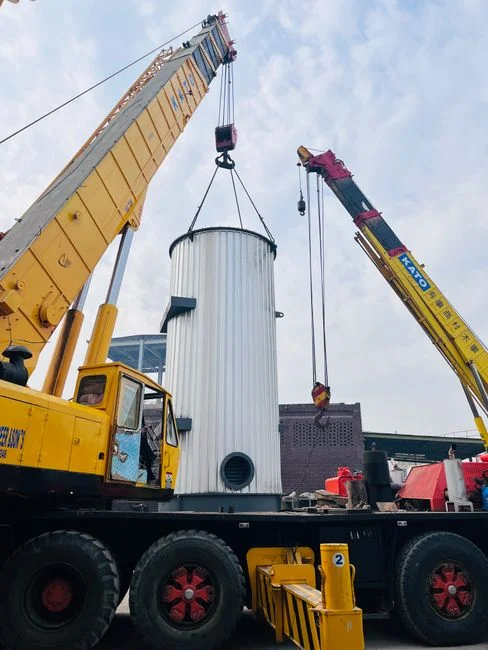
WSZ and MBR are different process choices with different operating consequences. WSZ uses anoxic and aerobic A/O biological contact oxidation, sedimentation and disinfection in a single buried package. Its manufacturer states that the WSZ underground A/O sewage treatment plant operates automatically without a routine operator and covers a stated range of 1–80 m³/h for residential communities and other decentralized applications.
The MBR route combines activated-sludge treatment with submerged PVDF membrane filtration. The manufacturer’s stated range for the MBR membrane bioreactor package system is 10–2,000 m³/day. It also states filtration below 1 μm and describes the resulting effluent as near reuse quality, while claiming 60% less footprint than conventional systems. These are manufacturer claims, not guaranteed performance for a Busan development. Require the supplier to define the test method, comparison baseline and receiving-water or reuse application.
| Selection factor | WSZ package | MBR package |
|---|---|---|
| Treatment architecture | Anoxic/aerobic A/O biological contact oxidation, sedimentation and disinfection | Activated sludge followed by submerged PVDF membrane filtration |
| Manufacturer-stated capacity range | 1–80 m³/h | 10–2,000 m³/day |
| Installed configuration | Single buried package with automated operation and no routine operator stated by the manufacturer | Package treatment includes membrane filtration; supplier documentation must define the complete arrangement |
| Water-quality claim | Requires project-specific effluent guarantees and test conditions | Filtration below 1 μm and near-reuse-quality effluent stated by the manufacturer |
| Space claim | Buried installation preserves the area above the package, subject to access requirements | Manufacturer states 60% less footprint than conventional systems; baseline must be verified |
| Key O&M issues | Process performance, settling, sludge removal, biological maintenance and odor control | Process control, membrane cleaning, membrane condition, replacement provisions and operator interface |
Do not compare the two capacity ranges as if they shared the same units or duty point. Confirm whether each supplier has selected the governing peak-hour condition, what phasing is permitted and what standby or redundancy is required. For MBR, require the membrane cleaning method, expected cleaning frequency, membrane replacement provision and life-cycle responsibility. For WSZ, require evidence for biological treatment, solids separation, disinfection, sludge withdrawal and access to submerged components.
Both alternatives must be evaluated against the same effluent schedule, site envelope and maintenance strategy. A smaller footprint does not help if routine access is blocked, and membrane filtration does not solve an incomplete collection network or an unapproved outlet.
Design for Odor, Maintenance and Neighborhood Acceptance
A buried installation can preserve usable space above the treatment package, but burial does not remove the need for odor control or physical maintenance access. Define ventilation, containment, odor monitoring, confined-space procedures, hatch locations, lifting provision, and safe removal routes as explicit design requirements. Review them together with the residential layout and access roads.
Korean evidence shows why these issues require early attention. A PubMed-indexed study, “upgrading sewage treatment plants,” published in 2020, identifies odor, hygiene and possible effects on house prices as reasons sewage treatment plants are viewed as undesirable neighborhood facilities. It also reports that social conflict between local government and residents is a central issue in plant upgrades.
The same study, published in 2020, reports average Korean household willingness to pay 36,340 KRW (33.25 USD) annually for sewage treatment plant upgrades and estimates that social benefits could cover about 47.73% of project costs. These results come from a Korean contingent valuation study. They are not a Busan housing-project price forecast and should not be inserted into a supplier budget.
The practical response is to assign operating responsibility before tender: who inspects the plant, how alarms are escalated, which spares are held locally, how screenings and sludge are removed, and how odors are investigated. A mechanical pretreatment concept such as a rotary mechanical bar screen may form part of that maintenance strategy, but it should be justified by the influent screening and solids-handling requirement rather than added as an unsupported odor-control device.
Turn the Selection into a Procurement and Approval Package
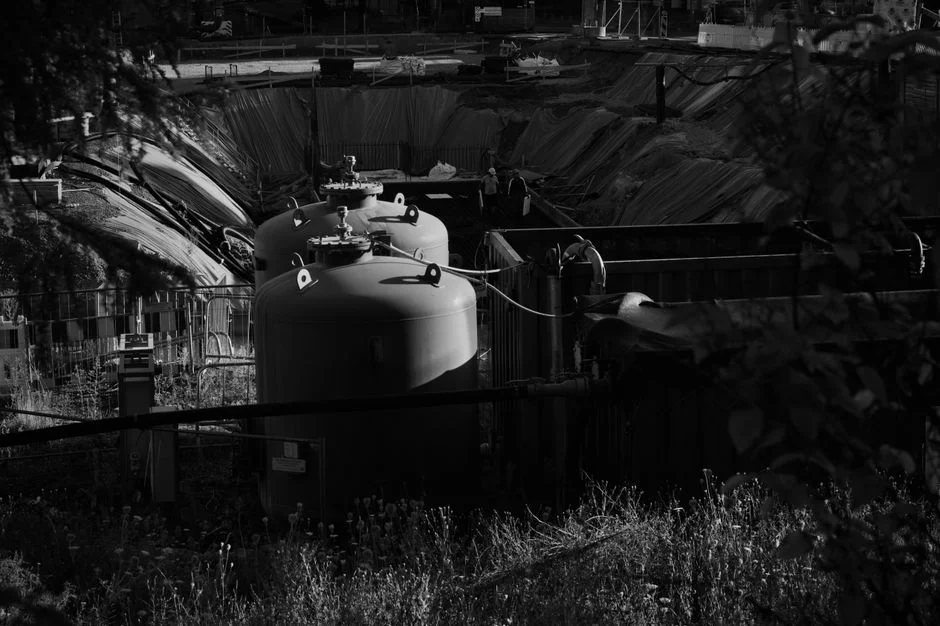
A defensible tender separates process selection from supplier acceptance. Issue a process-neutral performance schedule covering design flow, organic loading, effluent quality, automation, materials, access, utilities, monitoring, documentation and maintenance. Do not prescribe a package before the authority’s route and outlet conditions are confirmed.
Require each bidder to submit a process flow diagram and mass-balance basis, general arrangement, hydraulic profile, control philosophy, commissioning method, training plan and maintenance schedule. Separate guaranteed values from general claims. For every performance guarantee, identify the test method, test conditions, sampling point, operating duty and acceptance criterion.
| Tender stage | Supplier deliverable | Buyer verification |
|---|---|---|
| Technical compliance | Process, mass balance, layout, controls and performance schedule | Check assumptions against the verified Busan design basis |
| Local delivery | Acceptance route, electrical and structural compliance, protected equipment supply and local partners | Confirm responsibilities with qualified Korean project parties |
| Commissioning | Test method, sampling plan, training and handover records | Make acceptance conditional on witnessed tests |
| Operations | Maintenance schedule, alarm escalation, spare-parts list and support commitment | Verify local availability and named responsibility |
| Commercial | Itemized equipment, civil works, installation, commissioning, monitoring and lifecycle costs | Compare like-for-like scope and obtain delivery commitments |
Use structured procurement tools such as the packaged sewage treatment selection for Singapore housing and the sewage treatment equipment supplier checklist as document checklists, not as substitutes for Busan requirements.
Ask Korean parties to confirm local acceptance, electrical and structural requirements, protected-equipment supply, commissioning support and spare-parts availability. Obtain itemized quotations and contractual delivery and support commitments during tendering. The supplied research contains no Busan installation price, budget range or delivery lead time, so none should be stated as an estimate without a project-specific quotation.
Use This Decision Framework for the Busan Development
The selection follows a simple order: connection route, verified design basis, process comparison, site and community requirements, then price. If a compliant municipal sewer connection is available and its hydraulics are accepted, compare that option with decentralized treatment rather than assuming a package plant is mandatory.
If decentralized treatment is required and the application falls within the WSZ manufacturer’s stated 1–80 m³/h range, shortlist the WSZ package. Verify hydraulic and loading margins, phasing, buried access, odor controls, solids handling and authority acceptance. Do not convert the stated range directly into a selected unit without the project’s peak-flow and organic-loading basis.
If footprint, membrane filtration or near-reuse-quality effluent is the defining requirement, shortlist the MBR package. Require the supplier to substantiate filtration below 1 μm and the claimed 60% footprint reduction against a defined baseline. Confirm cleaning, replacement and operating implications before accepting the membrane route.
If development density or phased growth exceeds the verified package capacity, use multiple modules or redesign toward a conventional plant. Do not depend on future expansion that has not been hydraulically demonstrated or approved by the authority.
Make the final recommendation conditional on written Busan effluent limits, discharge or sewer approval, site constraints and lifecycle cost. If the treatment route cannot be demonstrated from collection through final disposal, no packaged plant is ready for procurement. The defensible choice is therefore not simply “WSZ” or “MBR”; it is the architecture that satisfies the verified Busan route and operating obligations.
Frequently Asked Questions
How much does a packaged sewage treatment plant cost for a Busan housing development?
No defensible Busan price can be calculated from the supplied research because it provides neither a quotation nor a project-specific cost basis. Request an itemized tender covering equipment, civil works, inlet and outlet pumping, installation, electrical works, commissioning, monitoring, training, maintenance, consumables and membrane or spare-parts replacement where applicable. Require each supplier to state exclusions and the basis of its lump-sum price.
Should a Busan housing development choose WSZ or MBR technology?
Choose WSZ when a decentralized residential application is required, the duty falls within the manufacturer’s stated 1–80 m³/h range, and its biological treatment, settling and buried-access arrangements fit the site. Choose MBR when membrane filtration, a very compact layout or near-reuse-quality effluent is the governing requirement, after verifying the filtration and footprint claims. The choice remains conditional on Busan’s outlet conditions, not product labels.
What flow data should be submitted when requesting a packaged wastewater treatment proposal?
Submit average and peak wastewater flows, development unit counts, the occupancy basis, construction phasing and expected expansion. Also provide wastewater temperature, pH, suspended solids, oil and grease, nutrients and any commercial or industrial contamination sources. These inputs must come from the development design or an agreed demand assessment; do not ask bidders to fill an undefined design basis with their own assumptions.
How should suppliers be evaluated for local approvals and long-term support?
Require each supplier to identify the Korean parties responsible for local acceptance, electrical and structural review, commissioning and maintenance support. Review protected-equipment supply, commissioning attendance, alarm escalation, operator training, local spare-parts availability and warranty responsibility. Treat written deliverables and contractual commitments as stronger evidence than a general statement of local support.
What are the main compliance risks if the treatment plant is installed without the correct sewer or discharge approval?
The principal risks are rejection of the sewer connection, non-compliant final discharge, incomplete commissioning and unresolved ownership of monitoring. The specific Korean approval path and numerical limits must be obtained in writing from the responsible Busan authority because the supplied research does not establish them. Building before confirming the route can leave a technically functioning package unable to accept or discharge treated sewage lawfully.