Why Taiwan’s Industries Are Switching to Package Wastewater Treatment Plants
A facility manager at a mid-sized electronics components factory in Taichung recently faced a critical ultimatum: upgrade an aging activated sludge system within six months or face daily fines exceeding NT$100,000. The existing plant, built in the late 1990s, occupied nearly 400 square meters of prime industrial land and struggled to meet the tightening Taiwan EPA standards for nitrogen and phosphorus. This scenario is increasingly common across Taiwan’s industrial corridors, where the Taiwan Environmental Protection Administration (EPA) has signaled a 20% increase in inspections for industrial parks in 2025. For many, the traditional approach of large-scale, site-built concrete tanks is no longer viable due to extreme land costs—averaging NT$150,000 to NT$300,000 per square meter in established industrial zones—and the critical shortage of specialized wastewater operators.
The Taichung manufacturer ultimately replaced their conventional system with a high-efficiency MBR system for Taiwan’s high-tech and semiconductor industries. By doing so, they reduced their physical footprint by 70% and lowered energy consumption by 35%. This transition highlights a broader shift toward package wastewater treatment plants in Taiwan. Unlike traditional infrastructure, these modular systems are skid-mounted or pre-fabricated, allowing for rapid deployment in 4 to 8 weeks compared to the 6 to 12 months required for conventional civil engineering projects. This speed is essential for facilities needing to align with how Taiwan’s industrial wastewater challenges compare to the Philippines’ and other rapidly industrializing regions in Asia.
Package plants address the three primary pain points of the Taiwanese market: high land value, regulatory pressure, and the need for automation. With automated PLC controls, these systems require minimal manual intervention, solving the "operator gap" currently affecting smaller industrial units in Taoyuan and Tainan. As the EPA moves toward real-time monitoring requirements for all facilities discharging over 50 m³/day, the integrated sensors in modern package plants provide a "plug-and-play" compliance solution that traditional systems lack.
Taiwan’s Wastewater Regulations: What You Must Know Before Installing a Package Plant
The Water Pollution Prevention and Control Act forms the foundation of Taiwan's industrial wastewater regulations. The Taiwan EPA categorizes discharge standards based on the receiving water body and the industry type. For most industrial park tenants, compliance hinges on Class-2 standards, though specific zones near protected watersheds or high-density urban areas like Taipei may enforce stricter Class-1 limits. Understanding how Taiwan’s package plant regulations compare to the UAE’s or other global standards reveals that Taiwan places a much higher emphasis on chemical oxygen demand (COD) and specific heavy metal concentrations.
The permitting process for a package plant typically spans 3 to 6 months. It begins with the submission of a Water Pollution Prevention and Control Plan to the local Environmental Protection Bureau (EPB). For plants exceeding a capacity of 500 m³/day, a full Environmental Impact Assessment (EIA) may be required. A common pitfall for procurement managers is failing to account for local variations. For instance, Kaohsiung’s EPB enforces a copper limit of ≤ 0.5 mg/L, which is significantly more stringent than the national 1.0 mg/L standard. Similarly, Taipei’s noise restrictions often necessitate acoustic enclosures for above-ground blower units.
| Parameter | Taiwan Class-1 Standard (mg/L) | Taiwan Class-2 Standard (mg/L) | General Industrial Park Limit (mg/L) |
|---|---|---|---|
| BOD (Biochemical Oxygen Demand) | ≤ 15 | ≤ 30 | ≤ 20-30 |
| COD (Chemical Oxygen Demand) | ≤ 60 | ≤ 100 | ≤ 80-100 |
| TSS (Total Suspended Solids) | ≤ 15 | ≤ 30 | ≤ 30 |
| Total Nitrogen (TN) | ≤ 15 | ≤ 20 | ≤ 15-20 |
| pH Value | 6.0 - 9.0 | 6.0 - 9.0 | 6.0 - 9.0 |
Industry-specific regulations also dictate technology choice. Electronics manufacturers must prioritize fluoride removal, often requiring specialized precipitation stages before the biological package plant. Food processing facilities must manage high oil and grease (O&G) levels, where a DAF system for Taiwan’s food processing and petrochemical wastewater pretreatment is essential to protect downstream biological membranes. Failure to include these pre-treatment stages can lead to membrane fouling and permit violations, resulting in fines that scale with the duration of the non-compliance.
Package Wastewater Treatment Plants: Technical Specifications and Process Design
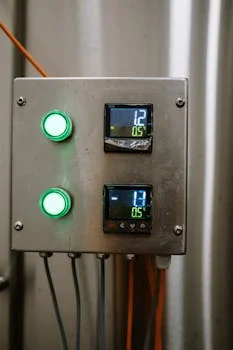
The dominant technologies in Taiwan’s package plant market are Anoxic/Oxic (A/O), Membrane Bioreactor (MBR), Sequencing Batch Reactor (SBR), and Dissolved Air Flotation (DAF). For high-tech parks in Hsinchu, MBR is the gold standard due to its ability to produce high-quality effluent suitable for water reuse, which is increasingly incentivized by the government.
The efficiency of a package wastewater treatment plant in Taiwan is measured by its ability to handle high organic loads within a minimal footprint. While conventional activated sludge systems require 1.5–3.0 m² of land per cubic meter of daily flow, a compact underground wastewater treatment solution for Taiwan’s space-constrained industrial parks can operate at 0.5–1.0 m²/m³/day. This efficiency is achieved through intensified biological activity and integrated clarification stages.
| Technical Parameter | A/O Process | MBR Process | SBR Process |
|---|---|---|---|
| BOD Removal Efficiency | 85-92% | 95-99% | 90-95% |
| Effluent TSS (mg/L) | < 20 | < 2 | < 15 |
| Energy Use (kWh/m³) | 0.3 - 0.5 | 0.6 - 1.0 | 0.4 - 0.7 |
| Footprint Requirement | Moderate | Very Low | Low |
| Sludge Yield (kg DS/m³) | 0.3 - 0.4 | 0.15 - 0.25 | 0.3 - 0.4 |
Energy consumption is a critical variable, as Taiwan’s industrial electricity rates average NT$2.5/kWh but are subject to peak-hour surcharges. Modern package plants utilize variable frequency drives (VFDs) on blowers and pumps to reduce consumption to 0.3–0.6 kWh/m³. Sludge production is another technical hurdle; Taiwan’s sludge disposal market is tightly regulated, with costs ranging from NT$1,000 to NT$3,000 per ton. MBR systems are often preferred here because they operate at higher Mixed Liquor Suspended Solids (MLSS) concentrations, which naturally reduces the volume of waste activated sludge produced, lowering long-term disposal liabilities.
Cost Breakdown: Package Wastewater Treatment Plants in Taiwan (2025)
A standard 100 m³/day industrial package plant requires CAPEX between NT$8M and NT$15M, depending on materials and automation. Budgeting for a wastewater project in Taiwan requires a distinction between initial capital expenditure (CAPEX) and long-term operating expenditure (OPEX). Larger units for municipal or large-scale industrial use (500 m³/day) can reach NT$50M.
Operating costs are often underestimated. In Taiwan, the cost to treat one cubic meter of wastewater generally falls between NT$0.5 and NT$1.5. This breakdown typically includes energy (40%), chemicals for pH adjustment or coagulation (25%), labor (20%), and routine maintenance/parts (15%). However, "hidden" costs such as site preparation—especially for buried units requiring shoring and excavation—can add NT$500,000 to NT$2,000,000 to the total project cost.
| Capacity (m³/day) | Estimated CAPEX (NT$) | Annual OPEX (NT$) | Estimated Payback (Years) |
|---|---|---|---|
| 10 - 50 | 3M - 7M | 150K - 400K | 5 - 7 |
| 100 - 200 | 10M - 25M | 800K - 1.8M | 4 - 6 |
| 300 - 500 | 30M - 50M | 2.5M - 4.5M | 3 - 5 |
The Return on Investment (ROI) becomes compelling when factoring in government incentives. The Taiwan EPA and local governments often provide up to 30% subsidies for capital costs if the project includes water reuse capabilities (e.g., using treated effluent for cooling towers or landscaping). Using standard ROI calculation methods for wastewater treatment projects, a 200 m³/day plant with a NT$25M price tag can achieve a payback period of 4.5 years when offset by water savings and avoided non-compliance fines. The EPA offers low-interest loans (approx. 2.5% interest over 10 years) specifically for "Green Engineering" initiatives, significantly lowering the barrier to entry for SMEs.
How to Choose the Right Package Wastewater Treatment Plant for Your Taiwan Facility
Procurement decisions in Taiwan must account for system integration risks. Because package plants are integrated systems, the failure of a single component—like a membrane or a PLC module—can halt the entire treatment process, leading to immediate regulatory risk.
Step 1: Define Influent Characteristics. Before contacting suppliers, conduct a 7-day composite sampling of your raw wastewater. You must know your peak flow rate, BOD/COD ratios, and the presence of inhibitory substances like heavy metals or high salinity. In Taiwan’s electronics sector, fluoride and ammonia levels are the most common "deal-breakers" for standard biological systems.
Step 2: Technology Matching. Use a decision tree based on your goals. If your primary constraint is space and you want to reuse water, MBR is the logical choice.