Why Lahore’s Wastewater Treatment Costs Are Rising in 2025
Lahore faces a dual challenge of escalating water scarcity and stringent environmental regulations, driving up the costs associated with wastewater treatment. The city's water table has dropped an alarming 1.5 meters annually between 2020 and 2024, as reported by the Pakistan Council of Research in Water Resources in 2024, compelling industries to increasingly rely on treated wastewater for reuse. Concurrently, the Punjab Environmental Quality Standards (PEQS) have been updated, demanding an 80% Biological Oxygen Demand (BOD) removal for industrial effluent, a significant increase from the previous 70% benchmark set in 2022. This necessitates more advanced and energy-intensive treatment processes, directly impacting operational expenditures. The approval of the Rs81.7 billion Babu Sabu plant in 2023 signifies a substantial governmental commitment to large-scale municipal wastewater management, yet it also highlights the investment required. For small and medium-sized enterprises (SMEs), particularly those located in industrial zones like Sundar Industrial Estate, the adoption of decentralized, cost-effective treatment solutions is becoming imperative to avoid escalating sewer surcharges and to ensure compliance.
Wastewater Treatment Plant Cost in Lahore: Capacity-Based Pricing (2025)
Understanding the capital and operational expenditure for a wastewater treatment plant (WWTP) in Lahore requires a detailed breakdown based on treatment capacity and the chosen technology. For facilities ranging from 50 to over 1000 Kilo Liters per Day (KLD), costs can vary significantly. For instance, a 500 KLD Membrane Bioreactor (MBR) system typically incurs an upfront capital cost of approximately 18–22 million PKR, with operational costs ranging from 8–12 PKR per cubic meter (m³). These operational costs are primarily driven by power consumption (around 60%), followed by chemicals (25%) and labor (15%).
The footprint of these plants also varies; MBR systems, while more expensive upfront, offer a significantly smaller land requirement compared to conventional activated sludge processes. It is important to note that these figures generally exclude the costs associated with land acquisition, which can add an additional 5–10% to the total capital investment in urban Lahore, and permitting fees, which typically range from 3–5% of the project cost. Lahore's prevalent high Total Dissolved Solids (TDS) levels, often between 1200–1800 mg/L, can necessitate more robust pretreatment steps, such as Dissolved Air Flotation (DAF) for industrial effluents like those from the textile sector, to remove suspended solids and fats, oils, and grease (FOG) before biological treatment.
| Capacity (KLD) | Technology | Approx. Capital Cost (PKR Million) | Operational Cost (PKR/m³) | Approx. Footprint (m²) |
|---|---|---|---|---|
| 50 | Conventional Activated Sludge | 4–6 | 7–10 | 150–200 |
| 50 | MBR Integrated System | 7–9 | 8–12 | 75–100 |
| 100 | Conventional Activated Sludge | 7–9 | 6–9 | 250–350 |
| 100 | MBR Integrated System | 10–13 | 7–11 | 100–150 |
| 500 | Conventional Activated Sludge | 15–20 | 5–8 | 800–1200 |
| 500 | MBR Integrated System | 18–22 | 8–12 | 300–400 |
| 1000+ | Conventional Activated Sludge | 25–40+ | 4–7 | 1500+ |
| 1000+ | MBR Integrated System | 30–45+ | 7–10 | 500–700 |
For specific applications like textile effluent with high FOG, DAF systems are often employed as a crucial pretreatment step, with a 500 KLD DAF unit costing approximately 8–12 million PKR upfront. For facilities requiring high-quality effluent for reuse, MBR integrated wastewater treatment systems offer superior performance, achieving BOD levels below 10 mg/L.
Government Tariffs vs. Private Plant Costs: What Lahore Pays in 2025
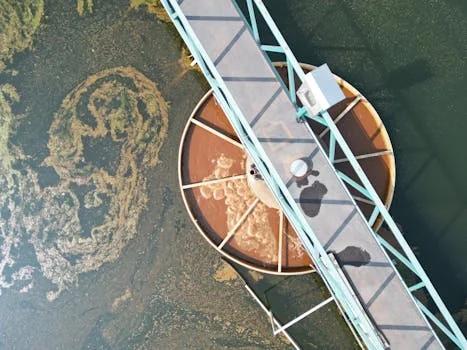
In Lahore, the cost structure for wastewater treatment diverges significantly between municipal projects managed by government entities and private industrial facilities. For large-scale municipal wastewater treatment plants (typically exceeding 200,000 m³/d), the government, through agreements with private operators, is set to pay tariffs ranging from Rs22.53 to Rs32.86 per cubic meter (m³) in 2025. This tariff structure, as exemplified by the agreements with firms like Kunming Dianchi Water Treatment Co., often follows a "front-loaded tariff" model. This means the cost per unit is higher in the initial years of operation, reflecting the substantial capital investment and operational ramp-up, gradually decreasing as the plant reaches full operational efficiency and the capital costs are amortized. The components of these municipal tariffs typically include power consumption (around 40%), chemicals (20%), labor (15%), and capital recovery (25%).
Conversely, private industrial wastewater treatment plants in Lahore, with capacities between 50–1000 KLD, face costs that are more directly tied to their specific influent characteristics and chosen treatment technology. These costs generally fall within the range of 8–25 PKR per m³. This variability is influenced by factors such as the complexity of pollutants, the required effluent quality for discharge or reuse, and the operational efficiency of the system. For instance, a Lahore-based textile factory that previously relied on municipal discharge and incurred costs of approximately 22 PKR/m³ has reported significant savings by investing in a dedicated 300 KLD treatment plant, comprising DAF and MBR technologies, reducing their operational cost to around 12 PKR/m³.
| Cost Component | Municipal Tariff (Approx. %) | Industrial Plant Cost (PKR/m³) |
|---|---|---|
| Capital Recovery / Amortization | 25% | N/A (Included in upfront cost) |
| Power Consumption | 40% | 3–6 (varies by technology) |
| Chemicals | 20% | 2–4 (varies by influent) |
| Labor & Maintenance | 15% | 2–3 (varies by automation) |
| Sludge Disposal | (Included in capital/operational) | 3–7 (varies by volume and disposal method) |
| Total Range | 22.53–32.86 | 8–25 |
This comparison underscores the economic advantage of in-house treatment for industries, especially when considering the potential for water reuse, which can further offset operational expenses by reducing the need for expensive freshwater intake. For those assessing pretreatment options, exploring DAF vs. other pretreatment technologies is a critical step in optimizing cost-effectiveness.
Equipment Type Comparison: Cost, Efficiency, and Compliance Trade-Offs
Selecting the appropriate wastewater treatment technology in Lahore hinges on a careful evaluation of capital costs, operational efficiency, footprint requirements, and the ability to meet stringent effluent standards such as the PEQS and WHO guidelines. Different influent types, common in Lahore’s diverse industrial landscape—including textile, tannery, and municipal wastewater—necessitate distinct treatment approaches.
Membrane Bioreactor (MBR) systems represent a high-efficiency, compact solution. For a 500 KLD capacity, the upfront capital cost for an MBR system can range from 25–30 million PKR. While this is the highest among common technologies, MBRs offer the smallest footprint and produce effluent of exceptional quality, often with BOD levels below 10 mg/L, making them ideal for water reuse applications. Their operational costs are typically in the 8–12 PKR/m³ range. On the other hand, Dissolved Air Flotation (DAF) systems offer a more budget-friendly entry point, with a 500 KLD unit costing approximately 8–12 million PKR. DAF is highly effective for removing suspended solids and FOG, making it a strong candidate for pretreatment, particularly for textile and food processing effluents. However, DAF alone is typically insufficient for meeting stringent biological oxygen demand (BOD) or chemical oxygen demand (COD) limits and usually requires downstream biological treatment. Conventional activated sludge (CAS) processes fall in the mid-range for capital costs, with a 500 KLD system costing around 15–20 million PKR. CAS plants have a larger footprint and higher sludge production, leading to increased sludge disposal costs, which can add an additional 3–5 PKR/m³ to operational expenses. For municipal wastewater in Lahore, which can exhibit high ammonia levels (50–100 mg/L), CAS systems may require enhanced aeration, increasing energy consumption.
| Technology | Typical Capital Cost (PKR/KLD) | Operational Cost (PKR/m³) | Footprint (m²/KLD) | BOD/COD Removal (%) | PEQS/WHO Compliance |
|---|---|---|---|---|---|
| Conventional Activated Sludge (CAS) | 30,000–40,000 | 5–8 | 1.5–2.5 | 85–95% | Good (requires nitrification/denitrification for ammonia) |
| Membrane Bioreactor (MBR) | 50,000–60,000 | 8–12 | 0.6–0.8 | 95–99%+ | Excellent (suitable for reuse) |
| Dissolved Air Flotation (DAF) | 16,000–24,000 (as pretreatment) | 3–6 (as pretreatment) | 0.1–0.2 (as pretreatment) | 50–80% (solids/FOG) | Pretreatment only; requires downstream treatment |
| Sequencing Batch Reactor (SBR) | 40,000–50,000 | 6–9 | 1.0–1.5 | 90–98% | Good (flexible, suitable for variable loads) |
The choice between these technologies significantly impacts both initial investment and long-term operational expenses. For industries in Lahore seeking cost-effective pretreatment, exploring DAF systems or reviewing DAF vs. other pretreatment technologies is crucial. For advanced treatment and reuse, MBR integrated wastewater treatment systems are often the preferred solution.
Operational Costs: Power, Chemicals, and Labor for Lahore Plants
Beyond the initial capital investment, the ongoing operational costs of a wastewater treatment plant (WWTP) in Lahore are critical for long-term financial planning. These costs are primarily driven by energy consumption, chemical usage, labor, and sludge disposal. Power is a significant expenditure, with conventional systems consuming approximately 0.8–1.2 kWh per m³ of treated water, while more advanced MBR systems can require 1.5–2.0 kWh/m³. Given Lahore's electricity rates, which can be around 22 PKR/kWh, this component forms a substantial part of the running expenses. Chemical costs typically range from 2–5 PKR/m³ for essential coagulants and flocculants like Polyaluminum Chloride (PAC) and polymers, and an additional 1–3 PKR/m³ for disinfection using chlorine or chlorine dioxide. Labor costs vary by plant size and automation level; smaller plants (50–500 KLD) might require 3–5 PKR/m³ for staffing one operator per shift, whereas larger, more automated facilities (1000+ KLD) can reduce this to 1–2 PKR/m³.
Sludge disposal is another considerable operational expense, often costing 3–7 PKR/m³ of treated wastewater, especially when considering landfill tipping fees, which in Lahore can reach 5000 PKR per ton. For a hypothetical 500 KLD MBR plant, an annual operational cost breakdown might look like this: power consumption accounting for roughly 45%, chemicals at 25%, labor at 20%, and sludge disposal at 10%. To mitigate rising power costs, many facilities are exploring renewable energy solutions. For instance, the integration of solar-powered aeration systems, particularly for decentralized or rural plants, can potentially reduce electricity expenses by 30–40%. Optimizing chemical usage through precise control is also vital; employing automatic chemical dosing systems can ensure efficient application and minimize waste, thereby reducing overall chemical expenditure. Similarly, for disinfection, advanced systems like chlorine dioxide generators can offer more effective and controlled treatment compared to traditional methods.
| Operational Cost Component | Estimated Cost Range (PKR/m³) | Notes |
|---|---|---|
| Power Consumption | 0.8–2.0 kWh/m³ (Cost: 17.6–44 PKR/m³) | Higher for MBR, aeration, pumping. Lahore electricity rate ~22 PKR/kWh. |
| Chemicals (Coagulants, Flocculants) | 2–5 | For coagulation, flocculation, pH adjustment. |
| Chemicals (Disinfection) | 1–3 | Chlorine, Chlorine Dioxide, UV. |
| Labor & Maintenance | 1–5 | Depends on automation and plant size. |
| Sludge Disposal | 3–7 | Landfill fees, transport, dewatering. |
| Consumables (Filters, Membranes) | 1–3 | Primarily for MBR and advanced filtration. |
ROI Framework: How to Calculate Payback for Lahore Wastewater Plants
To justify investment in a wastewater treatment plant (WWTP) in Lahore, a clear Return on Investment (ROI) framework is essential. This process involves quantifying potential savings and comparing them against the initial capital expenditure and ongoing operational costs. The calculation is typically broken down into several key steps.
Step 1: Estimate Annual Savings. This involves calculating the financial benefits derived from the WWTP. For industrial facilities, the primary savings come from avoiding municipal wastewater discharge tariffs, which can be substantial. For example, a 300 KLD textile plant that would otherwise pay 22 PKR/m³ to discharge its effluent can save approximately 12 million PKR annually (300 m³/day * 365 days/year * 22 PKR/m³). Additional savings can be realized through water reuse, reducing the cost of purchasing freshwater, and by avoiding potential fines for non-compliance with environmental regulations. If Lahore's industrial water cost is 30 PKR/m³, reusing water can significantly boost savings.
Step 2: Calculate Annual Operational Costs. This step involves summing up all recurring expenses associated with running the WWTP. For a 300 KLD MBR plant, this might include power costs (e.g., 1.8 kWh/m³ * 300 m³/day * 365 days/year * 22 PKR/kWh ≈ 4.3 million PKR), chemicals (e.g., 10 PKR/m³ * 300 m³/day * 365 days/year ≈ 1.1 million PKR), labor (e.g., 3 PKR/m³ * 300 m³/day * 365 days/year ≈ 0.3 million PKR), and sludge disposal (e.g., 5 PKR/m³ * 300 m³/day * 365 days/year ≈ 0.55 million PKR), totaling around 6.25 million PKR annually.
Step 3: Determine Net Annual Savings. Subtract the total annual operational costs (Step 2) from the total annual savings (Step 1). In our example, this would be 12 million PKR (savings) - 6.25 million PKR (operational costs) = 5.75 million PKR net annual savings.
Step 4: Calculate Payback Period. Divide the total upfront capital cost of the WWTP by the net annual savings. If the 300 KLD MBR plant had a capital cost of 18 million PKR, the payback period would be approximately 3.1 years (18 million PKR / 5.75 million PKR/year). Municipal plants, with longer depreciation cycles and different revenue streams, typically have payback periods of 7–10 years. Industrial systems, especially those focusing on water reuse, can achieve payback in as little as 3–5 years. Enhancing ROI can be achieved by maximizing water reuse, which can improve payback periods by 20–30% by reducing freshwater procurement costs.
| Parameter | Example: 300 KLD MBR Plant (Industrial) | Example: Municipal WWTP (Large Scale) | Your Input |
|---|---|---|---|
| Capacity (KLD) | 300 | 200,000+ | __________ |
| Capital Cost (PKR Million) | 18 | 81,700 (Babu Sabu Example) | __________ |
| Annual Savings (PKR) | 12,000,000 (Avoided Tariffs @ 22 PKR/m³) | N/A (Government Payment) | __________ |
| Water Reuse Value (PKR/year) | 3,000,000 (e.g., 100 KLD @ 30 PKR/m³) | N/A | __________ |
| Total Annual Savings (PKR) | 15,000,000 | N/A | __________ |
| Annual Operational Costs (PKR) | 6,250,000 (Power, Chemicals, Labor, Sludge) | ~30-40 PKR/m³ (estimated for government payment) | __________ |
| Net Annual Savings (PKR) | 8,750,000 | N/A | __________ |
| Payback Period (Years) | 2.05 (18M / 8.75M) | 7–10 (Typical) | __________ |
For a more detailed understanding of specific investment scenarios, considering wastewater treatment plant costs in other regions for comparative analysis can provide valuable context.
Frequently Asked Questions
Q: How much does a 500 KLD wastewater treatment plant cost in Lahore?
A: A 500 KLD Membrane Bioreactor (MBR) plant typically costs between 18–22 million PKR upfront, with operational costs of 8–12 PKR/m³. Conventional activated sludge (CAS) systems are generally less expensive upfront, costing 15–20 million PKR, but may incur higher sludge disposal costs (3–5 PKR/m³).
Q: What is the cost per unit for municipal wastewater treatment in Lahore?
A: For large-scale municipal plants (over 200,000 m³/d), the government pays private operators a tariff ranging from Rs22.53 to Rs32.86 per m³. Industrial plants in Lahore, depending on their capacity and technology, typically face costs between 8–25 PKR/m³.
Q: Can I reuse treated wastewater in Lahore? What are the cost savings?
A: Yes, treated wastewater can be reused for various purposes such as irrigation, cooling towers, or industrial process water. For instance, a 300 KLD textile plant can save an estimated 8–10 million PKR annually by reusing treated water instead of purchasing freshwater, assuming industrial water costs of around 30 PKR/m³ in Lahore.
Q: What are the hidden costs of a wastewater treatment plant in Lahore?
A: Beyond equipment and installation, hidden costs include land acquisition (which can add 5–10% of capital cost in urban areas), permitting fees (3–5%), potential increases in operational costs due to power fluctuations or unexpected maintenance (add 5–10%), and ongoing sludge disposal fees (3–7 PKR/m³).
Q: How do I choose between MBR and DAF for my Lahore factory?
A: Choose an MBR system if your priority is achieving high-quality effluent for water reuse (BOD <10 mg/L) and if space is a constraint, as MBRs are compact. Select a DAF system if your wastewater has high levels of fats, oils, and grease (FOG), such as in food processing or textile industries, and you require a cost-effective pretreatment step before further biological treatment. DAF is rarely a standalone solution for meeting stringent discharge standards.