
What Makes a Screen Cleaning System Food Grade?
Food-grade screen cleaning is the controlled removal of captured solids, product residue and biofilm from the screening surface, followed by hygienic access, drainage or discharge; installing a spray system alone does not establish sanitary suitability. Selection should begin with the waste stream because food particles, fats, fibrous debris and product fragments differ in blinding behavior, odor retention and cleanup frequency. Sanitary construction then determines whether the equipment can be inspected, cleaned and returned to service without retaining contamination.
Enclosure is a meaningful comparison point. Filson states that fully enclosed rotary drum screens may prevent the spread of unpleasant odors and dangerous gases. Lyco likewise describes its sealed drum separator as containing odors, improving liquid recovery and aiding temperature control (Lyco Manufacturing, Wastewater Screens | Food Processing). Neither feature substitutes for hygienic access or a validated cleaning sequence.
Require a supplier to document contact materials, surface finish, drainability, access covers, cleaning sequence, chemical compatibility and whether captured solids can contact product zones. Lyco’s Sanitary Zero Maintenance Screen provides a useful published benchmark: its covers open for full access, while the cleaning arrangement includes CIP spray balls, automated purging and rapid-change dual canister filters. Systems in that design are available from 50 gpm to 400 gpm (Lyco Manufacturing, Wastewater Screens | Food Processing). These are supplier-specific design facts, not a universal specification.
Also separate screen cleaning from solids handling. A rotary mechanical bar screen with self-cleaning brush discharge combines mechanical screening with a discharge mechanism, but its hygienic performance still depends on access, drainability and the route taken by retained solids.
Compare the Main Cleaning Mechanisms
CIP is appropriate when repeatable cleaning and reduced manual intervention are the priorities, but the proposed design must show spray coverage, chemical recovery, complete drainage and a way to verify that the cleaned surface is clean. Brush, rake and high-pressure methods differ mainly in labor exposure, automation and how effectively they remove adherent residue from the screen geometry.
| Cleaning mechanism | Primary advantage | Buyer checks |
|---|---|---|
| CIP with spray balls | Repeatable cleaning with less manual intervention | Spray coverage, drainage, chemical recovery and surface-verification method |
| Traveling spray CIP | Directed spray movement along wedge-wire screening surfaces | Cycle duration, water use, nozzle maintenance and demonstrated coverage |
| Brush or rake | Mechanical removal of retained solids | Residue removal, wear parts, captured-solids discharge and access time |
| Manual high-pressure cleaning | Simple method suitable for smaller installations, according to Filson | Operator exposure, pressure, water use, drainage and safe access |
| Self-cleaning rotary discharge | Continuous solids removal and reduced screen blinding | Cleaning repeatability, overload behavior and whether the full screen surface is cleaned |
For wedge-wire equipment, Lyco states that its screens can offer greater cleaning efficiency or reduced water requirements with an optional patented Traveling Spray CIP option (Lyco Manufacturing, Wastewater Screens | Food Processing). Keep that claim within the scope of Lyco equipment and request the test conditions behind it.
Filson reports that manually cleaned screens may use a rake or high-pressure water jetting, while mechanically cleaned bar screens use a rotating brush and are better suited to large quantities of debris (Filson, Wastewater Treatment Screen for Fine Filtration). A rotating screen is not automatically a self-cleaning surface: the cleaning member must contact the screening area, not merely convey solids away.
Isolation can limit production disruption. Lyco’s dual-canister arrangement allows flow to be rerouted to the clean filter while the plugged filter is removed and cleaned (Lyco Manufacturing, Wastewater Screens | Food Processing). For every method, request evidence covering cycle duration, chemical consumption, water use, operator exposure, wear parts and restart after a power or chemical-supply failure.
Match the Screen to the Food-Processing Waste Stream
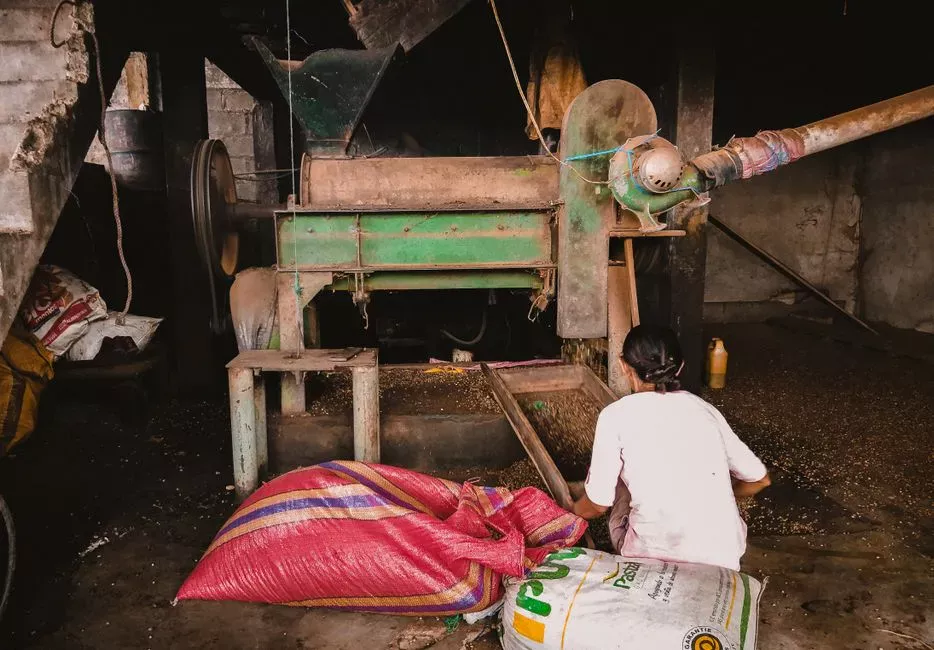
The correct screen begins with the material to be removed, not with a preferred cleaning mechanism. Filson identifies bar, wedge-wire, perforated-plate and mesh screens as common wastewater-screen forms, alongside drum and rotary mechanical configurations. Food particles may create product loss, fats may adhere to surfaces, and fibers may wrap or blind openings. Each waste stream therefore creates a different capture and cleaning requirement.
| Waste-stream or operating condition | Selection implication | Evidence to request |
|---|---|---|
| Meat, poultry, seafood or vegetable processing | Match the rotary or other screen to the specific solids and product-loss risk | Representative samples and recovered-solids analysis |
| Fine solids that could foul downstream equipment | Consider fine screening before downstream treatment | Capture target, screen area and downstream blockage data |
| Odor-sensitive or enclosed processing areas | Evaluate enclosure, ventilation and access together | Odor-control design and verified containment |
| Production cannot stop for screen service | Consider isolation or dual-filter architecture | Flow-rerouting sequence and clean-filter availability |
Filson recommends installing the fine screen upstream to reduce clogging, while stating that the appropriate installation should be assessed by engineers (Filson, Wastewater Treatment Screen for Fine Filtration). This is a process-design recommendation, not proof that one screen type fits every plant.
Lyco identifies meat, poultry, seafood and vegetable processing as rotary-screen applications. Its Micro Drum Screen removes particles as small as 0.008 in, which the supplier describes as 60% smaller than the 0.020 in removal of typical screens. The same source states that 0.020 in slot spacing in its sealed drum separator helps remove insoluble impurities and avoid clogs in screens, nozzles and other downstream equipment (Lyco Manufacturing, Wastewater Screens | Food Processing). These are specific equipment examples, not universal capture limits.
Do not select by opening size alone. Evaluate flow, load, effective screen area, solids characteristics, odor control, recovered-solids handling and required uptime together. If solids leaving the screen require further thickening, a food-processing DAF system for downstream solids removal changes the pretreatment objective and should be included in the integrated process review.
Build a Sanitary Cleaning and Sanitation Workflow
A sanitary workflow should be treated as a controlled sequence, not a final cleaning task after production. First characterize the waste, then screen it, remove captured solids, clean the screening surface, inspect for residual material, drain the enclosure and return the line to service. Each step needs an owner, an observable acceptance condition and a defined response when the condition is not met.
Define inspection frequency using actual operating history. Trigger a cleaning cycle for visible residue, odor, leakage, rising differential pressure or abnormal screen behavior, and record the reason. This is more useful than relying on a fixed interval when waste composition and production volume vary.
Coordinate CIP with production so cleaning chemicals cannot contact product or create an unsafe release into the wastewater stream. The cleaning sequence should address chemical supply, spray coverage, contact conditions, drainage, inspection and release back to service. If an interruption is unacceptable, evaluate isolation or redundant screening. Lyco reports that its dual-canister system permits uninterrupted production while the plugged filter is removed and cleaned (Lyco Manufacturing, Wastewater Screens | Food Processing).
Track water consumption, chemical consumption, operator labor time, cycle duration, screen-element life and downstream blockage events. The supplied research provides no universal cleaning-cycle duration, chemical dose, water-saving percentage or labor reduction. Those figures must come from a defined operating test.
Where washwater or process-water reuse is being evaluated, verify that the selected screen does not defeat the reuse objective. Lyco reports that its water-reuse system can reduce cleaning and maintenance time and conserve up to 15 million gallons per year in poultry applications (Lyco Manufacturing, Wastewater Screens | Food Processing). That published application result is not a general savings guarantee.
Size the System Before Comparing Bids?

Equipment sizing should begin with the process data, not a catalog flow range. Collect peak and average flow, hourly and daily load, solids descriptions, required capture or screen opening, available footprint, utilities, production schedule and the intended reuse point. Without those inputs, two bids may appear comparable while addressing different duties.
| Procurement input | Why it affects the design | Evidence required in the bid |
|---|---|---|
| Peak and average flow | Determines hydraulic loading and required screening area | Duty calculation and stated sizing assumptions |
| Solids type, size and load | Determines blinding, wear and capture requirements | Representative sample characterization and selected opening |
| Production and cleaning schedule | Determines isolation and redundancy needs | Cycle sequence, restart method and availability case |
| Available footprint and access | Controls enclosure, drive, cover and maintenance layout | General arrangement and access clearances |
| Reuse or discharge destination | Determines solids handling and washwater-recovery scope | Mass and water balance across the complete line |
Compare the complete scope: screen, drive, cleaning mechanism, controls, odor enclosure, solids discharge, washwater recovery, electrical requirements and installation access. A mechanical screen integrated with a multi-media filtration stage may have different space, pressure and maintenance requirements from a screen discharging directly to solids handling.
Published flow figures are market references only. Lyco states that its Sanitary Zero Maintenance Screens are available from 50 gpm to 400 gpm (Lyco Manufacturing, Wastewater Screens | Food Processing); that range does not establish the correct size for any facility. Lyco also reports a 200 GPM saving worth more than $150,000 per year in poultry plants. Treat this as one supplier’s application example, not a guaranteed project saving.
Require acceptance criteria for capture, leakage, cleaning repeatability, recovered-solids quality, noise, odor control and downstream equipment protection. Each criterion needs a test method, sample basis and acceptance limit.
Supplier Questions That Expose Design Gaps
Ask which parts of the screen, enclosure, spray system and discharge path can contact retained food solids, and how every contact surface is accessed for inspection and cleaning. A supplier should identify drains, seals, shafts, bearings, spray nozzles, covers and the transition into the solids-discharge path. If a component is difficult to access, the cleaning method is incomplete even if the screen has a polished surface.
Request the written cleaning sequence, cycle controls, chemical-compatibility information, water-recovery arrangement and fail-safe behavior after loss of power or cleaning chemical. Ask how the system prevents reuse of contaminated washwater and how the operator confirms that the screen is clean before the line returns to service.
Request evidence of hygienic operation in comparable food-processing applications. The proposed configuration should match the stated waste stream, not a generic equipment description. Also confirm that capture and flow claims are tied to defined test conditions. For example, Lyco’s 0.008 in claim applies to its Micro Drum design, while the 0.020 in figure is associated with its sealed drum separator (Lyco Manufacturing, Wastewater Screens | Food Processing); neither should be transferred to an unrelated screen.
Require lifecycle information on wear components, lubrication points, seals, spray coverage, access time and spare-part availability. Food-grade design does not necessarily remove every lubrication requirement. Lyco, for example, states that its Sanitary Zero Maintenance Screen eliminates routine bearing lubrication, but chain and sprocket drives still require routine lubrication (Lyco Manufacturing, Wastewater Screens | Food Processing).
Finally, ask for a failure-mode walkthrough. The response should show what the operator sees, which interlocks stop operation, how retained solids are contained and how the equipment is returned to a sanitary state. This exposes design gaps more effectively than a general claim of automated or low-maintenance cleaning.
Frequently Asked Questions
Which cleaning method is best for a food-grade wastewater screen?
Choose the method that matches the waste and operating constraints, then validate it. CIP suits plants prioritizing repeatable cleaning and less manual intervention; brushes and rakes suit mechanically removable debris; high-pressure cleaning may suit smaller installations where operator access is simple. Require a project-specific comparison of cleaning repeatability, labor, water, chemical use and access time.
What screen size and capture level should a buyer specify?
Provide peak and average flow, hourly and daily load, solids characterization, footprint and the required capture target. Lyco reports availability from 50 gpm to 400 gpm and particle removal down to 0.008 in in its Micro Drum Screen, but neither figure is a universal sizing rule. Ask the supplier to show the duty calculation and test conditions behind the proposed configuration.
What are the main cost drivers when pricing a sanitary screen cleaning system?
Request an itemized quote covering the screen, cleaning