What Domestic Sewage Treatment in Beira Must Achieve
Domestic sewage treatment in Beira should be planned around the wastewater source, treatment capacity, site conditions, receiving environment and reuse requirements. Compact package plants are practical for hotels, residential developments, hospitals, factories and remote facilities where rapid installation and limited surface space matter. HydropureWater’s WSZ underground system combines anoxic/aerobic biological contact oxidation, sedimentation and disinfection in one automated unit rated from 1–80 m³/h. An MBR may suit projects requiring a smaller footprint and sub-1 μm membrane filtration, while wetlands or vermifiltration may suit decentralized sites with suitable land and lower-complexity operations. Final selection requires verified local effluent, discharge and reuse requirements.
The first design decision is the treatment boundary. Identify domestic sewage from homes, hotels, hospitals, residential developments, factories and remote facilities separately from industrial wastewater and stormwater. A factory service, for example, should not be assigned a domestic design flow until the process water, cleaning discharges and other industrial inputs have been characterized. Where stormwater enters the collection system, define whether it is excluded, separately managed or included in the wet-weather design basis.
Next, distinguish the required outcome. The project may be intended for safe discharge, non-potable reuse, toilet flushing, irrigation, cooling, or protection of a receiving water. Each route requires a different performance specification and evidence of compliance; the proposed reuse must be checked against the applicable local requirements. The US EPA frames collection and treatment of domestic sewage and wastewater as vital to public health and clean water, with treated wastewater discharged to water bodies or land, or reused, according to its Municipal Wastewater guidance.
Receiving-water sensitivity should be established rather than assumed. PeerJ research in the Lower Amazon describes urban domestic-sewage discharge and limited knowledge of receiving-water self-purification as challenges for sanitation-system design. That study does not establish a Beira dispersion model or receiving-water limit. A Beira project therefore needs site-specific discharge information and applicable authorization rather than an assumed dilution or assimilative capacity.
Define the Wastewater and Design Basis
Meaningful equipment sizing starts with a documented design basis, not a nominal population or equipment range. Request daily wastewater volume, peak-hour flow, occupancy or population equivalents, seasonal demand and expected future expansion. Record the measurement period, data source, assumptions and load basis for every figure so that the supplier is sizing the same wastewater the designer expects the plant to receive.
Develop a sampling plan before selecting equipment. It should cover pH, COD, BOD, suspended solids, oil and grease, nutrients, pathogens and any industrial inputs, with sampling frequency, laboratory methods and responsible analyst identified. The sample points should represent the wastewater reaching the proposed treatment boundary. The domestic sewage treatment in Mozambique guide provides a broader reference for framing local project requirements.
Wet weather belongs in the collection-system review. The US EPA states that infiltration and inflow in sanitary sewers can cause overflows and operational problems at treatment facilities, while significant wet-weather flow increases can adversely affect treatment efficiency, reliability and process control. Check pipe condition, storm connections, groundwater entry and flow recording. Hydraulic sizing must cover realistic variation, but process performance still has to be demonstrated against the agreed influent characterization.
| Design input | Evidence required | Why it changes the decision |
|---|---|---|
| Flow | Daily volume, peak-hour flow, seasonal demand, future expansion and wet-weather observations | Defines preliminary hydraulic capacity and the need for peak-flow or redundancy assessment |
| Wastewater quality | Representative pH, COD, BOD, suspended solids, oil and grease, nutrients and pathogens | Establishes process loading, pretreatment needs and guaranteed influent limits |
| Collection system | Separate-system status, storm connections, infiltration and inflow, blockage and overflow history | Prevents a treatment plant from being selected for a collection-system problem |
| Site | Soil, groundwater, flood exposure, footprint, access, power, odor and pipe routes | Determines installation method, civil works, maintainability and resilience |
| Compliance and reuse | Applicable discharge or reuse requirements, receiving water and approval route | Sets the required treatment objective and demonstration tests |
Collect physical and operational constraints before asking for a final quotation: soil and groundwater conditions, flood exposure, available footprint, maintenance access, power reliability, odor boundaries, incoming sewer route and outgoing effluent route. A buried system can reduce above-ground space use, but installation depth, groundwater, access for maintenance and the consequences of flooding still require project-specific resolution.
The supplied research does not establish Beira’s current effluent limits, permit procedure, groundwater conditions, project costs or annual demand. These are missing local inputs, not values to infer from another city or climate zone. They must be verified with the relevant authority and the project designer before final treatment selection.
Compare Treatment Routes for Beira Projects
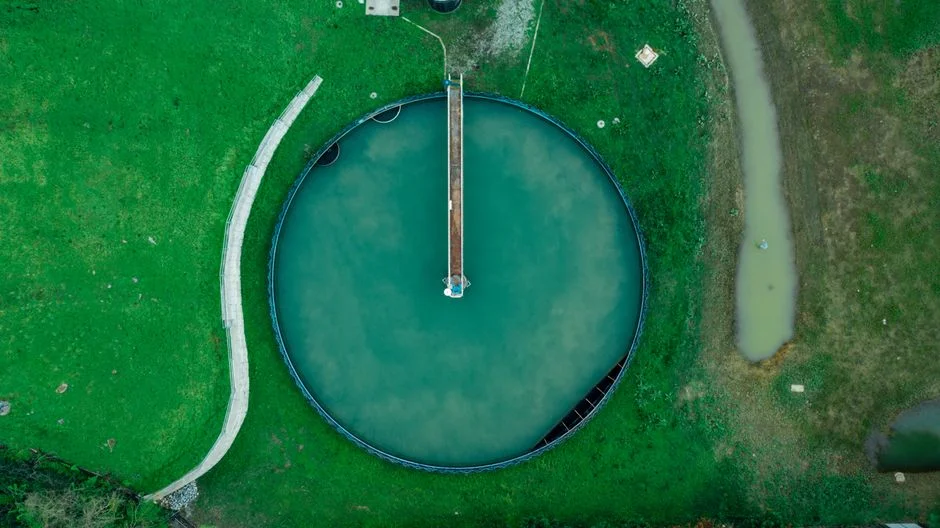
Route selection should follow the verified wastewater source and operating objective. Compact packages suit projects needing a defined, integrated process with limited surface area; an MBR is relevant where membrane solids separation and a small footprint dominate; nature-based routes require land, maintainable ecological process conditions and a clear solids-management path.
The HydropureWater WSZ is the compact integrated option. Its verified product catalog describes anoxic/aerobic biological contact oxidation, sedimentation and disinfection in one buried package. The published capacity is 1–80 m³/h, the system is fully automated and requires no operator, and installation below grade permits landscaping above it. The same catalog identifies residential communities, hotels, hospitals, factories and rural areas as applications, and describes trailer mounting for mobile deployment. These are product specifications, not a guarantee that every application is suitable in Beira; the selected duty must still be checked against the project design basis.
The HydropureWater MBR is the membrane-based alternative. Its published range is 10–2,000 m³/day, with submerged PVDF membranes providing filtration below 1 μm. The manufacturer states a 60% smaller footprint than conventional systems. For a Beira project with limited space, these specifications justify preliminary comparison, but hydraulic recovery, peak-flow treatment, membrane fouling, redundancy and power dependence must be addressed before selection.
Constructed wetlands offer a nature-based route where suitable land and maintenance capability exist. InTech’s chapter on integrating constructed wetlands with microbial fuel cells addresses domestic sewage treatment and electricity production, but the supplied excerpt does not establish a transferable Beira performance range. Vermifiltration is another decentralized option: the IntechOpen chapter describes it as efficient, viable, requiring less expertise and able to be decentralized. Its Zimbabwe case, however, does not constitute a Beira design guarantee. Both routes require local acceptance, climate and land assessment, and a defined solids-removal stage.
Activated-sludge and MBR package solutions remain relevant where standardized process control and established operation are priorities. Newterra describes modular systems including SBR, MBR, aerators, mixers, clarifiers and media filters for domestic wastewater applications. Headline capacity alone is not a selection method: wastewater characteristics, hydraulic loading, footprint, odor, sludge handling, power requirements, operator capability, reuse goals and local acceptance must be compared together.
| Route | Published basis | Main project question |
|---|---|---|
| Underground WSZ package sewage treatment plant | 1–80 m³/h; integrated anoxic/aerobic contact oxidation, sedimentation and disinfection; automated and buried | Does the verified flow and wastewater fit the manufacturer’s selected duty and operating range? |
| MBR membrane bioreactor for municipal sewage | 10–2,000 m³/day; submerged PVDF filtration below 1 μm; stated 60% smaller footprint than conventional systems | Does membrane recovery, redundancy, peak-flow and power requirements meet the project basis? |
| Constructed wetland | Academic treatment and energy-production concept; no transferable Beira performance range in the supplied excerpt | Are land, climate, ecology, maintenance and local acceptance suitable? |
| Vermifiltration | Academic evidence describes decentralization and reduced expertise requirements; Zimbabwe case is not a Beira guarantee | Can solids capture, earthworm management and effluent acceptance be maintained locally? |
Size the Plant and Protect the Treatment Train
Match nominal capacity to the verified design flow, then check the manufacturer’s allowable operating range, peak conditions and wet-weather behavior. Do not select from the upper or lower end of a published range. A supplier should identify the selected configuration, design flow, treatment duty, process assumptions and any conditions outside which the stated performance is not valid.
For preliminary screening, use the WSZ published 1–80 m³/h range and request a manufacturer selection based on verified flow and wastewater characteristics. For the MBR, use the published 10–2,000 m³/day range and require a duty, recovery, redundancy and peak-flow assessment. The containerized MBR sewage treatment plant sizing guide provides a useful methodology, but its Sharjah context is not a substitute for Beira design data.
Protect the biological process from solids that should be removed upstream. Screen the influent for rags, plastics and fibrous debris and provide a suitable pretreatment stage. HydropureWater’s GX Series rotary mechanical bar screen is designed for continuous-duty municipal and industrial wastewater headworks and removes suspended solids, rags, plastics and fibrous debris. Its suitability must be confirmed against the actual flow, debris loading, available head and installation constraints; no unsupported screening capacity is assumed here.
| Sizing or protection item | Supplier information required | Buyer verification |
|---|---|---|
| WSZ capacity | Selected unit, design flow, operating range, process duty and influent limits | Verified project flow and wastewater analysis fall within the stated basis |
| MBR capacity | Selected train, duty, recovery, redundancy, peak-flow method and membrane-cleaning provisions | Hydraulic and biological loading assumptions are documented and defensible |
| Pretreatment | Screen type, duty, head-loss strategy and maintenance access | Debris characteristics and flow match the proposed equipment |
| Sludge and odor | Solids capture, stabilization, storage, dewatering, collection, disposal and odor-control provisions | Each generated solid has a named destination and responsible operator |
| Disinfection | Integrated and additional duties, contact or dose criteria, monitoring and control | Additional treatment is justified by the discharge or reuse specification |
Address sludge and odor during sizing rather than after installation. Define solids capture, stabilization, dewatering, storage, collection and disposal routes, together with operator access and the intended waste destination. The WSZ already includes disinfection in its integrated train; an additional chlorine dioxide or ultraviolet duty should therefore be justified by the reuse or discharge specification, not added automatically.
Build a Procurement and Implementation Checklist
A comparable quotation should begin with a process basis document. It should identify design flow, wastewater analysis, treatment objectives, process stages, equipment list, controls, pretreatment, sludge route and commissioning assumptions. Without that document, quotations may be technically correct for different projects and therefore impossible to compare.
Require each supplier to state guaranteed duty, applicable influent limits, required pretreatment, utilities, footprint, installation method, commissioning prerequisites, operator tasks and routine maintenance. Ask for the packaged sewage treatment plant for a housing development procurement structure to identify missing information, while retaining Beira’s local receiving-water, approval and site requirements.
Obtain the final discharge, reuse and construction approvals in writing. Distinguish equipment documentation from the design certification and approvals required from the relevant Beira authority. A supplier’s statement that a system is “compliant” is not a substitute for the applicable permit conditions or approved project design.
- Verify the local effluent, discharge, reuse and construction requirements.
- Complete wastewater sampling and document wet-weather collection-system behavior.
- Issue one design basis to all shortlisted suppliers.
- Compare selected duty, pretreatment, utilities, footprint, sludge handling and operator requirements.
- Resolve civil works, installation, power, control, odor and maintenance-access interfaces.
- Plan commissioning against incoming sewer readiness, power and water availability, controls testing, sludge routing, operator training, sampling and performance verification.
- Complete handover with as-built drawings, operating manual, spare parts, control settings, laboratory plan, maintenance schedule and a responsible local service provider.
Treat budget as a life-cycle decision. Compare purchase price with installation, civil works, power, chemicals where applicable, sludge handling, maintenance, monitoring and eventual expansion. The supplied research contains no Beira project price, so the buyer should request an itemized local quotation and lifecycle estimate rather than use an unsupported generic price.
Frequently Asked Questions
What is the best domestic sewage treatment system for a hotel or residential development in Beira?
There is no universally best system. A hotel or residential development may suit the WSZ where the verified flow, wastewater characteristics and site conditions fit its published 1–80 m³/h range and limited surface space is important. An MBR may be preferable where membrane solids separation and a small footprint justify the additional operating and power considerations. Confirm the choice against local discharge or reuse requirements rather than application type alone.
How much capacity does a packaged sewage treatment plant need in Beira?
Capacity must be calculated from the project’s verified design flow, including the documented basis for daily volume, peak-hour flow, seasonal demand, future expansion and wet-weather conditions. Use the WSZ 1–80 m³/h or MBR 10–2,000 m³/day published ranges only for preliminary screening. Ask the supplier for a selected configuration and its permitted operating range; do not assign a unit by occupancy alone.
Should I choose an underground WSZ system or an MBR for a decentralized project?
Choose the WSZ when its integrated biological, sedimentation and disinfection train matches the flow, wastewater, footprint and maintenance plan. Choose the MBR when membrane filtration, compactness and controlled solids separation are project priorities, subject to recovery, redundancy, fouling control and power-reliability assessment. Request both options on the same design basis and compare their complete treatment trains.
What should a supplier provide before I accept a wastewater equipment quotation?
Require a process basis document, selected duty, influent limits, pretreatment needs, utilities, footprint, installation method, controls, sludge route, operator tasks, maintenance schedule, commissioning prerequisites and warranty scope. For budget review, request an itemized quotation covering equipment, installation, civil works, power, chemicals where applicable, sludge handling, maintenance and monitoring rather than accepting a headline equipment price.
Which local approvals and tests are required before a sewage plant can be commissioned?
The supplied research does not identify Beira’s current permit procedure or effluent limits, so the buyer must obtain the applicable discharge or reuse conditions, construction approval and commissioning requirements from the relevant authority. Before startup, verify sewer readiness, power and water, controls, sludge routing and operator training; then conduct the required sampling and performance tests against the agreed project specification.
Related Equipment
- rotary mechanical bar screen for wastewater pretreatment — specifications, capacity range, and technical data