Why Luanda's Sanitation Story in 2026 Is Bigger Than One Treatment Plant
Luanda's 2026 sanitation narrative is being rewritten by a single large programme: the IDOM-led project, which is constructing two interceptors to collect wastewater from the city centre and a new wastewater treatment plant, sized to improve conditions for up to 1,790,000 residents currently under saturated sanitation conditions, per IDOM (2026 project description). The IDOM framing focuses on improving the bays and meeting sustainability commitments. That is a signal to any 2026 specifier that effluent quality at the eventual municipal tie-in will be a design driver, not an afterthought.
The IDOM scope does not cover the entire province. The two interceptors and the new WWTP are city-centre infrastructure; districts such as Cazenga, Sambizanga, and Cacuaco sit outside that envelope. Those communes are exactly where a developer, hotel, hospital, or factory in 2026 still has to make a packaged-plant decision. The same engineering logic used in the DouroECI-led Cazenga Southest Plan work, where water supply, wastewater drainage and treatment, and stormwater were treated as one integrated package for a degraded Luanda district, applies to any 2026 site outside the interceptor zone: separate sanitary drainage first, then a packaged biological stage, sized for real peak flow. A useful regional parallel is the packaged sewage treatment for Kinshasa housing developments, which faces the same interceptor-versus-decentralized split.
What 'Domestic Sewage' Actually Means for a Luanda Design Basis
Domestic sewage is the wastewater from homes, businesses, and institutions that is conveyed through sanitary sewers separately from stormwater, as defined by the US EPA (S5). The Luanda design basis should follow that separation principle wherever the collection network allows it, because combined sewers are not permitted for new construction and overflow under wet weather.
Sanitary sewers that are not watertight receive significant infiltration and inflow (I/I) during wet weather, which causes peak flows and operational stress at the downstream treatment plant, per US EPA (S5). In Luanda, with a tropical wet season and an aging or informally extended collection network, I/I is a first-order design consideration. Any sizing exercise must reserve hydraulic capacity for that peak at the pump station and the biological stage, otherwise the first major storm washes solids out of the clarifier.
Domestic sewage is characterised by organic load (BOD/COD), suspended solids, nutrients (nitrogen, phosphorus), and pathogen load. Exact Luanda values should be confirmed by influent sampling at the specific site rather than borrowed from generic textbook ranges, because tropical dilute sewage, high-I/I catchment sewage, and septic-tank effluent behave differently at the same nominal population. Where a Luanda site currently discharges to a septic tank or soakaway, the design must also handle the higher TSS and FOG fractions typical of septic-tank effluent—the same baseline condition flagged in the IntechOpen vermifiltration work (S3).
The 2026 Technology Menu for Luanda Domestic Sewage Treatment
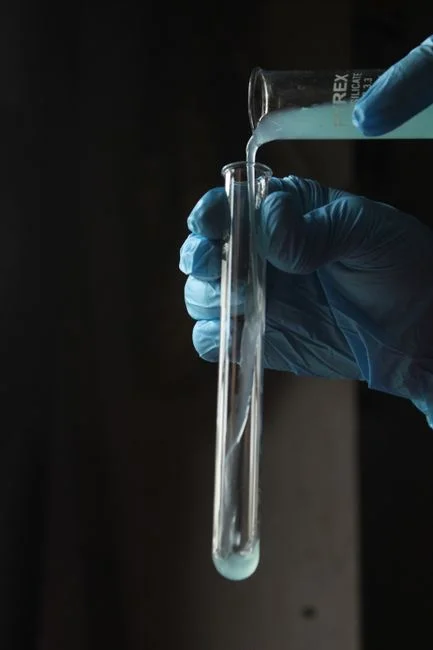
The 2026 menu for sites outside the IDOM interceptor footprint is short, and each entry has a defined job.
A/O packaged units combine anoxic/aerobic biological contact oxidation with sedimentation and disinfection in a single buried package, are fully automated, and handle 1–80 m³/h for residential communities, hotels, hospitals, factories, and rural areas, per the WSZ internal spec (S6). They install below grade with landscaping above, fitting Luanda compounds, staff villages, and hotel sites where surface area is at a premium. The underground A/O packaged sewage plant is the right answer when the load is domestic, the footprint must stay hidden, and there is no on-site reuse requirement.
MBR membrane bioreactors integrate activated sludge with submerged PVDF membranes, deliver sub-micron (<1 μm) effluent suitable for reuse, and need roughly 60% less footprint than conventional activated sludge, in a 10–2,000 m³/day range. The MBR is the right answer where reuse water for irrigation, toilet flushing, or cooling make-up is part of the project scope, or where the discharge consent is tight enough that secondary clarification alone will not pass. Footprint pressure in dense Luanda neighbourhoods also pushes projects toward MBR even when reuse is not yet contracted.
Constructed wetlands, with or without earthworm-assisted vermifiltration, are a low-expertise, decentralisable option that can handle domestic septic-tank effluent in semi-arid to tropical settings, per the IntechOpen vermifiltration study (S3). They require land, careful hydraulic design, and a real operating plan; they are a comparator, not a default. The vermifiltration evidence in S3 is from a Zimbabwe baseline and should not be used as a numeric design input in Luanda without a local pilot.
A combined sewer context is not the right design model for new Luanda domestic sewage work in 2026; sanitary sewer separation plus packaged biological treatment is the cleaner baseline, consistent with the US EPA municipal wastewater framing (S5).
Side-by-Side Comparison: A/O Packaged vs MBR vs Constructed Wetland
The trade-off a Luanda specifier faces in 2026 involves footprint, operator requirement, effluent quality, and whether the water can be reused on site. The table below compares the three realistic options against those criteria. Numeric cells for the A/O packaged and MBR rows are anchored in the WSZ (S6) and MBR internal product specifications; the constructed-wetland row is qualitative because the research does not provide Luanda-specific numeric parameters for wetland sizing.
| Criterion | A/O packaged (WSZ, S6) | MBR (internal spec) | Constructed wetland (S3 comparator) |
|---|---|---|---|
| Flow envelope | 1–80 m³/h | 10–2,000 m³/day | Site-specific; qualitative |
| Footprint vs conventional AS | Compact, buried | ~60% smaller than conventional activated sludge | Large land take |
| Operator requirement | No operator required; fully automated | Skilled operator for membrane cleaning/integrity | Low-tech but disciplined plant management |
| Effluent quality | Secondary biological, suitable for sewer discharge | Sub-micron (<1 μm), reuse-grade | Secondary, polishing depends on design |
| Reuse suitability | Limited | Yes — irrigation, toilet flushing, cooling make-up | Possible for irrigation, not for high-grade reuse |
| Visual integration | Buried, landscaping above | Above-ground equipment room, smaller footprint | Integrated into landscape |
| Best fit in Luanda 2026 | Compounds, hotels, rural sites outside interceptor | Hospitals, F&B, water-reuse projects, tight footprints | Rural/low-density sites with land and no reuse driver |
Sites that will eventually tie into the IDOM interceptor should be designed so their effluent can be accepted at a municipal connection point, which usually means meeting TSS/BOD limits consistent with biological treatment. Confirm those limits with the utility before locking the technology. For the A/O packaged and MBR options, see the underground A/O packaged sewage plant and the MBR membrane bioreactor for reuse-grade effluent specifications as starting points.
How to Size a Luanda Domestic Sewage Plant Without a Crystal Ball
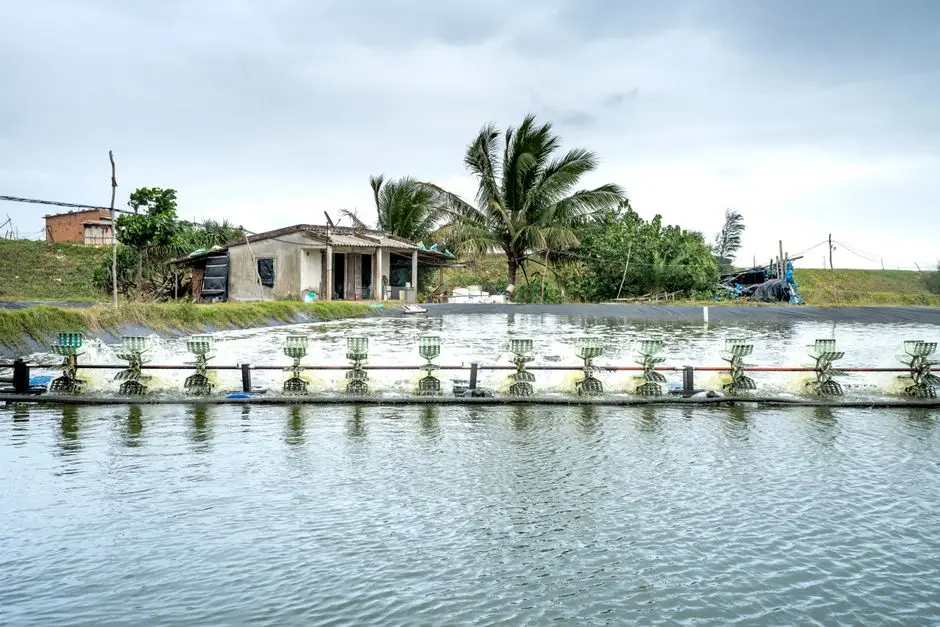
Sizing a Luanda domestic sewage plant in 2026 requires a four-step discipline.
- Fix the design flow from a measured or estimated per-capita or per-bedroom basis, then apply a peak factor. The I/I risk described by US EPA (S5) is the reason peak factor matters in Luanda. The duty flow should be the average dry-weather figure; the hydraulic envelope must pass the wet-weather peak without solids washout.
- Reserve hydraulic capacity for the wet-weather peak at both the influent pump station and the biological stage. Skipping this is the most common way a packaged plant fails its first rainy season.
- Select inside the technology's flow band. For an A/O packaged unit, the WSZ spec puts that band at 1–80 m³/h (S6)—request a duty point (m³/h at the design peak) from the supplier, not just a nominal model number. For an MBR plant, the 10–2,000 m³/day band is the selection envelope, but sizing should also fix the target effluent quality, as membrane area and aeration intensity scale with that target.
- Add a buffer for septic-tank or high-FOG influent where the site currently discharges to a septic tank or grease trap, because the TSS and FOG load will be higher than standard municipal influent. Without that buffer, the biological stage will be undersized from day one.
No supplier can waive the need for a recent influent sample from the site (or a comparable Luanda catchment) and a peak factor that reflects the local I/I reality.
Selection Framework: Matching the Plant to the Luanda Site
The right technology falls out of the site archetype, not the bid price.
If the site is a residential community, hotel, or staff compound in a peri-urban district not yet on the interceptor—Cazenga, Sambizanga, Cacuaco, or the surrounding communes—the default 2026 recommendation is an A/O packaged unit, buried, automated, and landscaped. Putting the WWTP footprint underground keeps the surface usable; this follows WSZ logic (S6) and is the same approach applied in decentralized sewage treatment for hot-climate sites.
If the site is a hospital, food-and-beverage facility, or any operation that wants to reuse treated water for irrigation or toilet flushing, the default is an MBR. Reuse-grade effluent is the deciding criterion; once reuse is on the table, secondary biological effluent from an A/O packaged unit will not pass the reuse specification, and the project ends up paying for a polishing step that should have been the primary stage.
If the site is a rural or low-density Luanda province location with land and no reuse requirement, a constructed wetland can be considered, but only with a local hydraulic designer and a real operating plan. The IntechOpen vermifiltration evidence (S3) shows the technology is viable in semi-arid to tropical settings, but remains qualitative for Luanda without a local pilot.
If the site is a future tie-in to the IDOM interceptor or any municipal trunk, confirm with the utility which effluent parameters will be accepted at the connection point before locking the technology. Interceptor acceptance rules should drive the final choice. The same caution applies to any West African packaged-plant procurement; wastewater treatment plant manufacturer selection in West Africa is a useful process comparator, but the Luanda utility's tie-in list is the actual constraint.
In every case, ask the supplier for a Luanda or sub-Saharan reference list, not a global brochure. Packaged plants are common; Luanda-specific commissioning experience is not.
Frequently Asked Questions
What cost envelope should we expect for a packaged domestic sewage plant in Luanda in 2026?
Available research does not contain a Luanda-specific packaged-plant price. A defensible budget conversation starts with three inputs: the design flow (m³/h or m³/day at the wet-weather peak), the target effluent quality (reuse-grade or sewer discharge), and the required supplier scope (supply-only, supply-and-install, or full O&M). Request a duty-point quote against those three inputs from at least two shortlisted suppliers before fixing a number.
How do we shortlist a supplier for a Luanda domestic sewage plant?
Ask each candidate for a Luanda or sub-Saharan reference list with contactable end users, the membrane or aeration component brands they integrate, and a commissioning plan that includes local electrical and civil conditions. The IDOM Luanda programme (S4) and the DouroECI Angolan portfolio (S2) show that large Angolan sanitation projects run on integrated water-plus-wastewater-plus-
Frequently Asked Questions
What is the best technology for domestic sewage treatment in Luanda in 2026 for a site not yet on the municipal interceptor?
For decentralized sites in Luanda, Membrane Bioreactor (MBR) technology is the current gold standard due to its ability to produce high-quality effluent suitable for non-potable reuse, such as landscape irrigation. Given the limited municipal sewage infrastructure, MBR systems offer a compact footprint and high organic removal efficiency, typically achieving BOD5 levels below 10 mg/L, which complies with current Angolan environmental discharge standards for sensitive areas.
How much does a packaged domestic sewage treatment plant cost in Luanda, and what inputs should I give a supplier to get a real number?
Packaged plant costs in Luanda vary significantly based on capacity and material, ranging from $45,000 to over $250,000 for standard residential or hotel deployments. To receive an accurate quote, you must provide the supplier with the daily average flow rate (m³/day), peak flow rate (m³/h), influent wastewater characteristics (BOD, COD, TSS, and Nitrogen levels), and the specific effluent quality requirements for your intended discharge or reuse application.
How do I choose between an A/O packaged plant and an MBR for a Luanda residential or hotel project?
An Anoxic/Oxic (A/O) process is generally more cost-effective for projects with larger land availability and less stringent effluent requirements, as it relies on secondary clarifiers and is easier to maintain. However, an MBR is the superior choice for high-density residential or hotel developments where space is restricted, or where the project requires high-quality water for on-site reuse to offset municipal water supply shortages common in the Luanda province.
What sizing assumptions and peak factors should be used for a Luanda domestic sewage plant, given wet-weather infiltration?
For Luanda projects, design engineers should assume a per-capita water consumption of 150 to 200 liters per day, adjusted for local occupancy patterns. To account for wet-weather infiltration and the high humidity levels impacting drainage, a peaking factor of 2.5 to 3.0 should be applied to the average daily flow. Failing to account for this factor often leads to hydraulic overloading of the primary settling tanks during Luanda’s heavy rainy season.
What should I check in a sewage treatment equipment supplier's reference list before awarding a Luanda contract?
When reviewing a supplier's reference list, prioritize projects completed within the last three years in similar tropical climates to verify how their equipment manages corrosion and high ambient temperatures. Specifically, request contact information for site managers to confirm the availability of local spare parts, the frequency of membrane or blower failures, and the supplier's response time for on-site technical support within Luanda.