What RA 9275 Actually Covers and Why It Still Matters in 2026
RA 9275 — the Philippine Clean Water Act of 2004 — is a comprehensive, multi-sectoral framework designed to prevent and minimize pollution from land-based sources, including industries, commercial establishments, agriculture, and community or household activities (DENR-EMB Region 12, RA 9275 explainer, https://r12.emb.gov.ph/ra-9275-the-philippine-clean-water-act/). Its purpose is operational, not symbolic: every regulated discharger must obtain a Permit to Discharge, observe DENR effluent standards, pay a wastewater charge, and post an Environmental Guarantee Fund (EGF).
The motivating data behind the law still defines the regulator's stance in 2026. EMB-cited 1996 monitoring found only 51% of classified rivers still meeting the standards for their most beneficial use, with the rest already polluted from domestic, industrial, and agricultural sources (DENR-EMB Region 12). EMB also attributes 48% of organic water pollution to domestic wastewater, while a World Bank report cited in the same source put Metro Manila's sewer-connection rate below 7% — against 20% in Kathmandu and 30% in Dhaka — and noted that only 3% of water-supply and sanitation investment reached sanitation. The same EMB source attributes 31% of all illnesses in the country to polluted waters, which is why compliance cannot be treated as a paperwork exercise; it is a workforce-health and product-quality issue for the discharger.
The policy response paired RA 9275 with the National Sewerage and Septage Management Plan (NSSMP), but the PIDS review of urban wastewater management (PIDS Discussion Paper, "Review of Urban Wastewater Management and Clean Water Act," https://pids.gov.ph/publication/discussion-papers/review-of-urban-wastewater-management-and-clean-water-act) concludes that the sector "remained plagued with institutional fragmentation and disjointed efforts in the absence of an overarching framework and master plan" and that large-scale investment requirements were "often overlooked and underfunded." For a private industrial discharger in 2026, the practical takeaway is that public-sector delivery will not close the gap on its own — the Permit, the treatment plant, the monitoring program, and the EGF have to be driven from inside the facility.
Who the Law Regulates and Which Agencies Enforce It
RA 9275 covers "all owners or operators of facilities that discharge wastewater," with the Implementing Rules and Regulations giving existing industries without a permit a 12-month window from IRR effectivity to secure a Permit to Discharge from the DENR (or the Laguna Lake Development Authority, LLDA, for the Laguna de Bay region) (DENR-EMB Region 12). The DENR is the primary implementing and enforcing agency and is responsible for setting effluent standards, enforcing water quality guidelines, classifying groundwater sources, preparing the national groundwater vulnerability map, and preparing 10-year water-quality management area plans.
For a compliance officer mapping deliverables, the supporting agencies are role-specific. DPWH handles sewerage and septage facilities and the safe collection, treatment, and disposal of sewage. DOH sets, revises, and enforces drinking-water quality standards. DOST evaluates, verifies, and disseminates pollution-prevention and cleaner-production technologies. DA formulates guidelines on wastewater reuse for irrigation and on pollution from agricultural and aquaculture activities. The Philippine Coast Guard enforces water quality standards in marine waters from offshore sources (DENR-EMB Region 12). Sites handling listed toxic substances must also recognize that RA 9275 explicitly cross-references the Toxic Chemicals, Hazardous and Nuclear Wastes Control Act, RA 6969, so the wastewater program and the hazardous-waste program share scope and must be aligned (DENR-EMB Region 12). Management is geographically organized: water quality management areas are designated by DENR in coordination with the National Water Resources Board, on watershed, river basin, or water-resources-region boundaries, and each is run by a multi-sectoral Governing Board that includes LGUs, national agencies, NGOs, water utilities, and the business sector.
| Deliverable | Owner |
|---|---|
| Permit to Discharge; effluent standards; groundwater classification; 10-year management area plans | DENR (LLDA for Laguna de Bay) |
| Sewerage, septage collection, treatment, disposal | DPWH (with LGUs on land/right-of-way) |
| Drinking-water quality standards | DOH |
| Cleaner-production technology evaluation and dissemination | DOST |
| Wastewater reuse for irrigation; agricultural and aquaculture pollution | DA |
| Marine water quality from offshore sources | Philippine Coast Guard |
| Hazardous-substance cross-compliance (shared with wastewater program) | DENR under RA 6969 |
| Adjudication of prohibited-act complaints and fines | Pollution Adjudication Board (PAB) |
The Four Core Obligations Every Discharger Must Meet

The statute collapses into four operational pillars that a plant can plan and budget against: permit, treatment, monitoring, and financial assurance, with a fifth economic instrument layered on top. First, a DENR (or LLDA) Permit to Discharge is mandatory for any facility discharging regulated water pollutants (DENR-EMB Region 12). Second, the facility must meet the effluent quality parameters set under the DENR DAO schedule applicable to its sector. The scraped EMB and PIDS sources do not enumerate the numerical limits for BOD, COD, TSS, FOG, pH, or heavy metals, and the operating parameters have been updated through successive DAOs (including successor instruments to DAO 2005-10 and DAO 2016-08 referenced in current compliance practice); confirm the current parameter schedule and limits with the DENR regional office before final design rather than carrying assumed values into the basis-of-design. The scrapers also do not specify the current 2026 EGF amount; the size of the fund is determined under the facility's environmental management plan and should be requested from DENR as part of the application. Third, the facility must allow DENR entry, inspection, and monitoring, and must submit reports and designate Pollution Control Officers (PCOs) when required (DENR-EMB Region 12). Fourth, every discharger must post an Environmental Guarantee Fund to finance watershed and aquifer conservation, emergency response, and clean-up (DENR-EMB Region 12).
On top of these four, a wastewater charge is levied per management area as an economic instrument designed to encourage cleaner production and pollution-control investment, and effluent trading is permitted within each management area. Fiscal and non-fiscal incentives are available to LGUs, water districts, enterprises, and individuals that deliver outstanding water-quality projects (DENR-EMB Region 12). For pre-treatment, many food, textile, and metal-finishing plants are directed at a dissolved air flotation (DAF) pre-treatment unit upstream of biological treatment, with biological polishing handled by an integrated MBR membrane bioreactor system where space is constrained or reuse-quality effluent is required.
The 14 Prohibited Acts Mapped to In-Plant Risk
The 14 prohibited acts in the EMB summary (DENR-EMB Region 12) read like a legal list, but they are really a risk register once grouped by where the failure occurs in the plant. Group (a) — direct water-body discharge — covers acts 1, 3, and 8: discharging or depositing any water pollutant into a water body, operating facilities that discharge regulated pollutants without valid permits, and discharging regulated pollutants without a valid Permit to Discharge. These are the acts that map directly onto the Permit to Discharge, the EGF, and the pre-treatment / biological-treatment stack. Group (b) — soil and groundwater pathways — covers act 2: discharging, injecting, or allowing anything to enter the soil that would pollute groundwater. Group (c) — hazardous-substance handling under RA 6969 — covers acts 6 and 13, which prohibit transport, dumping, or discharge of listed chemicals and the operation of facilities that discharge or allow listed RA 6969 substances to seep into water bodies. Sites that handle listed chemicals must align their hazardous-waste manifest and storage program with the wastewater program, because a waste-coded violation under RA 6969 can be adjudicated together with a RA 9275 prohibited-act complaint. Group (d) — procedural non-compliance — covers acts 9, 10, 11, 12, and 14: LGU noncompliance with the Water Quality Framework and Management Area Action Plan; refusal of DENR entry, inspection, monitoring, and access to reports and records; refusal or failure to submit reports or designate a PCO when required; tampering with the water supply or using booster pumps in the distribution system; and operating wastewater or sewerage facilities in violation of P.D. 1586 and its IRR (EIS system). Acts 4 and 5 — disposal of potentially infectious medical waste into the sea by vessels, and unauthorized transport or dumping of sewage sludge or solid waste — drive sludge-handling design choices on site, including dewatering and containment. For screening and sludge dewatering, the standard references are a rotary mechanical bar screen for head-of-works protection and a plate and frame filter press for sludge dewatering downstream of the biological stage; a rotary mechanical bar screen is the typical first unit process in a packaged treatment train.
| Risk family | Act(s) (per EMB summary) | Plant-side owner |
|---|---|---|
| (a) Direct water-body discharge | 1, 3, 8 | Permit to Discharge; EGF; pre-treatment and biological-treatment stack |
| (b) Soil / groundwater pathways | 2 | Containment, secondary bunding, lined sludge storage |
| (c) Hazardous substances (RA 6969 link) | 6, 13 | Chemical inventory; manifest; segregated storage; pre-treatment for listed metals |
| (d) Procedural non-compliance | 9, 10, 11, 12, 14 | PCO designation; report calendar; inspection readiness; EIS compliance for expansion |
| Sludge and waste handling | 4, 5 | Sludge dewatering, transport manifests, off-site disposal records |
Fines, Imprisonment, and the True Cost of Non-Compliance
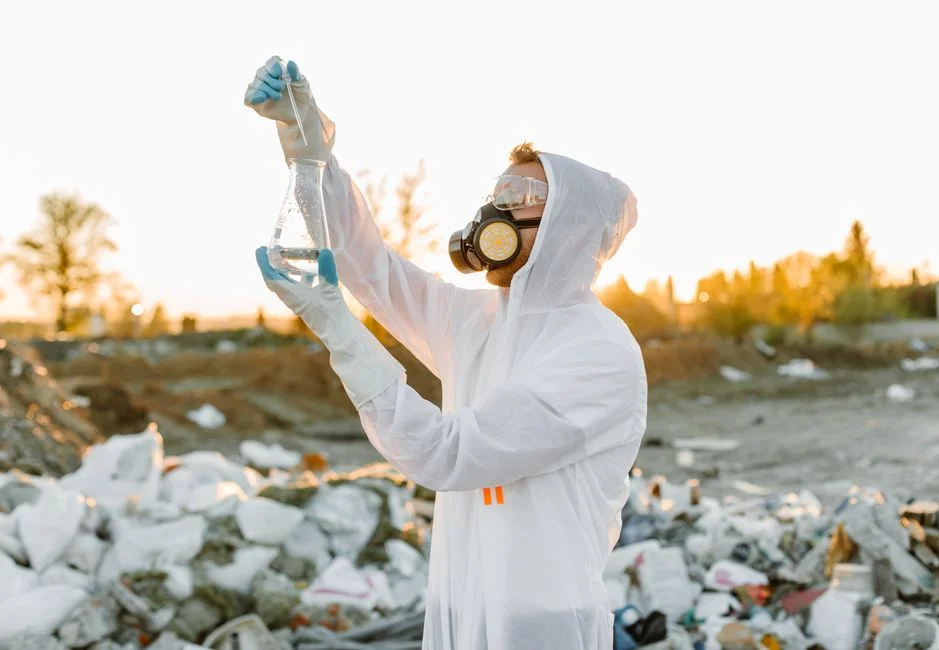
The penalty schedule is set in concrete pesos and years, which is what makes it useful in a capex-defense memo. On the recommendation of the Pollution Adjudication Board (PAB), anyone who commits prohibited acts such as discharging untreated wastewater into any water body is fined not less than Php 10,000 and not more than Php 200,000 for every day of violation (DENR-EMB Region 12). Willful failure to undertake clean-up operations is punished by imprisonment of not less than two years and not more than four years, plus a fine of not less than Php 50,000 and not more than Php 100,000 per day of violation. Where the failure or refusal to clean up results in serious injury, loss of life, or irreversible contamination of surface, ground, coastal, or marine water, the imprisonment rises to not less than six years and one day and not more than twelve years, with a fine of Php 500,000 per day for each day the contamination continues. In cases of gross violation, the fine is not less than Php 500,000 and not more than Php 3,000,000 for each day of violation, and criminal charges may also be filed (DENR-EMB Region 12).
These are floors, not ceilings. The headline daily fine understates true exposure because the PAB can layer clean-up cost recovery, EGF draws, and third-party damages on top, and a criminal complaint can suspend operating permits during adjudication. Treat the published range as the input to a worst-case loss expectancy, not as the expected loss.
A 2026 Compliance Roadmap for an Industrial Site
The roadmap below converts the four obligations into a sequence a project engineer can put on a Gantt chart. Step 1 is influent characterization: measure flows, pH, temperature, BOD, COD, TSS, FOG, and any sector-specific parameters (heavy metals for metal finishing, dye load for textiles, etc.) on a representative operating week. The Permit to Discharge is written against measured effluent, so the basis-of-design starts with the data, not with assumed values. Step 2 is the permit application: lodge a Permit to Discharge application with the DENR regional office (or LLDA for the Laguna de Bay region) (DENR-EMB Region 12). Step 3 is design and installation of the treatment train to meet the applicable effluent parameter schedule. The DENR DAO parameter schedule and current limits are not enumerated in the scraped research, so confirm the current values with the DENR regional office before final design. For sites with limited footprint or a reuse-quality target, an integrated MBR membrane bioreactor system is a common reference configuration; smaller flows or domestic-blended streams can be served by an underground integrated package sewage treatment plant with a much smaller site footprint.
Step 4 is monitoring, sampling, and PCO designation per DENR requirements, with an automatic chemical dosing system for pH correction or nutrient balancing and a chlorine dioxide disinfection generator for the disinfection stage. Step 5 is the EGF: post the Environmental Guarantee Fund and document the management plan that defines how the EGF is sized, what it finances (watershed and aquifer conservation, emergency response, clean-up), and the draw-down conditions (DENR-EMB Region 12). Step 6 is operations readiness: train operators, stand up sludge handling and disposal records, and lock in record retention so the site can satisfy the inspection, reporting, and PCO obligations in the prohibited-acts list. For plants in food, textile, or metal finishing, the supplier and engineering selection is rarely a single product decision; the industrial wastewater treatment engineering spec and cost guide is a useful reference for sizing logic, and the ultrafiltration installation and commissioning protocol is a useful reference for the MBR-side commissioning steps. For plants benchmarking against a comparable regime, the parallel guide to China's 2026 wastewater discharge standards shows how another jurisdiction organizes its parameter schedule.
Frequently Asked Questions
What does a RA 9275 compliance program cost an industrial site in 2026?
The scraped EMB and PIDS sources do not publish a 2026 equipment, EGF, or wastewater-charge price list, so a defensible budget has to be built from site-specific inputs. The actionable step is to request a line-item quote from a packaged-plant supplier that breaks out the pre-treatment unit, the biological stage, the disinfection stage, sludge dewatering, and the EGF posting, then verify the EGF amount with the DENR regional office because it is set under the facility's environmental management plan and is not standardized in the EMB summary.
How do I choose a wastewater treatment supplier in the Philippines without inheriting compliance risk?
Use procurement language that transfers design liability: require the supplier to warrant that the delivered train meets the DENR DAO effluent parameters at the discharge point, not at the outlet of a single unit, and to provide a performance test protocol and retention-period guarantee. Cross-check that the supplier's PCO support covers the prohibited-acts list (acts 10 and 11 cover inspection access, reports, and PCO designation) and that their commissioning documentation is consistent with the P.D. 1586 / EIS requirements cited in prohibited act 14, so an expansion does not trip a procedural violation during the warranty period.
What is the typical lead time from permit application to commissioning for a packaged wastewater treatment plant?
The EMB summary fixes the regulatory clock at 12 months from IRR effectivity for existing industries to secure a Permit to Discharge, but it does not state a current 2026 EMB permit-processing service-level agreement, so the actionable step is to request the current EMB regional processing time and a binding delivery-plus-commissioning schedule from the supplier in writing. The engineering clock (fabrication, shipping, installation, commissioning) is then overlaid on the permit clock to give a realistic ready-to-discharge date.
Does RA 9275 also cover our hazardous-waste handling, or is that a separate program?
Both. RA 9275's prohibited acts 6 and 13 cross-reference the Toxic Chemicals, Hazardous and Nuclear Wastes Control Act (RA 6969), so a facility that handles listed substances has a shared compliance obligation across the wastewater program and the hazardous-waste program (DENR-EMB Region 12). The practical implication is that pre-treatment for listed metals, segregated storage, and the manifest trail should be designed together with the wastewater basis-of-design, not as a separate retrofit after the permit is issued.
Related Equipment
- dissolved air flotation (DAF) pre-treatment unit — specifications, capacity range, and technical data