Why the DAF-vs-Clarifier Question Matters for Southfield EV/Auto Plants in 2026
Southfield sits inside Oakland County, Michigan, the historic spine of the US auto supply chain that now also hosts EV components, battery-pack assembly lines, and gigafactory-adjacent suppliers. The plant streams that hit primary clarification in 2026 are no longer "just metalworking" — they blend legacy stamping lubricants and machining coolants with newer electrode-coating rinse water, electrolyte traces, and battery black-mass carryover. Filtra Systems publishes a 248 area code (248-427-9090) on its industrial filtration product page, confirming Southeast Michigan remains an active service region for industrial water treatment in 2026 (Filtra Systems, 2026).
The dominant signature is still FOG plus TSS, which is exactly the stream profile Clearwater Industries / SigmaDAF USA identifies as a DAF strength — removal of FOG, TSS, BOD, COD, oils, and greases (Clearwater Industries, 2026-04-27). This reality makes the choice between a dissolved air flotation unit and a gravity or lamella clarifier a front-of-train decision for any Southfield facility writing a 2026 pretreatment memo.
How a DAF Clarifier Actually Works in 2026
A recirculation pump pressurizes clarified water with air; on depressurization, 30–50 micron micro-bubbles form and attach to flocculated particles, FOG, and oils, lifting them to the surface (Clearwater Industries, 2026-04-27). A paddle skimmer then scrapes the floating sludge off, while heavier solids settle into a bottom collection zone and are removed by an auger — meaning a DAF system for industrial wastewater is also a partial clarifier by design, as Clearwater explicitly states.
Standard construction is 304SS, with 316SS and polypropylene available for corrosive battery-chemistry streams (Clearwater Industries, 2026-04-27). Chemical conditioning is mandatory upstream: coagulant, pH adjustment, and polymer flocculant. Clearwater documents both delivery options — serpentine flocculation tubes with a 15–45 second flash-mix and multiple dosing points, or staged mix tanks — and notes that flash-mix and contact time must be confirmed by jar testing on the actual plant stream (Clearwater Industries, 2026-04-27; Clearwater Industries, 2026).
The DAF vessel must be filled with clean water at start-up. Filling with raw wastewater risks damaging the recirculation pump and air-saturation system, and forces the unit to discharge dirty, non-clarified water for an extended period (Clearwater Industries, 2026).
How a Gravity or Lamella Clarifier Handles the Same Stream
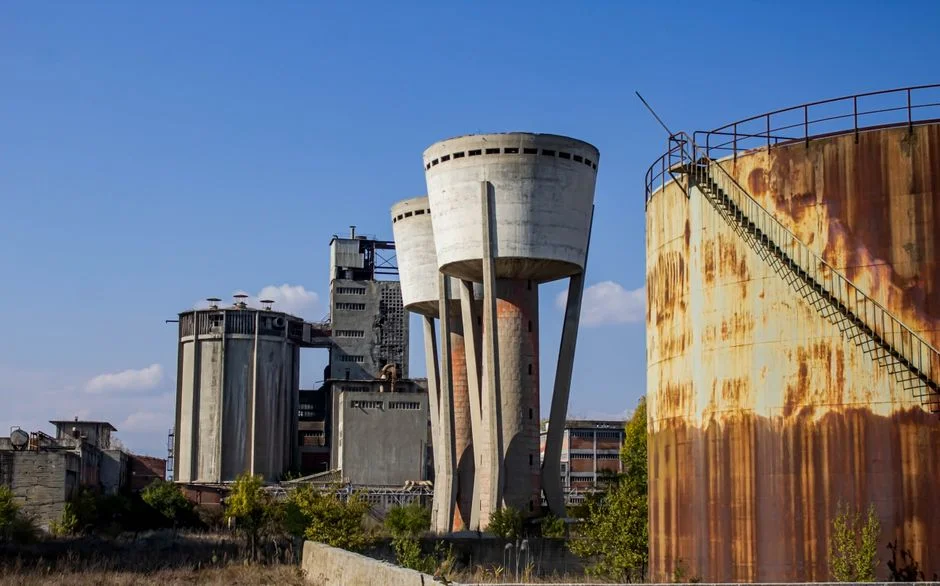
Gravity clarifiers — including lamella or inclined-plate designs — rely on density difference and quiescent settling. They excel when solids are heavy and settleable and when oil content is low. Lamella plate packs multiply the effective settling area inside a small footprint, which is why a lamella clarifier for industrial wastewater competes with DAF on space even though it cannot float FOG (Clearwater Industries, 2026-04-27).
Compared with DAF, a gravity or lamella unit does not need a clean-water start-up fill, a pressurized recirculation loop, or an air-saturation system. That removes a class of mechanical failure modes and simplifies controls. For oily EV/auto streams, a plain gravity clarifier typically needs a prior oil-skimming or pre-coalescing step. The lamella plate principle itself is the same one Clearwater builds into its FPBC and FPHF DAF models to drive overflow rates down, so the underlying physics overlap even when the equipment is not packaged as flotation (Clearwater Industries, 2026-04-27).
DAF vs Clarifier: Side-by-Side for EV/Auto Wastewater
The decision matrix below provides a direct, head-to-head view grounded in Clearwater / SigmaDAF documentation. Engineers should read it against their own jar-test and sewer-ordinance data.
| Parameter | DAF (SigmaDAF / Clearwater) | Gravity / Lamella Clarifier |
|---|---|---|
| Primary mechanism | Floats FOG, oils, and light TSS on 30–50 µm micro-bubbles; heavier settleables still drop to a bottom auger (Clearwater Industries, 2026-04-27) | Quiescent settling; lamella plates increase effective area for fine settleables |
| Best-fit EV/auto stream | Stamping lube, machining coolant carryover, electrode-coating rinse, battery black-mass rinse with FOG | Mineral scale, sand, and metal-bearing sludges with little free oil |
| Footprint | Low-profile cross-flow or skid; Compact DAF is a single skid at ≤66 GPM and a two-skid modular unit above 66 GPM (Clearwater Industries, 2026-04-27) | Lamella design competes with DAF on footprint; conventional basin is larger |
| Start-up requirement | Clean-water fill to protect the recirculation pump and air-saturation system (Clearwater Industries, 2026) | No clean-water fill required |
| Chemical conditioning | Coagulant + pH adjustment + polymer flocculant via 15–45 s serpentine tubes or staged mix tanks (Clearwater Industries, 2026-04-27) | Coagulant/flocculant optional; often omitted on raw settleables |
| Standard materials | 304SS standard; 316SS or polypropylene for corrosive battery streams (Clearwater Industries, 2026-04-27) | Typically coated carbon steel or FRP vessels |
| Mechanical risk surface | Recirculation pump, saturation vessel, air compressor, skimmer drive | Sludge rake/auger, launder, scum baffle |
| Pre-treatment step required for oily streams | None — DAF is itself a FOG-removal step | Oil-skim or pre-coalescer typically required upstream |
Matching DAF Models to Southfield Plant Flow Rates
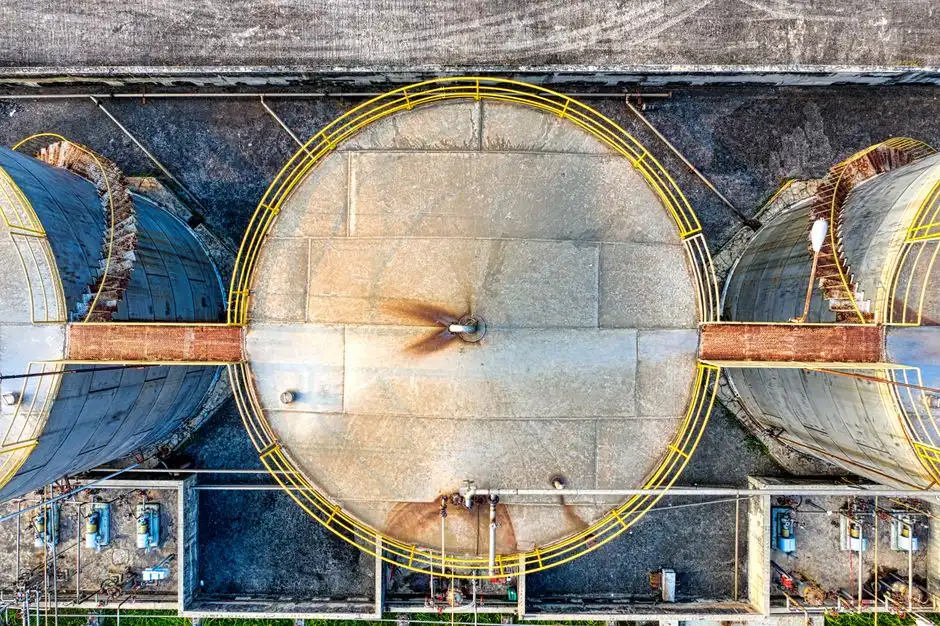
Translating the SigmaDAF / Clearwater line into the flow bands a Southfield EV or auto-parts plant sees allows an engineer to pre-select a model before talking to suppliers. The four relevant platforms are documented in the same Clearwater product reference.
The FPAC is a low-profile cross-flow separator with a large free surface area, designed for small-to-medium flow rates carrying high TSS and FOG loads. The FPBC is a high-profile separator that uses lamella plate technology to reach very low overflow rates, suited to low-to-medium loads including low-buoyancy particles. The FPHF combines cross-flow and countercurrent lamella flow and is sized for high wastewater flows with low-to-large solids loads, which fits a central wastewater treatment point at a larger Southfield facility.
The Compact DAF is the turnkey packaging option: a pre-assembled skid bundling chemical conditioning, the DAF clarifier, sensors, instruments, and a PLC panel that adjusts chemical dosing pumps, skimmer speed, and sludge discharge. Flows of 66 GPM or less fit a single skid; flows above 66 GPM are handled as a modular two-skid system (Clearwater Industries, 2026-04-27). A material upgrade to 316SS or polypropylene should be specified whenever fluoride-bearing electrolyte residue or low-pH rinse water enters the train, since 304SS is the documented standard (Clearwater Industries, 2026-04-27).
2026 Decision Framework: How Southfield Plants Should Pick
Use this five-step protocol to convert the comparison into a defensible 2026 internal recommendation, working from your own plant data before contacting vendors.
- Characterize the stream. Split FOG vs settleable solids vs total flow in GPM. If FOG and light TSS dominate — typical of stamping, machining, and battery-cell rinse — DAF is the default starting point (Clearwater Industries, 2026-04-27).
- Run a jar test on the actual stream. Fix the coagulant, pH adjustment, and flocculant doses. Clearwater states that the number of mix tanks and contact time are variable and must be confirmed by jar testing (Clearwater Industries, 2026). The 15–45 second serpentine flash-mix option is only valid once chemistry is proven (Clearwater Industries, 2026-04-27).
- Confirm the receiving sewer ordinance. Verify discharge limits and any 2026 PFAS or heavy-metal requirements with the local sewer authority. This data must come directly from the authority.
- Match flow to the model family. FPAC for high-load small/medium flows, FPBC for low-to-medium with low-buoyancy particles, FPHF for high flows with low-to-large solids, and Compact DAF for turnkey skids at ≤66 GPM (single) or >66 GPM (two-skid) (Clearwater Industries, 2026-04-27).
- Select materials and controls. Specify 304SS, 316SS, or polypropylene based on stream corrosivity, and decide between a PLC with chemical dosing, skimmer speed, and sludge discharge control (as on the Compact DAF) or a more manual configuration for very small flows. Pair the unit with a PLC-controlled coagulant and flocculant dosing skid sized to the chemistry proven in step 2 (Clearwater Industries, 2026-04-27).
For a broader pretreatment-compliance view, this EV/auto plant 2026 pretreatment compliance guide covers the regulatory layer, and the 2026 industrial wastewater solutions provider comparison frames the supplier shortlist. For a sibling sector view, see the DAF vs clarifier for fabricated metals wastewater guide.
Frequently Asked Questions
How should a Southfield EV/auto plant decide between DAF and a clarifier in 2026?
Start by splitting the influent into FOG, settleable solids, and total GPM. If FOG and light TSS dominate — typical of stamping, machining, and battery-cell rinse — DAF is the default front-of-train choice, since the documented 30–50 µm micro-bubble process targets exactly that profile (Clearwater Industries, 2026-04-27). Choose a gravity or lamella clarifier when settleable solids dominate and free oil is minor. Confirm the decision with a jar test on the actual plant stream and with the local sewer ordinance limits before final selection (Clearwater Industries, 2026).
What size DAF or clarifier do I need, and what affects lead time?
For the DAF line, Clearwater documents a Compact DAF skid at 66 GPM or less (single skid) and a modular two-skid configuration above 66 GPM, with larger FPAC, FPBC, and FPHF models covering small-to-medium, low-to-medium, and high flows respectively (Clearwater Industries, 2026-04-27). Lead time depends on system complexity, the technologies in the train, and the manufacturer's production schedule; Filtra Systems states that project-specific timelines are only provided after system design is finalized (Filtra Systems, 2026).
Which materials should be specified for battery or electrolyte-bearing streams?
Clearwater's standard DAF construction is 304SS, with 316SS and polypropylene available on request for corrosive chemistries (Clearwater Industries, 2026-04-27). For Southfield EV/auto plants handling fluoride-bearing electrolyte residue, low-pH rinse water, or black-mass carryover, specify the upgrade at the quote stage so the vessel, lamella pack, and wetted skimmer components are quoted in the