Where the NESREA Dissolved Oxygen Limit Is Set
The dissolved oxygen (DO) row sits inside Schedule I of the National Environmental (Food, Beverages and Tobacco Sector) Regulations 2009, published as a Federal Republic of Nigeria Official Gazette and hosted on the NESREA website at the Food, Beverages and Tobacco Sector Regulation 2009 PDF. Schedule I is the effluent limitation standard for the entire sector, structured as a parameter table with a Unit column and a Maximum Permissible Limit column, and for several parameters a second or third limit also applies (Federal Republic of Nigeria Official Gazette, 2009). The schedule is invoked by Regulation 11(2)(b) and by Regulations 15(1), (2)(a), and (3), which together define what makes an effluent polluted for compliance purposes.
Engineers cannot read the DO row in isolation. The same Schedule I table contains the related oxygen-demand parameters that decide whether a discharge is acceptable: BOD₅ is set at 30 and 50 mg/l across two columns, COD at 60 and 90 mg/l, effluent Temperature capped at 40 °C with a permitted rise of less than 3 °C at the edge of a scientifically established mixing zone, Sulphide at 0.2 mg/l, Ammonia as N at 1.0 mg/l, Free Chlorine at 0.5 mg/l, Nitrate as N at 10 mg/l, Total Nitrogen at 10 mg/l, and Total Phosphorus at 2.0 mg/l (Federal Republic of Nigeria Official Gazette, 2009). TSS is set at 25 mg/l and Oil & Grease at 10 mg/l in the same table, so DO is one column in a tightly interlinked oxygen-and-nutrient envelope.
An important data gap: in the scraped text of the 2009 Gazette, the numeric value for the Dissolved Oxygen (mg/l) cell of Schedule I is not rendered. The parameter, its unit (mg/l), and its position in the table are confirmed, but the actual figure that the cell should contain has to be read directly from the official PDF before it is quoted in any compliance report or Monthly Discharge Monitoring Report. Treat any DO number from a secondary source as unverified until it is checked against the Gazette.
How to Read the Schedule I Three-Column Limit Logic
Regulation 11(2) of the 2009 Regulations states that any effluent is deemed non-compliant and polluted if (a) the concentration of any of its parameters exceeds the permissible limit specified in the first column of Schedule I; (b) it does not comply with the corresponding limit specified in the second or third column of Schedule I, as the case may be; or (c) it is discharged from a facility without pre-treatment (Federal Republic of Nigeria Official Gazette, 2009). The three columns therefore operate as a stacked set of tests, not as alternatives — the first column is the absolute ceiling, and the second and third columns refine the limit for specific receiving-water conditions.
The way the three columns are applied can be read directly from the schedule. BOD₅ carries the values 30 and 50 mg/l, and COD carries 60 and 90 mg/l; pH is given as 6.5–8.8 in one column and 6–9 in another; Temperature is capped at 40 °C with a separate condition that the temperature rise at the edge of the mixing zone must be less than 3 °C (Federal Republic of Nigeria Official Gazette, 2009). For these parameters, the first column is the strictest end-of-pipe value, and the second column describes the limit that the discharge must meet at the edge of the mixing zone — that is, after the receiving water has begun to dilute and assimilate it. The third column, where it appears, typically covers additional site-specific conditions set by the permit.
Schedule I footnote (a) defines the mixing zone as "a scientifically established mixing zone which takes into account ambient water quality, receiving water use, potential receptors and assimilative capacity," and requires the effluent to cause a temperature rise of no more than 3 °C at the edge of that zone (Federal Republic of Nigeria Official Gazette, 2009). Because DO is a receiving-water-quality parameter rather than a pipe-side concentration, the DO value that the regulator will check against depends on where the sampling point is — at the discharge outlet, or at the edge of the mixing zone defined in the facility's permit.
| Column | What it limits | Where it applies | Example from Schedule I (2009) |
|---|---|---|---|
| First column | End-of-pipe concentration ceiling for every parameter | At the discharge point from the facility, before mixing with receiving water | BOD₅ 30 mg/l, COD 60 mg/l, Temperature 40 °C, Sulphide 0.2 mg/l, Free Chlorine 0.5 mg/l, Total Phosphorus 2.0 mg/l |
| Second column | Limit at the edge of the mixing zone, or for an alternate receiving-water condition | After initial dilution, at the boundary of the scientifically established mixing zone | BOD₅ 50 mg/l, COD 90 mg/l, pH 6–9, Temperature rise < 3 °C |
| Third column | Site- or permit-specific condition (e.g., a different receiving-water use class) | Where the facility's discharge consent invokes an additional condition | Referenced in Regulation 11(2)(b) but values are set in the facility permit |
Before quoting a single DO number, confirm in writing which column the facility's discharge consent applies and where the compliance sampling point is located relative to the mixing zone. The schedule is a table, not a single number, and the right answer changes with the discharge point.
Why Dissolved Oxygen Matters in NESREA Effluent Compliance

Low DO in a discharge is the symptom of an oxygen-demanding load upstream, and the Schedule I numbers reflect that linkage. BOD₅ is set at 30 and 50 mg/l and COD at 60 and 90 mg/l, so a discharge that is compliant on both oxygen-demand parameters will generally also leave enough residual DO in the receiving water to stay inside the schedule (Federal Republic of Nigeria Official Gazette, 2009). The reverse is not always true: a plant that removes BOD efficiently but discharges hot effluent can still depress DO in the receiving water because oxygen solubility falls as temperature rises. The schedule anticipates that by capping effluent Temperature at 40 °C and limiting the temperature rise to less than 3 °C at the mixing-zone edge.
Several other Schedule I parameters interact with DO in the receiving water. Sulphide at 0.2 mg/l, Ammonia as N at 1.0 mg/l, Free Chlorine at 0.5 mg/l, Nitrate as N at 10 mg/l, Total Nitrogen at 10 mg/l, and Total Phosphorus at 2.0 mg/l are all oxygen-consuming or oxygen-affecting species (Federal Republic of Nigeria Official Gazette, 2009). Ammonia in particular is nitrified in the receiving water and pulls DO down during that conversion. Engineering for the DO limit is therefore engineering for the whole oxygen-and-nitrogen envelope at the same time, not for a single column on a lab report.
Field data confirms the schedule is routinely breached in practice. A 2024 assessment of wastewater discharged from bakeries in Benin City reported average pH of 5.9 (below the permitted range), TDS of 4 754.2 mg/l, COD of 1 058.34 mg/l, NH₄N of 3.068 mg/l, Chloride of 2 984.86 mg/l, and Lead of 0.0724 mg/l — all substantially above NESREA limits for the food industry (Assessment of Wastewater Quality Discharged from Some Selected Bakeries in Benin City, Nigeria, 2024). The result was non-compliance with multiple Schedule I parameters that directly support or consume dissolved oxygen, including COD and NH₄N. If the DO-supporting parameters are already out of control in a typical food-sector discharge, the DO row is unlikely to pass on its own.
What a 2026 Compliance Programme for the DO Limit Looks Like
Schedule XIII of the 2009 Regulations, invoked by Regulation 35(3) and (4), sets out the Monthly Discharge Monitoring Report (MDMR) form. The form lists Dissolved Oxygen (DO) in mg/l as a weekly-reported physical parameter, sitting in the same block as Temperature, pH, Conductivity, Turbidity, Total Suspended Solids, Total Dissolved Solids, BOD, and COD (Federal Republic of Nigeria Official Gazette, 2009). For each parameter the form records weekly results for four weeks and a monthly average, with the NESREA Regulatory Limit shown in the adjacent column for line-by-line comparison during inspection. The DO figure on the MDMR is the figure that the regulator reads, so the sampling point, the probe calibration, and the method reference have to be defensible.
Pre-treatment is mandatory, not optional. Regulation 11(2)(c) makes it a stand-alone ground for declaring an effluent polluted if it is discharged from a facility without pre-treatment, regardless of the measured parameter values (Federal Republic of Nigeria Official Gazette, 2009). A compliant DO result does not save a plant that has no pre-treatment in place.
A defensible engineering sequence for the oxygen-related Schedule I rows in 2026 runs as follows: equalisation to smooth hot and concentrated spikes; primary treatment to remove settleable and floatable load; biological treatment to meet BOD 30/50 and COD 60/90; solids removal; controlled re-aeration if needed; and a continuous DO probe at the discharge sampling point feeding the MDMR. Upstream of biology, a DAF system for FOG and colloidal load upstream of biology protects aeration capacity so that air is being used to degrade BOD, not to oxidise incoming oil and grease. Soluble BOD and COD reduction is then handled by an MBR membrane bioreactor for BOD and COD compliance, and flow and temperature smoothing is delivered by a lamella clarifier for flow and temperature equalisation.
NESREA's Compliance Flag Award, set out in Schedule XII, scores a facility on a five-level scale: Outstanding (Green) above 75 %, Good (Blue) 50–75 %, Average (Yellow) 35–49.9 %, Poor (Red) 25–34.9 %, and Non-compliant (Black) below 25 % (Federal Republic of Nigeria Official Gazette, 2009). Consistent DO compliance, backed by a complete MDMR, feeds the wider compliance rating, and a Poor or Non-compliant flag carries permit and reputational consequences that go beyond the DO column itself.
Choosing Equipment to Stay Inside the NESREA Oxygen-Demand Limits
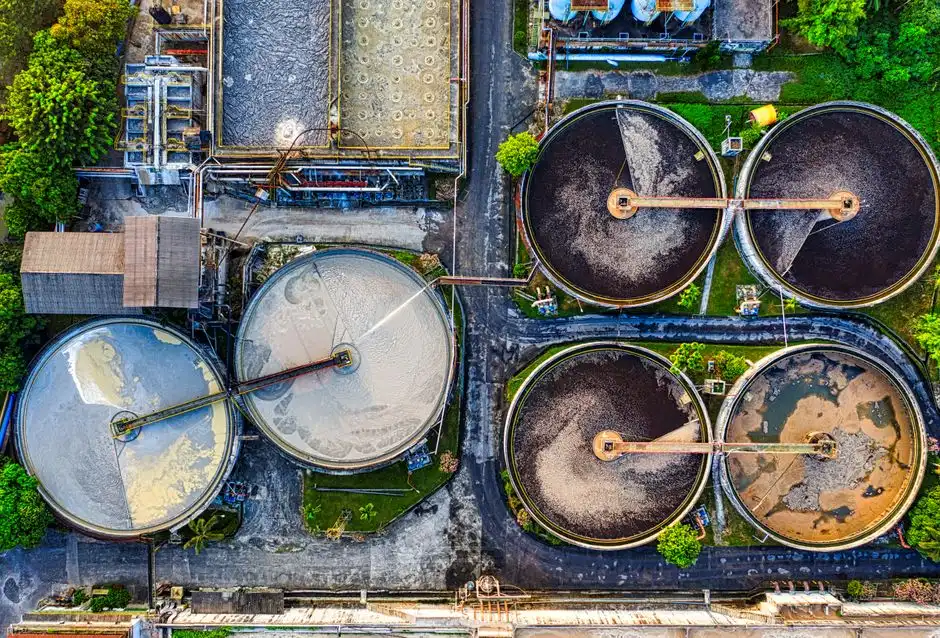
The starting point is the regulation, not the catalogue. BOD₅ at 30 and 50 mg/l and COD at 60 and 90 mg/l require biological treatment with a reliable solids separation step, and an MBR with submerged PVDF membranes gives the lowest effluent BOD/COD while polishing TSS at the same time (Federal Republic of Nigeria Official Gazette, 2009). For a beverage or food plant, the DAF stage in front of the bioreactor is the difference between an aeration tank that is oxidising BOD and one that is oxidising emulsified oil. The temperature cap of 40 °C and the less-than-3 °C mixing-zone rise are met by a lamella clarifier or equalisation tank in the equalisation step, which smooths hot spikes from CIP and boiler blowdown before they reach the biology.
For the related parameters in the same row of Schedule I, TSS 25 mg/l and Oil & Grease 10 mg/l are addressed by the DAF and the MBR together, while Sulphide 0.2 mg/l and Ammonia as N 1.0 mg/l require biological oxidation and nitrification in the aeration stage, with the DO probe set high enough to support nitrifiers (Federal Republic of Nigeria Official Gazette, 2009). Background reading on these design choices is in the DAF design for beverage wastewater engineering guide and in the food and beverage pretreatment in 2026 buyer guide, both of which work through the same oxygen-related Schedule I parameters in a beverage context. For a wider West African STP cost and compliance comparison, the West African STP cost and compliance guide covers the same regulatory logic from a Ghanaian perspective.
Before issuing a purchase order, a buyer should map each oxygen-related Schedule I row to the equipment stage that controls it, then check that the proposed skid has a documented turn-down range that covers the lowest expected flow (so the DO probe still has live water to read) and a membrane or media replacement plan that keeps the MDMR defensible over a 12-month cycle. Pre-treatment, biology, and re-aeration are three different procurement decisions; bundling them under one supplier is a separate risk decision that the MDMR data will eventually expose.
Frequently Asked Questions
What is the actual NESREA dissolved oxygen limit in mg/l for industrial discharge?
The 2009 Schedule I table lists Dissolved Oxygen in mg/l as a parameter, and it sits in the same row block as the related oxygen-demand parameters BOD₅ (30 / 50 mg/l) and COD (60 / 90 mg/l) (Federal Republic of Nigeria Official Gazette, 2009). In the scraped text of the Gazette the numeric value for the DO cell was not rendered, so the exact mg/l figure must be read from the official PDF on the NESREA website rather than from a secondary summary. Once the value is confirmed from the official source, it has to be applied together with the column that matches the discharge point (end-of-pipe or mixing-zone edge) as set out in the facility's discharge consent.
How much does it cost to upgrade a food or beverage plant to meet the DO and oxygen-demand limits in 2026?
No specific price for an upgrade that targets the DO row of Schedule I is published in the supplied research, so any quoted figure should be treated as indicative only. A defensible budget request has to be built from the unit operations the schedule actually requires: equalisation, DAF pre-treatment, biological treatment sized for BOD 30/50 and COD 60/90, solids removal, and a continuous DO probe at the compliance sampling point. Request a priced engineering package that names each of these stages, the design flow, the design BOD/COD, the expected effluent quality, and the membrane or media replacement cost over a 12-month operating cycle, so the cost is anchored to Schedule I rather than to a generic equipment list.
How do I pick a wastewater treatment supplier for a Nigerian facility under the 2009 Regulations?
Ask the supplier for a written compliance statement that names the exact Schedule I parameters the offered system is designed to meet, including the DO row, the BOD 30/50 and COD 60/90 figures, the 40 °C temperature cap with the less-than-3 °C mixing-zone rise, Sulphide 0.2 mg/l, and Ammonia as N 1.0 mg/l (Federal Republic of Nigeria Official Gazette, 2009). Also ask for a reference list of Nigerian food, beverage, or tobacco plants operating under the 2009 Regulations, a sample Monthly Discharge Monitoring Report filled in from a comparable site, and a documented spare-parts lead time for membranes, diffusers, and DO probes. A supplier who can answer all three in writing is a lower compliance risk than one who can only supply a generic datasheet.
How often does a Nigerian facility have to report dissolved oxygen to NESREA?
Under Schedule XIII of the 2009 Regulations, invoked by Regulation 35(3) and (4), Dissolved Oxygen is reported on the Monthly Discharge Monitoring Report (MDMR) as a weekly physical parameter, with four weekly results and a monthly average entered for each parameter alongside the NESREA Regulatory Limit (Federal Republic of Nigeria Official Gazette, 2009). The MDMR is submitted monthly to the nearest NESREA office, so DO effectively moves from a continuous process variable on the probe to a weekly recorded value on the form, and a monthly average on the submission. Confirm in the facility's discharge consent whether the regulator also requires the on-probe data to be retained for inspection.