
The Three Pretreatment Layers a Quincy Chemical Plant Must Satisfy
Discharging to the City of Quincy POTW under NPDES Permit No. IL0030503 — whose outfalls 001, 003, 004, 005, and 006 release to the Mississippi River — requires satisfying three stacked compliance tests, not one. The most visible number on a permit application is the local limit, but local limits sit on top of two broader layers, and any one of them can be the binding constraint.
Layer 1 is the federal categorical pretreatment program. Quincy Ord. 9399 (2-24-2020) incorporates 40 CFR Chapter I, Subchapter N, Parts 405–471 by reference, so a chemical manufacturing facility is governed by 40 CFR Part 414 in addition to any other applicable category. The categorical standard applies whether or not the local limit is tighter.
Layer 2 is the Illinois Title 35, Subtitle C, Chapter I, Part 310 state requirements. Ord. 9399 makes these state limits operative "in any instance in which [the limits] are more stringent than federal requirements and limitations or those in this chapter or in other applicable ordinances." The state's authority does not replace the federal program; it is an additional, more-stringent floor when the state value is lower.
Layer 3 is the local limits in Quincy § 51.153, last amended by Ord. 9508 on 10-21-2024, plus the Director of Utilities' reserved authority to layer concentration, mass, or special-agreement limits on top. Where a user is subject to both a categorical standard and a local limit for the same pollutant, Ord. 9399 states the more stringent limit applies.
| Layer | Authority | Adoption Mechanism | Chemical-Plant Reference |
|---|---|---|---|
| Federal categorical | 40 CFR Chapter I, Subchapter N, Parts 405–471 | Incorporated by reference in Ord. 9399 (2-24-2020) | 40 CFR Part 414 (organic chemicals, plastics, synthetic fibers) |
| State | Illinois Title 35, Subtitle C, Chapter I, Part 310 | Adopted by Ord. 9399 where more stringent than federal | Applies on top of 40 CFR Part 414 limits |
| Local | Quincy § 51.153 (Ord. 9508, 10-21-2024) | Direct local ordinance; outfalls 001, 003–006 discharge to Mississippi River | 12-pollutant daily-max table plus Director's reserved authority |
Decoding the Quincy Local Limit Table and What Each Number Implies
Quincy § 51.153 sets twelve daily maximum pollutant limits in mg/L measured at the point of discharge to the POTW (end of the pipe), with all metallic values reported as total metal unless otherwise indicated (Ord. 9508, 10-21-2024). The Director of Utilities may impose mass-based limitations either in addition to, or in place of, the concentration values, and the city reserves the right to establish more stringent standards by ordinance or in individual wastewater discharge permits.
The table below reproduces the § 51.153 numeric values and adds the engineering reading: which pollutants are tight enough that conventional hydroxide precipitation will not reach the number without a polishing step, and which pollutants group by chemistry into a single treatment train.
| Pollutant | Daily Max Limit (mg/L) | Order of Magnitude Difficulty | Chemistry Group / Implication |
|---|---|---|---|
| Arsenic | 0.180 | Moderate | Requires coagulation/adsorption on iron or alum floc; not all hydroxide precipitation schemes are effective |
| Cadmium | 0.240 | Moderate | Co-precipitates with hydroxide at pH 9–11; risk of resolubilization if pH drifts |
| Chromium (total) | 4.4 | Moderate–High | Hexavalent Cr(VI) requires reduction to Cr(III) at pH ~2 before re-precipitation as hydroxide |
| Copper | 3.38 | Low–Moderate | Standard hydroxide precipitation; watch for chelating agents in process streams |
| Cyanide | 1.2 | High | Requires alkaline chlorination or oxidation; CN must be destroyed, not precipitated |
| Iron | 124.4 | Low | Conventional coagulation handles this without a polishing step |
| Lead | 1.4 | Moderate–High | Precipitates as hydroxide or carbonate, but solubility is low; sulfide precipitation often used for tighter polishing |
| Mercury | 0.001 | Very High | Drives polishing selection: sulfide precipitation, ion exchange, or granular activated carbon |
| Nickel | 2.11 | Low–Moderate | Hydroxide precipitation at pH 9–10 is generally sufficient |
| Selenium | 0.22 | High | Reductive precipitation or ion exchange; conventional hydroxide is not effective |
| Silver | 0.43 | High | Precipitates as chloride or sulfide; silver recovery may be economical |
| Zinc | 2.610 | Low | Hydroxide precipitation at pH 9–10 is generally sufficient |
Oil and grease are not in the numeric table but are still controlled by the 40 CFR 403.5 general prohibitions against pass-through and interference, and by the city's separate interceptor requirements. A categorical user must meet all three layers; the local number for mercury, lead, silver, and selenium will likely set the polish-step specification, while the categorical number under 40 CFR Part 414 may set the binding number for organics, solvents, and TSS-based parameters.
From Discharge to Compliance: A Process Flow for a Quincy Chemical Plant
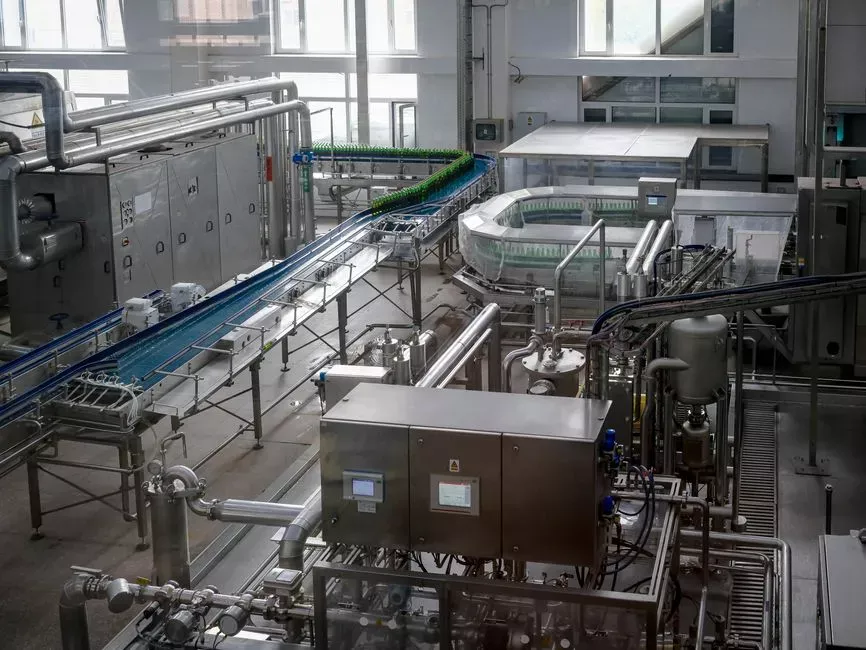
Translating the local-limit table and 40 CFR Part 414 categorical rules into a workable train yields a five-step flow. Each step is a unit operation, and each unit operation has a discrete deliverable: a PFD, a P&ID, an instrument list, and a basis-of-design memo. Plan and operating procedures must be submitted to the city and accepted before construction of any pretreatment facility (Ord. 9399).
- Equalization and pH adjustment. Batch discharges from a chemical plant need 12–24 hours of surge equalization to dampen pH and concentration swings. The pH is then trimmed to the operating range needed for the next step — typically 6–9 for general conformity, or ~2 for the chromium reduction reactor. Note: the § 51.153 local limit table does not list a numeric pH limit, but the city's NPDES permit (NPDES Permit No. IL0030503) imposes pH 6–9 standard units on the POTW's own discharge under 35 IAC 304.125, and the city can pass that constraint back to industrial users.
- Metals precipitation and coagulation. Hydroxide, sulfide, or carbonate precipitation drives As, Cd, Cr (after reduction), Cu, Ni, Pb, and Zn toward the § 51.153 numbers. For chromium, hexavalent Cr(VI) is first reduced to trivalent Cr(III) at pH ~2 using a reducing agent, then re-precipitated as the hydroxide. Coagulation and flocculation follow to build settleable or floatable flocs. Chemical feed is typically automated through an automatic chemical dosing system to keep stoichiometry and pH inside the tight windows the lead, cadmium, and silver limits require.
- Clarification. A DAF system or lamella clarifier separates the metal-bearing flocs from the treated water. DAF is preferred at chemical plants where free oil or grease co-exists with the metal precipitate; the skimmings are routed to sludge handling. Lamella clarification is acceptable for dissolved-metals-only streams.
- Polishing for mercury, lead, silver, and selenium. The 0.001 mg/L mercury limit, the 1.4 mg/L lead limit, the 0.43 mg/L silver limit, and the 0.22 mg/L selenium limit will not be reached by hydroxide precipitation alone in most chemical-plant matrices. Polishing options include granular activated carbon (GAC) for mercury and certain organics, ion exchange for silver and selenium, and ultrafiltration at 0.03 µm nominal pore size as a final barrier for suspended solids carryover. The exact specification should be set after jar tests on the actual plant effluent.
- Sludge dewatering and disposal. The clarifier underflow and DAF skimmings are routed to a plate and frame filter press for moisture reduction. The metal-bearing cake is typically a hazardous waste under RCRA because of the heavy-metal content, and disposal must be routed to a permitted TSDF. Filtrate returns to the head of the plant.
| Step | Unit Operation | Pollutants Targeted | Driver in the Compliance Stack |
|---|---|---|---|
| 1 | Equalization + pH adjustment | pH variability, slug loadings | Slug control plan, NPDES pH 6–9 SU |
| 2 | Cr(VI) reduction, hydroxide/sulfide precipitation, coagulation | As, Cd, Cr, Cu, Ni, Pb, Zn, CN (oxidation) | § 51.153 daily max values; 40 CFR Part 414 metal limits |
| 3 | DAF or lamella clarifier | Total suspended metals, oil & grease | 40 CFR 403.5 pass-through/interference prohibitions |
| 4 | GAC, ion exchange, or UF polishing | Hg 0.001, Pb 1.4, Ag 0.43, Se 0.22 mg/L | Tightest § 51.153 daily max values |
| 5 | Plate-and-frame filter press | Sludge volume reduction | RCRA hazardous-waste handling |
Using the Mississippi River Intake Credit (40 CFR 403.15) to Your Advantage
40 CFR 403.15 allows a Categorical Industrial User (CIU) to obtain a net/gross adjustment to a categorical pretreatment standard when regulated pollutants are present in the intake water. Quincy § 51.153 division (2) mirrors the federal criteria, and Quincy draws its intake from the Mississippi River and discharges back to the Mississippi, so the same-body-of-water requirement is satisfied without needing a city waiver (Ord. 9399, 2-24-2020; NPDES Permit No. IL0030503).
Two eligibility rules are easy to miss. First, the credit is granted only to the extent necessary to meet the applicable categorical standard, up to a maximum value equal to the influent value, and the city may require additional monitoring to verify both eligibility and continued compliance. Second, generic pollutants — BOD, TSS, and oil and grease — are not eligible for intake credit unless the user demonstrates that the constituents of the generic measure in the effluent are substantially similar to those in the intake water, or unless additional limits are placed on process-water pollutants either at the outfall or elsewhere.
The procedural step is a written application to the Director of Utilities demonstrating that the proposed or installed control system would meet the categorical standard in the absence of intake pollutants, and documenting the intake-water characterization. The city may waive the same-body-of-water requirement if it finds that no environmental degradation will result; this is relevant only to plants drawing intake from a different watershed than the Mississippi. The local limits in § 51.153 are concentration-based and are not directly net/gross adjusted, but the categorical standards at 40 CFR Part 414 are — so the intake credit is most useful for the federal number, not the local number.
Documentation the City Will Require: Permits, ASPP, and Self-Monitoring

Pretreatment equipment does not satisfy compliance on its own. Ord. 9399 requires that detailed plans showing the pretreatment facilities and operating procedures be submitted to the city for review and acceptable to the city before construction of the facility. Construction ahead of approval is not a path to compliance; the city may require modifications after the fact, and the user remains responsible for producing an acceptable discharge regardless of plan review.
For categorical users, the wastewater discharge permit compliance date cannot extend past the EPA categorical deadline; for non-categorical users or for categorical users held to a more stringent local limit, the city sets a compliance schedule for the shortest feasible time (Ord. 9399). New sources and new users must comply within 90 days of beginning discharge, and all pollution control equipment must be installed, in operating condition, and started up before discharge begins.
Two spill-related deliverables sit on top of the construction permit. First, the Director of Utilities may require an Accidental Spill Prevention Plan (ASPP) or slug control plan and may require the plan to be submitted within 60 days of city notification (Ord. 9399). At a minimum, the plan must address discharge practices including non-routine batch discharges, stored chemicals, immediate notification procedures, and prevention measures (inspection, maintenance, containment, worker training, emergency response). Second, the user must notify the WWTP immediately after any slug or accidental discharge, then submit a detailed written report within five days describing the cause and the preventive measures. Posted signs and employee training are mandatory, and dilution is not a permissible substitute for treatment.
| Deliverable | Trigger | Deadline | Authority |
|---|---|---|---|
| Pretreatment plans and operating procedures | Any new or modified user-side pretreatment facility | Before construction | Ord. 9399 |
| Industrial wastewater discharge permit | All CIUs and any non-categorical user with tighter local limits | Compliance date cannot exceed EPA categorical deadline (new sources: ≤90 days) | Ord. 9399 |
| Accidental Spill Prevention Plan (ASPP) | City notification when required | Within 60 days of notice | Ord. 9399 |
| Slug/accidental discharge written report | Any slug or accidental discharge | Immediate verbal; written report within 5 days | Ord. 9399 |
Frequently Asked Questions
What is the most stringent numeric compliance target a Quincy chemical plant will likely face?
Mercury at 0.001 mg/L daily maximum under § 51.153 (Ord. 9508, 10-21-2024) is the tightest number in the local limit table and typically drives the selection of a polishing step such as sulfide precipitation, ion exchange, or granular activated carbon.
How long does a new chemical plant have to comply with categorical and local limits?
New sources and new users must comply within the shortest feasible time, not to exceed 90 days from the beginning of discharge, and all pollution control equipment must be installed and operating before discharge starts (Ord. 9399, 2-24-2020).
What is the practical first step when sizing a pretreatment system for a Quincy chemical plant?
Request the most recent city local-limit calculation and the categorical standard at 40 CFR Part 414 that applies to the plant's SIC code, then characterize the intake water for the same pollutants; the intake-water data is the basis for a 40 CFR 403.15 net/gross application to the Director of Utilities (Ord. 9399).
What should a buyer ask a pretreatment-equipment supplier to confirm the equipment will satisfy the city's plan-review requirement?
Ask for stamped P&IDs, a written basis-of-design that cites the § 51.153 daily-max values and the 40 CFR Part 414 categorical limits the equipment will meet, a startup and commissioning plan, and a list of reference installations at chemical plants; the city's plan review (Ord. 9399) will look for these documents before approving construction. To compare vendor options against these deliverables, review the industrial wastewater management buyer's guide and the guide on how to compare water treatment equipment distributors.