Why Oran Needs a Local Sewage Treatment Playbook in 2026
Domestic sewage treatment in Oran in 2026 cannot be specified from generic EPA or textbook defaults: the local influent profile differs from northern European assumptions, the climate is semi-arid and coastal, and the dominant supply chain is packaged biological plants rather than large municipal WWTPs. The only Oran-specific, peer-reviewed influent characterization currently available is the El-Kerma STP analysis indexed in Europe PMC / PubMed (Environ Monit Assess, PMID 40825918, 2025), which evaluated sewage treatment plant wastewater at El-Kerma, Oran, Algeria.
That study is the most defensible anchor for design loads in any Oran residential, hotel, hospital, or small-community project. The same coastal, water-stressed context is consistent with the SDG 13 reuse framing used in the IntechOpen vermifiltration paper (IntechOpen, 10.5772/intechopen.103920), which documents the climate-driven case for wastewater reuse in semi-arid regions. This article scopes down to that Oran building-scale duty — process selection between A/O package STP and MBR, equipment sizing, and the buyer's decision logic — not a national master plan.
Influent Reality at El-Kerma: What Oran Sewage Actually Looks Like
The El-Kerma STP analysis (Environ Monit Assess, PMID 40825918, 2025) is the primary local benchmark for domestic sewage characterization in Oran. According to the Europe PMC record, the study analyzed and evaluated sewage treatment plant wastewater at the El-Kerma facility in Oran, Algeria, and is therefore the most directly relevant reference for setting influent loads on any Oran project today. Its purpose is specifically to characterize municipal wastewater quality at one Oran installation and to evaluate treatment options against it. The families of parameters a designer must verify site-side before fixing loads are the conventional domestic set: BOD, COD, total suspended solids, ammonia nitrogen, and fecal coliform indicators. Numeric ranges and exact values for these parameters at El-Kerma are not extractable from the supplied Europe PMC metadata, so they cannot be quoted here. A defensible site-side protocol is a 24-hour composite sample on at least one working day, one weekend day, and one wet-weather event, run at the upstream manhole of the proposed plant rather than at a downstream municipal outfall. Without that local check, the El-Kerma study should be treated as a directional anchor, not a substitute for site data.
Sewer Collection: Combined vs Sanitary, and the Oran Implication
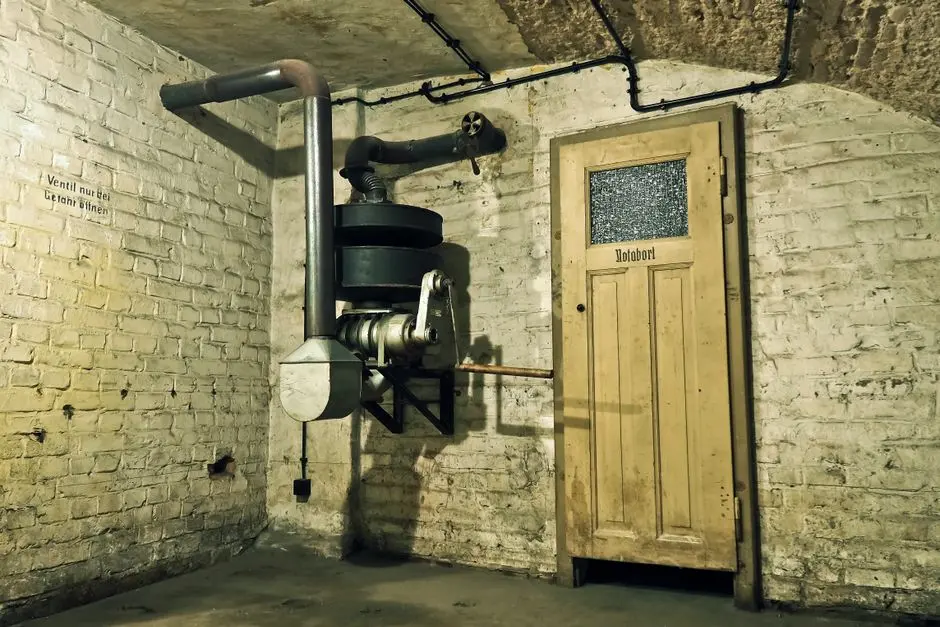
Treatment plant sizing fails most often because the collection system, not the biology, is misread. Per US EPA municipal wastewater guidance, two principal sewer types deliver flow to a treatment plant. Combined sewers collect sanitary sewage and stormwater runoff in a single pipe; they were designed to convey dry-weather flow to the STP and overflow during wet weather when stormwater volumes exceed capacity. US EPA notes that state and local authorities in the US have generally not allowed new combined sewers since the first half of the 20th century. Sanitary sewers, the second major type per US EPA, collect wastewater only and do not provide widespread drainage for stormwater runoff; they are typically built with some allowance for the higher flows that occur when excess water enters the collection system during storm events. Sanitary sewers that are not watertight — due to cracks, faulty seals, or improper connections — can receive large volumes of infiltration and inflow (I/I) during wet weather, causing sanitary sewer overflows (SSOs) and operational problems at the downstream facility. Significant wet-weather flow increases can adversely affect treatment efficiency and unit process control. Applied to Oran, the practical step before any hydraulic sizing is to confirm whether the contributing catchment is combined or separate and to capture at least one wet-season flow survey before fixing capacity.
Process Selection for Oran: A/O Package STP vs MBR
Two biological trains dominate 2026 packaged-plant supply for Oran building-scale duty. The WSZ underground package sewage treatment plant combines A/O biological contact oxidation with sedimentation and disinfection in a single buried unit, is fully automated with no operator required, and covers a capacity envelope of 1–80 m³/h. Per the product entry, the unit can be installed below grade with landscaping above or mounted on a trailer for mobile deployment, which suits Oran sites where above-ground footprint or visual impact is constrained. The MBR membrane bioreactor system integrates activated sludge with submerged PVDF membrane filtration at a pore size of less than 1 μm, achieves a footprint roughly 60% smaller than conventional activated-sludge systems of the same throughput, and covers an envelope of 10–2,000 m³/day. A third option, vermifiltration, is documented in the IntechOpen study (10.5772/intechopen.103920) as an efficient, decentralized, low-expertise technique for domestic septic-tank duty; it should be treated as a candidate for very small or rural Oran-area sites, not for hotel or hospital duty. The table below maps the practical choice.
| Selection criterion | A/O package STP (WSZ) | MBR (membrane bioreactor) | Vermifiltration (decentralized) |
|---|---|---|---|
| Capacity envelope | 1–80 m³/h (per WSZ product entry) | 10–2,000 m³/day (per MBR product entry) | Septic-tank scale (IntechOpen 10.5772/intechopen.103920) |
| Effluent quality target | Discharge-class, with disinfection | Reuse-class, with downstream polishing per end use | Reuse / irrigation class, low-tech |
| Footprint | Buried below grade or trailer-mounted | About 60% smaller than conventional activated sludge (per MBR product entry) | Land-based, surface footprint |
| Operator requirement | Fully automated, no operator required (per WSZ product entry) | Skilled operator for membrane maintenance | Low expertise (per IntechOpen 10.5772/intechopen.103920) |
| Best-fit Oran duty | Residential compounds, hotels, clinics, small communities | Hospital campuses, larger residential communities, reuse-quality projects | Very small or rural sites, not hotel/hospital |
Matching Capacity to Population and Flow in Oran Projects
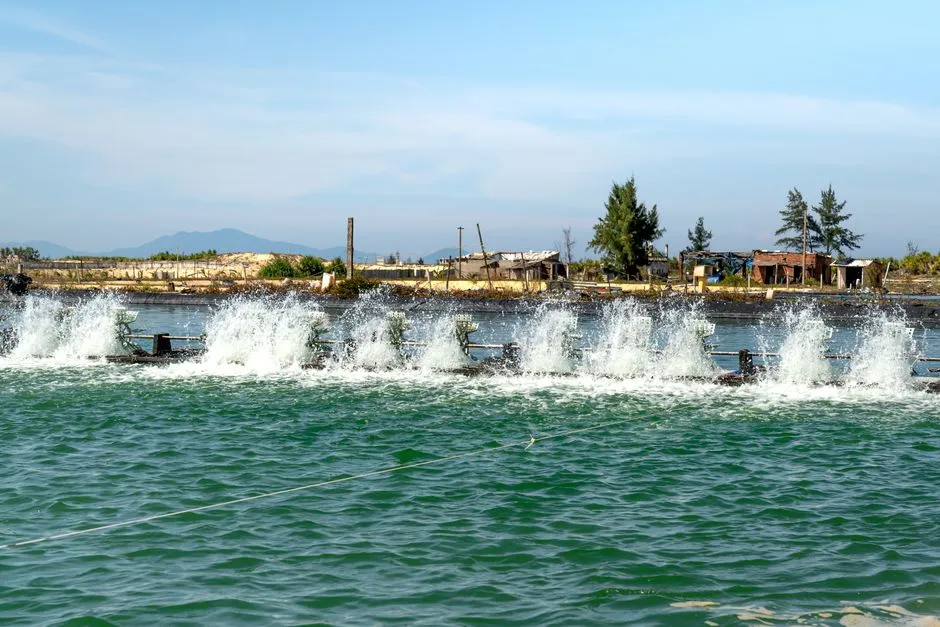
Translating a building programme into a concrete plant selection is a two-step exercise. The WSZ underground package plant at 1–80 m³/h fits residential communities, hotels, hospitals, factories, and rural areas, with smaller compounds and clinics at the lower end of that range and mid-sized hotels and housing blocks in the middle. The MBR 10–2,000 m³/day envelope is positioned for larger residential, hotel, hospital, and industrial clusters where reuse or a tight footprint is required. Hydraulic peaking must be addressed during the design phase. US EPA municipal wastewater guidance warns that significant wet-weather flow increases can adversely affect treatment efficiency, reliability, and control of unit process operations, which is why the peak factor and the I/I allowance must be agreed at design. Concretely, the buyer should bring three things to the supplier: an El-Kerma-comparable influent characterization, a measured 24-hour dry-weather flow, and a measured or modelled wet-weather peak, all checked against the local sewer type.
| Typical Oran use case | Recommended envelope | Process train | Key sizing input to confirm |
|---|---|---|---|
| Small residential compound or clinic | Lower end of 1–80 m³/h | A/O (WSZ) | Daily flow per capita, peak factor |
| Mid-sized hotel or housing block | Mid range of 1–80 m³/h | A/O (WSZ) | Occupancy-driven load, wet-weather peak |
| Larger mixed-use site | Upper end of 1–80 m³/h | A/O (WSZ) | Catchment I/I allowance |
| Residential community / institutional campus | Lower–mid range of 10–2,000 m³/day | MBR | Reuse class, footprint constraint |
| Hospital campus or large mixed-use | Mid–upper range of 10–2,000 m³/day | MBR | Reuse class, variable loading profile |
Reuse, Disinfection, and Sludge: Closing the Mass Balance
Treatment is not the finish line in Oran; reuse and solids handling must be planned at the same time as the biological train. The motivation for reuse is the coastal, semi-arid water stress that the IntechOpen study (10.5772/intechopen.103920) frames under SDG 13: climate-driven shortages in semi-arid regions push designers toward wastewater reuse. For reuse-class effluent, the MBR train delivers permeate through submerged PVDF membrane filtration at a pore size under 1 μm (per the MBR product entry), but downstream polishing and disinfection must be specified against the actual end use — landscape irrigation, toilet flushing, cooling makeup. For discharge-class effluent from the WSZ A/O train, the built-in disinfection stage handles the contactor duty, and the discharge target must be confirmed with the relevant Algerian authority. On the solids side, sludge dewatering must be sized from site yield, and the plate and frame filter press range is documented from 1 m² up to 500 m² of filtration area (per the HydropureWater plate and frame filter press product entry), which covers both small WSZ and larger MBR sites when the correct size is selected from measured solids production. The supplied research does not include local discharge limits, reuse limits, or sludge disposal routes, so these must be requested from the authorities before design freeze.
Buyer's Decision Framework: Choosing the Right 2026 Package
The decision logic for an Oran building-scale project in 2026 is short enough to apply on one page. Default to the A/O packaged STP, in the WSZ series, when the site is under roughly 80 m³/h, there is no reuse requirement, burial or trailer-mounted deployment is preferred, and minimal on-site operator presence is acceptable — the WSZ is documented as fully automated with no operator required. Default to the MBR, in the 10–2,000 m³/day envelope, when reuse-quality effluent is required, a 60% smaller footprint than a conventional system is decisive, or the loading is variable enough that the membrane barrier adds operational margin. For very small or remote Oran-area sites, evaluate vermifiltration-style decentralized concepts as a low-skill alternative, noting that the documented design parameters were developed for septic-tank duty (IntechOpen 10.5772/intechopen.103920). Regardless of train, two checks must run before any order is placed: confirm the sewer context (combined versus sanitary, I/I allowance, SSO risk) per US EPA municipal wastewater guidance, and confirm the local influent dataset against El-Kerma-type studies such as the Oran STP analysis (Environ Monit Assess, PMID 40825918, 2025). For a peer reference on the same equipment family applied in another Moroccan coastal city, the domestic sewage treatment in Agadir 2026 engineering guide covers a comparable duty envelope.
Frequently Asked Questions
What is the most representative local study for Oran domestic sewage design in 2026?
The El-Kerma STP analysis (Environ Monit Assess, PMID 40825918, 2025), which characterized municipal wastewater and evaluated treatment options at the El-Kerma facility in Oran, Algeria, is the only Oran-specific, peer-reviewed influent reference in the supplied research base.
Which packaged plant fits a mid-sized Oran hotel or housing block in 2026?
An A/O underground package plant in the WSZ series, in the 1–80 m³/h range, fully automated with no operator required, installable below grade or trailer-mounted per the WSZ product entry — provided the buyer has confirmed dry- and wet-weather flows at the site first.
When does an MBR make more sense than an A/O package STP in Oran?
An MBR is appropriate when reuse-quality effluent is required or a footprint about 60% smaller than a conventional system is decisive, in the 10–2,000 m³/day envelope per the MBR product entry — but the buyer should request