
Why a Brasília housing development is a different packaged-STP problem
Generic "package plant for housing" advice is written for temperate, water-rich contexts and fails Brasília on three specific points. The city sits on the cerrado plateau at roughly 1,100 m elevation with a defined dry season, intense UV, and soil-moisture extremes that change both biological kinetics and the structural duty on any buried tank. Most Federal District residential blocks are superquadras with strict landscaping rules, so the surface above the plant must remain green — buried or fully enclosed units outperform open concrete basins in almost every layout review. Receiving waters around Lake Paranoá and the Paranoá river basin are sensitive enough that effluent targets sit tighter than generic Brazilian residential norms, which pushes the technology choice upstream of the sizing math.
The regulatory frame is two-layered. CONAMA Resolução 430/2011 sets the national effluent conditions and standards that any packaged plant discharging in Brazil must meet, and ADASA — the Agência Reguladora de Águas, Energia e Saneamento Básico do DF — sets the local discharge permit parameters inside the Federal District, including conditions tied to Lake Paranoá. CAESB governs the public sewer connection, so the plant must be selected to meet whichever of the three discharge routes the project actually takes: to the CAESB sewer, to a local water body under ADASA, or to an on-site reuse loop. The same logic is reflected in a 2026 buyer's guide we published for a very different climate — see the comparison in our packaged STP for Chittagong housing developments — but the per-capita load and the peak factor logic carry over.
For planning, the safe numeric anchor is 80–100 gal/person/day, sourced from the USGS and cited via the HUD Exchange environmental assessment guide; treat it as a planning anchor and flag Brasília-specific adjustments (dry-season concentration, peak surge ratio, superquadra occupancy) as a checklist item rather than a fixed multiplier.
How residential sewage actually behaves in a Brasília development
Residential sewage flow rates fluctuate throughout the day, peaking in the morning and evening when people leave or return from work or school, followed by long low-flow periods overnight.
Pollutant concentration swings harder than flow because of disinfectant and cleaning-product use, and because many houses in Brazilian developments still lack grease traps. The biological stage must be sized for variable organic load and ammonia peaks, not just for an average BOD number.
Use 80–100 gal/person/day (USGS via HUD Exchange) as the daily-load anchor and convert to m³/day using 1 m³ ≈ 264.17 US gal; then apply a peak factor for the morning and evening surges. The peak factor itself is a project-specific input — confirm it with CAESB or a local consultant based on the development's superquadra layout and the local collection network's surge behavior, rather than borrowing a temperate-climate number.
Brasília adds two specific load-shape effects. During the cerrado dry season, water rationing lowers infiltration and inflow, which reduces the hydraulic load without lowering the per-capita pollutant load; ammonia and COD concentration therefore rise when flow falls. That is a direct argument for SBR or MBR over constant-aeration designs, because SBR can hold sludge in the reactor at low flow without washing it out, and MBR retains biomass behind the membrane at any hydraulic condition.
The four packaged-STP technologies you will actually be offered
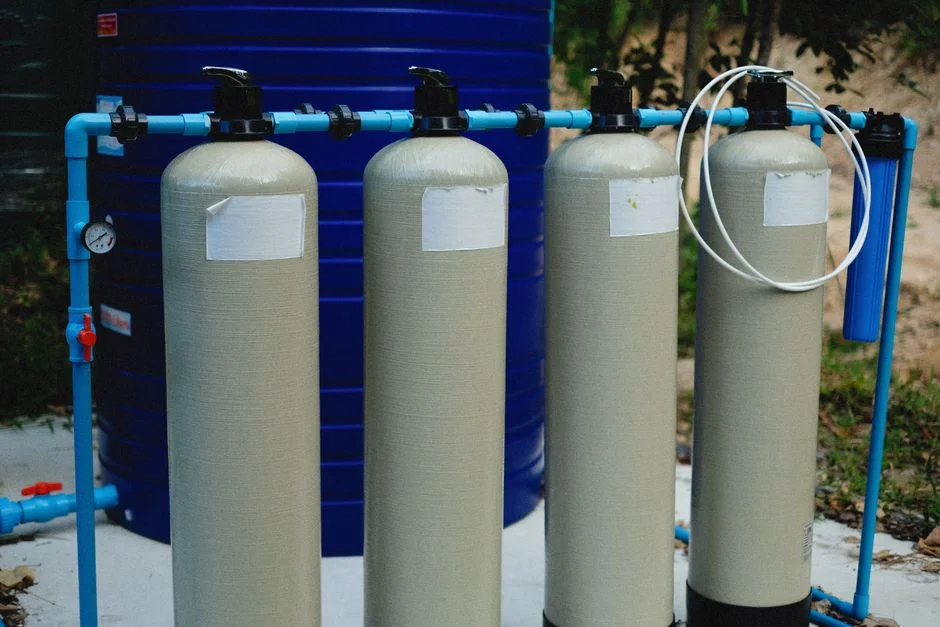
Four technology classes dominate the proposals you will receive for a Brazilian residential community of a few hundred to a few thousand residents.
MBBR (Moving Bed Biofilm Reactor) uses plastic biofilm carriers in a continuously aerated tank; it is compact, tolerant of peak surges, and is the most common choice for mid-size developments, typically installed in a civil concrete tank below grade. SBR (Sequencing Batch Reactor) operates in fill–aerate–settle–decant cycles, which include rest and settlement periods without electricity; a patented SBR process for residential duty is one of the options offered by Biocell, and the cyclic operation is the basis of its energy claim against constant-aeration package plants.
MBR (Membrane Bioreactor) combines activated sludge with submerged membrane filtration, delivering near-reuse-quality effluent at sub-micron filtration. Standard integrated MBR units in the 10–2,000 m³/day range claim roughly 60% smaller footprint than conventional systems, and the DF-series flat-sheet MBR module variant uses 0.1 μm PVDF membranes with 10–20× lower energy than external cross-flow designs, at 32–135 m³/day per 80–225 m² cassette. Underground A/O contact-oxidation units of the WSZ class — anoxic + aerobic stages, sedimentation and disinfection in a single buried package, 1–80 m³/h, fully automated with no on-site operator — are typically buried with landscaping above or supplied as trailer-mounted mobile plants. This is the technology class that fits Brasília superquadras because the surface above stays green and civil works collapse into one factory-built tank.
Each of the four must be matched against the developer's discharge target: to the CAESB sewer, to a local water body under ADASA, or to an on-site reuse loop. The match — not the catalog headline — is what determines the winner. The WSZ underground integrated sewage treatment plant and the integrated MBR membrane bioreactor system are the two most relevant product families on these routes; the flat-sheet DF-series module is the spec detail that matters when an MBR is selected for near-reuse effluent.
Matching the technology to the development size and discharge goal
Suppliers offer specific residential ranges that serve as a baseline for project sizing.
Biocell explicitly covers small projects up to 50 people to larger projects up to 5,000 people, and the WSZ envelope of 1–80 m³/h covers the same envelope expressed in flow. For a development of roughly 200–1,000 residents where the goal is compliant discharge and landscaping preservation, the WSZ-class buried A/O unit is the lowest-friction Brasília fit because it buries completely, needs no dedicated operator, and leaves the superquadra surface usable. For 1,000–5,000 residents or phased growth, MBBR or SBR in a civil concrete tank below grade is typically more cost-effective, with modular add-ons for phosphorus removal, ammonia polishing, disinfection or grease treatment available later — a real benefit where the discharge license tightens after commissioning. For high-density blocks or projects with a reuse mandate (irrigation, toilet flushing, car wash), MBR is justified by the sub-micron filtrate and the roughly 60% footprint reduction; add a UV sterilizer or ClO₂ generator downstream if reuse targets demand disinfection. The right framing is discharge target → technology class → modularity for phasing, not the other way round.
| Technology | Typical residential envelope | Footprint / civil works | Operator requirement | Best fit in Brasília |
|---|---|---|---|---|
| Buried A/O (WSZ-class) | 1–80 m³/h, fully buried or trailer-mounted | Lowest — single factory tank, surface stays green | None on-site; automated | 200–1,000 residents, landscaping-preserved superquadras |
| MBBR in concrete tank | Below-grade civil tank, modular | Moderate — concrete tank built on site | Routine checks; modular add-ons possible | 1,000–5,000 residents, phased growth, tight CAPEX |
| SBR in concrete tank | Below-grade civil tank, cyclic operation | Moderate — concrete tank built on site | Routine checks; rest cycles lower energy | Variable load, dry-season concentration spikes, residential duty |
| MBR (integrated / DF-series) | 10–2,000 m³/day integrated; 32–135 m³/day per DF-series cassette | Smallest — ~60% smaller than conventional | Membrane care; SCADA recommended | High-density blocks or reuse mandate (irrigation, toilet flushing) |
For reuse mandates the downstream disinfection step is decisive: a pipeline UV sterilizer suits closed-loop reuse, and a chlorine-dioxide generator is the standard option where a residual is required across the reuse network. Sludge handling — a plate-and-frame filter press on the back end — is covered separately in the procurement checklist below.
Sizing a packaged STP for a Brasília housing development
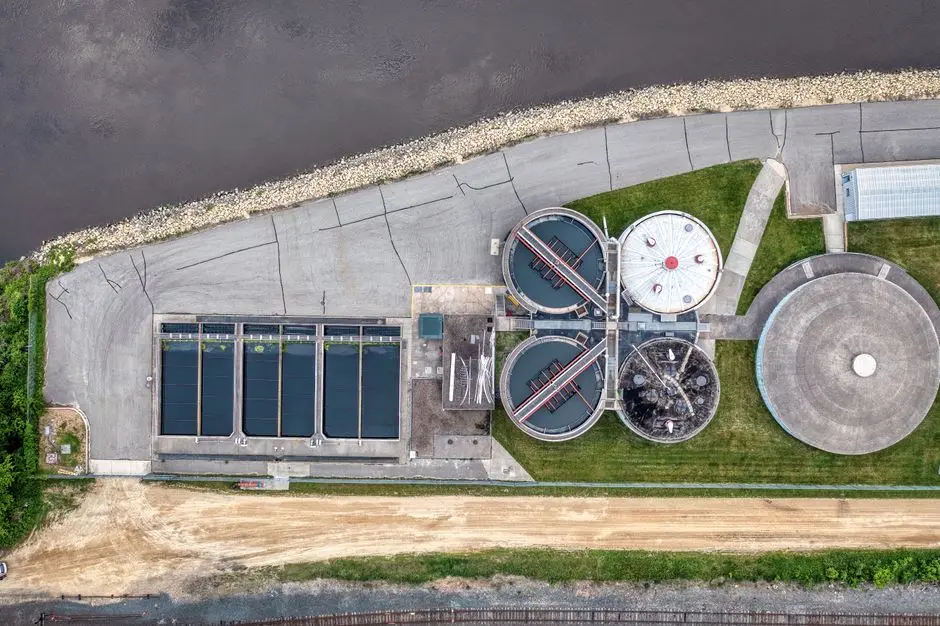
A four-step method allows you to verify any supplier quotation against first principles.
Step 1 — estimate resident count from the number of dwelling units × average household occupancy for the local census district; Brasília DF household size is project-specific, so confirm it with the local census office rather than adopting a national average. Step 2 — convert to daily flow using the 80–100 gal/person/day anchor from USGS (via HUD Exchange) and convert to m³/day (1 m³ ≈ 264.17 US gal), then add a peak factor for the morning/evening surges. The peak factor itself is a project input — confirm it with CAESB or a local consultant based on the superquadra's network behavior. Step 3 — check the chosen plant's envelope: WSZ underground units cover 1–80 m³/h, so a 500 m³/day development sits at roughly 21 m³/h average and well inside the envelope once the peak factor is applied; very large developments should stack modular units or move to MBR in the 10–2,000 m³/day range. Step 4 — verify organic load: COD, BOD and ammonia must sit inside the plant's design band; maintain the 80–100 gpcd numeric anchor and describe the load inputs qualitatively rather than inventing Brazilian-specific per-capita BOD figures that the project must confirm during detailed design.
Regulatory and procurement checklist for Brasília
Run these checks before signing a PO.
First, confirm the discharge route — to the CAESB sewer, to a local water body under ADASA, or to on-site reuse — because each route has different effluent targets, and the plant must be selected to match. CONAMA Resolução 430/2011 sets the national baseline; ADASA sets the local permit conditions; CAESB sets the connection conditions. Second, confirm the plant has an automated alarm and SCADA option so any fault is immediately clear to the operator; GSM alarm dialout and continuous SCADA monitoring are standard on modern residential package plants. Third, confirm maintenance access: designs without submerged moving parts and with maintenance carried out without entering the tank are useful in Brazilian residential contexts where confined-space entry is a serious HSE issue. Fourth, confirm civil works scope — below-ground MBBR and SBR solutions typically require a concrete tank built on site, while WSZ and containerized MBR/MBR plug-and-play modules reduce civil works dramatically. Fifth, plan for sludge handling — a plate-and-frame filter press on the back end turns a compliance liability into a manageable solids stream. For a deeper look at the operating-cost side of these decisions, our AAO process operating cost breakdown for 2026 walks through the OPEX side of the same technology choice.
Frequently Asked Questions
What is the realistic cost range for a packaged STP sized for a Brasília housing development of 200–1,000 residents?
No published price-per-cubic-meter for packaged STPs in the Federal District is available, and Brasília-specific equipment, civil works and ADASA permitting all move the number. Ask each shortlisted supplier for a quotation anchored on your resident count, peak factor, discharge route (CAESB sewer vs ADASA water-body vs reuse) and the required effluent parameters under CONAMA 430/2011; that gives you a defensible like-for-like comparison.
How do I choose a supplier for a packaged STP in the Federal District?
Verify three things: that the supplier's residential range covers your development size (Biocell explicitly covers 50 to 5,000 people and WSZ-class units cover 1–80 m³/h, which is the same envelope in flow), that the proposed plant can be
Frequently Asked Questions
Which packaged sewage treatment plant technology is best for a Brasília housing development in 2026?
For 2026 residential projects in Brasília, Membrane Bioreactor (MBR) technology is the most effective choice due to its high effluent quality and compact footprint, which is ideal for the city’s dense urban zoning. MBR systems consistently achieve BOD removal efficiencies exceeding 95% and are highly resistant to the variable hydraulic loads typical of residential developments.
Alternatively, Moving Bed Biofilm Reactor (MBBR) systems are recommended for developments where lower energy consumption is prioritized over strict water reuse standards. Both technologies comply with the stringent effluent requirements mandated by local environmental agencies for sensitive Cerrado watersheds.
How do you size a package STP for a 500-unit residential project in the Federal District?
Sizing for a 500-unit project is calculated based on NBR 7229/1993 and NBR 13969/1997 standards. Assuming an average of 3.5 residents per unit and a per capita water consumption of 150 to 200 liters per day, the plant must be designed for a total flow of approximately 260 to 350 cubic meters per day (m³/day).
Engineers must incorporate a peak factor of 2.0 to 2.5 to account for diurnal flow variations. Hydraulic retention time (HRT) calculations must ensure the system handles the specified organic loading rate (OLR) to prevent process instability during peak usage hours in the Federal District.
What is the typical CAPEX and OPEX difference between an underground A/O unit and an MBR for a Brazilian housing development?
An underground Anaerobic/Oxic (A/O) unit typically carries a 30% to 40% lower initial CAPEX compared to an MBR system, primarily due to the absence of expensive membrane modules and automated air-scouring systems. However, A/O units often require larger excavation footprints and secondary polishing stages to meet modern discharge standards.
Conversely, MBR systems involve higher OPEX, ranging from 20% to 50% more than A/O units, driven by membrane replacement cycles (typically every 5 to 7 years) and higher electricity consumption for aeration and permeate pumps. The trade-off is the superior water quality, which allows for non-potable reuse, potentially lowering long-term water utility costs.
What discharge permits does a packaged STP need in Brasília under CONAMA 430/2011 and ADASA?
In the Federal District, a project must obtain a "Outorga de Lançamento de Efluentes" (Effluent Discharge Permit) from ADASA (Agência Reguladora de Águas, Energia e Saneamento Básico do Distrito Federal). This process requires submitting technical reports demonstrating compliance with CONAMA Resolution 430/2011, which dictates the maximum allowable limits for parameters like BOD, COD, pH, and thermotolerant coliforms.
Additionally, the project must secure a "Licença de Operação" (Operating License) from the Brasília Environmental Institute (IBRAM). Compliance is monitored through regular effluent sampling and reporting to ensure that discharge into local water bodies does not exceed the Class 2 or Class 3 water quality standards defined for the specific drainage basin.
Can a packaged residential STP in Brasília be upgraded later with MBR or UV for reuse without replacing the whole plant?
Yes, modular systems allow for retrofitting without total replacement. Many modern packaged plants are designed with "plug-and-play" sections where membrane cassettes can be installed in existing aeration tanks if the tank geometry allows for the required cross-flow velocity.
Adding UV disinfection is even simpler, as it typically requires only the installation of an ultraviolet chamber in the final discharge piping. This upgrade path is highly recommended for developers who wish to meet initial compliance requirements now while keeping the flexibility to implement onsite water reuse systems as water scarcity regulations tighten in the Federal District.