Why Tannery Wastewater Defeats Generic DAF Advice
Tannery wastewater carries a mixture that the 2026 RSC Advances microalgae review describes as "complex and toxic," containing chromium, cadmium, lead, nickel, organic compounds, surfactants, sulfides, chlorides, and dyes in the same stream (RSC Advances, 29 Jul 2026). Generic DAF marketing literature positions the technology around suspended solids, oil and grease, and FOG removal in food processing, dairy, refinery, and pulp and paper duty (Seven Seas Water; Kemco Systems). When that positioning is copied into a tannery specification, the engineer inherits a unit selection that ignores the chemistry conflicts sitting upstream of the float cell.
Three tannery-specific mechanisms break simple coagulation-flotation logic. Chromium speciation shifts when pH or redox change across equalisation, releasing dissolved Cr(VI) that does not attach to air bubbles. Sulfide re-releases hydrogen sulfide under pH swings, creating a headspace hazard and a colloidal sulfur load. Surfactant-stabilised emulsions and dye chromophores change bubble-particle attachment kinetics, so a coagulant tuned for food-grade FOG under-performs. The RSC Advances review identifies microalgae-bacteria, microalgae-fungi, and microalgae-microalgae consortia as the downstream step that resolves the residual load through chromate reductase-mediated Cr(VI) reduction, peroxidase-driven phenolic degradation, and EPS-mediated metal immobilisation (RSC Advances, 29 Jul 2026). A modular DAF system is necessary but insufficient; it must be embedded inside a chemistry-resolving train rather than sold as a stand-alone tannery solution.
Tannery Influent Parameters That Decide DAF Design
The engineer must build a site-specific characterisation plan around the pollutant categories the 2026 RSC Advances review flags as decision-relevant: total chromium and the Cr(VI)/Cr(III) split, sulfide, chloride, total suspended solids, oil and grease, surfactant load, dye intensity, pH, and salinity (RSC Advances, 29 Jul 2026). The following table provides a sampling plan for these categories rather than default concentrations.
| Parameter category | Pre-DAF condition the engineer must verify on-site | Implication for the DAF stage |
|---|---|---|
| Total chromium and Cr(VI)/Cr(III) split | Confirm Cr precipitation upstream has already converted Cr(VI) to Cr(III) and the precipitate has settled or is captured in primary clarification | DAF only scavenges particulate-bound metals; it does not remove dissolved Cr(VI) or un-precipitated Cr(III) |
| Sulfide | Confirm sulfide oxidation is complete and residual dissolved sulfide is below the design threshold before the float cell | Residual sulfide re-releases H2S under pH swing and re-emulsifies colloidal sulfur inside the DAF |
| Oil and grease / FOG | Quantify emulsified FOG load and identify the surfactant class (non-ionic, anionic) | Coagulant demand rises sharply; flocculant selection must follow jar testing on the actual emulsion |
| Surfactants and dyes | Profile dye chromophore class and surfactant loading by campaign | Polymer chemistry must destabilise the emulsion before floc build, otherwise the float blanket is dark, wet, and hard to skim |
| Total suspended solids | Measure TSS and particle size distribution upstream of DAF | Confirms whether the DAF is acting as primary solids removal or as a polishing step on pre-settled water |
| Chloride and salinity | Log chloride and conductivity by campaign | High salinity stresses downstream biology and corrodes skimmer components; the DAF cell and dosing skids must be specified accordingly |
| pH | Confirm pH is held inside the band required for Cr(III) precipitate stability and downstream biology | Drives the automatic chemical dosing system duty and the discharge compliance envelope |
Coagulant and flocculant addition agglomerates colloids and improves float recovery (Kemco Systems). Tannery duty is the high-demand variant of that step, requiring site-specific jar testing to determine polymer dose rather than relying on generic ranges.
Where DAF Belongs in a 2026 Tannery Treatment Train
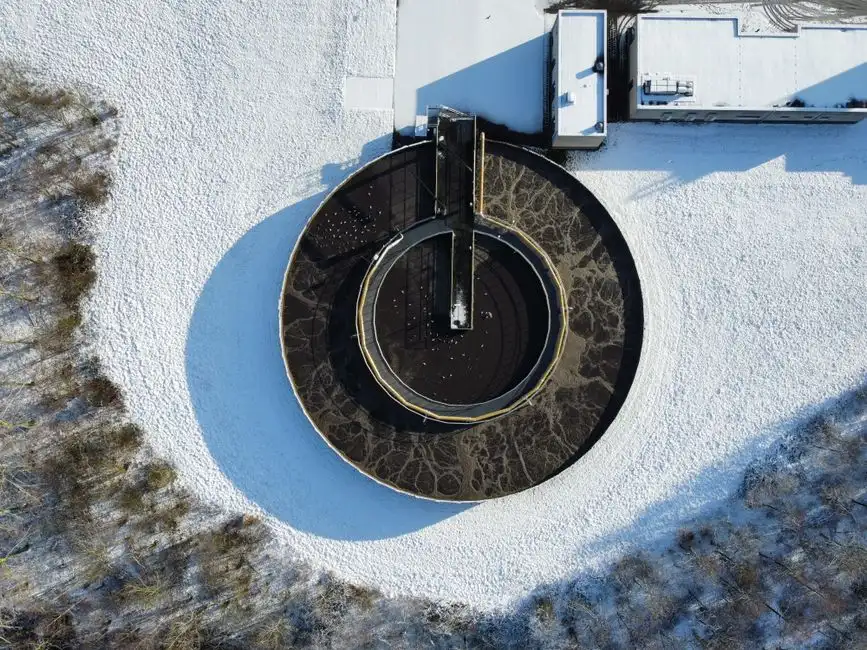
The clearest published reference architecture for a 2026 tannery train comes from the Vietnamese pilot in the Journal of Water Reuse and Desalination, where the sequence ran batch coagulation and sedimentation, then dissolved air flotation, then a membrane bioreactor, then granular activated carbon polishing (Journal of Water Reuse and Desalination). Effective integration requires clear boundaries between these stages.
| Train position | Unit operation | Boundary guarantee the engineer can specify against |
|---|---|---|
| 1. Upstream chemistry | Sulfide oxidation, chromium precipitation, equalisation | Cr(VI) reduced and precipitated; sulfide oxidised; pH held in the Cr(III) stability band |
| 2. Pre-flotation clarification | Batch coagulation and sedimentation (Vietnamese pilot) | Removes the bulk settleable solids and reduces the TSS load on the DAF |
| 3. Dissolved air flotation | Float cell with coagulant/flocculant dosing and skimming | Reduces TSS, FOG, oil and grease, and particulate-bound metals before the biological step |
| 4. Biological or membrane polishing | MBR (Vietnamese pilot) or microalgae-bacteria consortium (2026 review) | Removes dissolved organics, nitrogen, and residual dissolved metals through biosorption, bioaccumulation, and enzymatic transformation |
| 5. Final polishing | Granular activated carbon (Vietnamese pilot) | Polishes residual colour and refractory organics for reuse or surface water discharge |
The 2026 RSC Advances review documents an alternative polishing step: microalgae-bacteria, microalgae-fungi, and microalgae-microalgae consortia that drive biosorption, bioaccumulation, chromate reductase-mediated Cr(VI) reduction, peroxidase-driven phenolic degradation, and EPS-mediated heavy metal immobilisation (RSC Advances, 29 Jul 2026). In either architecture, the DAF protects the downstream biological or membrane step from TSS, FOG, and particulate metal overload. Where the train uses an MBR membrane bioreactor, the DAF protects the membranes from fouling; where it uses a microalgae consortium, the DAF protects the photobioreactor from light-blocking particulates.
DAF Configuration Choices for Tannery Duty
Kemco's DAF configuration list provides a baseline: coarse filtration, pH control with automatic acid and caustic dosing, the DAF cell itself, automatic skimming, and downstream sludge dewatering (Kemco Systems). Two design consequences follow for tannery duty. First, pH control is non-negotiable to avoid fines and environmental damage. Second, skimmings must feed sludge dewatering: tannery float sludge is mixed hazardous and non-hazardous waste because it concentrates chromium, sulfide residues, and dye, so a plate and frame filter press sized to the float cell's wet-sludge output is a required component.
Polymer choice for tannery influent remains qualitative in the public literature. High-surfactant, high-dye streams require a coagulant that destabilises the emulsion and binds dye chromophores, followed by a flocculant that builds a buoyant floc. Modular, skid-mounted DAF platforms with a 4–300 m³/h range suit phased tannery capacity because flow and stream mix change with each production campaign (HydropureWater DAF system product catalog).
Removal Targets the Buyer Should Specify in 2026
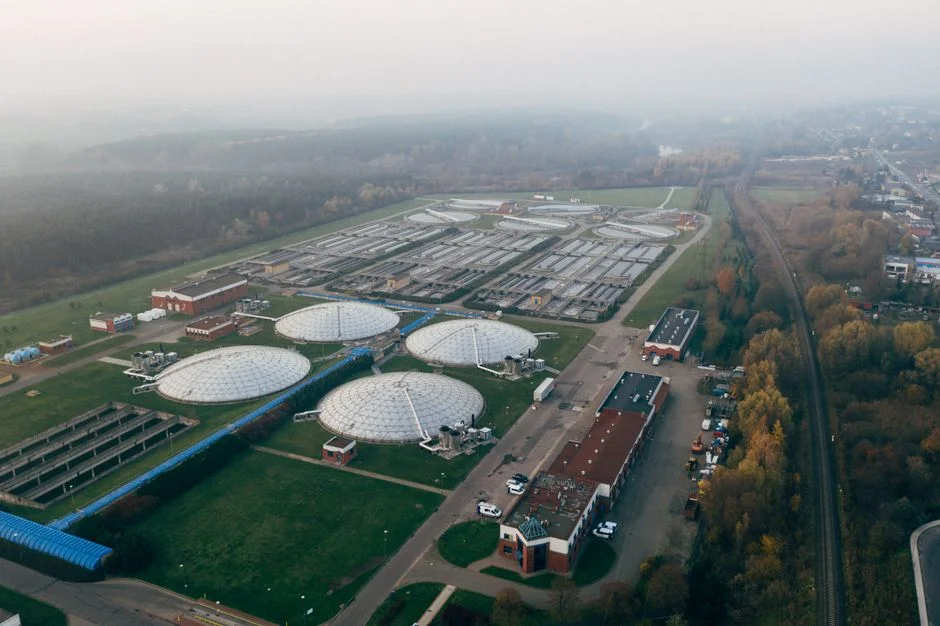
Specify the DAF for the parameters it actually controls: total suspended solids, oil and grease, FOG, and a portion of particulate-bound metals. Do not specify DAF for dissolved chromium, dissolved sulfide, or salinity removal, as these loads are managed by upstream chemistry and downstream polishing (Kemco Systems; Seven Seas Water). The binding constraint is the downstream unit's tolerance.
Define the residual load leaving the DAF and the load expected after the polishing step to avoid over-specifying the DAF or under-specifying the downstream unit. Since the literature does not publish numeric DAF removal percentages for tannery duty, tenders should require jar-test and pilot data to evidence performance. A useful reference for structuring that contract language is the broader DAF unit selection framework.
Procurement and Compliance Checklist for 2026
A tannery-specific DAF quote must address five questions before a purchase order is signed. Does the supplier provide an influent characterisation protocol tied to the chromium, sulfide, surfactant, dye, and chloride categories? Will the supplier run jar tests on the actual tannery influent and provide a polymer-dose report? Does the supplier have pilot data on a tannery or chemically similar influent? Is the sludge handling plan integrated with the float cell, including a filter press and a hazardous-waste disposal route for chromium-bearing skimmings? Is the pH-control skid integrated with the upstream chromium precipitation and sulfide oxidation stages (Kemco Systems)?
The buyer must resolve the discharge destination, local chromium and sulfide limits, sludge classification, and polishing step selection before specifying the DAF. The published architectures treat the polishing step as the compliance driver and the DAF as the boundary protector (Journal of Water Reuse and Desalination; RSC Advances, 29 Jul 2026). Two parallel reference cases worth reading are the industrial ETP and DAF system guide for a Vienna factory and the daf system for distillery wastewater guide.
Frequently Asked Questions
What is a realistic 2026 budget envelope for a tannery DAF unit?
A defensible budget cannot be asserted from public sources. Request a per-m³/hour installed cost from the supplier tied to a specific jar-test and pilot report, and budget separately for the upstream chemistry skid, the sludge dewatering press, and the polishing step (Kemco Systems; RSC Advances, 29 Jul 2026).
How do I choose between an MBR and a microalgae-bacteria polishing step downstream of DAF?
Use the boundary role as the deciding factor. MBR is the lower-risk choice when space and operator skill are constrained; microalgae consortia are worth piloting when land is available, the discharge limit tightens on dissolved metals, and the operator can manage a photobioreactor (Journal of Water Reuse and Desalination; RSC Advances, 29 Jul 2026).
What is the actual job of the DAF in a tannery train?
Reduce TSS, oil and grease, FOG, and particulate-bound metals ahead of the biological or membrane polishing step to protect that step from fouling and overload (Kemco Systems; Seven Seas Water).
What influent data must I collect before sizing a DAF for tannery duty?
Sample across at least one full production campaign and profile total chromium with a Cr(VI)/Cr(III) split, sulfide, chloride, total suspended solids, oil and grease, surfactant class, dye chromophore class, pH, and conductivity. Feed that profile into a jar-test campaign with the DAF supplier before locking the polymer dose, the cell size, and the sludge dewatering capacity (RSC Advances, 29 Jul 2026).