
Why Belo Horizonte housing needs a packaged STP, not a custom build
A packaged sewage treatment plant is the right class of solution for a greenfield Belo Horizonte subdivision because the developer is building roads, utilities, and housing in parallel and cannot afford the on-site civil window that a custom reinforced-concrete STP demands. Belo Horizonte is referenced in Brazilian housing-environment research as a benchmark city for residential salubrity indicators (Observatório Latinoamericano, 2015, citing the Governo do Estado de Minas Gerais, 2015), which means scrutiny on sewage servicing is high and a permit delay caused by an under-specified treatment train is expensive.
A factory-built, pre-engineered unit—skid- or container-mounted and bench-tested before shipment—collapses the field work into a crane lift, a pipe tie-in, and an electrical hookup, which is decisive on a phased Minas Gerais housing project. The same argument is made by communitysewer.com, whose residential-development workflow runs consult → engineer → build → ship → startup → 12-week follow-up assessment, and whose modular design lets capacity be added phase-by-phase instead of being sized for the full master plan on day one. Two packaged architectures dominate the Brazilian residential market: containerized membrane bioreactor (MBR) and buried WSZ-style anoxic/aerobic biological contact oxidation. Both appear in the current HydropureWater Brazil engineering hub and are sized for the flow bands a Belo Horizonte subdivision actually generates.
The Brazilian regulatory stack a packaged STP must satisfy
Compliance for a packaged STP in Minas Gerais requires a three-layer stack, and the developer's first job is to put the whole stack in front of every supplier before pricing is discussed. Layer one is the national discharge envelope, defined by CONAMA Resolution 430/2011, which is the standard cited across every HydropureWater 2026 Brazil engineering guide for STP sizing. Layer two is the state permit, issued by COPAM (Conselho Estadual de Política Ambiental de Minas Gerais), which sits on top of the CONAMA 430 envelope and adds Minas Gerais-specific conditions on the outfall, monitoring frequency, and sludge management. Layer three is the plumbing interface, defined by ABNT NBR 8160 (internal plumbing for separate sewerage) and ABNT NBR 9809 (small-community sewage project design), which govern how the packaged unit's inlet and outlet connect to the subdivision collection network. A defensible supplier bid for a BH housing development must include, as a single deliverable, the unit's CONAMA 430 effluent performance curve, COPAM licensing reference projects in Minas Gerais, and an explicit ABNT NBR 8160/9809 compliance statement. Any bid missing one of those three items is unqualified for the COPAM submission, regardless of the CAPEX number attached to it.
Sizing logic: from housing units to packaged unit count
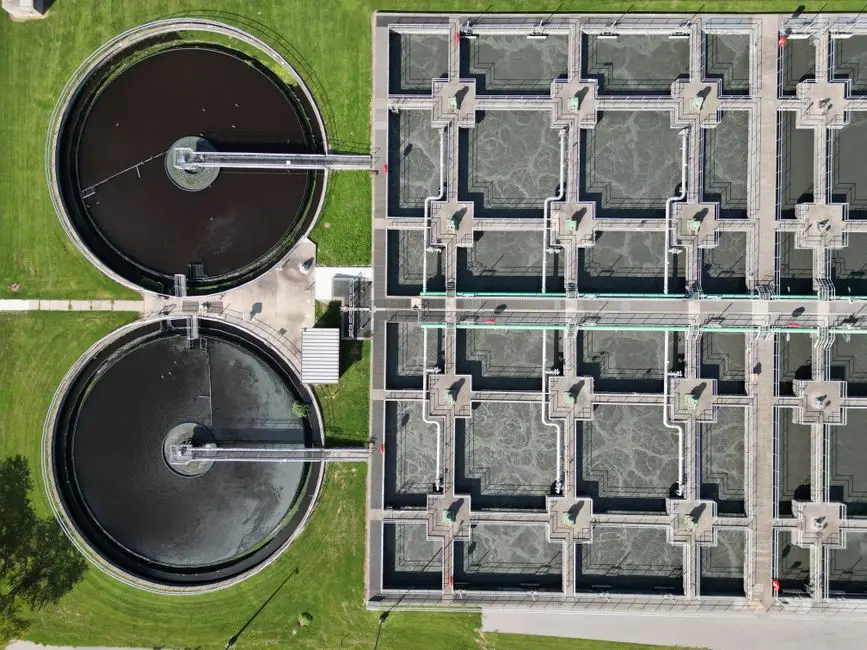
The defensible sizing chain for a residential subdivision runs housing units → occupancy → per-capita sewage flow → average daily flow → peak hourly flow → packaged unit count, and every step must be answered by the supplier in writing. Start with the planned number of housing units and the design occupancy per unit, then multiply by the per-capita sewage flow the supplier assumes; the scraped research does not state a Belo Horizonte-specific per-capita value, so request the number the bidder used and confirm it against the local concessionaire's design norm before signing. Convert average daily flow to peak hourly flow with a peak factor appropriate to residential duty; confirm the supplier's assumption rather than accepting a default. The two packaged envelopes that match a BH subdivision are the containerized MBR system at 10–2,000 m³/day and the buried WSZ A/O package at 1–80 m³/h, both per the HydropureWater product catalog. Belo Horizonte sits at roughly 852 m elevation, and the same HydropureWater Brazil guides that flag altitude derating for Brasília (DF) apply the same blower physics to a BH installation; request the supplier's altitude-corrected blower and diffuser sizing for the project altitude. A final sizing sanity check is the per-capita load: a framework for the same chain on a different Brazilian residential market is given in the packaged STP sizing framework for housing developments, which is useful as a structural reference even though the per-capita and peak-factor numbers are jurisdiction-specific.
Containerized MBR vs buried WSZ: head-to-head for housing duty
Both packaged architectures are credible for a Belo Horizonte subdivision, but they answer different developer priorities. The containerized MBR system combines activated sludge with submerged PVDF membrane filtration and is rated for an integrated envelope of 10–2,000 m³/day per the HydropureWater catalog. The membrane block typically uses DF series flat-sheet MBR modules at 0.1 μm PVDF, with cassette areas of 80–225 m² and per-cassette flows of 32–135 m³/day, and the package is documented as consuming 10–20× less energy than external cross-flow configurations. The MBR train delivers near-reuse-quality effluent suited to landscape irrigation or toilet flushing, in a footprint roughly 60% smaller than conventional activated sludge, at the cost of a membrane-replacement line item in OPEX. The buried WSZ A/O package runs anoxic/aerobic biological contact oxidation with sedimentation and disinfection in a single buried tank, is rated for 1–80 m³/h, and can be trailer-mounted for redeployment between phases; it is fully automated with no on-site operator and leaves a landscaped surface. The MBR working principle and selection logic is laid out in more detail in the MBR working principle and selection guide, and a side-by-side MBBR/MBR reference for biological-stage engineering is in the MBBR process flow and BOD-removal engineering guide.
| Parameter | Containerized MBR | Buried WSZ A/O |
|---|---|---|
| Hydraulic envelope | 10–2,000 m³/day (catalog) | 1–80 m³/h (catalog) |
| Core separation | Submerged PVDF membrane, 0.1 μm (DF series) | Sedimentation + disinfection |
| Module footprint reference | DF cassette 80–225 m², 32–135 m³/day per cassette | Single buried tank, fully automated |
| Effluent quality target | Near-reuse (irrigation, toilet flushing) | CONAMA 430 / COPAM discharge envelope |
| Surface impact | Containerized skid above grade | Buried, landscaped surface |
| Mobility | Fixed installation | Trailer-mountable for phased redeployment |
| Main OPEX driver | Membrane replacement interval | Sludge haulage, blower energy |
| Best-fit priority | Reuse intent, tight footprint | Landscaped surface, lowest operator involvement |
Phased procurement and on-site delivery for a BH subdivision
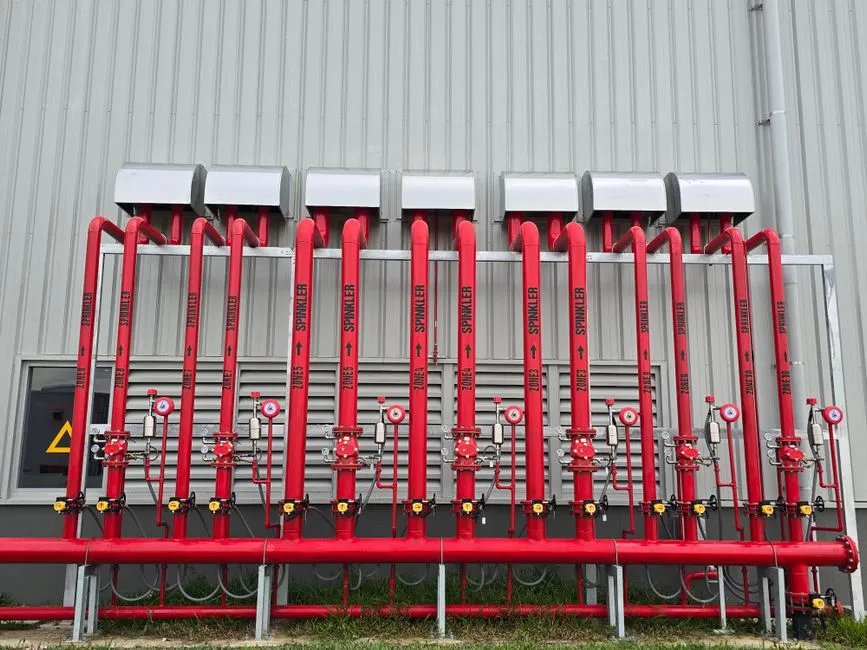
The procurement plan for a BH housing development should follow the factory-build → ship → assemble → startup → 12-week reassessment cadence documented by communitysewer.com, with the milestones rewritten against a COPAM inspection schedule. The HydropureWater Brazil hub confirms a 2026 engineering guide specifically for sizing a containerized MBR STP in Belo Horizonte, covering per-capita flows, container picks, and MBR specs; that guide is the right starting document to attach to any supplier RFP so that all bidders answer against the same design point. The quote must split CAPEX (skid or container, membranes, buried tank, blowers, controls) and OPEX (membrane replacement interval, chemical consumption, energy, sludge haulage) so the developer can cost the build lot-by-lot as the subdivision phases in. Confirm delivery dimensions and crane or trailer requirements against BH subdivision site-access constraints before signing, because a containerized MBR and a buried WSZ tank have very different logistics footprints, and a trailer-mounted WSZ can be redeployed between phases while a containerized MBR is fixed once lifted.
Frequently Asked Questions
How long does a packaged STP delivery and COPAM licensing take for a BH subdivision?
The scraped research confirms a 2026 engineering guide exists specifically for sizing a containerized MBR STP in Belo Horizonte and that the communitysewer.com workflow runs a 12-week post-startup reassessment, but it does not give a BH-specific COPAM licensing lead time. Request the supplier's last three COPAM licence issue dates for Minas Gerais residential projects and the median elapsed time from protocol to LO (Licença de Operação) before signing.
What should a developer budget for a packaged STP on a BH housing project?
The scraped research does not contain a CAPEX or OPEX figure for a Brazilian residential packaged STP. Request a written split of CAPEX and OPEX from each bidder, attach the same design flow and per-capita load to every quote, and compare on a 20-year net present value rather than on sticker price.
How do I pick a packaged STP supplier for a COPAM submission in Minas Gerais?
Filter the shortlist on three documents: a CONAMA 430 effluent performance curve, COPAM reference projects in Minas Gerais, and an ABNT NBR 8160/9809 compliance statement. Any bidder who cannot deliver all three is unqualified for a COPAM submission, regardless of price.
Do I need to derate the aeration system because BH sits at altitude?
Yes, blower physics for a Belo Horizonte installation requires altitude derating. Request the supplier's altitude-corrected blower and diffuser sizing for the project elevation and confirm it against the local concessionaire's design norm.