
Why Gelatin Wastewater Breaks a Standard Pretreatment Train
Gelatin production pushes wastewater through a 10-plus-step chain — classification, washing and dipping, degreasing, neutralization, hydrolysis, filtration, concentration, gelation, drying, and crushing — and every step contributes its own stream (Jorsun, gelatin wastewater case study, 2024-2025). The combined effluent carries high oil and grease from animal fats, high suspended solids, high COD, and high concentrations of Cl⁻ and SO₄²⁻, with pH swings between acid-wash and alkaline-wash batches (Jorsun, gelatin wastewater case study, 2024-2025).
The structural failure mode is well documented. In an 8,000 m³/d retrofit baseline, the only screening was a 5 mm mechanical bar screen at the inlet, and a two-stage air flotation train was running without generating micro-bubbles; oil and SS removal was poor, coagulant and energy were wasted, and the secondary biological stage ran overloaded with widely fluctuating effluent (Jorsun, gelatin wastewater case study, 2024-2025). Adding more chemistry or more hours to a train that does not actually produce bubbles does not fix the problem — the air-flotation cell is the wrong geometry, the dissolved-air system is starved of saturated water, or both. Buying another tank of coagulant will not recover flotation performance that the saturator cannot deliver.
Corrosion sits underneath that failure. The published case calls out the primary treatment equipment as "seriously corroded" because acid and alkaline batches hit the front end without homogeneous equalization, and because high Cl⁻ and SO₄²⁻ attack the steel structure in the pretreatment section (Jorsun, gelatin wastewater case study, 2024-2025). Operators who chase biological instability with aeration tweaks, then chase corrosion with paint, are usually treating symptoms of the same root cause: a pretreatment slot that is mechanically and chemically underspecified for gelatin duty.
What a DAF System Actually Does Inside a Gelatin Plant
A dissolved air flotation clarifier works by pressurizing a side-stream of clarified water with air inside a saturation vessel, then releasing that saturated water into the main flotation tank, where 30–50 micron micro-bubbles form and attach to flocculated oil and SS particles, lifting them to the surface (Clearwater Industries, 2025). A skimmer pulls the floating sludge blanket into a collection trough; clarified water is drawn off below the blanket and above any settled sludge, and most tanks also include a bottom sludge hopper for heavier settleables (Clearwater Industries, 2025). A gelatin stream usually produces both fractions — floating FOG and a granular bone/fines sludge — so the hopper is not optional.
Coagulation and flocculation are mandatory, not optional, in gelatin duty. Acids and bases are dosed to neutralize the swing between acid-wash and alkaline-wash batches, and a polymer flocculant builds the floable floc that the micro-bubbles need to attach to (Clearwater Industries, 2025; Jorsun, gelatin wastewater case study, 2024-2025). Mixing is done either in flocculation tubes, which provide 15–45 seconds of flash mix with dosing locations for coagulant, pH adjustment, and polymer, or in agitated mix tanks when a chemical needs longer contact time; jar testing fixes the actual residence time on the user's specific wastewater (Clearwater Industries, 2025). For background on microbubble physics and zero-risk selection logic, the DAF working-principle guide covers the saturation-vessel and nozzle-relief mechanisms in more depth.
Clean water for startup is also a real constraint: a DAF cell must be filled with clean water before the recirculation pump pulls a side-stream to the saturator, because dirty water in the saturator risks damaging the pump and the air-saturation system and forces the plant to discharge non-clarified water for an extended startup period (Clearwater Industries, 2025). On a gelatin site this typically means a small treated-water buffer tank sized to the largest DAF cell.
DAF Geometry Options for Gelatin Duty
Geometry choice is the first engineering decision after the chemistry is set, and Clearwater's clarifier taxonomy maps cleanly onto the gelatin envelope (Clearwater Industries, 2025). The FPAC is a low-profile, cross-flow separator with a large free surface area, suited to small-to-medium flows with very high contaminant loads — the closest match to a primary oil-removal cell on a gelatin line where the floating fraction dominates. The FPBC is a high-profile clarifier that adds plate separating technology to reach maximum efficiency at very low overflow rates, well suited as a polishing DAF downstream of a primary cell on streams with lower buoyancy particles. The FPHF is a hybrid that combines cross-flow and counter-current-flow for large flows with medium-to-large contaminant loads, the right geometry when a gelatin plant scales beyond a single skid. The COMPACT is a pre-assembled turnkey skid with chemical conditioning, DAF, sensors, and PLC integrated; single skid up to 66 GPM, modular two-skid above 66 GPM, and the right answer for smaller gelatin lines, pilots, or fast retrofit schedules (Clearwater Industries, 2025).
In the Jorsun gelatin retrofit, a high-efficiency sedimentation DAF (SDAF) was selected for the primary pretreatment slot because the high oil concentration made a compact, high-hydraulic-load cross-flow-style cell preferable on a constrained site, with a per-train maximum of 200 m³/h on segregated concentrated acid and concentrated alkaline streams (Jorsun, gelatin wastewater case study, 2024-2025). The deeper DAF engineering selection guide walks through the trade-offs between these geometries in more detail.
| Geometry | Flow envelope | Contaminant load fit | Gelatin duty fit |
|---|---|---|---|
| FPAC (cross-flow, low profile) | Small-to-medium | Very high loads | Primary oil-removal cell on a high-FOG line |
| FPBC (high profile + plates) | Low-to-medium | Low buoyancy particles | Polishing DAF downstream of primary cell |
| FPHF (cross-flow + counter-current hybrid) | Large | Medium-to-large loads | Scale-up beyond a single skid |
| COMPACT (pre-assembled skid) | Up to 66 GPM single, modular above | Integrated chemistry + controls | Pilot, small lines, fast retrofit schedules |
| High-efficiency sedimentation DAF (Jorsun SDAF) | Up to 200 m³/h per train | High oil, high SS, segregated acid/alkaline batches | Primary pretreatment on footprint-constrained gelatin sites |
Design Parameters That Actually Move the Needle
Hydraulic load sets the footprint. The Jorsun gelatin retrofit sized conservatively at 5.5–7.0 m³/m²·h and then pushed to 9 m³/m²·h on the upper end once the laminar-flow separation zone was confirmed (Jorsun, gelatin wastewater case study, 2024-2025). A buyer working from a fixed pad should pick the conservative end; a buyer on a constrained site can ask vendors to demonstrate laminar-flow separation at 9 m³/m²·h on their specific influent.
Reflux (return) ratio is the single most important dissolved-air number. A 40% floor is normal design; the Jorsun gelatin case raised the floor to ≥45% because of the high solid content of the incoming water (Jorsun, gelatin wastewater case study, 2024-2025). Micro-bubble size in the 30–50 micron band is generated by a saturated-water recirculation loop pressurized through a recirculation pump and an air-saturation vessel (Clearwater Industries, 2025). Flocculation contact time runs 15–45 seconds in flocculation tubes for fast-reacting chemistry, longer in agitated mix tanks when pH adjustment or coagulation requires it, with jar testing used to set the actual value (Clearwater Industries, 2025).
Reloader/releaser specification is the second most overlooked item. The Jorsun design required an anti-clogging, non-disassembly, cleaning-in-place releaser because gelatin streams carry hair, fines, and undissolved bone particles that plug conventional release devices (Jorsun, gelatin wastewater case study, 2024-2025). Skimmer coverage must be full-area with no dead zone, and the flotation cell must include a sludge hopper, because the stream produces both floating FOG and a granular settleable fraction (Jorsun, gelatin wastewater case study, 2024-2025). When comparing vendor quotes, push these into the datasheet so all bidders price the same scope.
| Parameter | Design value (gelatin duty) | Source |
|---|---|---|
| Hydraulic load (conservative) | 5.5–7.0 m³/m²·h | Jorsun, 2024-2025 |
| Hydraulic load (constrained site) | 9 m³/m²·h, with laminar-flow separation zone verified | Jorsun, 2024-2025 |
| Reflux ratio (floor) | ≥40% normal; ≥45% on high-SS gelatin influent | Jorsun, 2024-2025 |
| Micro-bubble size | 30–50 micron | Clearwater, 2025 |
| Flocculation tube contact time | 15–45 seconds (fast chemistry) | Clearwater, 2025 |
| Reloader/releaser | Anti-clogging, no-disassembly, CIP-style | Jorsun, 2024-2025 |
| Per-train peak flow | 200 m³/h on segregated acid/alkaline streams | Jorsun, 2024-2025 |
| Oil & grease removal | >95% | Jorsun, 2024-2025 |
Corrosion, pH Swings and Materials of Construction
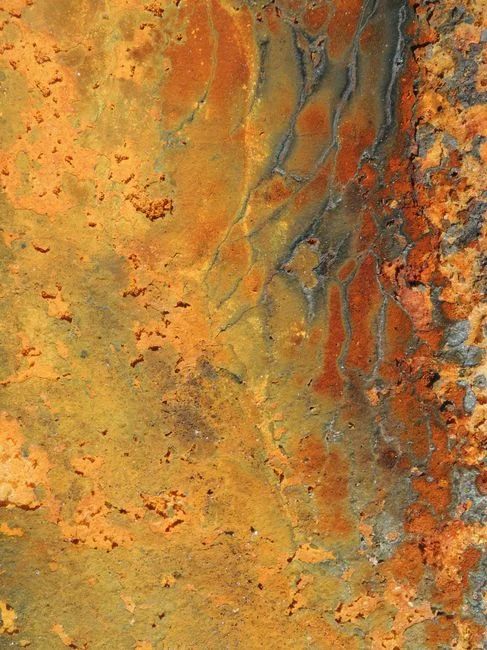
Corrosion is a primary design constraint in gelatin duty, not a value-engineering option. The Jorsun case documents two distinct failure mechanisms: pH-driven attack on the equalization and primary treatment equipment caused by acid-wash and alkaline-wash batches hitting the front end without homogeneous equalization, and Cl⁻/SO₄²⁻-driven attack on the steel structure equipment in the pretreatment section (Jorsun, gelatin wastewater case study, 2024-2025). Both failure modes were visible in the same plant at the same time, and both reduced to the same root cause: a pretreatment section whose materials of construction were not specified for the actual chemistry of a gelatin line.
The implication for the datasheet is that the wetted separation zone, the sludge hopper, the releaser, and the downstream instruments must all be specified in corrosion-resistant materials as a package, with the releaser in particular required to resist both chemical attack and particulate fouling simultaneously (Jorsun, gelatin wastewater case study, 2024-2025). Buyers should request explicit material callouts — not generic "corrosion-resistant" — and should request coupon test data or documented equivalent installations on high-Cl⁻/SO₄²⁻ influent. Without that documentation, a vendor's "stainless option" on a price sheet is not a defensible spec.
Integrating the DAF with the Rest of the Train
Where the DAF ends is just as important as where it begins. The published process train positions the DAF as pretreatment in front of a series of biochemical stages; the biological section is what removes residual COD, not the DAF (Jorsun, gelatin wastewater case study, 2024-2025). Promising the regulator or the plant manager that the DAF will "treat to discharge" is a contract risk — the DAF's job is to remove oil, grease, and suspended solids so that biology runs steady, and the biological section does the COD polishing.
Equalization must precede the DAF so that the acid-wash and alkaline-wash swings do not slam the flotation cell with pH excursions, and so that the downstream biological stage is also protected from shock loads (Jorsun, gelatin wastewater case study, 2024-2025). On a typical gelatin site the full train reads: production drainage → mechanical screen → equalization → DAF (primary oil/SS removal) → primary sedimentation → biological treatment → polishing. The DAF unit decision framework covers how to defend the DAF scope in front of a procurement team that may want to push it downstream.
Recovered oil from the DAF sludge can be re-refined into industrial oil. The Jorsun case describes this sidestream as having "high economic value," with an annual revenue contribution of "millions of dollars" on one page and "tens of millions of dollars" on another (Jorsun, gelatin wastewater case study, 2024-2025). The two figures should be flagged for the vendor during bid review rather than averaged or picked at random; the actual order of magnitude depends on the plant scale, local industrial-oil pricing, and the dewatering yield on the recovered sludge, none of which are fixed in the published case.
Sizing Worksheet: Inputs to Send a DAF Vendor
Send the same datasheet to every bidder. The minimum input set below is what the Jorsun retrofit used to size the cell and the recirculation loop, and it is what a vendor needs to return a defensible quote on the same scope (Jorsun, gelatin wastewater case study, 2024-2025; Clearwater Industries, 2025).
| Input | Value to provide | Why it matters |
|---|---|---|
| Daily and peak hourly flow | m³/d average; m³/h peak; segregated acid and alkaline batch profiles | Sets number of trains and per-train peak (Jorsun case: 200 m³/h per train) |
| Influent oil/grease, TSS, COD | Min, average, max — not just averages | Drives chemistry dose, reflux ratio, sludge-handling sizing |
| Cl⁻ and SO₄²⁻ | Min, average, max | Drives material-of-construction spec for wetted zone, hopper, releaser, instruments |
| Temperature and pH range | Min, average, max | Drives equalization sizing and pH-correction dose |
| Target effluent oil/grease and TSS | mg/L target, with ≥95% oil removal as a benchmark | Defines guarantee basis and vendor performance test |
| Site constraints | Footprint envelope, available clean water for startup, utility capacity | Drives hydraulic-load choice (5.5–7.0 vs 9 m³/m²·h) and skid vs field-built |
| Sidestream value | Whether recovered oil will be sold as industrial oil | Changes sludge-handling, dewatering, and storage spec |
Frequently Asked Questions
What hydraulic loading rate and reflux ratio should a DAF be sized at for gelatin wastewater?
For gelatin duty, hydraulic load should be set conservatively at 5.5–7.0 m³/m²·h and pushed to 9 m³/m²·h only when the cell can be demonstrated in laminar-flow separation on a constrained site; the Jorsun retrofit pushed to 9 m³/m²·h on those terms (Jorsun, 2024-2025). Reflux ratio should be specified at ≥40% as a floor and raised to ≥45% when influent SS is high (Jorsun, 2024-2025).
What oil and grease removal can a gelatin-plant DAF realistically guarantee?
The published Jorsun retrofit reports oil and grease removal greater than 95% on a high-FOG gelatin influent, with the DAF effluent going directly to biochemical treatment rather than to discharge (Jorsun, 2024-2025). The 95% figure should be used as a benchmark in vendor guarantees, with the specific inlet envelope and chemistry written into the performance test.
What materials of construction are required for a DAF on gelatin wastewater?
The wetted separation zone, sludge hopper, releaser, and downstream instruments must be specified in corrosion-resistant materials because gelatin wastewater carries high Cl⁻ and SO₄²⁻ and swings between strong acid and strong alkaline batches, both of which attacked steel structure equipment in the documented baseline (Jorsun, 2024-2025). The releaser must additionally resist particulate fouling, so material selection has to satisfy corrosion and anti-clogging requirements at the same time.
How do I compare DAF vendor quotes for a gelatin plant on the same basis?
Send each bidder the same datasheet: daily and peak flow with segregated acid/alkaline batch profiles, influent oil/grease/TSS/COD/Cl⁻/SO₄²⁻/pH/temperature as min-average-max, target effluent, footprint, and whether recovered oil is sold as industrial oil. Ask for explicit material callouts on the wetted zone, hopper, and releaser, and a hydraulic-load figure (5.5–7.0 vs 9 m³/m²·h) tied to a demonstrated Reynolds number, not a generic "high rate" claim (Jorsun, 2024-2025; Clearwater, 2025). Quotes that do not address material selection and laminar-flow separation should be treated as incomplete, regardless of price.
Related Equipment
- DAF system — specifications, capacity range, and technical data
- automatic chemical dosing system — specifications, capacity range, and technical data
- rotary mechanical bar screen — specifications, capacity range, and technical data