Why Manama housing developments need a packaged plant, not a municipal connection
Bahrain operated three major sewage treatment plants and six smaller facilities as of late 2008, supported by 57 km of transmission lines and 186 km of distribution pipes (MEED, 2008). That trunk network was sized for the population of that period and does not extend to every new housing parcel on the urban fringe of Manama, where developers regularly commission compounds before the municipal sewer reaches the boundary. Packaged systems are pre-engineered, factory-tested and containerizable, which suits a developer who needs an STP that can be commissioned and handed over on the project's own timeline rather than waiting for a Works Ministry extension.
The residential end-use segment leads demand for packaged systems in Bahrain, driven by the proliferation of new housing projects and heightened awareness of sustainable wastewater management among homeowners (Ken Research, 2019–2030 outlook). If a site falls inside the Tubli catchment and a sewer connection is feasible, the developer still has a reuse-quality case for a packaged plant serving landscape irrigation. If the site sits outside the catchment, a packaged plant is typically the only short-term viable option, and the design question becomes which configuration, not whether to build at all.
Matching packaged system type to housing scale
Ken Research identifies four packaged system types active in Bahrain: Modular Treatment Systems, Containerized Treatment Solutions, Skid-Mounted Systems, and Membrane-Based Systems. Modular systems offer flexibility, scalability and ease of installation for applications ranging from residential complexes to industrial parks. Containerized solutions allow for rapid deployment and portability in remote or temporary locations. Skid-mounted systems provide compact, pre-engineered solutions for smaller facilities, while membrane-based systems serve advanced filtration and water reuse requirements (Ken Research, 2019–2030 outlook).
The membrane-based class is a proven technology for Bahrain: the Ma'Amir plant delivered by Stantec was the first advanced membrane bioreactor in the Kingdom, and the facility produces recycled water that exceeds the quality requirements for unlimited reuse (Stantec, project page). For a Manama housing developer, that sets a local benchmark that the MBR class is buildable, operable and accepted by the regulator.
A practical mapping for residential Bahrain work: a 50–200 dwelling estate typically fits a modular MBR; under 50 dwellings or phased builds suit containerized or skid-mounted units; any project that needs reuse-grade effluent for landscape irrigation should specify membrane-based regardless of size, because the reuse requirement drives the process train, not the flow.
| Packaged type (Ken Research taxonomy) | Typical housing capacity | Strength | Limit in a Manama context |
|---|---|---|---|
| Modular Treatment Systems | 50–200+ dwellings | Scalable in parallel trains; phased build-out | Larger site footprint; longer install |
| Containerized Treatment Solutions | Under 50 dwellings, temporary | Rapid deployment; portable | Limited above-grade footprint flexibility |
| Skid-Mounted Systems | Small facilities, low flow | Compact, pre-engineered, fast plug-in | Not the right class for reuse-grade effluent |
| Membrane-Based Systems (MBR) | Any residential scale targeting reuse | Unlimited-reuse quality benchmark (Ma'Amir) | Higher capex; membranes need climate-rated performance data |
Sizing the plant: dwellings, per-capita flow and peak factor
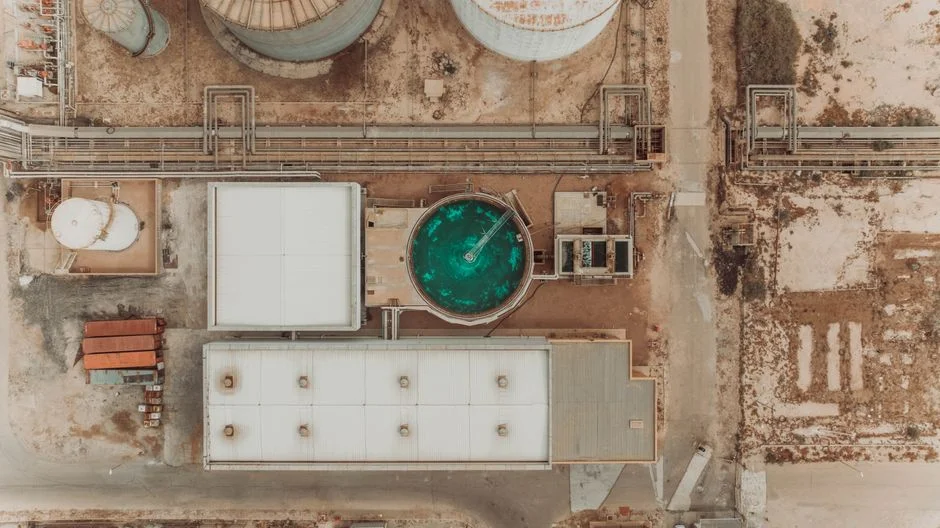
Standard sizing inputs are the number of dwelling units, design population per unit, litres per capita per day, and a peak factor. The engineer must confirm these values against the developer's water-demand data and the current Works Ministry masterplan rather than assuming a default value. Once the average dry-weather flow is established, the peak factor converts it to the hydraulic capacity that the packaged unit must pass without surging; for residential collection networks, a 2.0–2.5× peak factor is the engineering starting point, to be verified against local masterplan figures.
The MBR membrane bioreactor packaged plant range is published from 10 to 2,000 m³/d, which covers the typical Manama housing-estate envelope from a small compound up to a multi-block development. For phased estates, modular MBRs can be deployed in parallel trains so capacity is added in line with occupancy instead of being over-built at handover, which controls capex and keeps the biological load per train in the design window.
| Sizing input | What the engineer must obtain | Why it matters for a Manama housing estate |
|---|---|---|
| Dwelling count × persons per unit | Developer population schedule, phased | Sets the average dry-weather flow basis |
| Per-capita water demand (L/c·d) | Bahrain masterplan or developer demand data | Drives ADWF; not supplied in research and must be confirmed |
| Peak factor (×ADWF) | Verify against local masterplan | Sets hydraulic capacity the unit must pass without surge |
| Effluent quality target | Works Ministry discharge or reuse requirement | Determines whether MBR is mandatory or optional |
Bahrain-specific design constraints for a Manama site
High ambient temperature affects biological kinetics, tank materials and concrete mix design. At the Tubli expansion in Manama, WTE used a concrete composition and processing method suited to the local climate, and applied buoyancy control to below-grade structures because part of the construction work was performed below the groundwater level (WTE, Tubli project page). For a packaged plant, the housing developer's buried civils and any below-grade packaged unit must be specified for both heat and groundwater, not just structural load.
Shallow groundwater is the second Bahrain-specific driver. Stantec's Ma'Amir work noted "poor ground conditions" at the site, and the parallel Tubli design by WTE explicitly addresses buoyancy. For a Manama housing site, an underground WSZ-type unit needs a buoyancy check against the highest recorded water table, and any MBR containerized unit on a skid or trailer frame needs to confirm that the above-grade mount does not transfer load into a flooded surround.
Effluent quality is the third constraint. Ma'Amir's MBR produces recycled water exceeding the quality requirements for unlimited reuse, a benchmark increasingly required by the Works Ministry for housing projects discharging to landscape irrigation. Tertiary disinfection practice in Bahrain combines disc filtration, two-stage ozonisation, sand filtration and chlorination at municipal scale (WTE, Tubli); a packaged plant serving housing typically applies an equivalent polishing step before reuse or discharge, using a UV sterilizer for tertiary polishing or a chlorine dioxide generator sized to the post-MBR flow.
WSZ underground vs MBR containerized: which fits a Manama housing estate
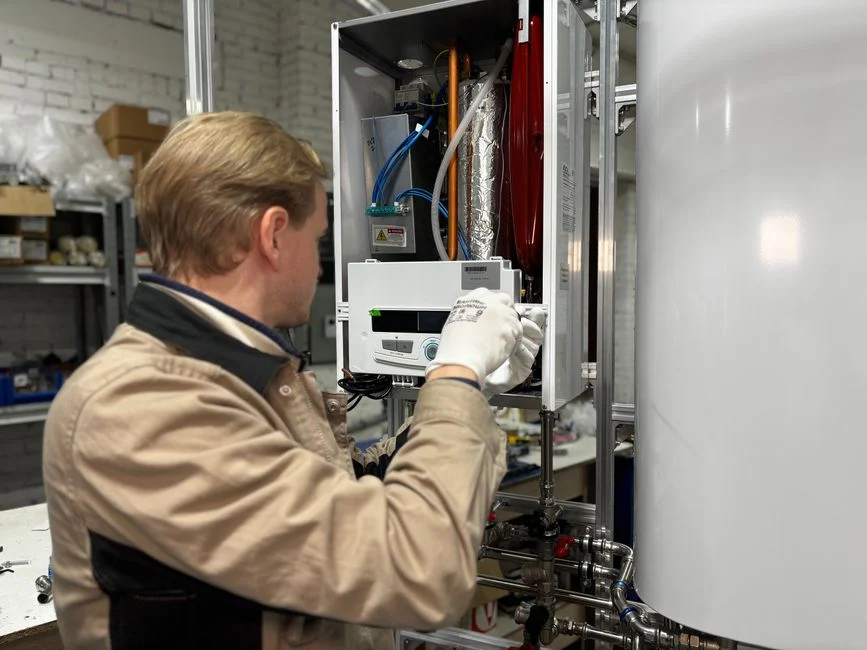
The WSZ underground packaged sewage treatment plant combines anoxic and aerobic biological contact oxidation with sedimentation and disinfection inside a single buried unit, runs fully automated without an operator, and is offered in the 1–80 m³/h band (roughly 24–1,920 m³/d). This is the appropriate choice where the developer needs the equipment hidden below grade, the footprint above the landscaped area preserved, and the influent is conventional domestic sewage without a reuse obligation.
The MBR containerized system combines activated sludge with submerged PVDF membrane filtration, delivers near-reuse-quality effluent at sub-micron filtration with roughly 60% less footprint than a conventional plant of the same flow, and is sized 10–2,000 m³/d. This is the right choice when the developer wants reuse-grade water for landscape irrigation, space above grade is constrained, or the Works Ministry is pushing for a discharge quality closer to the Ma'Amir unlimited-reuse benchmark.
The site trade-off is direct. A buried WSZ in Manama's shallow groundwater must be designed for buoyancy, which adds civil works. A containerized MBR on a trailer or skid frame avoids the buoyancy question entirely, but uses visible above-grade footprint that the architect must plan around. Decision rule: if the development has landscape irrigation demand or the Works Ministry is pushing for reuse, default to MBR; if the plant is a temporary measure ahead of municipal connection and no irrigation reuse is planned, WSZ is the lower-capex route that still meets a basic secondary discharge.
Supplier landscape and what to verify before ordering
International and regional suppliers active in Bahrain's packaged wastewater market include Veolia Water Technologies, SUEZ Water Technologies & Solutions, Xylem, Aquatech, Corodex Industries, MENA-Water, Emvees Wastewater Treatment, Organica Water, Pollution Control Systems, Smith & Loveless, Huber Technology, Gradiant, IDE Technologies, Pentair and Bio-Microbics (Ken Research, 2019–2030 outlook). The shortlist for a Manama housing submittal should be drawn from that set.
Verification points a buyer should request in writing include a Bahrain or Gulf reference list with operating plants of similar size, reuse-quality compliance data for the proposed MBR configuration, factory acceptance test records for the specific train being offered, and O&M support presence inside the Kingdom with named contacts. Confirm that the offered MBR uses PVDF membranes with documented cleaning intervals, the same material class specified in DF series PVDF flat-sheet MBR modules. Ask for hydraulic and organic-load performance curves under high ambient temperature, not just at the 20 °C standard conditions, because Bahrain's peak ambient temperature shifts biological kinetics and oxygen demand off the standard curve.
Frequently Asked Questions
What capacity range should we ask for in a packaged STP quote for a Manama housing estate?
For a typical Bahraini residential compound, a packaged plant in the 10–2,000 m³/d range with MBR-class effluent quality covers everything from a small villa cluster up to a multi-block development. The specific flow for your site is set by the dwelling count, the per-capita demand figure from the current masterplan, and the agreed peak factor; request a sizing calculation from each bidder rather than a single flow number.
How much does a packaged sewage treatment plant cost for a Bahraini housing project?
A request-for-quote is the only defensible input to a budget submittal. Ask each shortlisted supplier for an itemised price covering the packaged unit, civil works for buoyancy and foundations, tertiary polishing, factory acceptance test, shipping to Bahrain, installation supervision, commissioning and a 12-month O&M proposal, because bundling or omitting these line items distorts a like-for-like comparison.
Which supplier selection checks matter most for a Bahraini housing submittal?
Ask for Bahrain or Gulf reference plants of the same MBR class, reuse-quality compliance data, PVDF membrane material and cleaning intervals, and a named O&M contact in the Kingdom. Performance curves must be quoted at Bahrain ambient temperature, and the bidder should provide a compliance narrative against the current Works Ministry discharge and reuse requirements.
What is the realistic lead time for a containerized versus modular MBR in Bahrain?
Containerized MBR units are factory-built, tested and shipped as a single skid, which compresses site work to foundation, connection and commissioning; modular MBRs are built in sections and assembled on site, which trades longer install time for the ability to phase capacity in parallel trains. The buyer must request a documented engineering, manufacturing and shipping schedule from each bidder relative to the developer's handover date.