Why 2026 is a turning point for industrial dust removal
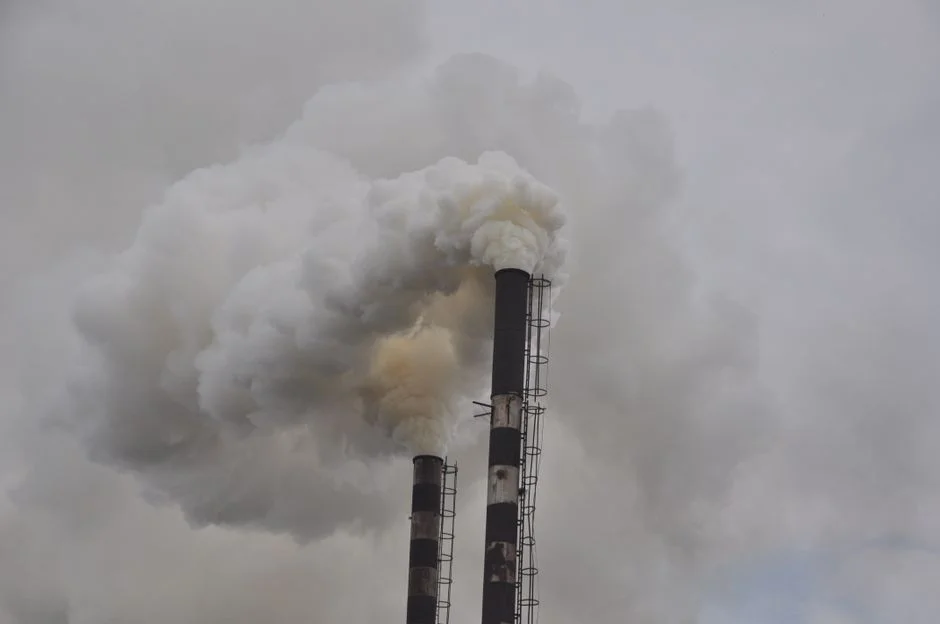
Industrial activity is the dominant source of atmospheric particulate matter, and chronic exposure to that dust is linked to respiratory disease, cardiovascular disease and the formation of photochemical smog (Condorchem, 2025). Regulators in the European Union and the United States have tightened particulate outlet limits repeatedly over the last decade, and the 2026 reference values for BAT-AEL, the EU Industrial Emissions Directive 2010/75/EU, and the EPA NSPS are now aligned around sub-10 mg/Nm³ outlet concentrations in the most exposed industrial categories (HydropureWater verified product catalog, 2026).
The shift forces a different conversation in the equipment room. A cyclone that delivers roughly 98% removal for coarse particles is no longer enough on its own; the same outlet must hold for PM2.5 and even sub-micron fractions, which behave very differently in collection devices (ScienceDirect, Dust Removal overview; Condorchem, 2025). Particulate matter is also not a single contaminant — it can be dry solid fragments, liquid aerosols, or solid nuclei with a liquid coating, and each form interacts with capture mechanisms differently (Condorchem, 2025). Choosing a 2026 dust removal system is a compliance decision as much as an operating-cost decision, because the chosen device must demonstrably hold the outlet concentration under real inlet variability.
The four main industrial dust removal technologies at a glance
Industrial dust removal devices are classified by the physical force that separates particles from the gas stream. Mechanical dust removal relies on gravity, inertia or centrifugal force, and the cyclone family is the workhorse of this category (ScienceDirect, Dust Removal overview). Electrical dust removal takes a different approach: gas-borne particles pass through an ion source, become charged, and migrate to oppositely charged collection surfaces — that is the principle of the electrostatic precipitator (ScienceDirect, Dust Removal overview).
The third principal family is dust removal by porous material, in which flue gas is drawn through fabric media and the dust forms a filter cake on the bag surface; the baghouse is the typical industrial embodiment, and it is the technology that delivers the sub-10 mg/Nm³ outlet required by BAT-AEL (ScienceDirect, Dust Removal overview; HydropureWater verified product catalog, 2026). Wet scrubbers form a parallel wet route in which contaminated gas contacts a liquid — water or a chemical solution — and the captured dust leaves the gas phase inside that liquid (Condorchem, 2025). The following table maps these four families against the basic operating envelope a procurement engineer needs before requesting a quote.
| Family | Capture principle | Typical role in the gas-cleaning train | Source |
|---|---|---|---|
| Mechanical — cyclone family | Centrifugal / inertial separation on particle mass | Pre-collector for coarse dust upstream of a fabric filter or ESP | ScienceDirect, Dust Removal overview |
| Electrical — electrostatic precipitator (ESP) | Particle charging followed by electrostatic attraction to collection plates | Standalone fine-dust collector where dust resistivity is favourable | ScienceDirect, Dust Removal overview |
| Fabric filtration — baghouse | Filtration through fabric media with periodic pulse cleaning | Final particulate stage when outlet is < 10 mg/Nm³ | ScienceDirect, Dust Removal overview; HydropureWater verified product catalog, 2026 |
| Wet route — scrubber | Particle transfer into water or chemical solution | Combined gas cleaning (e.g. SO₂ + dust) and gypsum by-product recovery | Condorchem, 2025 |
Head-to-head comparison: cyclones, scrubbers, baghouses and ESPs
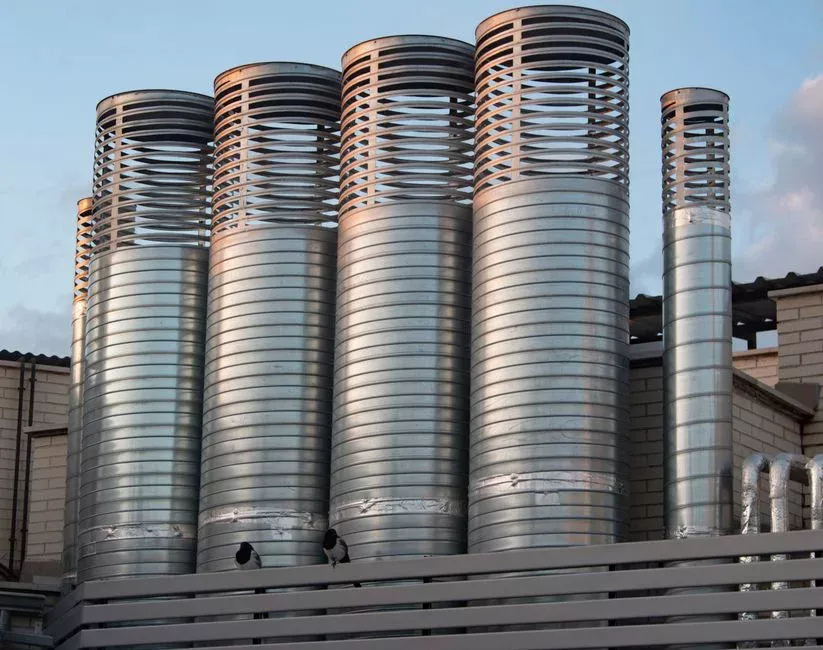
Procurement for these systems requires evaluating achievable outlet concentrations, particle size capture, and final waste forms. A cyclone caps at roughly 98% removal for particles above 20 µm; finer particles, including the sub-micron fraction from oil and waste combustion, require a downstream filtration stage (ScienceDirect, Dust Removal overview). For sites that must meet BAT-AEL or EPA NSPS — outlet below 10 mg/Nm³ — a pulse-jet baghouse is the typical workhorse, often paired with a cyclone pre-stage (HydropureWater verified product catalog, 2026; ScienceDirect, Dust Removal overview).
Wet scrubbers cover both coarse and soluble fractions, but the captured dust leaves the device as a slurry, which becomes a wastewater-handling problem (Condorchem, 2025). Electrostatic precipitators handle fine dust efficiently when particle resistivity is in the working range; outside that range, performance degrades and a hybrid ESP/baghouse configuration is sometimes used. The HydropureWater Pulse Jet Baghouse Dust Collector is documented in the verified catalog as delivering an outlet below 10 mg/Nm³, which is the value most often quoted against BAT-AEL. For processes that must also remove SO₂, the HydropureWater FGD Scrubber System is sized in parallel with a particulate stage.
| Parameter | Cyclone | Wet scrubber | Baghouse | Electrostatic precipitator (ESP) |
|---|---|---|---|---|
| Capture principle | Centrifugal | Liquid impingement | Fabric filtration | Electrostatic attraction |
| Documented removal / outlet | ~98% for particles > 20 µm | Combined gas + dust train; reported in multi-pollutant context (SO₂ 96.3%, HCl 83.6%, NOₓ 30%, dust 98.9%) | Outlet < 10 mg/Nm³ per HydropureWater verified product catalog | High for fine dust when resistivity is favourable (no verified figure in the supplied research) |
| Particle-size sweet spot | Coarse (> 20 µm) | Coarse and soluble fractions | Sub-micron to coarse | Fine dust with adequate electrical resistivity |
| Waste form at outlet | Dry solid | Liquid slurry → wastewater train | Dry solid (filter cake) | Dry solid (rapping) |
| Typical role | Pre-collector | Multi-pollutant train including gypsum by-product | Final particulate stage | Standalone fine-dust stage |
Sizing the system to your process variables
Device selection relies on defined inputs: type and size of particles, particle size distribution, moisture content, gas volume and the applicable emission limit (Condorchem, 2025). With those inputs the engineer can decide whether a single device is enough or whether a multi-stage train is required. Where the inlet is heavily loaded with coarse dust, a battery of multi-cyclones upstream of a baghouse is the standard arrangement, because the cyclones remove the coarse fraction and protect the bags from abrasion (ScienceDirect, Dust Removal overview).
For processes that also emit acid gases, the cleaning train target reported in the ScienceDirect overview is SO₂ = 96.3%, HCl = 83.6%, NOₓ = 30%, dust = 98.9% and metals/metalloids = 97.6% — those values belong to the same combined gas-cleaning case study and must be read together. Before final sizing, the regulatory regime must be confirmed in writing, because EPA NSPS, the EU Industrial Emissions Directive and BAT-AEL each prescribe different outlet limits and reference conditions (HydropureWater verified product catalog, 2026). Stack test data from a reference plant in the same industry is the most reliable input for a final number, and any supplier quoting a single figure for an unrelated fuel or process should be asked to justify the deviation.
Wet vs dry dust removal and what happens to the captured dust
Technology choice determines the form of the waste the plant must handle on the back end. Dry systems (cyclones, baghouses, ESPs) recover the particulate as a dry solid that can usually be recycled, sold as a by-product, or sent to landfill under local solid-waste rules (Condorchem, 2025; ScienceDirect, Dust Removal overview). Wet scrubbers discharge the captured dust in a liquid slurry, which is why an FGD scrubber is typically quoted together with downstream wastewater treatment (HydropureWater verified product catalog, 2026).
For the FGD route specifically, lime or limestone wet scrubbing produces a reusable gypsum by-product, which removes the need for a separate dry particulate stage and gives the operator a saleable output (HydropureWater verified product catalog, 2026). If the wet route is selected, the reader should plan for clarification and chemical dosing of the scrubber blowdown — a HydropureWater Dissolved Air Flotation (DAF) system is typically the next step, paired with a chemical dosing system to handle suspended solids and metals before the clarified water is recycled or discharged. This link between gas cleaning and wastewater treatment is the integration point that requires the wet route to be evaluated as a coupled gas-and-water project.
2026 selection checklist before you talk to a supplier
Before requesting a quote, lock down the four inputs that drive the device choice: the outlet limit in mg/Nm³, the required removal efficiency, the gas volume and temperature, and the inlet dust loading (HydropureWater verified product catalog, 2026; Condorchem, 2025). Decide dry versus wet capture up front based on what you want to do with the collected dust, and identify whether the scrubber blowdown must be treated on-site or can be sent to a common wastewater treatment plant.
Ask the supplier for reference plants in the same industry, and request third-party stack test data rather than catalogue curves. For wet routes, also request a mass balance for the scrubber blowdown so that downstream clarification equipment — DAF, chemical dosing, sludge handling — can be sized against the same envelope as the gas train. With those four pieces of evidence in hand, the technology choice between cyclone, scrubber, baghouse and ESP becomes a structured shortlist.
Frequently Asked Questions
Which dust removal system is the cheapest to install in 2026?
Capital cost scales with the outlet target and the gas volume rather than with the device name on the datasheet. A cyclone pre-stage is typically the lowest-cost hardware, but a site that must meet the < 10 mg/Nm³ outlet documented for the HydropureWater Pulse Jet Baghouse Dust Collector (verified product catalog, 2026) will pay for fabric filtration, not cyclones. Buyers should request a priced bill of materials against their own outlet limit and gas volume, because the same cyclone can cost very different amounts when it is sized for a 10,000 Nm³/h cement kiln versus a 200,000 Nm³/h power boiler.
How do I choose between a cyclone, scrubber, baghouse and ESP for a new bid?
Start with the outlet limit, then the particle size window. The ScienceDirect Dust Removal overview places cyclones at roughly 98% removal for particles above 20 µm, and baghouses as the device of choice for sub-10 mg/Nm³ outlets. ESPs are credible where dust resistivity is favourable; wet scrubbers earn their place when SO₂ and dust must be removed together. A reference plant in the same industry, with third-party stack test data, is the most defensible input to a supplier shortlist.
What happens to the waste if I select a wet scrubber?
A wet scrubber discharges the captured dust as a slurry, and FGD scrubbers in particular are quoted together with downstream wastewater treatment (HydropureWater verified product catalog, 2026). The buyer should plan for a DAF or equivalent clarification stage plus chemical dosing for the scrubber blowdown, and should request a mass balance from the scrubber supplier so that this downstream train is sized correctly.
Which 2026 regulations should I confirm before finalising the design?
Three regulatory regimes dominate 2026 industrial dust bids: the EPA NSPS in the United States, the EU Industrial Emissions Directive 2010/75/EU, and the BAT-AEL ranges published under that directive. The HydropureWater verified product catalog (2026) explicitly ties its < 10 mg/Nm³ baghouse outlet to all three. Confirm the applicable sub-category in writing with the local regulator before locking the design basis, because the prescribed reference conditions (oxygen, temperature, pressure) change the converted outlet number.