Why Baku housing developments need a packaged STP in 2026
Most Bakı-Absheron housing clusters built between 2024 and 2026 sit outside the central sewerage network, so a packaged sewage treatment plant is the default answer rather than a temporary one. Azerbaijan is actively expanding wastewater treatment capacity, with the EBRD funding a sovereign loan of up to EUR 91 million for the Shaki Water and Wastewater Project — Tranche 1 of up to EUR 57 million covers a 16,000 m³/day WWTP, a sludge management facility (around 5 years storage) with 0.8 MWp of PV, plus 102.7 km of water, 148.3 km of sewerage and 48.7 km of stormwater networks, with procurement scheduled to start on 18/05/2026 (S2). That central scheme is sized for a city, not a suburban cluster of a few hundred to a couple of thousand homes.
Turkish water-sector vendors already execute turnkey projects across Baku, Sumgayit, Ganja, Shirvan, Mingachevir, Shabran, Lankaran, Naftalan and Shamakhi, with documentation, training and remote support delivered in Turkish or Azerbaijani, simplified customs for Turkish manufacturers, and a road-transit corridor of 5–7 days through Georgia (S4). The Ismayilli rayon plant — a Soviet-era 30,000 PE extended-aeration unit built in 1988–90 — is leaking untreated sewage to groundwater and to ditches around the town, a pattern that pushes both MENR and developers toward modern, sealed, buried packages for new builds (S5). The first engineering decision is therefore not technology but site context: confirm whether the plot falls inside an existing sewerage catchment, and if not, plan a packaged STP with its own discharge or reuse path; if yes, MENR may still require on-site treatment and reuse for landscape irrigation.
Sizing a packaged STP for a Bakı-area residential cluster
The Ismayilli reference design (S5) gives a defensible flow per capita for Azerbaijani conditions: 30,000 PE at 6,232 m³/day, or roughly 208 L/capita·day, with a dry-weather peak of 378 m³/h and a rainy-weather peak of 637 m³/h — the rainy peak runs about 1.7× the dry peak. For a Baku housing development, count population equivalent (PE) at design occupancy rather than at handover occupancy, request the developer's actual occupancy assumption instead of using a default, and apply a domestic-sewage range of roughly 150–200 L/capita·day. Translate PE to average daily flow with Qavg = PE × L per capita ÷ 1,000 (m³/day), then check the peak with a peaking factor of about 2.5–3.0 for small communities in the Absheron climate.
The WSZ underground package sewage treatment plant covers 1–80 m³/h, equivalent to roughly 24–1,920 m³/day, so any Baku cluster from a few hundred to about 2,000 homes falls inside a single block of WSZ units or a small parallel train without having to step up to a civil WWTP. Always define a stormwater policy before locking the design: MENR permitting looks at both sanitary and stormwater networks, the Shaki project combines 148.3 km of sewerage with 48.7 km of stormwater (S2), and the EIA template used for Ismayilli treats the cleaned-sewage monitoring point, the discharge point to the collector, and the soil where sludge is applied as separate items (S5).
Inputs a buyer must collect before final sizing: unit count, design occupancy, any commercial or kindergarten load, infiltration estimate, expected BOD/COD/TSS, target reuse versus disposal, and the developer's stormwater policy (separate stormwater, on-site detention, or blending).
| Sizing input | How to derive it | Source / check |
|---|---|---|
| Population equivalent (PE) | Units × design occupancy; ask developer for occupancy assumption | Project-specific; not in research data |
| Per-capita sewage (L/capita·day) | Use 150–200 L/capita·day domestic range; cross-check against 208 L/capita·day at Ismayilli (S5) | S5 |
| Average daily flow | Qavg = PE × L per capita ÷ 1,000 (m³/day) | Derived from S5 |
| Dry-weather peak (m³/h) | Peaking factor ~2.5–3.0 for small Absheron communities | Qualitative; not in research data |
| Rainy-weather peak (m³/h) | Apply stormwater policy; Ismayilli rainy peak ≈ 1.7× dry peak (S5) | S5 |
| WSZ product range | 1–80 m³/h, ≈24–1,920 m³/day (HydropureWater product page) | HydropureWater catalog |
Process selection: buried A/O, containerized MBR, or MBBR + UV
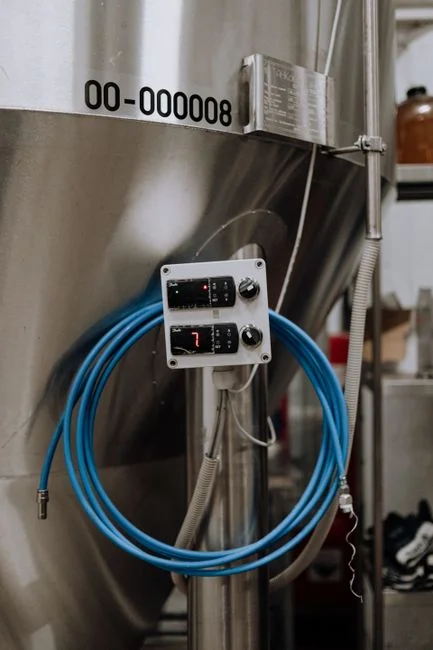
Three packaged architectures are realistic for Baku residential duty. The buried A/O (anoxic + aerobic contact oxidation) trains, combined with sedimentation and disinfection in a single buried package, is fully automated with no operator required and can be installed below grade with landscaping above the cover slab, which suits landscaped Baku compounds that want zero noise or visible plant at the surface. The WSZ underground package sewage treatment plant sits in this family and is the right reference for the buried option. Where the site needs reuse-quality effluent, handles variable load, or must cope with Caspian salinity, a containerized MBR membrane bioreactor wastewater treatment system (10–2,000 m³/day) is the second option; submerged PVDF membranes give sub-1 μm filtration and a near-reuse effluent in roughly 60% of the footprint of a conventional plant. The third option is MBBR with UV disinfection, which Turkish engineers active in Baku and Sumgayit specify for municipal duty where footprints are tight and reuse is not required (S4).
For oil- or petrochemical-adjacent housing, or where groundwater salinity is high, pair the biological stage with a salinity-tolerant UF or RO polishing step: Arsistek flags salinity-tolerant membranes as a standard requirement for the Caspian region (S4). Final disinfection should be specified explicitly — UV as a chemical-free step effective against Cryptosporidium and Giardia, or chlorine dioxide generation where a residual is needed; both are integrated as final-stage processes across the recommended Turkish technology stack (S4).
| Process option | Typical flow range | Best fit in Baku context | Reuse potential |
|---|---|---|---|
| Buried A/O (WSZ) | 1–80 m³/h (≈24–1,920 m³/day) | Landscaped compounds, low-noise sites, soakaway or irrigation disposal | Limited without polishing |
| Containerized MBR | 10–2,000 m³/day | Sites requiring reuse-quality water, variable loads, saline feed | High — landscape/toilet flushing |
| MBBR + UV | Project-specific, municipal scale | Tight footprints where reuse not required (S4) | Not normally |
| Polishing (UF / RO) | 2,000–40,000 L/h UF class | Caspian salinity, oil-adjacent sites (S4) | Required for highest reuse quality |
Azerbaijan compliance: MENR, EIA (ÇED), and discharge limits
Wastewater regulation in Azerbaijan sits with the Ministry of Ecology and Natural Resources (Ekologiya və Təbii Sərvətlər Nazirliyi, MENR), and an Environmental Impact Assessment (ÇED) plus a compliance certificate are required during project delivery (S4). Azerbaijan's wastewater discharge limits are described in the supplier literature as close to European directives, which is why packaged plant designers should anchor the effluent specification to the parameters used in EU-funded plants — typically BOD, COD, TSS, and total nitrogen and phosphorus — so the ÇED submission and any reuse plan reference the same values MENR already accepts under EBRD-financed schemes (S4; S2). For housing developments, the EIA scope typically follows the SNWSS2 Ismayilli template (S5): site protection, erosion control, sludge handling, monitoring of cleaned sewage at the discharge/collection point, and a sludge management plan — the Ismayilli EIA budgeted $10,000/year for sludge transport and $10,000/year for sludge monitoring, a useful benchmark for the line items MENR expects to see.
Decide reuse versus disposal early. A buried WSZ plant typically disposes to soakaway or irrigation; a containerized MBR can supply landscape irrigation or toilet flushing, which strengthens the ÇED application by reducing net freshwater demand. Documents a buyer must prepare: design basis, process flow diagram, hydraulic profile, effluent quality guarantee, sludge management plan, noise and odour mitigation, and a commissioning protocol — these are the same items a packaged STP for South Caucasus housing projects is typically tendered against. The 2026 wastewater discharge and compliance framework for industrial projects covers adjacent rule structure for context.
Logistics, installation, and commissioning into Baku
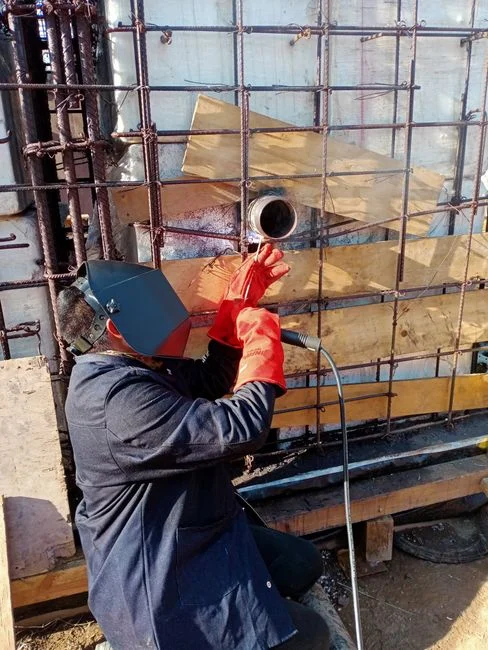
The bottleneck on a packaged STP project is rarely the unit itself — it is the road from Turkey or China, the civil works on site, and the MENR witnessing at commissioning. Road transit from Turkey into Azerbaijan is 5–7 days via the Georgian transit corridor, or 10–15 days by container via Mersin–Poti; Turkish manufacturers benefit from a simplified customs process in Azerbaijan, and project documentation and training can be delivered in Turkish or Azerbaijani (S4). Buried WSZ units require excavation, anti-flotation measures in coastal Baku where groundwater is high, and a concrete base slab; containerized MBR arrives on a skid, needs only a hardstand plus inlet and outlet connections, and is faster to install — a relevant trade-off where the developer is on a tight construction programme.
Plan for sludge handling from day one. WSZ produces waste-activated sludge that must be dewatered with a plate-and-frame filter press (1–500 m² filtration area, manual to PLC-controlled) or sent to municipal sludge handling, and MENR will ask for a defined sludge path even on small plants — the Shaki project includes a dedicated WWTP sludge management facility with around 5 years of storage and 0.8 MWp of PV (S2). Specify a rotary mechanical bar screen at the headworks to protect pumps and the biological stage from rags, plastics and fibrous debris, and pair the biological stage with an automatic chemical dosing system for coagulant and pH adjustment, plus UV or chlorine dioxide generation for final disinfection.
Supplier shortlist and 2026 decision checklist
Three vendor archetypes compete for Baku housing projects: Turkish turnkey EPCs with active reference projects in Baku, Sumgayit and Ganja and documentation in Turkish or Azerbaijani (S4); Chinese package-STP exporters supplying the same flow range; and European specialists. A direct technical match for the 200–2,000-home cluster is the WSZ underground package sewage treatment plant (1–80 m³/h, A/O, fully automated) paired with a containerized MBR membrane bioreactor, UV, chlorine dioxide generation, a plate-and-frame filter press and an automatic chemical dosing system to form a one-supplier scope. Use the EBRD Shaki project as the benchmark for the level of project documentation MENR is used to seeing: a sovereign EUR 91M loan, two-tranche procurement plan, separate O&M vehicles, PV on the sludge facility, and 5-year sludge storage (S2) — even a small packaged plant should be tendered with a comparable level of design and O&M clarity.
Decide buried A/O versus containerized MBR on three axes: land visibility (buried wins for landscaped compounds), reuse requirement (MBR wins), and schedule (containerized MBR wins on fast-track). Qualify each supplier on: a reference list with named Baku or Caspian-region municipal projects; ability to issue documentation in Azerbaijani or Russian; a factory acceptance test (FAT) plan and a MENR-witnessed site acceptance test (SAT); a local service partner or permanent representation; and spare-parts stocking in Baku or Istanbul. This mirrors the qualification logic used for a packaged sewage treatment plant for housing developments in comparable markets, such as the Brisbane 2026 guide.
| Qualification item | What to ask the supplier | Why MENR cares |
|---|---|---|
| Reference list | Named Baku or Caspian-region municipal projects with flow and year | Proves the unit performs in local conditions |
| Documentation language | Azerbaijani or Russian issue of drawings, manuals, SAT protocol | Speeds ÇED review and operator handover |
| FAT / SAT plan | Factory test report, MENR-witnessed SAT checklist | Required for compliance certificate |
| Local service | Service partner in Baku or Istanbul, response time commitment | Drives 2-year reliability |
| Spare-parts stocking | 2-year spare-parts list and remote-support package | Keeps biological stage and disinfection in spec |
Frequently Asked Questions
What packaged STP flow range fits a 200–2,000 home Baku residential project?
At 150–200 L/capita·day (anchored to the 208 L/capita·day in the Ismayilli reference design, S5) and a peaking factor of 2.5–3.0, a 200–2,000 home cluster maps to a few hundred up to roughly 1,500–2,000 m³/day. That sits inside the WSZ 1–80 m³/h (≈24–1,920 m³/day) product range, so a single block of buried A/O units or a small parallel train is normally sufficient. Final sizing requires the developer's design occupancy assumption plus an infiltration estimate, which the buyer must request before ordering.
What does a containerized MBR cost versus a buried A/O package for Baku housing in 2026?
The research data does not include unit prices for either option, so no quotation can be quoted. A buyer should request a written quote that separates the biological train, the membrane skid, the headworks screen, the sludge dewatering module, the disinfection bank, and the FAT/SAT documentation package, then compare on a total-installed basis including civils, anti-flotation works and MENR witnessing rather than on equipment price alone.
Which supplier type is lowest risk for MENR permitting on a Baku housing STP?
A Turkish turnkey EPC with named reference projects in Baku, Sumgayit, Ganja, Shirvan, Mingachevir, Shabran, Lankaran, Naftalan or Shamakhi, and the ability to issue documentation and training in Turkish or Azerbaijani (S4), is the lowest-risk option for MENR permitting because the regulator is already familiar with the documentation style. A Chinese package-STP exporter with EBRD-style procurement experience and a Baku stocking partner is the main alternative. Request proof of a MENR-witnessed SAT on at least one Caspian-region municipal project before signing.
What MENR documents are required before a packaged STP can be commissioned in Baku?
MENR requires an Environmental Impact Assessment (ÇED) and a compliance certificate during project delivery (S4). The EIA scope typically follows the SNWSS2 Ismayilli template (S5): design basis, process flow diagram, hydraulic profile, effluent quality guarantee aligned to European-directive parameters, sludge management plan, noise and odour mitigation, monitoring of cleaned sewage at the discharge/collection point, and a commissioning protocol. Submit these with the supplier's FAT report and the SAT plan so the compliance certificate can be issued at handover.
Related Equipment
- WSZ underground package sewage treatment plant — specifications, capacity range, and technical data
- containerized MBR membrane bioreactor — specifications, capacity range, and technical data