
Why Marrakech's Domestic Sewage Challenge Is Different
Until 2008, sewage from the Marrakech-Tensift-El Haouz region was discharged to Wadi Tensift after only minimal treatment, putting downstream sanitation at risk (Waterleau case study, accessed 2026). That baseline is why the municipal plant, in service since 2011, was designed not for primary settlement but for full biological treatment and reuse — treating 237,000 m³/d of municipal wastewater with primary, secondary activated-sludge, and tertiary coagulation/flocculation/sand filtration plus UV-chlorination disinfection (Waterleau). Marrakech's semi-arid climate and tourism-driven water demand push agricultural and golf-course reuse to the front of the design brief, and the plant is sized so that up to 30 million m³ of treated water per year can be reused (Waterleau).
Two research findings make reuse quality non-negotiable for new builds. First, drug-resistant Salmonella has been documented in stabilization-pond effluents around Marrakech, meaning any pond-only scheme carries a documented pathogen risk that downstream irrigation cannot ignore (World Journal of Microbiology and Biotechnology, 2026-01 view of "Drug resistance in Salmonella strains isolated from domestic wastewater before and after treatment in stabilization ponds in an arid region (Marrakech, Morocco)"). Second, long-term wastewater irrigation in the Marrakech region has been linked to accumulation of zinc, copper, lead and cadmium in soils and crops, raising a heavy-metal exposure pathway that the design must monitor, not just a BOD/COD removal question (Journal of the Saudi Society of Agricultural Sciences, 2018-02). The design target is therefore clear: BOD/COD removal to reuse quality plus validated disinfection, with a heavy-metal monitoring plan if the effluent is going onto food crops.
What 'Domestic Sewage' Means in a Marrakech Project
Domestic sewage in a Marrakech project is the combined blackwater (toilets) and greywater (showers, kitchens, laundry) from residences, hotels, riads, schools, staff housing and tourism compounds. It is a relatively consistent biodegradable stream, but the exact envelope has to be set by the project's hydraulic balance, not assumed. Parameters to request from the hydraulic balance before sizing any equipment: BOD₅, COD, TSS, NH4-N, fats-oils-grease (FOG) and fecal coliforms, plus the daily and peak hourly flow. The research data does not give Marrakech-specific numeric envelopes for these parameters, so the design must rely on the project's own sampling and on the local authority's discharge licence.
The reuse target drives the disinfection step. The Marrakech municipal plant uses UV disinfection plus chlorination in its tertiary train specifically so the effluent can be reused for agricultural and golf-course irrigation (Waterleau, accessed 2026). For a smaller domestic plant, the reuse end-use — golf or landscape versus food crops versus unrestricted urban reuse — sets the bacterial limit the design has to hit, and therefore whether UV alone, chlorination alone, or both are specified. Pretreatment is the same sequence used at the municipal plant: coarse and fine screening, grit removal, and grease removal, all needed to protect the downstream biological stage (Waterleau). The table below sets out the envelopes a buyer should lock before equipment selection.
| Parameter to lock | Why it matters | Source / action |
|---|---|---|
| Daily flow (m³/d) and peak factor | Sets hydraulic sizing and equalization volume | From project hydraulic balance; do not assume |
| BOD₅ and COD | Sets aeration tank volume and MLSS | Lab sampling or authority data |
| TSS | Sets clarifier and sludge-handling sizing | Lab sampling or authority data |
| NH4-N | Sets nitrification oxygen demand and reactor volume | Lab sampling or authority data |
| FOG | Drives grease-removal pre-treatment | Lab sampling, especially for hotel/riad kitchen flows |
| Fecal coliforms (influent and reuse target) | Sets disinfection dose and technology choice | Reuse licence / authority limit |
| Reuse end-use | Sets final effluent quality bar | Client / authority decision |
The Three Process Trains That Fit Marrakech

Three process trains cover the flow bands a Marrakech developer or engineer is likely to face. The choice is driven by flow, footprint, reuse target and whether sludge valorization is wanted.
Conventional activated sludge is the proven train at the 237,000 m³/d Marrakech municipal plant, with primary settling, biological treatment, tertiary coagulation/flocculation/sand filtration plus UV-chlorination, anaerobic digestion producing 22,500 Nm³/d of biogas and 1.6 MWe of energy, and solar greenhouse sludge drying that lifts dry matter from 22% to 80% (Waterleau, accessed 2026). It is the right match for municipal-scale flows and where biogas/sludge valorization is wanted. It is rarely the right match for a 50-room riad.
Membrane bioreactor (MBR) combines activated sludge with submerged PVDF ultrafiltration to deliver near-reuse-quality effluent at sub-micron filtration in roughly 60% of the footprint of a conventional plant and with lower sludge yield. It is the right answer when the reuse bar is high, the footprint is tight, or the project sits close to a sensitive receptor. The HydropureWater MBR membrane bioreactor is offered from 10 to 2,000 m³/day, which covers mid-size hotels, staff housing, school campuses and district clusters.
Buried A/O package plants (WSZ) combine anoxic/aerobic contact oxidation with sedimentation and disinfection in a single buried unit, fully automated with no on-site operator, sized from 1 to 80 m³/h, and can be trailer-mounted for mobile duty. The HydropureWater WSZ buried A/O package plant is the right match for riads, small hotels, residential compounds, rural clusters and any site where the operator footprint has to be zero. Stabilization ponds alone are not recommended for new Marrakech builds because drug-resistant Salmonella has been documented in pond effluents in the region, and ponds do not deliver the reuse quality the market now expects (World Journal of Microbiology and Biotechnology, 2026-01). The table below compares the three trains against the criteria that drive a Marrakech decision.
| Criterion | Conventional activated sludge (Marrakech WWTP logic) | MBR skid | Buried A/O package (WSZ) |
|---|---|---|---|
| Flow band (research-supported) | Municipal scale, e.g. 237,000 m³/d at Marrakech WWTP (Waterleau) | 10–2,000 m³/day (HydropureWater MBR) | 1–80 m³/h (HydropureWater WSZ) |
| Effluent quality | Reuse-ready after tertiary + UV/chlorination (Waterleau) | Near-reuse, sub-micron filtration | Discharge or restricted reuse with disinfection |
| Footprint | Largest; concrete tanks | ~60% smaller than conventional | Smallest; buried, landscaped over |
| Operator needs | Dedicated O&M team | Light, skilled | None on-site; fully automated |
| Sludge line | Anaerobic digester + solar greenhouse drying 22%→80% DM (Waterleau) | Small filter press usually sufficient | Sludge storage; periodic dewatering |
| Fit for Marrakech | Large municipal / district scale | Mid-size hotel, staff housing, campus | Riads, small hotels, residential compounds |
Marrakech Domestic Sewage Treatment Process Flow
The Marrakech municipal sequence is the right reference for any new domestic plant in the region. The end-to-end flow is: pre-treatment, primary settling, secondary biological treatment, tertiary treatment for reuse, and a sludge line that produces biogas and dried digestate (Waterleau case study, accessed 2026).
- Pre-treatment. Coarse and fine screening, grit removal, and grease removal, identical to the Marrakech plant headworks, sized to protect the downstream biological stage (Waterleau). A HydropureWater GX rotary mechanical bar screen handles the screening duty at small-to-medium flows.
- Primary settling. Suspended solids settle by gravity in primary sedimentation tanks and are scraped by a rotating bridge into a hopper; clarified water moves to the biological stage (Waterleau).
- Secondary biological treatment. Aerated activated-sludge tanks degrade the biodegradable organic load; clarifiers separate the biomass, which is partly returned to keep mixed liquor suspended solids stable, and the treated supernatant moves on (Waterleau).
- Tertiary treatment for reuse. Coagulation with ferric chloride destabilizes colloids, polymer flocculation builds larger floc, sand filtration removes the floc, and UV disinfection plus chlorination controls bacterial contamination. This is the train that makes the 30 million m³/y reuse target possible (Waterleau). A HydropureWater UV sterilizer range covers the disinfection step at package-plant scale.
- Sludge line. Primary and secondary sludge are mixed and fed to a closed anaerobic digester; biogas fuels 4 cogeneration engines supplying up to 50% of plant energy, and digestate is solar-dried in HYDROGONE greenhouses from 22% up to 80% dry matter (Waterleau).
Sizing a Domestic Plant in Marrakech: From 5 m³/d to 50,000 m³/d
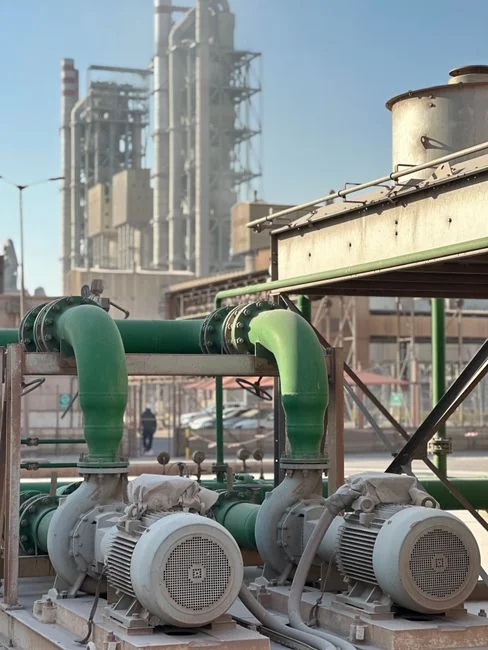
Sizing a domestic plant in Marrakech is a flow-band decision, not a single equation. Three bands are common in the 1–500 m³/d envelope this article targets, plus the larger district/municipal band above it.
Up to 80 m³/h — covering a single residence, a small hotel, a riad cluster, or a rural school — the right match is a buried A/O package plant. The HydropureWater WSZ buried A/O package plant delivers A/O contact oxidation, sedimentation and disinfection in one buried unit, fully automated with no operator, and is trailer-mountable for mobile duty. In the 10–2,000 m³/day band — mid-size hotels, staff housing, school campuses, district clusters — the HydropureWater MBR membrane bioreactor gives near-reuse effluent at roughly 60% of the footprint of a conventional plant and with a lower sludge yield. Above a few thousand m³/day, or wherever biogas/sludge valorization is wanted, the conventional activated sludge train used at the Marrakech WWTP (237,000 m³/d, 22,500 Nm³/d of biogas, 1.6 MWe) is the proven logic to replicate (Waterleau, accessed 2026).
Always confirm the hydraulic balance, peak factor and organic load before selecting. If a flow figure is missing, request it from the project engineer or the authority rather than assume it. The table below maps flow band to train.
| Daily flow band | Typical project | Recommended train | Source |
|---|---|---|---|
| Up to ~80 m³/h (≈1,900 m³/d) | Riad, small hotel, residential compound, rural cluster | Buried A/O package (WSZ) | HydropureWater WSZ 1–80 m³/h |
| 10–2,000 m³/d | Mid-size hotel, staff housing, school campus, district cluster | MBR skid | HydropureWater MBR 10–2,000 m³/d |
| Several thousand m³/d and above | District, municipal, large resort | Conventional activated sludge + anaerobic digestion | Marrakech WWTP, 237,000 m³/d (Waterleau) |
Disinfection, Reuse and Heavy-Metal Risk: Marrakech-Specific
Disinfection is not optional for any irrigation or landscape reuse in the Marrakech region. Drug-resistant Salmonella has been documented in stabilization-pond effluents in the region, which is why the Marrakech municipal plant uses UV disinfection plus chlorination in its tertiary train and why any new build targeting reuse should follow the same logic (Waterleau, accessed 2026; World Journal of Microbiology and Biotechnology, 2026-01). UV alone, chlorination alone, or UV plus chlorination can be specified, but the reuse end-use sets the bacterial limit the design has to hit.
Long-term wastewater irrigation around Marrakech has been linked to zinc, copper, lead and cadmium accumulation in soils and crops, which is a slow-acting exposure pathway rather than an acute toxicity event (Journal of the Saudi Society of Agricultural Sciences, 2018-02). For any agricultural-reuse scheme, periodic heavy-metal monitoring of the reuse water and of the receiving soil/crop should be written into the operating plan from day one; it is the kind of obligation a regulator will check. Chlorine dioxide or ozone are alternatives where chlorinated by-products must be limited, but UV plus chlorination remains the Marrakech benchmark and the safer default for new builds. A HydropureWater UV sterilizer range covers the disinfection duty at package-plant scale.
Procurement Checklist for a Marrakech Domestic Sewage Plant
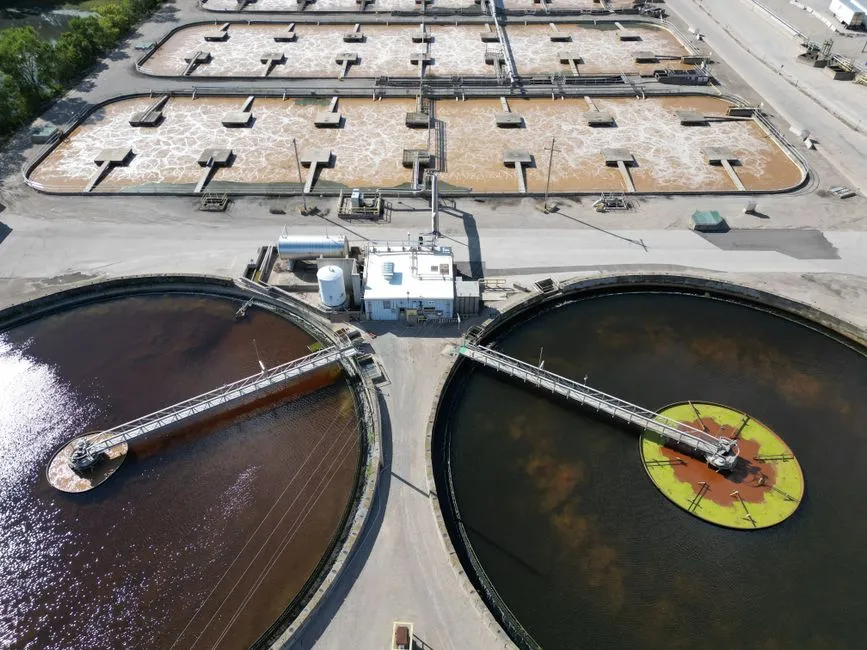
Lock these items before signing a purchase order. They are the inputs the supplier cannot guess for you, and they are the items the authority will check at commissioning.
- Influent envelope: daily flow, peak factor, BOD, COD, TSS, NH4-N, FOG, fecal coliforms — from the project hydraulic balance, not assumed.
- Process train: WSZ buried A/O package for up to 80 m³/h, MBR skid for 10–2,000 m³/day, or conventional activated sludge above that — see sizing section. A side-by-side read is in Domestic Sewage Treatment in Morocco (2026 Engineering Guide).
- Disinfection: UV + chlorination is the Marrakech benchmark (Waterleau, accessed 2026); add chlorine dioxide or ozone only if the reuse rules require it.
- Sludge line: for plants under ~2,000 m³/day, a HydropureWater plate and frame filter press is usually sufficient; for larger plants, replicate the Marrakech solar-greenhouse drying logic if land and sun are available (Waterleau).
- Pre-treatment headworks: rotary mechanical bar screen, grit classifier, grease removal, to protect the biological stage (Waterleau).
- Supplier deliverables: documented commissioning, operator training, and a remote-monitoring option. The HydropureWater WSZ buried A/O package plant is delivered fully automated with no on-site operator required.
Frequently Asked Questions
What is a realistic cost band for a small domestic sewage plant in Marrakech?
The research data does not give a Marrakech-specific price for a domestic plant, so any quoted figure would be invented. Instead, ask each shortlisted supplier for a written split of equipment, freight, civil works, installation, commissioning and training, and for a separate annual operating cost covering energy, chemicals, sludge handling and remote monitoring. Compare those line by line, not as a single lump sum, and weigh the operating cost against the capital cost over a 10-year horizon. For a like-for-like comparison, hold flow band (e.g. WSZ 1–80 m³/h or MBR 10–2,000 m³/day) and reuse target constant across bids.
How do I choose between a WSZ buried A/O package, an MBR skid and a conventional activated-sludge plant for a Marrakech project?
Match the flow band first: WSZ for up to 80 m³/h (riads, small hotels, residential compounds), MBR skid for 10–2,000 m³/day (mid-size hotels, staff housing, campuses), and conventional activated sludge for several thousand m³/day and above (HydropureWater WSZ 1–80 m³/h; HydropureWater MBR 10–2,000 m³/day; Marrakech WWTP at 237,000 m³/d, Waterleau). Then check reuse target, footprint, and whether you want biogas/sludge valorization. The conventional train is the only one that has the Marrakech WWTP's documented biogas (22,500 Nm³/d) and solar-drying (22% to 80% DM) logic to replicate (Waterleau, accessed 2026).
What reuse compliance risks should I plan for around Marrakech?
Two documented risks. Drug-resistant Salmonella has been found in stabilization-pond effluents in the region, so any reuse scheme must have validated disinfection — UV plus chlorination is the Marrakech municipal benchmark (Waterleau; World Journal of Microbiology and Biotechnology, 2026-01). Long-term wastewater irrigation around Marrakech has been linked to zinc, copper, lead and cadmium accumulation in soils and crops, so a heavy-metal monitoring plan for the reuse water and receiving soil should be in the operating plan from day one (Journal of the Saudi Society of Agricultural Sciences, 2018-02). The reuse end-use (golf, landscape, food crop) sets the bacterial limit the design has to hit.
What is a typical lead time and what should I ask the supplier to confirm in writing?
The research data does not give a Marrakech-specific lead time, so request a written schedule from each bidder covering equipment manufacturing, shipping, civil works, installation, commissioning and training, with milestone dates rather than a single number. Ask for documentation of the disinfection and reuse-quality performance they are warrantying, for the operator training plan, and for a remote-monitoring option that gives you alarm visibility without an on-site operator. For buried A/O packages sized in the 1–80 m³/h range such as the HydropureWater WSZ buried A/O package plant, confirm that the fully automated no-operator-on-site claim is part of the contractual scope.