Why Barquisimeto's Water Profile Forces Reuse Over Discharge
Barquisimeto sits in Venezuela's semi-arid Lara State, where municipal rationing is chronic and most large industrial users rely on borehole wells whose hardness profile varies by season and depth. A 100 MW data center can demand up to 2 million liters of water per day (ide-tech.com, 2026), so the 25–30% of makeup water lost to cooling-tower blowdown at typical cycles of concentration (genesiswatertech.com) becomes a binding operational risk.
Globally, 75–90% of data centers rely on water-based cooling (S3, 2026), and the same discharge-permit pressure on TDS, phosphorus, and biocide residuals seen in U.S. utilities is now visible in jurisdictions applying limits below 1,500 mg/L TDS (genesiswatertech.com). A Barquisimeto operator cannot default to a discharge-compliance-only design; the binding constraint is freshwater availability, and the treatment train must convert blowdown into cooling-tower makeup, with discharge compliance or zero liquid discharge as conditional objectives.
The site inputs an engineer must confirm before sizing equipment are: borehole TDS and hardness at expected pump depth, daily hours of municipal supply delivered to the site, ambient wet-bulb temperature during the dry season, and the current version of any MINAMB or regional environmental authority guidance applicable to industrial discharge in Lara State. Two earlier water-reuse references are useful for context but do not replace these local measurements: a data center water reuse forecast through 2030 outlines the technology trajectory, and a 2026 industrial effluent discharge compliance overview covers the general regulatory direction without substituting for a Venezuelan permit review.
Cooling Tower Blowdown: What Is Actually in the Water
Cooling-tower blowdown contains 1,200–6,000 mg/L of total dissolved solids, or 4–8 times the makeup-water concentration, depending on cycles of concentration and source water (genesiswatertech.com). The dissolved load is dominated by scaling minerals—calcium, magnesium, silica, and alkalinity—which concentrate alongside biocides, corrosion inhibitors, scale inhibitors, and dispersants. Suspended solids accumulate despite basin filtration at 10–50 mg/L, consisting of corrosion products, biofilm fragments, and airborne particulates drawn in by cooling-tower fans (genesiswatertech.com). Biological content, including planktonic bacteria, algae, and biofilm-forming organisms, is present even in well-maintained systems and requires removal before any reuse stream.
These contaminants dictate pretreatment targets: a Barquisimeto site blending borehole water with intermittent municipal makeup will see silica, calcium, and magnesium levels fluctuate with each source change, and the treatment train must maintain stable recovery and permeate quality across these swings. For a comparable operating context, a comparable 2026 data center blowdown guide for Bien Hoa, Vietnam applies similar chemistry to a different water-stress setting.
Three End-Use Strategies: Reuse, Discharge Compliance, or Zero Liquid Discharge
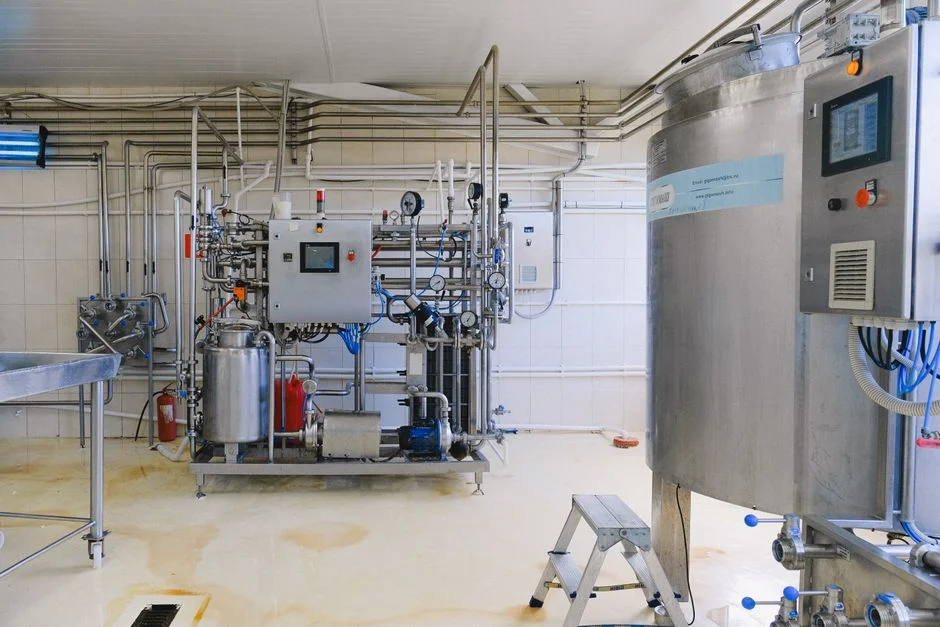
Three strategic end-uses govern equipment selection, and the choice must be made before any skid is specified. Cooling-tower makeup reuse recovers blowdown for return to the cooling system, typically achieving 60–85% recovery, and acts as the highest-value option in water-scarce sites (genesiswatertech.com) by displacing freshwater withdrawal. Discharge compliance targets municipal or industrial permit limits on TDS, metals, and biocide residuals to avoid fees, though the operator must obtain the local discharge-charge schedule before sizing the business case. Zero liquid discharge eliminates liquid waste entirely but requires $3–8M in capital and $5–15 per 1,000 gallons to operate (genesiswatertech.com), so it must clear a water-alternatives hurdle rather than just a regulatory one.
For a Barquisimeto site in 2026, freshwater scarcity and grid instability push the optimal answer toward reuse at moderate-to-high recovery, with ZLD held as a future phase once load growth tightens the supply balance. The energy intensity of MVC (15–25 kWh per 1,000 gallons, per genesiswatertech.com) is a concern where diesel generation drives operating costs, so an evaporation pond or controlled-concentrate disposal is a reasonable intermediate step before committing to a thermal ZLD block.
Treatment Train: Side-Stream Filtration, UF, NF or RO, and Optional MVC
Each unit operation in a blowdown-recovery train serves a specific function based on feed water, target recovery, and the concentrate management plan. Side-stream filtration treats 1–5% of circulation flow and drops suspended solids to a level downstream membranes can handle (genesiswatertech.com); a properly sized side-stream multimedia filter protecting downstream membranes is the foundation of the train. Ultrafiltration (UF) with 0.01–0.1 µm pores runs at 90–95% recovery and removes particulates, bacteria, and high-molecular-weight organics, serving as standard pretreatment for any downstream RO or NF; a hollow-fiber ultrafiltration skid for blowdown pretreatment fits this role. Reverse osmosis (RO) provides 95–99% dissolved-solids rejection, 50–85% recovery, and permeate at 10–50 mg/L TDS (genesiswatertech.com), and an industrial RO unit sized for cooling-tower blowdown is the central capital item. Nanofiltration (NF) suits sites where hardness is the primary contaminant: it operates at 75–150 psi with 70–85% recovery (genesiswatertech.com). Mechanical vapor compression (MVC) reaches 95–98% recovery with distillate below 10 mg/L TDS, but requires $1–3M capital for 10,000–30,000 GPD (genesiswatertech.com), so waste-heat availability from generators or chillers must be screened early. A high-recovery train pairs RO at conservative local recovery with controlled precipitation of silica, calcium carbonate, and calcium sulfate, followed by dynamic RO operation to push overall recovery past conventional 75–80% limits (ide-tech.com).
| Unit Operation | Function | Key Operating Parameters | Typical Recovery | Notes for Barquisimeto |
|---|---|---|---|---|
| Side-stream multimedia filter | Bulk suspended-solids and biofilm reduction | 1–5% of circulation flow; 10–25 µm rating (genesiswatertech.com) | N/A (filter) | Reduces fouling load on downstream UF; tolerates variable borehole particulates |
| Ultrafiltration (UF) | Particulate, bacterial, and high-MW organic removal; RO/NF pretreatment | 0.01–0.1 µm pores; 10–30 psi; 90–95% recovery (genesiswatertech.com) | 90–95% | Backwash with permeate; chemical clean every 1–3 months |
| Reverse osmosis (RO) | Dissolved-solids, hardness, silica, and chemical removal | 150–400 psi; 95–99% rejection; permeate 10–50 mg/L TDS (genesiswatertech.com) | 50–85% (standard); higher with precipitation + dynamic RO (ide-tech.com) | Antiscalant critical; pair with controlled precipitation for >80% recovery |
| Nanofiltration (NF) | Partial softening; sulfate and hardness reduction | 75–150 psi; permeate TDS 30–50% of feed (genesiswatertech.com) | 70–85% | Use when hardness, not total TDS, is the bottleneck |
| Mechanical vapor compression (MVC) | Concentrate volume reduction; high-purity distillate | 95–98% recovery; distillate <10 mg/L TDS; 15–25 kWh/1,000 gal (genesiswatertech.com) | 95–98% of concentrate | High energy demand — screen for waste-heat availability before committing |
Sizing, Energy, and Cost Reality Check
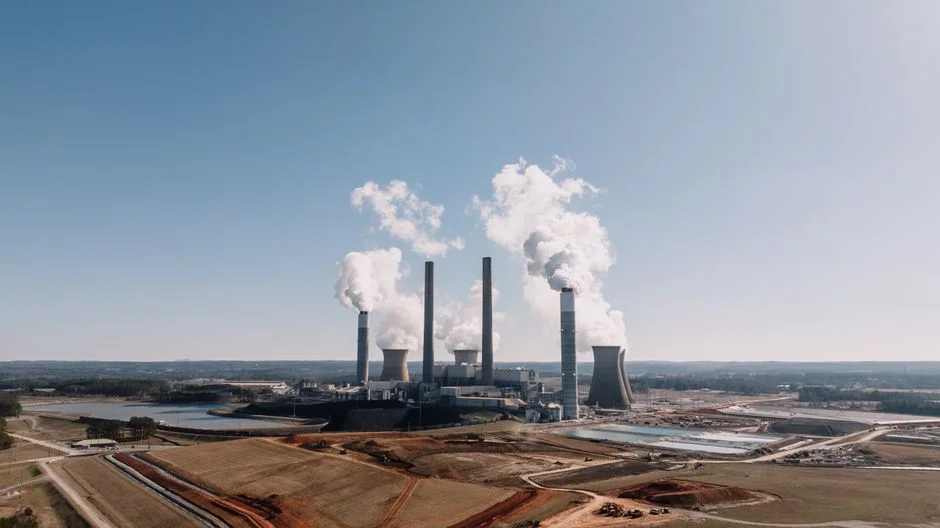
The following figures reflect U.S. commercial references; the operator must obtain Venezuela-specific quotations for membrane skids, freight, and import duties before budgeting. A 50,000 GPD RO skid for blowdown reuse typically costs $250,000–500,000 installed, with operating costs of $1.50–3.00 per 1,000 gallons including energy, antiscalant, membrane replacement, and maintenance (genesiswatertech.com). Side-stream filtration adds $50,000–200,000 in capital (genesiswatertech.com). MVC capital runs $1–3M for 10,000–30,000 GPD (genesiswatertech.com); in a grid-constrained site, the operator should confirm waste-heat availability from generator jacket cooling or chiller condensers before sizing, as electrical energy in Lara State may be more expensive and less reliable than U.S. benchmarks.
A Texas hyperscale reference case recovered 2.5 million gallons monthly from blowdown, cutting municipal consumption by 35% and eliminating discharge fees (genesiswatertech.com). Chemical dosing must be specified in parallel with the membrane skid: an automatic antiscalant and pH dosing for blowdown RO protects the membrane warranty, and RO and UF membrane replacement elements should be budgeted as a recurring line item from day one.
Barquisimeto Decision Framework: Which Train Fits Your Site?
The decision framework is ordered by the local constraint driving the selection. If borehole TDS is moderate and discharge is intermittently allowed, side-stream filtration plus RO at moderate recovery delivers the fastest payback and lowest complexity, allowing concentrate discharge under open permit windows. If municipal supply is severely rationed, target higher cycles of concentration with RO reuse at 60–85% recovery and plan concentrate management early—using evaporation ponds where land and security permit, or MVC where footprint is constrained and waste heat is available. If MINAMB or the regional authority is tightening TDS limits below 1,500 mg/L, factor that limit into the design and select RO or NF permeate quality to meet it without relying on blending. If load growth is forecast, design the train to be ZLD-ready by reserving footprint and electrical capacity for an MVC or brine concentrator, as retrofitting space and power later is prohibitively expensive.
Across all branches, confirm a 12-month record of municipal-supply hours and a current borehole water analysis with seasonal silica and hardness values before final equipment selection. Without these data sets, the treatment train is sized on assumptions rather than the specific site conditions.
Frequently Asked Questions
What is the typical capital cost of a cooling-tower blowdown recovery train for a Barquisimeto data center?
For a 50,000 GPD RO skid, reference costs are $250,000–500,000 installed, with side-stream filtration adding $50,000–200,000 (genesiswatertech.com). MVC adds $1–3M if concentrate reduction is required (genesiswatertech.com). These are U.S. figures; a Venezuelan buyer must request quotations inclusive of membrane freight, import duties, and installation at local labor rates.
How do I choose between a single-source and a system-integrator supplier for the train?
Request a single point of process responsibility for the UF, RO, antiscalant dosing, and concentrate management, and confirm in writing who holds the membrane performance warranty when feed water deviates from the design basis. Ask the integrator for a reference list of at least two operating sites in Latin America or the Caribbean with similar feed-water hardness. Local after-sales response time for membrane replacement and chemical resupply must be confirmed before contract signature, as international shipping lead times into Lara State can span several months.
When is zero liquid discharge economically justified in Barquisimeto?
ZLD becomes defensible when the cost of alternative water—trucked-in potable water, deep-well drilling, or emergency municipal supply—exceeds the $