What counts as III-V wet processing equipment — and why features matter to the fab
III-V semiconductor wet processing equipment is the wet bench, cassette handler, etch and clean module, rinse and dry station, chemical delivery system, exhaust and controller that together prepare and pattern GaAs, GaN, InP and SiC wafers using liquid chemistries. Key buyer-facing features are chemical compatibility with HCl, NH4OH, H2SO4/H2O2, SC-1 and SC-2, temperature control, cascade rinse resistivity targets, single-wafer versus batch architecture, slot-to-slot uniformity, low-metal-trace construction, and an exhaust scheme matched to oxidizer and acid fumes. Because the fabs that run these tools also drive "millions—or even tens of millions—of gallons of water per day" of UPW (Samco, 2024), per-module UPW draw and per-cycle chemical consumption directly govern downstream wastewater volume, segregation needs, and whether re-routed streams can hit the 60% reuse figure that research attributes to chip fabs (Samco, 2024).
Wet processing covers surface prep, wet etch, post-etch clean, photoresist strip, and final rinse/dry. Dry alternatives exist, but per Samco (2024), "dry processes tend to offer greater precision" while wet remains lower cost and dominant for many III-V etches — which is why features that close the precision gap (closed-loop temperature, in-situ end-point, uniformity control) are the differentiators on a buyer's spec sheet.
To make the rest of this guide scoreable, treat the platform as eight subsystems: cassette/handler, wet bench, etch module, clean/brush module, rinse tank plus cascade, dryer, chemical delivery, and exhaust plus controller. Each subsystem writes a different line into the fab's water and wastewater balance sheet, so subsystem-level features — not headline etch rate — are what procurement should be evaluating. For broader fab-side water context, the chip fab wastewater reuse and recovery engineering guide lays out the recovery math that ties to these tool decisions.
Wet bench and cassette handler features that protect III-V surfaces
Wetted-parts material of construction is the first subsystem a buyer should pin down, because III-V chemistries punish the wrong elastomer or the wrong seal. PFA-lined tanks, PVDF piping, quartz for hot acid and piranha service, and Halar-coated stainless for IPA and NH4OH service cover the HCl, NH4OH, H2SO4, H2O2 and IPA chemistries used across GaAs, GaN, InP and SiC lines. The handler envelope matters as much as the bench itself: per Samco (2024), "the clean room… is an environment where dust, vibration, temperature, and humidity are carefully controlled," so a FOUP-compatible, closed-front flow hood with SECS/GEM hand-off and tool-to-tool queueing prevents the queue-time oxidation that wrecks GaAs and InP surfaces between modules.
Particle and metal-trace budgets are tighter on a III-V line than on a silicon logic line because there is no downstream CMP copper barrier to soak up mobile-ion contamination. Ask suppliers for documented metal-trace certification (ppt-level Fe, Cu, Na, K on wetted surfaces), end-point detection on the etch module so wafers are not over-processed, in-situ rinsing that avoids a queue-time air break, and brush-scrub modules with documented particle-addition counts on GaAs and InP — not just silicon. Reject vendors who only offer silicon curves on these metrics; the III-V selectivity and surface-finish numbers are a different question.
Etch and clean module features: chemistries, selectivity and temperature control
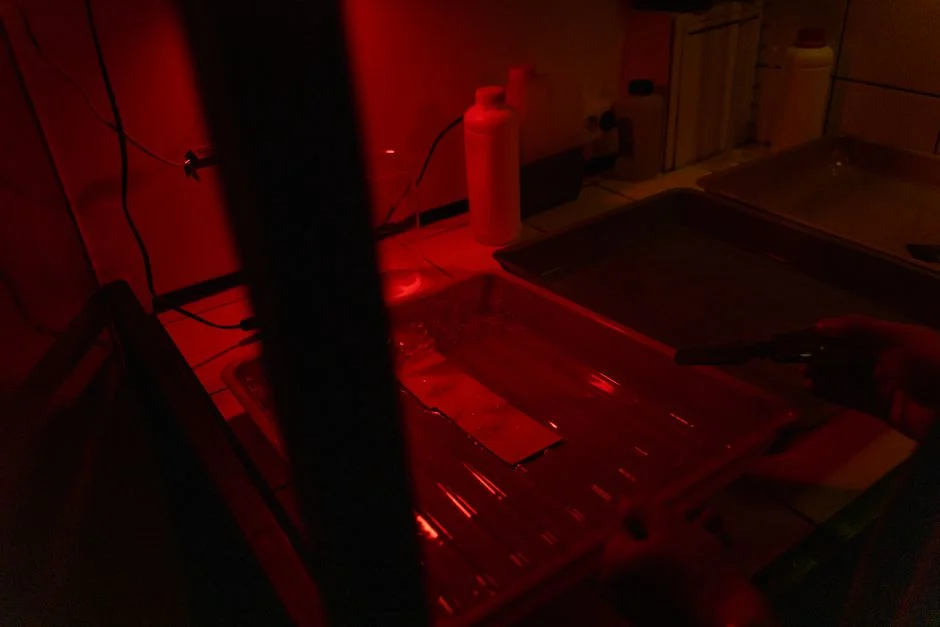
Etch and clean module features must match the chemistries the line actually runs, not a generic silicon spec sheet. The relevant III-V families are HCl/H2O2 and HCl/HNO3 for GaN and InP, NH4OH/H2O2 and citric-acid/H2O2 for GaAs, dilute HF for native-oxide removal, and oxidizer-bearing mixes that include "oxidants like hydrogen peroxide, and acids such as sulfuric and piranha mixtures" (ElectraMet, 2024). Each carries a different feature set: GaN HCl etches demand vapor-return plumbing and temperature stability in the 60–80 °C band, GaAs oxidizes within minutes of an air break so queue-time and bath-to-bath transfer are features, and piranha — a "sulfuric acid + hydrogen peroxide" mix (ElectraMet, 2024) — requires heated quartz construction, redundant cooling, in-line peroxide destruction, and oxidizer-rated exhaust, not as accessories but as spec-line items.
Selectivity and uniformity features to require: closed-loop temperature control with documented set-point stability, megasonic or ultrasonic agitation sized to wafer diameter, in-situ end-point via optical emission or conductivity, and slot-to-slot uniformity data on the actual III-V films, not extrapolated from silicon. Safety and containment features are equally part of the spec because the chemistry streams leaving this module become the oxidizer-laden wastewater the fab must treat: dual-contained chemical lines, vapor return, automated abort, and interlocks on over-temperature and over-flow. Piranha exhaust, in particular, should be oxidizer-class and segregated from general acid exhaust so the air-side treatment train is not asked to handle an oxidizer load it was not designed for.
Rinse, dry and resistivity features that govern UPW demand
The rinse and dry subsystem is where most of the per-tool UPW draw actually lives, so its features drive the largest single line in the fab water balance. Key spec items are cascade rinse architecture (tank count, LPM per module, counter-current flow paths), overflow rate, and whether the design supports re-routing the most dilute reject stream to a non-critical reuse point — the approach Samco (2024) cites when it notes facilities "can achieve a recovery rate as high as 60% by simply re-routing spent process streams." Counter-current cascade is not a free option; it requires matched tank hydraulics and dump-valve logic that the supplier has to design in.
Final-rinse resistivity targets translate the hardware into a release criterion: online resistivity monitoring and dump-valve logic that gates a wafer into the dryer only when rinse water meets a defined MΩ·cm threshold. Ask for the threshold, the sensor response time, and how the system fails safe on a bad probe. Drying options then set the secondary water-and-chemistry demand: spin-rinse-dryer, Marangoni, IPA vapor dryer, or hot N2. Each has a different UPW, IPA and N2 profile; IPA vapor dryers in particular feed the isopropyl alcohol recovery stream that Samco (2024) lists among recoverable fab materials. Quick-disconnect and skid features matter at the wastewater interface, because they let rinse reject be segregated for RO/IX polishing instead of mixing with oxidizer-loaded acid streams downstream — the core of the "segregate spent streams and treat them individually" approach (Samco, 2024).
Chemical delivery, exhaust and automation features that change the wastewater signature
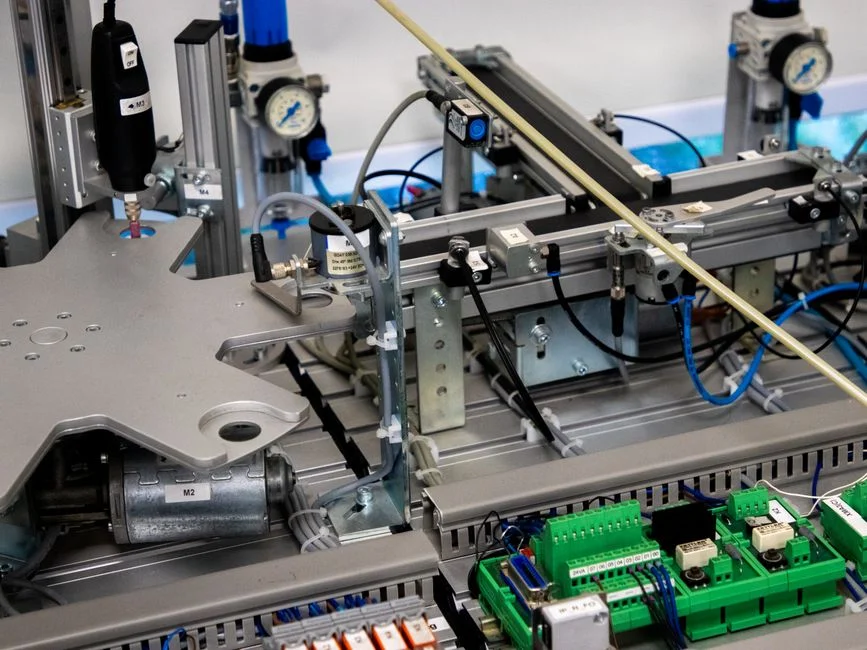
Chemical delivery, exhaust and automation are the upstream knobs that ultimately determine the wastewater train the fab has to build. Delivery features to score: bulk versus pod delivery, day-tank capacity matched to shift consumption, on-tool blending with redundant metering, and chemical reclaim paths that reduce the volume of spent oxidizer and acid the fab must haul or treat. Exhaust features: classify each module's exhaust as acid, oxidizer, solvent, or general, and decide whether each is served by a point-of-use scrubber or a central scrubber tie-in. Those decisions feed the FGD-style air-treatment train and change the chemistry of the scrubber blowdown the fab has to handle.
Automation features drive the auditability of stream segregation. SECS/GEM, recipe management, per-wafer traceability, and predictive maintenance are the tools that turn "segregate spent streams and treat them individually" (Samco, 2024) from a slogan into a controllable practice, because the controller has to log which wafer went through which module and which chemical stream it generated. The same logging supports material recovery: Samco (2024) notes fabs may "recover materials like silicon, fluoride, copper, and isopropyl alcohol," and for III-V lines the equivalent ask is whether the supplier can route gallium, indium, arsenic and ammonia-bearing waste to separate recovery streams rather than into a single mixed tank. The two product platforms most directly connected to this segregation work are a DAF unit for segregating suspended solids from fab wastewater and an industrial RO system for fab-side UPW make-up downstream of the segregated stream.
| Tool subsystem | Feature to specify | UPW / chemical signature | Downstream treatment impact |
|---|---|---|---|
| Etch module | Heated quartz, vapor return, oxidizer-rated exhaust | Spent HCl, H2SO4, H2O2, NH4OH; oxidizer-laden | Requires oxidizer destruction before metals precipitation |
| Clean / brush module | Particle-addition certification on III-V surfaces | SC-1 / SC-2 with dissolved metals | Feeds segregated acid stream to RO/IX polishing |
| Rinse cascade | Counter-current flow, online resistivity, dump-valve logic | Majority of per-tool UPW draw | Dilute reject can be re-routed for ~60% recovery (Samco, 2024) |
| Dryer | SRD, Marangoni, IPA vapor, or hot N2 selection | UPW residual, IPA vapor, N2 demand | IPA stream supports isopropyl alcohol recovery (Samco, 2024) |
| Chemical delivery | Day-tank, blending, reclaim paths | Bulk oxidizer and acid usage | Segregated day-tank decant enables targeted treatment |
| Exhaust | Acid / oxidizer / solvent class separation | Vapor-phase acids and oxidizers | Drives scrubber blowdown chemistry and air-train sizing |
| Controller / automation | SECS/GEM, per-wafer traceability, stream logging | No direct water use | Makes segregation auditable and recovery-grade |
Feature comparison matrix: two III-V wet platform archetypes side by side
The two archetypes a buyer typically shortlists are a batch wet bench with manual chemical delivery and an automated single-wafer or small-batch platform with closed chemical delivery. The matrix below scores each against the eight subsystems defined earlier plus the per-wafer water and chemical signatures that drive fab-side treatment train sizing. The purpose is a buyer's spec checklist, not a brand comparison — every cell is a question to put to the supplier during the next vendor meeting.
| Subsystem / metric | Archetype A — batch wet bench, manual delivery | Archetype B — automated single-wafer / small-batch, closed delivery |
|---|---|---|
| Cassette / handler | Open cassette, manual load, longer queue time | FOUP, closed-front, SECS/GEM, short queue time |
| Wet bench wetted parts | PFA / PVDF, manual chemical mixing | PFA / PVDF / quartz, on-tool blending |
| Etch module | Bath immersion, fixed temperature, no end-point | Closed-loop temperature, in-situ end-point, selectivity data |
| Clean / brush | Manual brush, no addition budget | Megasonic, documented particle-addition on III-V |
| Rinse / dry | Static cascade, manual dump, IPA or N2 dry | Counter-current cascade, resistivity-gated, Marangoni or IPA vapor |
| Chemical delivery | Day-tank, no reclaim | Pod delivery, reclaim paths, day-tank with telemetry |
| Exhaust | Single acid exhaust, central scrubber | Class-segregated exhaust, oxidizer-rated, point-of-use option |
| Controller / automation | Recipe push-button, no per-wafer log | SECS/GEM, full traceability, predictive maintenance |
| UPW LPM per wafer (relative) | Higher — larger overflow and static rinse | Lower — counter-current and resistivity-gated |
| IPA mL per wafer (relative) | Higher with IPA vapor dryers in batch | Lower with Marangoni; higher only if IPA vapor specified |
| Chemical streams to segregated waste | Mixed — limited segregation at the tool | Segregated by module and chemistry class |
| Fit for Samco (2024) "segregate and treat individually" approach | Poor — streams mix before treatment | Strong — controller logs stream identity per wafer |
Tying tool features to the fab's UPW and wastewater train
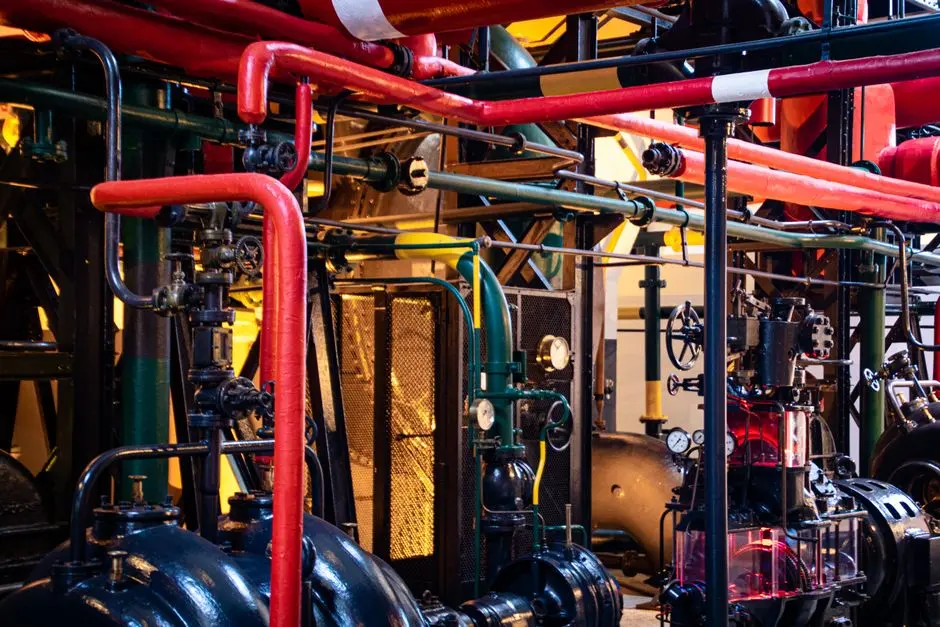
Once each subsystem is scored, the next step is to map it to the fab's UPW and wastewater train so the buyer does not over-spec a tool the water plant cannot support, or under-spec and overload treatment. The mapping is direct: rinse modules drive UPW LPM, etch and clean modules drive oxidizer and acid streams, dryers drive IPA and N2, exhaust ties to the air-treatment train, and the controller determines whether any of those streams are kept segregated for targeted reuse. Per Samco (2024), the fab-side treatment train typically combines "carbon, media, and/or membrane (MF/UF) filtration, as well as oxidation to degrade and remove organics… reverse osmosis (RO) as well as ion exchange (IX) or deionization (DI)" to bring reused water up to UPW quality. Tool features should be chosen to feed that train in segregated streams, not a single mixed flow.
The water-scarcity context reinforces the case: "severe drought events have directly impacted major chip producers, including Intel and TSMC" (Samco, 2024), so tool features that enable reuse and recovery are a hedge, not a luxury. The features that justify each downstream block are concrete — segregation-ready plumbing and resistivity-gated rinsing justify the cost of UF pretreatment ahead of RO and EDI polishing, while mixed output forces a heavier chemical-precipitation front end. The two building blocks most directly aligned with that work are UF pretreatment ahead of RO and EDI and an EDI polishing stack for ultra-pure water loops, with RO membrane elements sourced as RO and UF membrane elements sized to the segregated reject flow rather than the mixed fab flow. For North American siting decisions, the semiconductor wastewater compliance guide for Mexico lays out the regulatory envelope a tool's segregated streams will need to meet.
Buyer's decision framework for shortlisting a III-V wet platform in 2026
Step 1 — fix the process flow first. List the chemistries, selectivities, wafer sizes, and target UPW per wafer that the line must hit before any tool is scored, so the matrix is anchored to actual demand and not vendor benchmarks.
Step 2 — score features on per-wafer UPW, per-wafer chemical, exhaust class, automation level, and stream-segregation capability, not on headline etch rate. Etch rate is the number silicon suppliers optimize for; III-V selectivity and surface finish are the numbers that actually protect yield.
Step 3 — request documented numbers. Ask each candidate vendor for III-V selectivity, metal-trace, particle, and per-wafer UPW and chemical consumption data on the same flow. Reject vendors that will only share silicon curves — they are not quoting the tool you are buying.
Step 4 — run a one-day on-site audit of the candidate tool's chemical delivery, exhaust, and rinse skid. Trace each subsystem to a node on the fab's UPW and wastewater P&ID before signing. A tool that looks clean on a datasheet but cannot be tied to a node in the existing water plant is a hidden capex item, and the fab will pay for it later. For the broader context of how fabs are publicly committing to reuse, the Samsung fab wastewater reuse announcement shows the scale at which the industry is now planning around water.
Frequently Asked Questions
What subsystem features most affect a III-V wet tool's UPW draw?
Rinse cascade architecture (counter-current flow, tank count, overflow rate), final-rinse resistivity gating, and dryer selection drive the largest share of per-tool UPW draw. Resistivity-gated counter-current cascades also enable re-routing the most dilute reject stream to less demanding reuse points, which is the mechanism behind the recovery figure Samco (2024) reports for chip fabs.
How should we score a wet platform on chemical compatibility for GaAs, GaN, InP and SiC?
Score wetted-parts material against the specific chemistries the line runs: PFA, PVDF, quartz, and Halar-coated stainless cover the HCl, NH4OH, H2SO4, H2O2, and IPA mixes used across III-V materials. Request documented metal-trace and particle-addition data on III-V wafers, not silicon, and require piranha service to come with heated quartz, oxidizer-rated exhaust, and in-line peroxide destruction as spec-line items, not accessories.
What should we ask a wet-processing vendor about price and total cost of ownership?
Ask for per-wafer UPW consumption, per-wafer chemical consumption, exhaust class, expected chemical-reclaim percentage, and any priced options for segregation-ready plumbing and resistivity-gated cascade. These line items drive the fab's downstream water and wastewater capex far more than the headline tool price, and suppliers that will not break them out are not pricing the tool you actually need. Any firm price requires a quotation from the supplier against your specific flow — the research data does not give a list-price range.
How do we validate a vendor's claim that the tool supports segregated wastewater treatment?
Require a one-day on-site audit of the candidate tool's chemical delivery, exhaust, and rinse skid, and trace each subsystem to a node on the fab's UPW and wastewater P&ID. Confirm the controller logs stream identity per wafer via SECS/GEM, that exhaust is class-segregated (acid, oxidizer, solvent, general), and that the rinse skid supports quick-disconnect to segregated RO/IX polishing. A vendor that passes those checks is genuinely compatible with the "segregate spent streams and treat them individually" approach described by Samco (2024); a vendor that cannot is selling a mixed-output tool regardless of the brochure.