
Why Perth Housing Needs Packaged Sewage Treatment in 2026
Perth's 2026 housing pipeline is being shaped by Water Corporation's $55 million Strategic Water Infrastructure Program, which is enabling the potential to deliver more than 15,000 new homes across nine Metronet precincts: Kenwick, Bennett Springs, Yanchep, Maddington, Malaga, Redcliffe, Meltham, Morley and Kelmscott (Water Corporation). Where Water Corporation trunk mains and treatment capacity are already in place inside those corridors, connection to the Water Corporation sewer is the default, and developers can recoup part of the cost through Special Developer Infrastructure Contributions (SDIC) established to recover the State's investment from benefiting landowners (Water Corporation).
Outside those nine precincts, the answer is different. Most Perth growth corridors still have trunk-main or treatment-plant capacity gaps, and developers must self-supply — typically via a packaged sewage treatment plant licensed by WA's Department of Water and Environmental Regulation (DWER). The decision therefore turns on two questions: is the site inside a Water Corporation SDIC area, and if not, what process and licence pathway is the shortest path to a discharge or reuse permit. The Australian context reinforces the urgency: a national population of roughly 25 million growing at 1.5% per year sits against tightening water constraints, with the millennium drought (2000–2009) acting as the policy inflection point for wastewater recycling in Australia (Water Cycle, 2020).
How a Packaged Sewage Treatment Plant Works
Every packaged STP follows the same process skeleton: coarse screening to remove rags and grit, biological reduction of BOD and nitrogen, solids separation, disinfection, then either discharge or reuse. The differences between the four common process families sold into Perth housing projects sit inside that skeleton.
An anoxic/aerobic (A/O) contact oxidation unit is the workhorse for small communities — a single buried tank with an anoxic zone for denitrification and an aerated zone for BOD and ammonia removal, followed by a clarifier. A typical buried A/O packaged sewage treatment plant runs fully automated with no on-site operator, and is landscaped over once installed. A sequencing batch reactor (SBR) treats flow in timed fill/react/settle/decant cycles inside one tank, which suits staged housing developments where inflows ramp as dwellings come online. A membrane bioreactor (MBR) adds submerged flat-sheet PVDF membranes with a nominal pore size of 0.1 μm after the biological stage, producing near-reuse-quality effluent and roughly 60% smaller footprint than a conventional settling tank. A constructed wetland or reed-bed system is a passive alternative for low-density Perth fringe lots where land is cheap and discharge is to subsurface irrigation rather than a reticulated reuse main.
Matching Plant Configuration to a Perth Housing Development
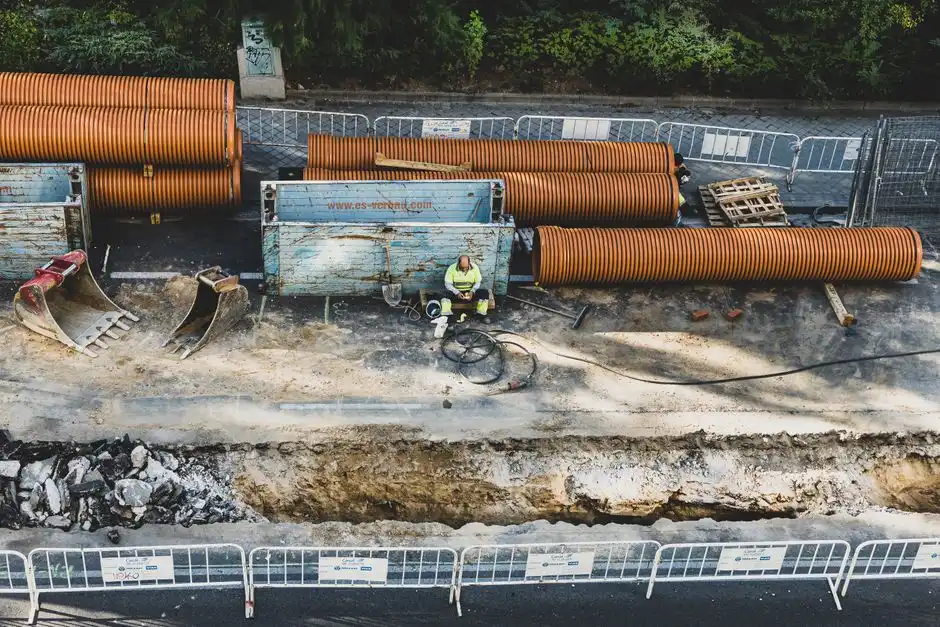
Australian commercial packaged STP suppliers typically serve communities from 50 to 5,000 equivalent persons (EP), with unit capacities from 5 kL to 500 kL per train — the sizing envelope most Perth housing projects sit inside (truewater.com.au). Choosing between A/O, SBR, MBR, and wetland comes down to dwelling count, reuse target, and site constraint.
| Configuration | Typical Perth housing scenario | Reuse pathway | Footprint / operator |
|---|---|---|---|
| Buried A/O packaged | Below ~200 dwellings, no reuse obligation | Subsurface irrigation; sewer discharge after disinfection | Smallest buried footprint; no on-site operator |
| SBR | 200–1,000 dwellings, staged commissioning | Irrigation; sewer discharge | Single tank, progressive ramp-up |
| MBR | 200+ dwellings targeting Class A reuse or dual-pipe reticulation | Toilet flushing, garden irrigation, laundry | ~60% smaller than settling; remote telemetry |
| Constructed wetland | Low-density rural-residential fringe; land available | Subsurface irrigation only | Large land take; passive operation |
For sites under about 200 dwellings with no reuse obligation, a buried A/O unit is normally the lowest-capex path. For 200 to 1,000 dwellings, or any site aiming at dual-pipe Class A recycled water for toilet flushing and garden irrigation, an MBR packaged plant for Class A reuse is the conventional choice because the membranes already deliver sub-micron solids, simplifying downstream disinfection. SBR makes sense when a developer wants to commission capacity progressively as stages are released. Wetlands suit rural-residential subdivisions on the Perth fringe where land is available and discharge is to land application. The scale of proven packaged delivery in Australia is significant: a single Australian utility holds more than 2,500 government approvals across residential and community projects with a combined installed treatment capacity of about five million litres per day (truewater.com.au). For MBR builds, specify individually replaceable PVDF flat-sheet MBR modules so failed modules can be swapped without taking a train offline.
Sizing a Packaged STP for a Perth Subdivision
Two numbers drive the size of any packaged STP: the equivalent population (EP) and the per-capita wastewater flow, both of which the supplier will request before issuing a sized proposal. Perth residential projects typically plan on 150 to 200 litres per person per day, but the design must also carry an allowance for inflow and infiltration (I/I), which is site-specific in Perth's clayey soils and must be measured or estimated rather than assumed.
Peaking factors are non-negotiable. Morning and evening peaks in a housing estate can run 2 to 3 times the average dry-weather flow, and the biological stage must be sized on peak loading, not on the daily average. Sludge handling is the second design input that is often missed early: every packaged STP produces waste activated sludge that must be stored, dewatered, and trucked off-site; the design must include sludge storage equivalent to at least the design holding time before sludge dewatering for packaged STP residuals. The effluent quality target — sewer discharge, subsurface irrigation, or Class A reuse — sets the disinfection step and therefore the post-treatment footprint; for reuse-quality effluents, UV disinfection for packaged STP effluent is the conventional final barrier in Perth installations.
Perth Regulatory and Reuse Pathway
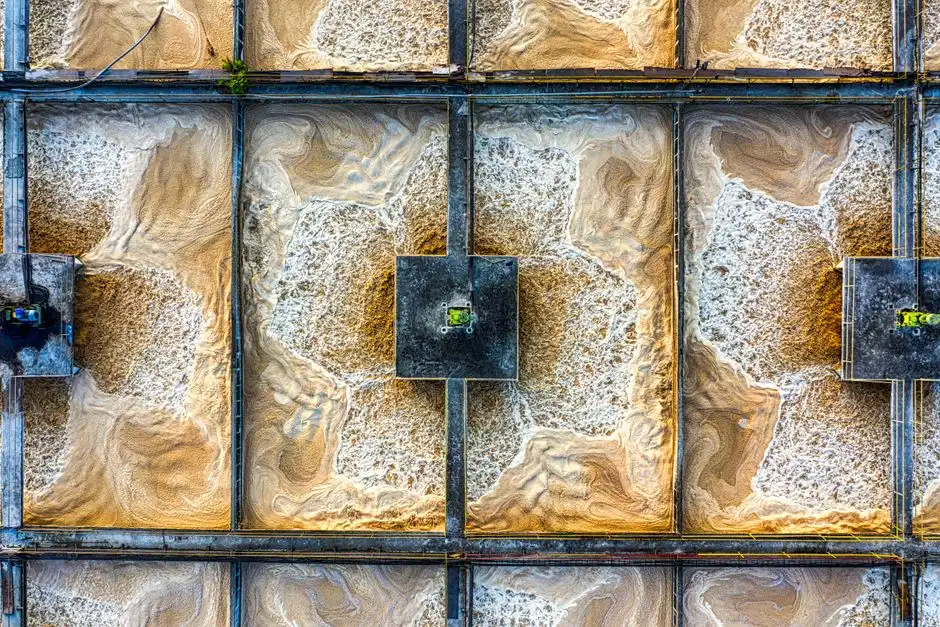
Every packaged STP installed in Western Australia must hold a licence from the Department of Water and Environmental Regulation under the Environmental Protection Act, with site-specific discharge limits written into the licence. If the development sits inside one of the nine Metronet precincts covered by Water Corporation's Strategic Water Infrastructure Program, connection to the Water Corporation sewer is typically the lowest-risk path and may attract SDIC support against the cost of the headworks (Water Corporation).
Where recycled water is intended for irrigation, toilet flushing, or laundry use, the design must align with the Australian Guidelines for Water Recycling and the WA Health Department requirements for dual-pipe reticulation. National policy has been pushing in this direction since the millennium drought (2000–2009), and Brisbane's advanced purified recycled water plants for indirect potable reuse are now the benchmark for high-end schemes (Water Cycle, 2020). Stormwater capture and reuse can be co-located with the packaged STP to offset potable demand for garden irrigation, which is particularly valuable in Perth's low-rainfall climate.
Procurement and Supplier Selection Checklist
Before signing with any Perth packaged STP supplier, the developer or consultant should walk through a fixed set of questions. The table below maps the question to the document or evidence a credible supplier should produce.
| Question to put to the supplier | Evidence the supplier should provide |
|---|---|
| Confirm DWER licensing history in WA | Copies of current operating licences and audit outcomes |
| Site references at comparable EP | Operating plants in the 50–5,000 EP range; 5 kL–500 kL per train (truewater.com.au) |
| Operator-free automation and remote telemetry | SCADA screenshots, alarm escalation tree, Perth-based service coverage |
| Scope inclusions | Written list covering civil works, sludge dewatering, disinfection, dual-pipe reticulation, landscaping |
| Build-own-operate (BOO) option | Contract term, tariff structure, handback conditions — the model used by an Australian packaged STP utility with 2,500+ approvals (truewater.com.au) |
| Consumables and membrane replacement schedule | Replacement interval for flat-sheet PVDF MBR modules, membrane cost per module, expected lifetime |
Cross-check the supplier's process selection against the comparable Brisbane housing packaged STP guide and the MBR retrofit and upgrade guide if the site has an existing tank. Compliance with the 2026 industrial effluent discharge guidelines is non-negotiable for any non-domestic load the development may add to the plant.
Frequently Asked Questions
Should we connect to Water Corporation or install a private packaged STP?
Connect if the site is inside one of the nine Metronet SDIC precincts — Kenwick, Bennett Springs, Yanchep, Maddington, Malaga, Redcliffe, Meltham, Morley, Kelmscott — and Water Corporation confirms headworks capacity. Outside those corridors, or where the Water Corporation timeline does not match the development staging, a DWER-licensed packaged STP is the practical path (Water Corporation).
How do we size a packaged STP for, say, 400 dwellings in Perth?
Start with equivalent population at roughly 2.7 persons per dwelling for medium-density housing, apply a per-capita flow of 150–200 L/person/day, then add a measured I/I allowance and a 2–3× peak factor on the biological stage. Give the supplier the EP, peak flow, and effluent target — discharge to sewer, subsurface irrigation, or Class A reuse — and request a sized proposal per train.
What does a packaged STP cost for a Perth housing development?
Capex varies with EP, process, and reuse target; suppliers do not publish indicative pricing, so request a budget estimate from at least two suppliers on the same EP, peak flow, and effluent quality basis. Ask for a 20-year whole-of-life quote including sludge dewatering, membrane replacement, energy, and operator cover.
What reuse pathway should a Perth housing development plan for?
If the site is targeting Class A recycled water for toilet flushing and garden irrigation, an MBR followed by UV disinfection is the conventional train because membrane effluent already sits below 1 μm. The design must align with the Australian Guidelines for Water Recycling and WA Health Department dual-pipe requirements, and the DWER licence must explicitly authorise the reuse end-use (Water Cycle, 2020).