Why Control Room Pricing Looks So Different From One Utility to the Next
A "control room upgrade" is not a single product a vendor quotes off a catalog; it is a stack of four architectural choices that scale with each other unevenly: PLC hardware and field instrumentation, the HMI/SCADA software layer, the plant-floor network, and the physical control room fit-out (panels, consoles, UPS, HVAC, lighting). When one utility reports a $200,000 controls line and another reports $2 million, the most common reason is that the two bids are not scoped the same way — not that one integrator is overcharging.
The clearest published evidence of how scope changes with plant size is the 2015 W&WD Magazine cost-comparison study of four Pennsylvania SBR upgrades (S1, Tim Daily & Bradley Pferdehirt, Pennoni Associates). The two smallest designs — the 280,000 gpd Cheyney University WWTP and the 740,000 gpd Ridley Creek STP — used "individual PLC control panels—reporting alarms to an autodialer" with no on-site HMI or integrated SCADA. The two larger designs — the 1.2 mgd Silver Spring Township Authority WWTP and the 4.5 mgd plant — explicitly integrated "individual PLC control panels…into an Ethernet SCADA system." Same state, same SBR technology, same basic treatment train; the control room scope moved from a phone dialer to a true SCADA network simply because the plant got larger.
Two normalization rules from that study are non-negotiable for any like-for-like comparison. First, the S1 costs are construction costs only: "The costs do not include engineering, inspections or construction management" (S1). Any vendor quote that bundles engineering and CM into a single number is not directly comparable to S1 or to a peer bid that separates them. Second, the S1 numbers were "factored using the Engineering News Record (ENR) Construction Cost Index to account for cost escalation…to March 2013 dollars. The ENR factor was normalized to 1 for March 2013." Comparing a March 2013 S1 number to a 2026 vendor quote without re-escalating through the current ENR Construction Cost Index is a classic source of phantom savings in board presentations.
The Plant-Size Cost Curve and What It Means for the Control Layer
The S1 study introduces a metric it calls the Treated Construction Cost Factor, expressed in dollars per gallon of treated wastewater capacity. Across the four Pennsylvania upgrades (250,000 gpd to 4.5 mgd), S1 reports that the cost per gallon "rises dramatically as the system capacity decreases." The SBR technology, treatment train, and design era are held roughly constant, so the curve isolates the effect of scale on construction cost.
The control layer — PLCs, HMI, SCADA servers, network switches, control panels — does not scale linearly with flow; a 4.5 mgd plant does not need nine times the control hardware of a 0.5 mgd plant. The civil and process work (tanks, blowers, UV banks, cloth disc filters) scales closer to flow. As a result, the control layer's share of total project cost is mathematically largest at the smallest flows, and S1's case-study pairing shows the predictable consequence: small plants drop integrated SCADA specifically to keep that share manageable. The S1 authors state this directly: "the smaller upgrade designs did not include design features such as an integrated SCADA systems, enhanced sludge digestion or sludge dewatering."
This is not a vendor preference; it is a per-gallon cost penalty that a board will see in the rate model. A capital-projects lead who defends a smaller-plant SCADA line item has to show the rate-payer that the same dollars per gallon buy a much richer control scope at 4.5 mgd than at 0.28 mgd, and that the autodialer choice is what creates the gap.
| Plant (S1, Pennsylvania SBR upgrade) | Average flow | Control scope as built | Notes on omitted features |
|---|---|---|---|
| Cheyney University WWTP | 280,000 gpd | Individual PLC panels, alarms to autodialer | No integrated SCADA, no enhanced digestion, no sludge dewatering (S1) |
| Ridley Creek STP | 740,000 gpd | Individual PLC panels, alarms to autodialer | No integrated SCADA per S1 |
| Silver Spring Township Authority WWTP | 1.2 mgd | Individual PLC panels integrated into Ethernet SCADA | Centrifuge dewatering retained/upgraded (S1) |
| Unnamed 4.5 mgd plant | 4.5 mgd | Individual PLC panels integrated into Ethernet SCADA | Full odor control, mechanical thickening, belt press (S1) |
Three Control Architectures Utilities Actually Buy
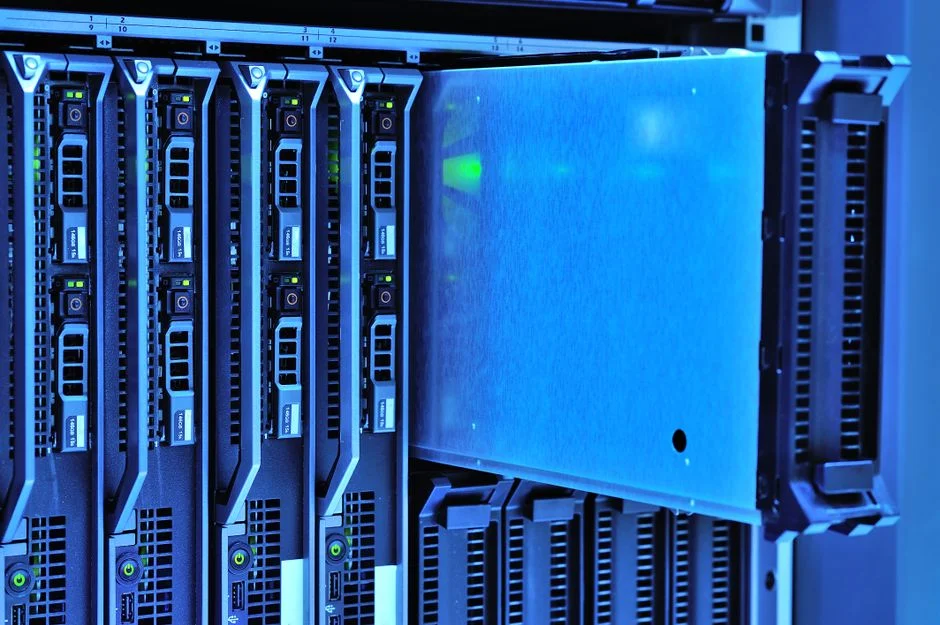
Most utility control-room upgrades in 2026 fall into one of three architectures, and the choice is the single largest price driver inside the controls line item.
Architecture A — PLC panels with autodialer alarms. This is the S1 baseline for the 280,000 gpd Cheyney and 740,000 gpd Ridley Creek plants. Each major piece of equipment (rotary drum screen, cloth disc filters, UV units, aeration blower VFDs, transfer-pump VFDs, alum feed) gets a local PLC; the only network is a phone line that dials out on alarm. There is no on-site HMI, no centralized trending, and no historical data. Capex is lowest, but staffing is 24/7 on-call, and the utility has no defensible records for an EPA Sanitary Survey or a state inspection.
Architecture B — Ethernet SCADA integrating individual PLC panels. This is the S1 baseline for the 1.2 mgd Silver Spring Township and the 4.5 mgd plants. Each PLC still controls its own skid, but they are networked over plant Ethernet to a central SCADA server and HMI, with remote operator access over a plant LAN. Trending, alarm history, and centralized control become possible, which is what unlocks a day-shift-with-remote-eyes staffing model. Capex rises by the cost of the network, the SCADA software, the historian, and the engineering hours to map every I/O point.
Architecture C — Cloud SCADA / digital-twin layer over Architecture B. Not present in S1, but a 2026 default for new builds and major retrofits. A secure cloud historian, mobile dashboards, predictive alarming, and a digital twin are added on top of an on-prem Ethernet SCADA backbone. Staffing can move toward remote operations centers, and the utility gets analytics-driven maintenance windows. The trade-offs are cyber posture (a documented external attack surface), connectivity (cellular or fiber failover), and a shift from capex to opex through subscription licensing — which is exactly what a rate model needs to capture. A cloud SCADA cost and ROI analysis walks through the same trade space in detail.
The S1 equipment list is the right starting point for any I/O count that drives bid pricing: rotating drum screens, cloth disc filters, UV units, alum chemical addition, and VFDs for aeration blowers and transfer pumps. A vendor who cannot map every one of those to a tagged I/O point is bidding a different project. Tools like a PLC-controlled chemical dosing skid or a rotary drum screen with control integration are typically priced at the skid level, with the I/O count carried back into the SCADA point schedule.
| Architecture | Reference plant (S1) | Capex profile | Staffing model | Cyber posture |
|---|---|---|---|---|
| A — PLC + autodialer | Cheyney 280,000 gpd; Ridley Creek 740,000 gpd | Lowest | 24/7 on-call, after-hours alarm escalation only | Minimal external surface; phone-line alarm path |
| B — Ethernet SCADA | Silver Spring 1.2 mgd; unnamed 4.5 mgd | Moderate (network + SCADA + historian) | Day-shift with remote eyes on plant LAN | Plant-LAN only; segmented OT network |
| C — Cloud SCADA / digital twin on top of B | Not in S1; 2026 default for new builds | Higher capex + ongoing subscription/licensing | Day-shift plus remote operations center capability | External attack surface; requires MFA, logging, segmentation |
Translating the Quote Into a Rate Case
Once a vendor number is in hand, the next test is whether it survives a rate case. EPA's water affordability page (S2, US EPA, "Water Affordability Resources for Utilities," published 2024-10-08) defines full cost pricing as a framework that "factors all costs into prices, including past and future operations, maintenance, and capital costs." Any control-room capex that demonstrably reduces future O&M — fewer after-hours callouts, fewer truck rolls, lower chemical over-feed, fewer permit excursions — is recoverable under the same framework as the upgrade itself.
S2 also lists the funding pathways a utility can stack onto a control-room project. The Clean Water State Revolving Fund (CWSRF) and the Drinking Water State Revolving Fund (DWSRF) are the two principal federal-state programs. For compliance-driven upgrades, the Clean Water Act Financial Capability Assessment Guidance (FCA) is the document that lets a municipality "negotiate implementation schedules" when the bill would otherwise outpace rate-payer affordability (S2). The S2 page also flags the equity constraint directly: "low-income households, especially those served by high-cost systems, may face affordability problems if prices are raised," which is why lifecycle savings from a control upgrade should be quantified honestly rather than restated as flat rate-base growth.
Operationally, Ethernet SCADA and cloud SCADA shift spend from labor (autodialer pages, overtime, emergency call-outs) to predictable subscription and licensing fees, which is easier to model in a multi-year rate filing than time-and-material overtime. A regional WTP cost breakdown with ROI calculator shows the same construction-cost-to-rate-impact logic applied at a country scale, and the same caveats about ENRCCI normalization apply.
How to Run a Like-for-Like Control Room Price Comparison in 2026
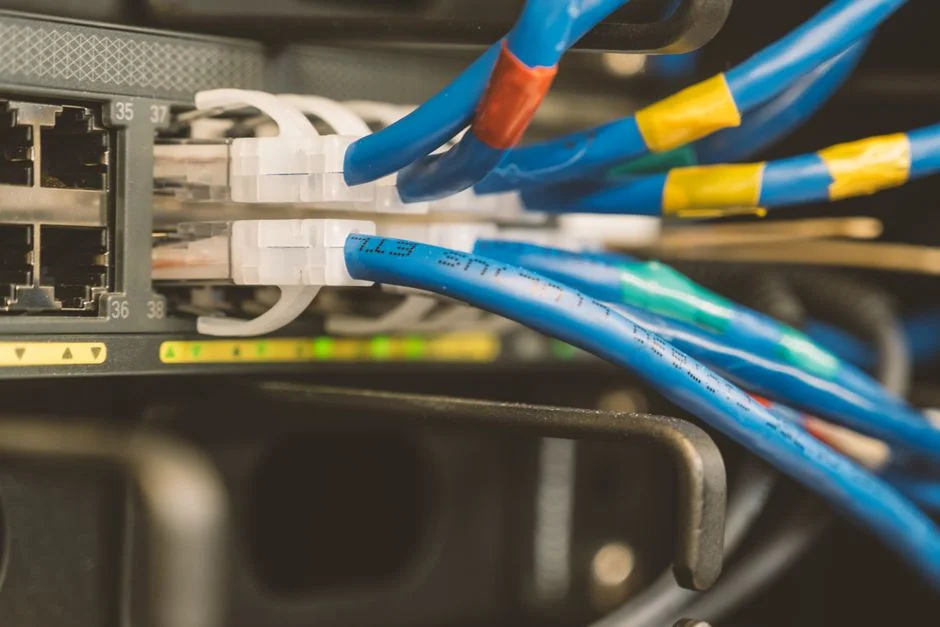
The procurement process is where most control-room price comparisons fall apart, because vendors are rarely bidding the same scope.
- Lock the I/O list against the S1-style treatment train. Screening (rotary drum screen or band screens), SBR biological nutrient removal with diffuser aeration and floating mixers, alum addition, flocculation, cloth media filtration, UV disinfection, and VFDs for aeration blowers and transfer pumps. Every bidder maps these to a tagged I/O point schedule before pricing.
- Specify the architecture in scope. State whether the bid is for Architecture A (PLC + autodialer), B (Ethernet SCADA), or C (cloud SCADA on top of B). List which features are owner-furnished vs. contractor-furnished: historian licenses, cyber hardening, network switches, fiber, and reporting.
- Separate construction cost from soft cost. S1 explicitly excludes engineering, inspections, and construction management. Any combined number will look artificially low against S1 or against a peer bid that splits them out.
- Re-escalate to current dollars with the ENR Construction Cost Index. S1 was normalized to March 2013 (ENR factor = 1). Direct price transfer to 2026 requires applying the current ENRCCI multiplier; otherwise the comparison is meaningless.
For utilities comparing multiple integrators, the same I/O list and architecture specification become the single source of truth. A digital twin provider comparison can then be run on the Architecture C layer independently of the underlying SCADA bid, so the cloud subscription is not double-counted in the controls line item.
Frequently Asked Questions
How much does a wastewater control room upgrade cost per gallon
Frequently Asked Questions
How much does a wastewater control room upgrade cost in 2026?
For a standard municipal wastewater control room upgrade in 2026, costs typically range from $150,000 to $450,000, depending on the complexity of the HMI software integration and hardware redundancy requirements. Small-scale projects involving basic workstation replacements and software licensing updates generally fall on the lower end, while full-scale migrations to high-availability server clusters with cybersecurity hardening often exceed $500,000.
Is Ethernet SCADA worth it for a small utility under 1 mgd?
Transitioning to an Ethernet-based SCADA architecture is recommended for utilities under 1 mgd primarily for future-proofing and diagnostic efficiency. While initial capital expenditure is 15-20% higher than serial-based polling due to the need for managed industrial switches and fiber-optic cabling, the reduction in troubleshooting time—often reduced from hours to minutes via remote IP-based diagnostics—provides a typical return on investment within 3 to 5 years.
What is the difference between a PLC autodialer system and a full SCADA upgrade?
A PLC autodialer system functions as a point-to-point alarm notification tool, limited to simple binary relay inputs and basic voice or SMS alerts. In contrast, a full SCADA upgrade implements a centralized Human-Machine Interface (HMI) that provides real-time data logging, historical trending, automated reporting for EPA compliance, and complex logic control across distributed assets, moving from reactive alarming to proactive process optimization.
Can a utility use the Clean Water SRF to fund a control room upgrade?
Yes, Clean Water State Revolving Funds (CWSRF) can be used for control room upgrades if the project is documented as necessary for the operational integrity and compliance of the wastewater treatment works. To qualify, the utility must demonstrate that the upgrade addresses critical infrastructure needs, such as aging hardware obsolescence or cybersecurity vulnerabilities, and meets the specific "Best Available Technology" requirements defined by the state’s SRF program guidelines.
How do I compare two SCADA bids that include different scope items?
To compare disparate SCADA bids, normalize the costs by creating a scope-of-work spreadsheet that categorizes items into four buckets: hardware/panels, software licensing, labor/programming, and long-term maintenance/support. Ensure both bids account for the same NERC CIP or ISA-101 high-performance HMI standards, and explicitly request that the contractors provide a line-item breakdown for "hidden" costs such as data migration, third-party interface drivers, and post-commissioning training hours.