Why 2026 Is a Tipping Point for UPW Recirculation Loop Flow Stabilization
Semiconductor UPW recirculation loop flow stabilization tool demand is changing in 2026 because advanced-node fabs running GAA, CFET, and ångström-era devices are pulling more than 10,000 m³ of ultrapure water per day, and chemical mechanical planarization alone accounts for roughly 30–40% of that wastewater and about one-third of total fab UPW use (Environmental Science & Technology Letters, 2025).
At the wafer level, a single 300 mm wafer needs roughly 1,500 gallons of UPW inside a broader fabrication water demand above 2,000 gallons per wafer (Processing Magazine, via cnynto.com). Any instability in a CMP feed loop is therefore multiplied across the entire recirculation system. IRDS 2023 pushes impurity control into the sub-ppb and ppt range for nodes below 10 nm and into the ångström era (IRDS 2023, cited in GF Industry and Infrastructure Flow Solutions, accessed 5 May 2026), which is the primary reason the recirculation loop—not the polishing skid—is now where tool demand is changing. Flow stabilization in 2026 is no longer about pump sizing; it is about the valve, instrumentation, and control logic holding the purity envelope between the polishing system and the process tool.
What 'Flow Stabilization' Actually Means on a 2026 UPW Recirculation Loop
Flow stabilization consists of the hardware and control functions that sit between the polishing skid outlet and the tool point of use to keep pressure, velocity, and purity within the target band (cnynto.com, citing Processing Magazine). In a 2026 UPW plant, polishing—typically UV plus mixed-bed DI or continuous electrodeionization polishing followed by ultrafiltration—feeds a distribution and recirculation loop that returns to a storage tank. The functional blocks a procurement team must now scope are: (1) control and isolation valves, (2) flow and pressure instrumentation, (3) control logic and actuation, and (4) integration with the reclaim loop. The field-level diagnostic anchor is the chattering control valve: at low opening, the trim is where torque increases and stroke slows, which is the first subfab hint that pressure stability, surface finish, or material compatibility is no longer aligned with the purity target (cnynto.com). Every component in these four blocks is judged against the same envelope—resistivity above 18 MΩ·cm, TOC below 1 ppb, very low dissolved oxygen, very low particle counts, and very low bacterial levels (cnynto.com, citing Processing Magazine). When a flow-stabilization component cannot hold that envelope, it causes the deviation.
Valve Trim, Wetted Materials, and Surface Finish: Where Demand Has Moved
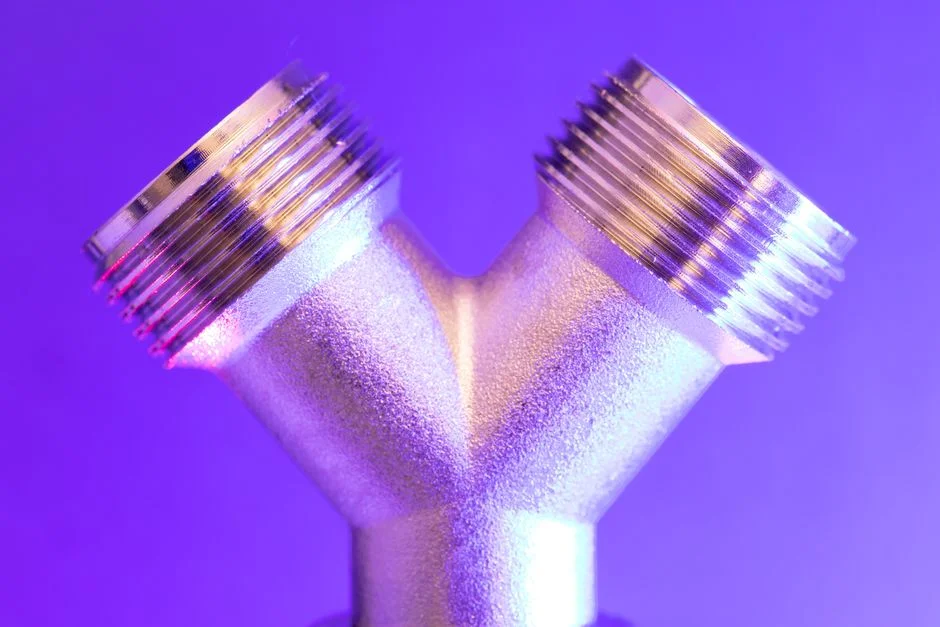
UPW control valves on a 2026 recirculation loop require surface roughness of Ra 35 microinches or less, with electropolished stainless wetted surfaces for cleanability and corrosion resistance—this threshold is a 2026 minimum (cnynto.com, citing Processing Magazine). UPW actively draws ions from surrounding surfaces because it contains so little ionic material; therefore, mismatched wetted materials lead directly to leaching or localized corrosion. Duplex, super-duplex, alloy steel, and coated carbon steel should be kept upstream of the final UPW contact loop rather than placed inside it (cnynto.com). The trim behavior buyers must test is the low-opening condition. At roughly 12% opening, torque increases and stroke slows, leading to incomplete closure and unstable flow sequencing at the tool—meaning a 2026 flow-stabilization spec must be evaluated at low-flow rinse duty, not just at design Cv (cnynto.com). On the structural piping side, PEEK-HP systems such as SYGEF Ultra are positioned for hot UPW at 85 °C, support nodes from <10 nm down to physical limits, carry a projected lifetime above 25 years, and the PEEK resin does not meet the OECD PFAS definition—though common FKM and PTFE sealing materials do (GF Industry and Infrastructure Flow Solutions, accessed 5 May 2026). The PEEK envelope is a piping benchmark, not a valve-trim substitute.
| 2026 UPW valve-trim spec point | Threshold or behavior | Source |
|---|---|---|
| Wetted surface roughness | Ra ≤ 35 µin, electropolished stainless | cnynto.com, citing Processing Magazine |
| Low-flow trim stability | Evaluate at ~12% opening; check torque, stroke time, closure integrity | cnynto.com |
| Upstream alloy placement | Duplex/super-duplex/alloy or coated carbon steel kept upstream of final UPW contact loop | cnynto.com |
| Sealing material disclosure | FKM and PTFE fluoropolymers meet the OECD PFAS definition; PEEK-HP resin does not | GF Industry and Infrastructure Flow Solutions, 2026 |
| Piping envelope example | PEEK-HP continuous service up to 250 °C; 85 °C UPW test; >25-year projected lifetime | GF Industry and Infrastructure Flow Solutions, 2026 |
Instrumentation, Control Topology, and the Move to Loop-Level Specs
2026 tool demand is shifting from siloed per-subsystem control to a unified control logic across UPW and reclaim loops, with virtual verification replacing extensive on-site wet-testing and corrective tuning (purewater-supply-lifecycle.com, accessed 2026). A process-node-aligned design model with predictive scaling is replacing static basis-of-design assumptions, and early simulation of multi-tool and load scenarios is replacing late, tool-specific evaluations. On the standards side, buyers should expect documentation mapped to SEMI F63 and ASTM D5127 for UPW quality expectations, ASTM A380/A967 for stainless cleaning and passivation, ANSI/ASME pressure-class language for pressure boundaries, and ISO 5211 for actuator mounting (cnynto.com). The 2026 requirement must be framed qualitatively: flow, pressure, conductivity, and TOC at the loop level, tied into a unified control layer that spans UPW and reclaim. Where a vendor's documentation only covers a single skid in isolation, treat that as a 2026 disqualifier.
A 2026 UPW Recirculation Loop Flow-Stabilization Parameter Table
The table below consolidates the loop-level targets, the node-driven limits, the fab-level water math, the wafer-level demand, and one supplier-published example envelope. Exact valve Cv ranges, controller model numbers, and lead times are not in the supplied research and must be requested from the vendor.
| Parameter | 2026 value or envelope | Scope / source |
|---|---|---|
| UPW resistivity target | > 18 MΩ·cm | Final UPW loop; cnynto.com, citing Processing Magazine |
| UPW TOC target | < 1 ppb | Final UPW loop; cnynto.com, citing Processing Magazine |
| DO, particles, bacteria | Very low (qualitative) | Final UPW loop; cnynto.com, citing Processing Magazine |
| Wetted surface roughness | Ra ≤ 35 µin, electropolished stainless | Final UPW control valves; cnynto.com, citing Processing Magazine |
| IRDS 2023 contamination control | Sub-ppb to ppt range | GAA, CFET, and beyond; IRDS 2023, cited in GF Industry and Infrastructure Flow Solutions, 2026 |
| Fab-level UPW consumption | > 10,000 m³/day | Typical fab; Environmental Science & Technology Letters, 2025 |
| CMP share of fab wastewater | ~30–40% | Fab-level; Environmental Science & Technology Letters, 2025 |
| CMP share of fab UPW use | ~One-third | Fab-level; Environmental Science & Technology Letters, 2025 |
| Wafer-level UPW demand | ~1,500 gal per 300 mm wafer | Per wafer; Processing Magazine, via cnynto.com |
| Total fabrication water | > 2,000 gal per wafer | Per wafer; Processing Magazine, via cnynto.com |
| Example piping envelope (PEEK-HP) | 85 °C UPW service, continuous use to 250 °C, > 25-year projected lifetime | Supplier-published example, not a universal spec; GF Industry and Infrastructure Flow Solutions, 2026 |
Reclaim Loop Integration: Why Flow Stabilization Now Spans UPW and Reclaim
2026 tool demand treats UPW and reclaim loops as one system, with shared digital-twin models and shared control logic rather than separate subsystems with their own control philosophies (purewater-supply-lifecycle.com, accessed 2026). The procurement package must evaluate the final purity loop, the regeneration chemical loop, waste neutralization, and the reclaim service, as the same hydraulics affect all four (cnynto.com). Because CMP accounts for 30–40% of fab wastewater, reclaim of CMP effluent feeds directly back into the UPW supply chain (Environmental Science & Technology Letters, 2025), and instability in the reclaim loop manifests as instability in the UPW feed. A 2026 flow-stabilization RFQ that scopes only the final UPW loop is under-scoped; the reclaim return path is part of the same control envelope.
Procurement Playbook: What to Put in a 2026 UPW Loop Flow-Stabilization RFQ
Frame the RFQ around the IRDS 2023 purity envelope—sub-ppb to ppt for GAA, CFET, and beyond (IRDS 2023, cited in GF Industry and Infrastructure Flow Solutions, 2026)—and around the SEMI F63, ASTM D5127, ASTM A380, A967, and ISO 5211 standards chain (cnynto.com). Require wetted-material disclosure up front, including whether common sealing materials such as FKM and PTFE are in scope, since the OECD PFAS definition in the GF documentation captures those even when the structural piping resin is non-PFAS. Require low-flow performance data at realistic rinse openings (e.g., ~12% per cnynto.com), not just nominal Cv, and require evidence of stable torque and stroke time over the projected loop lifetime. Require loop-level control documentation that shows how the proposed system unifies UPW and reclaim control logic and supports predictive scaling, per the digital-twin direction in scalable digital-twin providers for water and manufacturing and the broader 2026 spec framing in the III-V semiconductor wet processing equipment spec guide. Treat the absence of that documentation as a disqualifier. Ask shortlisted vendors for unit pricing and lead-time benchmarks in writing and compare on total cost of ownership across the projected loop lifetime, including industrial RO pretreatment for UPW polishing skids and UPW-grade control valves, instrumentation, and filter media as line items. Where reclaim of CMP effluent is in scope, cross-reference the CMP wastewater treatment engineering specs and the industrial water-use reduction engineering guide to ensure consistent loop math.
Frequently Asked Questions
What is actually changing in 2026 UPW recirculation loop flow stabilization tool demand?
Demand is shifting from pump sizing and skid capacity toward loop-level flow stabilization—valve trim, wetted surface finish, instrumentation, and control logic—because IRDS 2023 pushes impurity control into the sub-ppb to ppt range for GAA, CFET, and ångström-era nodes, while a typical fab still pulls more than 10,000 m³ of UPW per day with CMP at 30–40% of wastewater (IRDS 2
Frequently Asked Questions
What is driving 2026 demand for new flow-stabilization tools on semiconductor UPW recirculation loops?
The primary driver is the transition to sub-2nm process nodes, which require ultra-stable flow dynamics to prevent particle shedding and ion leaching caused by pressure transients. As feature sizes shrink, even minor flow fluctuations in the UPW recirculation loop can trigger micro-bubble formation and resistivity excursions that exceed the tighter process windows required for EUV lithography and atomic layer deposition (ALD) steps.
How does IRDS 2023 change the way UPW recirculation loop valves and instrumentation need to be specified?
The IRDS 2023 roadmap mandates tighter control of Total Organic Carbon (TOC) and metal ion contamination, shifting specifications toward high-purity PFA-lined valves with zero-dead-leg designs. Instrumentation must now support higher sampling rates—typically exceeding 100Hz for pressure transducers—to detect and dampen rapid hydraulic surges that were previously undetectable under older standards.
What is the typical cost range for upgrading flow stabilization on an existing UPW recirculation loop in 2026, and what drives the spread?
Retrofit costs generally range from $150,000 to $450,000 per loop, depending on the scope of the control system integration. The cost spread is driven by the choice between simple mechanical pressure-regulating valves versus intelligent, PLC-integrated electronic control valve assemblies that utilize AI-driven predictive maintenance algorithms to anticipate flow disruptions.
Which valve and instrumentation suppliers should a fab shortlist for a 2026 UPW loop flow-stabilization RFQ, and how should they be compared?
Shortlists should prioritize tier-one suppliers such as GF Piping Systems, Entegris, Swagelok, and Bürkert, specifically focusing on their semiconductor-grade, high-purity product lines. Suppliers should be compared based on their verified particle shedding rates, material compatibility with 18.2 MΩ·cm UPW, and their ability to provide integrated software interfaces compatible with existing fab SCADA systems.
What is the expected lead time for a 2026 UPW recirculation loop flow-stabilization retrofit, and what compliance risks should be flagged before signing a PO?
Current lead times for high-purity flow components range from 16 to 32 weeks due to specialized material sourcing requirements. Before signing a purchase order, compliance risks regarding SEMI F47 for voltage sag immunity and SEMI S2 for environmental, health, and safety guidelines must be verified, as failure to meet these standards can lead to significant installation delays and regulatory non-compliance during facility commissioning.