
What an Effluent Treatment Plant in Al Khor Actually Does
Effluent is wastewater that has passed through at least one treatment step and is leaving a facility. In industrial settings, this stream is often called "trade effluent," and per the U.S. EPA framework cited by Water & Wastes Digest, it cannot enter a river, reservoir, stream, or lake without first meeting category-specific discharge standards. A modern effluent treatment plant applies four stages in series: screening and grit removal, primary clarification, secondary biological treatment, and tertiary polishing or disinfection, with auxiliary steps added for oils, metals, salts, or pathogens depending on the waste.
Removal performance scales with the stages used; primary treatment removes about 60% of suspended solids and secondary treatment removes more than 90%, both figures attributed to USGS data carried by Water & Wastes Digest. In Al Khor, the design is pushed further by ambient summer temperatures above 40 °C, brackish or saline groundwater intrusion, and the need to produce reuse-grade water rather than just compliant discharge. Consequently, reactors run at higher mixed-liquor temperatures, materials of construction shift toward duplex stainless steel or FRP, and biological sludge handling must cope with elevated solids yields.
The Regulatory Frame Every Al Khor ETP Must Clear
Industrial effluent must meet stringent regulatory standards designed to protect surface and groundwater resources, serving as the baseline every Al Khor project must clear. The U.S. EPA Effluent Guidelines model, which Water & Wastes Digest cites as the reference point for category-specific limits—including metals, food, and chemicals—provides the framework for most Qatari discharge limits. An Al Khor buyer should ask the supplier to map every process stream to a guideline category before sizing the plant. The reuse pathway is also formally documented: Schrader's PhD thesis at the University of Twente (2020) frames membrane technology, particularly nanofiltration, as a route to polish WWTP effluent to a quality suitable for agricultural or (in)direct potable usage. Because the supplied research does not contain numeric Qatar MME or Kahramaa reuse limits, the operator must obtain three inputs directly from the regulator before equipment selection: the permit effluent limits for each discharge point, the receiving water body or designated TSE/irrigation reuse end use, and the required monitoring frequency and sample preservation method. Without those three, a quote is a price rather than a compliant plant.
Matching the Process Train to Your Wastewater Type
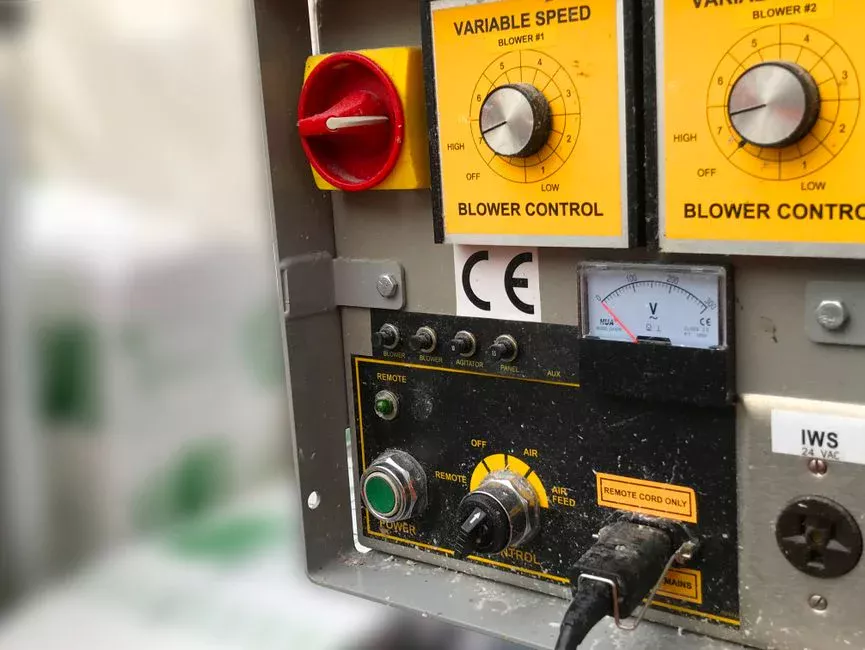
Effluent contaminants fall into six families reported by Water & Wastes Digest—suspended solids, organics, nutrients, metals, oil and grease, and pathogens—with each family requiring a specific unit operation. Four process trains cover the Al Khor industrial mix, and the table below maps influent signature to train, core equipment, and best-fit end use.
| Al Khor industry | Dominant contaminants | Recommended train | Core equipment | End use |
|---|---|---|---|---|
| Food processing, steel, refinery | High FOG, TSS, emulsified oils | DAF + biological + UF polish | dissolved air flotation (DAF) system, aeration basin, ultrafiltration (UF) polishing system | Cooling-tower makeup, irrigation |
| Worker camps, light industry | Municipal-strength BOD, NH3-N, low metals | Equalization + MBR + UV | MBR membrane bioreactor system, UV | TSE for landscape irrigation |
| Petrochemical (QAPCO-type) | Recalcitrant organics, variable salinity, trace metals | Physico-chemical + SBR | Equalization, SBR, clarifier | Compliant discharge |
| Any train targeting reuse | Micropollutants, pathogens, residual organics | Membrane or constructed-wetland polish | UF/NF per Schrader thesis, or constructed wetland per Lei 2022 | Agricultural or indirect potable reuse |
Two of the four trains are anchored in peer-reviewed work: Schrader's University of Twente thesis (S1) documents direct nanofiltration as a polish to reuse-grade quality, and Lei's Wageningen University PhD thesis (2022) documents constructed wetlands as a low-energy option for micropollutant polishing. For space-constrained worker-camp duty, the WSZ package plant for lower-flow sites is the standard fit.
Sizing the ETP: Flows, Loads, and the Al Khor Climate Factor
Plant sizing must rely on peak hourly flow rather than the average daily figure, as Qatar's summer cooling and process-water demand compresses daily flow into a narrow window. Any biological stage sized only on the 24-hour mean will oxygen-starve during peak periods. The biological stage is driven by the daily mass load: kilograms of BOD and NH3-N per day, translated into reactor volume through a target food-to-microorganism ratio and mixed-liquor suspended-solids concentration. These are standard inputs that must be confirmed against the supplier's quoted F/M and MLSS, as the supplied research does not provide numeric ranges for these targets. Tertiary polishing sizing is driven by the reuse end use: irrigation needs pathogen and salinity control, cooling-tower reuse needs silica, hardness, and conductivity control, and any form of potable reuse requires the nanofiltration membrane polish described in Schrader's thesis. Before requesting a quote, the buyer should assemble 24-hour composite and grab samples covering pH, TSS, BOD5, COD, oil and grease, total nitrogen, total phosphorus, temperature, conductivity, and the peak-to-average flow factor.
MBR, SBR, DAF+UF, or Constructed Wetland: A Decision Matrix
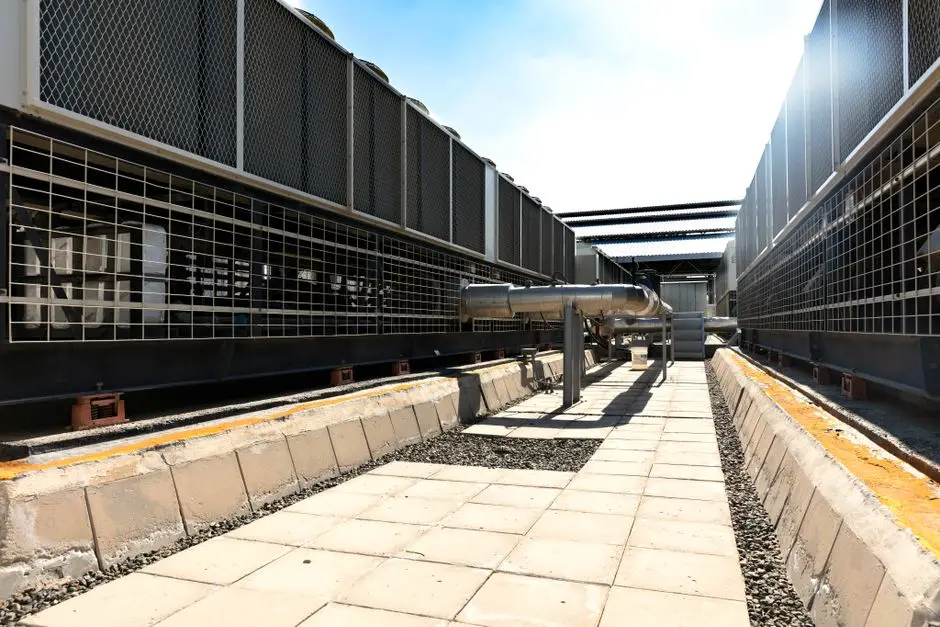
Four technologies cover the Al Khor envelope, and the choice is driven by the reuse target, footprint, and operator skill level. The table below summarizes the trade-offs a buyer should weigh before signing.
| Technology | Footprint | Effluent quality | Energy / O&M intensity | Best fit in Al Khor |
|---|---|---|---|---|
| MBR (membrane bioreactor) | Small | Near-reuse, low TSS, low turbidity | Higher aeration energy, membrane cleaning | Space-constrained sites, worker camps, food plants — see MBR membrane bioreactor system |
| SBR (sequencing batch reactor) | Large | Compliant discharge, batch variability | Lower capex, moderate O&M | Petrochemical and variable-strength streams |
| DAF + biological + UF | Medium | High TSS/FOG removal, reuse-ready | Moderate; chemical conditioning for DAF | Steel, refinery, food — use dissolved air flotation (DAF) system with a ultrafiltration (UF) polishing system |
| Constructed wetland polish | Large land area | Micropollutant and nutrient reduction, documented by Lei 2022 | Low energy, low O&M, land-hungry | Tertiary step on any train, not a standalone ETP for high-strength industrial wastewater |
The Lei 2022 thesis (S5) explicitly addresses constructed wetlands as a polish step, so the wetland belongs downstream of a working biological stage rather than in front of high-strength raw influent. Primary decision drivers, in order of weight, are required reuse quality, available footprint, operator skill level, peak-to-average flow ratio, and on-site sludge handling capacity.
CAPEX, OPEX, and the Sludge Side of the Equation
Sticker price is an insufficient comparison metric for an ETP, as energy, chemicals, and sludge disposal costs over a 15-year asset life usually exceed the original capital investment. A 5-year lifecycle view provides a more accurate financial picture. The line items a buyer should request from every bidder include: civil works, equipment supply, installation, instrumentation and control, commissioning, operator training, annual energy, annual chemicals, spare-parts allowance, and sludge disposal cost per ton of dry solids. Many facilities produce sludge as a byproduct, which can potentially be used as a soil additive or fertilizer if properly dewatered, per Water & Wastes Digest. Dewatering is therefore not optional; a plate and frame filter press sized to the sludge mass load closes the loop on disposal cost and turns the waste stream into a handleable cake.
Supplier Selection: 7 Questions to Ask Before You Sign
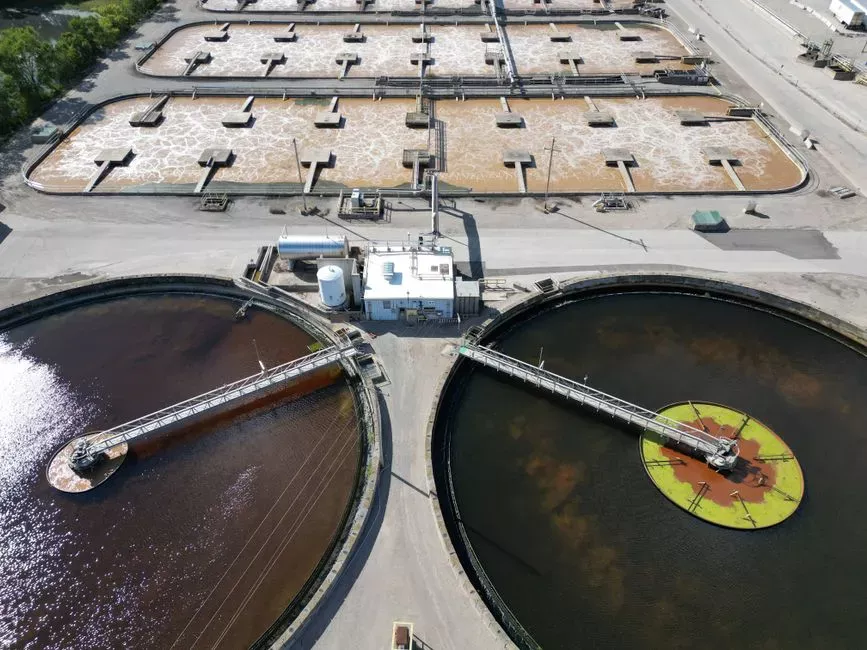
Most ETP failures in the Gulf trace back to gaps between the proposal and the installed plant. Ask every bidder the following questions in writing:
- Will you provide a documented performance guarantee tied to our influent data and our discharge or reuse target, with liquidated damages for non-compliance?
- Do you have at least three reference plants in Qatar or the wider Gulf that have run for three or more years on similar wastewater—steel, petrochemical, food, or worker-camp duty?
- Is the scope split explicit: civil, mechanical, electrical, instrumentation, commissioning, and operator training, with no grey area between "supply" and "install"?
- What is the spare-parts logistics path from your factory to Al Khor, and what is the guaranteed response time for a local service engineer?
- Is the proposed disinfection stage matched to the reuse pathway—UV for chemical-free disinfection, or chlorine dioxide for a higher log reduction on mixed or hospital wastewater?
- What is the realistic ambient-temperature derating of the biological stage, given Al Khor's summer profile, and what is the contingency if influent temperature exceeds the design value?
- Can you provide a 5-year lifecycle cost in the same format as your competitors, with energy, chemicals, and sludge disposal as separate lines?
Match the disinfection choice to the end use: a chemical-free UV stage for landscape-irrigation reuse, and a chlorine dioxide generator for higher-log kill on hospital or mixed wastewater streams.
Frequently Asked Questions
What does an effluent treatment plant in Al Khor cost in 2026?
Published prices for Al Khor projects are not available, so buyers should request a 5-year lifecycle cost per cubic meter of treated effluent. Benchmark at least three suppliers on the same influent data and discharge or reuse target to ensure a fair comparison.
Which ETP technology fits an Al Khor food or steel plant best?
For high FOG and TSS, the standard train is a DAF primary, a biological stage, and an ultrafiltration polish, utilizing the dissolved air flotation (DAF) system and the ultrafiltration (UF) polishing system. For space-constrained sites, an MBR stage can replace the conventional aeration basin and clarifier.
How do I size an ETP for a worker camp or small industrial site in Al Khor?
Size the plant based on peak hourly flow and the daily BOD and NH3-N mass load rather than average flow. Before requesting a quote, assemble a 24-hour composite and grab samples for pH, TSS, BOD5, COD, oil and grease, total nitrogen, total phosphorus, temperature, conductivity, and the peak factor. The integrated WSZ package plant fits the lower-flow end of that envelope.
How do I choose between an MBR, SBR, DAF+UF, and constructed-wetland train?
Selection should be based on the reuse target, footprint, and operator skill level. MBR is ideal for near-reuse quality on small footprints, SBR for variable-strength streams on a budget, and DAF+UF for high FOG and TSS; constructed wetlands, as documented by Lei 2022, should be used only as a tertiary polish. For comparison with adjacent Gulf jurisdictions, the Al Ain ETP buyer's guide and the Fujairah ETP buyer's guide apply the same regulatory model.
Related Equipment
- UV sterilizer — specifications, capacity range, and technical data