Why a Yaounde Data Center Faces a Different Blowdown Problem
Yaoundé requires site-specific blowdown management rather than a generic engineering approach. The data center wastewater management overview provides abstract technical guidance, but a Central African project lead must specify from first principles: Cameroon hosts three data centers across two cities, and only one sits in Yaoundé (datacentermap.com, June 2026 listing; datacenterjournal.com Cameroon directory, updated 2020-09-04). Local reference designs do not exist, so the constraint envelope is built from the site rather than copied from a peer project.
Three local variables dominate. First, humid-tropical wet-bulb temperature shrinks the approach to wet-bulb on the cooling tower, which forces lower cycles of concentration and pushes blowdown volume toward the 25–30% of makeup figure cited by genesiswatertech.com for 4-cycle operation. Side-stream filtration is the only path to defensible cycles. Second, makeup in Yaoundé is typically drawn from the Sanaga distribution network or from local boreholes, and the asce.org primer on data center water (March/April 2024) recommends seasonal sampling for pH, conductivity, TDS, chlorides, silica, hardness, alkalinity, and microbial counts with the local utility before equipment sizing. Third, municipal discharge of high-TDS blowdown is not guaranteed; genesiswatertech.com notes some jurisdictions set discharge limits below 1,500 mg/L TDS, so the discharge pathway must be confirmed with the Yaoundé utility before selecting reuse versus ZLD.
What Comes Out of the Cooling Tower: Blowdown Characteristics
Blowdown TDS at 4 cycles of concentration is 4–8× the makeup water, typically landing in the 1,200–6,000 mg/L band, which serves as the central design parameter for any downstream RO or ZLD stage (genesiswatertech.com).
Scaling minerals — calcium, magnesium, silica, and alkalinity — concentrate in blowdown and drive antiscalant selection and the recovery ceiling on any downstream RO, per the same source. Treatment chemicals (biocides, corrosion and scale inhibitors, dispersants) accumulate proportionally to cycles of concentration, and legacy chromate or high-phosphate chemistries can block reuse or violate discharge rules. Suspended solids in blowdown — corrosion products, biofilm fragments, airborne dust — typically measure 10–50 mg/L, which sets the loading on side-stream filtration and any UF pretreatment. Even well-maintained systems carry planktonic bacteria, algae, and biofilm-forming organisms into the blowdown stream, which any downstream disinfection step must address if the permeate is reused as cooling makeup.
| Parameter | Typical Range at 4 Cycles | Source |
|---|---|---|
| TDS | 1,200–6,000 mg/L (4–8× makeup) | genesiswatertech.com |
| Suspended solids | 10–50 mg/L | genesiswatertech.com |
| Hardness/silica/alkalinity | Scaled with cycles; drives antiscalant selection | genesiswatertech.com |
| Treatment chemicals | Biocides, inhibitors, dispersants accumulated proportionally | genesiswatertech.com |
| Biological content | Planktonic bacteria, algae, biofilm fragments | genesiswatertech.com |
The Three End-Use Strategies and When Each Fits Yaoundé
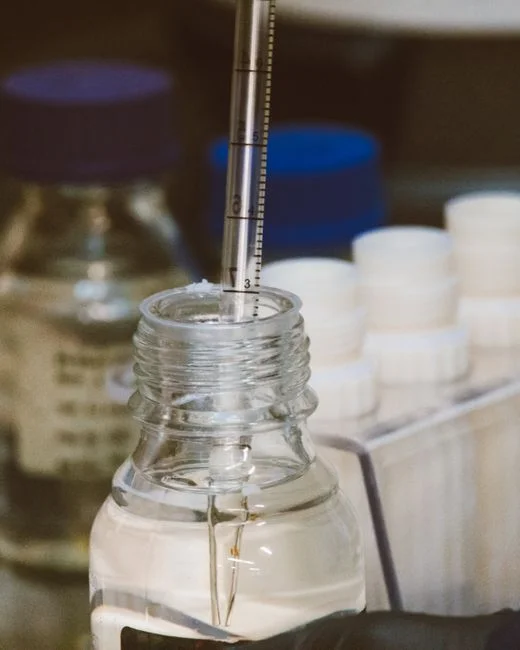
Cooling-tower makeup reuse typically achieves 60–85% recovery, directly cutting freshwater demand, per genesiswatertech.com. This recovery band is the primary target for a Yaoundé facility utilizing the Sanaga network or local boreholes.
Discharge-compliance treatment is justified by avoided discharge fees, which genesiswatertech.com puts at $5–15 per thousand gallons in water-stressed regions. This economic case requires a compliant outfall, which the Yaoundé utility must confirm in writing before the train is designed. Zero liquid discharge eliminates liquid waste entirely at 95–99% overall recovery but carries the highest CAPEX and OPEX, reserved for sites where discharge is prohibited or water is existential. A partial ZLD approach — concentrating blowdown to reduce discharge volume by 80–90% — captures most recovery benefits at a lower cost than full ZLD and is often the realistic ceiling for a Yaoundé project (genesiswatertech.com).
Building the Treatment Train: Filtration, UF, RO and Polishing
Side-stream filtration sized at 1–5% of circulation flow is the first unit operation; it removes suspended solids ahead of the cooling tower, enables higher cycles of concentration, and is the most cost-effective pretreatment. CAPEX is typically $50,000–200,000 for a data center installation per genesiswatertech.com, with minimal operating expense beyond solids disposal and routine maintenance.
Ultrafiltration with 0.01–0.1 micron pores operates at low pressure (10–30 psi) and 90–95% recovery, removing suspended solids, bacteria, and high-MW organics to protect downstream RO from fouling. A packaged UF pretreatment skid sized to the blowdown flow is the standard configuration. Reverse osmosis provides 95–99% dissolved-solid rejection, with permeate at 10–50 mg/L TDS and 50–85% recovery limited by scaling potential, per genesiswatertech.com. A 50,000 GPD RO skid treating blowdown runs $250,000–500,000 installed with OPEX of $1.50–3.00 per thousand gallons, and an industrial RO system at this scale is the typical anchor unit. Nanofiltration is the lower-pressure alternative (75–150 psi, 70–85% recovery) when hardness rather than total TDS is the limiting parameter. Feed water to any membrane must be filtered to less than 10–15 microns, chemically conditioned against scaling, and pH-adjusted; an automatic antiscalant dosing skid is essential on blowdown service. A polishing/disinfection step on the RO permeate protects the cooling loop from biological regrowth when high-purity permeate is blended back in as makeup.
| Stage | Function | Operating Range | CAPEX (genesiswatertech.com) |
|---|---|---|---|
| Side-stream filtration | 1–5% of circulation; 10–25 µm | Continuous, low energy | $50,000–200,000 |
| Ultrafiltration | 0.01–0.1 µm; SS, bacteria, organics | 10–30 psi; 90–95% recovery | Packaged skid |
| Reverse osmosis | 95–99% rejection; 10–50 mg/L permeate TDS | 150–400 psi; 50–85% recovery | $250,000–500,000 per 50,000 GPD |
| Nanofiltration | Partial softening, lower pressure | 75–150 psi; 70–85% recovery | Lower than RO at equivalent flow |
Pushing Recovery Higher: Evaporation, MVC and ZLD
Mechanical vapor compression (MVC) compresses water vapor to provide evaporation heat, producing distillate below 10 mg/L TDS at 95–98% recovery of the RO concentrate (genesiswatertech.com). MVC CAPEX runs $1–3M for 10,000–30,000 GPD systems with 15–25 kWh per 1,000 US gallons of distillate; because energy is the dominant operating cost, ZLD economics are tied to grid stability. In Yaoundé, where the grid is intermittent, MVC duty must be paired with on-site generation or scheduled around stable grid windows.
A typical ZLD train stages RO at 70–80% recovery, MVC on the RO concentrate to 20–30% dissolved solids, then a crystallizer to solid salt cake, achieving 95–99% overall water recovery (genesiswatertech.com). Solar evaporation ponds are an option for managing RO concentrate where land is available and rainfall is low, but in the Yaoundé humid-tropical climate, net evaporation is limited and must be modeled. A chlorine dioxide polishing step on the MVC distillate completes the loop before it returns to the cooling tower.
CAPEX, OPEX and a Yaoundé Decision Framework
A reuse-oriented train (side-stream filtration + UF + RO) typically costs in the low-to-mid six figures for a small/medium Yaoundé facility, based on genesiswatertech.com benchmarks of $50,000–200,000 for filtration and $250,000–500,000 for a 50,000 GPD RO skid. ZLD increases the envelope to $3–8M CAPEX with $5–15 per thousand gallons OPEX and is only justified when discharge is unavailable and water risk is existential.
The decision between reuse and ZLD relies on three local inputs: confirmed discharge limits from the Yaoundé utility, makeup-water tariffs and reliability, and grid stability for MVC energy demand. A water balance study — the first step recommended by the asce.org primer — should be commissioned before equipment selection, since site-specific cooling load and ambient wet-bulb drive blowdown volume. The same constraint envelope applies across the Gulf of Guinea, and a side-by-side read against the Abobo, Ivory Coast data center blowdown guide confirms that humid-tropical wet-bulb and grid reliability dominate the technology choice in this region.
| Train Configuration | CAPEX (genesiswatertech.com) | OPEX (genesiswatertech.com) | Justification in Yaoundé |
|---|---|---|---|
| Filtration + UF + RO (reuse) | Low-to-mid six figures | $1.50–3.00 / 1,000 gal | Default when discharge pathway is unconfirmed |
| RO + MVC + crystallizer (ZLD) | $3–8M | $5–15 / 1,000 gal | Only if discharge prohibited and water existential |
| Partial ZLD (80–90% volume cut) | Between reuse and full ZLD | Below full ZLD | Realistic ceiling for most Yaoundé projects |
Frequently Asked Questions
What is a realistic CAPEX and OPEX range for a data center blowdown treatment train in Yaounde?
A reuse-oriented train (side-stream filtration, UF, RO) sized from genesiswatertech.com benchmarks typically costs in the low-to-mid six figures for a small/medium facility, with OPEX around $1.50–3.00 per thousand gallons treated. Full ZLD moves CAPEX to $3–8M and OPEX to $5–15 per thousand gallons. Request a site-specific water balance and a CAPEX split by unit operation from vendors, as Yaoundé's humid-tropical wet-bulb and grid profile significantly shift the sizing requirements.
How do I size the RO and pretreatment for a Yaounde project?
Start with the genesiswatertech.com sizing anchors: side-stream filtration at 1–5% of circulation flow, UF at 90–95% recovery, and RO at 50–85% recovery with permeate at 10–50 mg/L TDS. Confirm seasonal makeup water quality (pH, conductivity, TDS, chlorides, silica, hardness, microbial counts) with the local utility per the asce.org primer, because the Sanaga network and local boreholes vary in feed quality. Without seasonal data, the 1,200–6,000 mg/L blowdown TDS band is the only defensible envelope for design.
Will the Yaoundé municipal sewer accept concentrated blowdown?
Municipal acceptance requires written confirmation. Genesiswatertech.com notes some jurisdictions set discharge limits below 1,500 mg/L TDS, which is below the 1,200–6,000 mg/L blowdown band at 4 cycles. Before ordering equipment, obtain the written discharge limit for TDS, chlorides, biocides