
Why the DAF-vs-Clarifier Question Matters for Tacoma Metals Plants in 2026
Fabricated metals shops around Tacoma—stamping presses, CNC machining cells, grinding booths, plating rinse tanks, and parts-washing skids—produce a wastewater signature that swings every shift: emulsified cutting fluids, drawing compounds, tramp oils, grinding swarf, metal fines, and pH excursions from acid pickling or alkaline cleaning. That is precisely the pollutant mix that dissolved air flotation (DAF) was engineered to float and the same mix that confounds a quiescent gravity clarifier.
EPA Process Design Manual 625/1-75-003a (1975) lists both sedimentation and flotation as alternative suspended-solids-removal unit processes, confirming that for a Tacoma engineer the two are real decision alternatives, not redundant gear. Hahn (2010) reinforces that flow variability, chemical conditioning, and the air/solids ratio are decisive for flotation performance, which is why equalization must precede any primary separator in a batch-fabrication environment. The underlying driver is compliance: Tacoma-area fabricators discharging to the City of Tacoma sanitary sewer or to the Pierce County industrial pretreatment program must hit local FOG, TSS, and metals limits in 2026, and the wrong primary separator turns a manageable stream into a recurring permit excursion. The comparison that follows is built around that local decision.
How a DAF System Works on Fabricated Metals Wastewater
DAF clarifies wastewater by saturating a side stream with air under pressure and then releasing that air at atmospheric pressure inside a flotation tank, where it nucleates as a cloud of fine bubbles. Clearwater/SigmaDAF (2026) describes the process as generating microbubbles of 30–50 microns that attach to oil droplets and flocculated fines, lifting them to the surface for skimming. Kemco Systems describes the same mechanism in similar terms, noting that coagulant and flocculant addition upstream is required to grow colloidal metalworking solids into particles large enough to be contacted by the bubbles. Hahn (2010) lists the controlling design variables for a DAF: air/solids ratio, hydraulic loading, chemical addition, and the operational parameters of saturation pressure and flow rate—all of which must be tuned to a fabricated metals matrix with rapidly changing oil load.
Inside the DAF vessel, floated material is skimmed by a paddle or flight scraper while heavier settleable solids fall into a bottom hopper and are augered out, so a DAF performs both flotation and a small amount of sedimentation simultaneously. Clearwater/SigmaDAF (2026) manufactures standard DAF clarifiers in 304SS and offers 316SS or polypropylene for chloride-bearing rinse waters—directly relevant to Tacoma plating shops that handle nickel, zinc, or chrome rinse streams. For a Tacoma engineer specifying the HydropureWater DAF system, the operating envelope to lock in is bubble size, A/S ratio, hydraulic loading, and the metallurgy that matches the rinse chemistry.
How a Conventional Clarifier Performs on the Same Stream
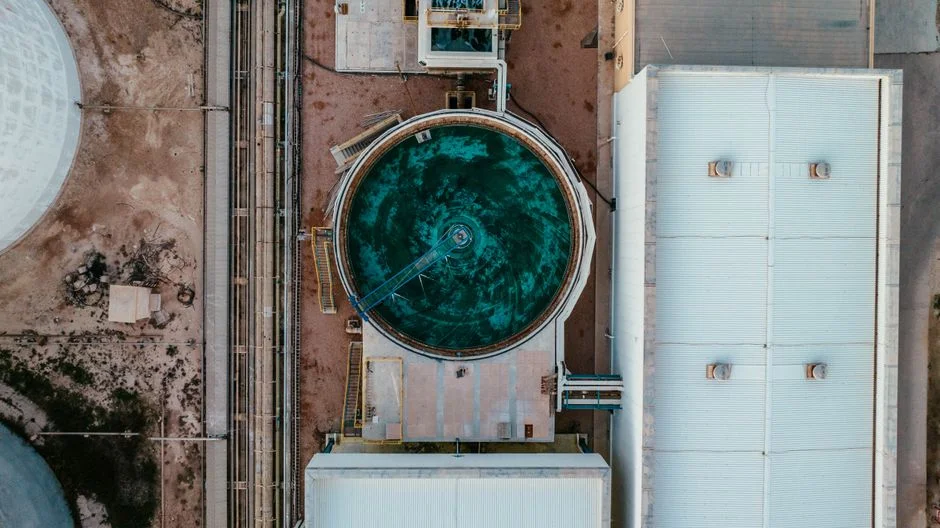
Gravity clarifiers rely on differential settling, where heavier suspended solids, sand, scale, and metal fines sink to the bottom under quiescent conditions while clarified water overflows a peripheral launder. EPA Process Design Manual 625/1-75-003a (1975) treats sedimentation and flotation as alternative suspended-solids-removal unit processes and explicitly notes that chemical coagulation and flocculation are frequently required upstream of either to agglomerate colloidal material into settleable floc. A lamella (inclined-plate) clarifier compresses the same physics into a small footprint by stacking many shallow settling paths inside one vessel; the HydropureWater lamella clarifier combines sludge recirculation, flocculation, and inclined-plate separation into a single packaged unit, which is what makes lamella practical inside the low-bay footprints common to Tacoma fabricators.
Clarifiers handle settleable metal fines and inorganic solids well but are weak on emulsified oils and neutrally buoyant fines—the dominant species in many fabricated metals streams. Heavier clarifier underflow is scraped to a central hopper and dewatered, typically on a plate-and-frame filter press, which is also the standard downstream handling step for DAF float sludge once it has been thickened. A clarifier is therefore a complementary technology, and the right framing is "primary separator plus polishing step," not "DAF or clarifier as an either/or."
DAF vs Clarifier: Side-by-Side Comparison for Metals Wastewater
The matrix below stacks DAF and a conventional or lamella clarifier on the parameters a Tacoma engineer must defend in a 2026 memo: removal target, effective particle range, footprint, hydraulic residence, chemical dependency, sludge handling, and materials of construction.
| Parameter | DAF (Dissolved Air Flotation) | Gravity / Lamella Clarifier |
|---|---|---|
| Primary removal target | Emulsified oil, FOG, flocculated colloids — Hahn (2010) reports 90% oil removal for DAF systems | Settleable suspended solids, sand, scale, metal fines — EPA 625/1-75-003a (1975) |
| Effective particle / droplet range | Oil droplets and low-buoyancy particles contacted by 30–50 µm microbubbles (Clearwater/SigmaDAF, 2026) | Particles whose specific gravity and size allow gravity settling within the available hydraulic residence time |
| Footprint | Compact, high-rate; suited to retrofit inside existing Tacoma bays | Lamella is compact; full-radius conventional clarifiers need substantially more floor area and hopper depth |
| Hydraulic residence | Short (minutes), because separation is driven by buoyancy of attached bubbles | Longer; settling velocity of the target particle sets the required surface area |
| Chemical dependency | Hahn (2010) lists chemical addition as a key DAF design variable; coagulant + flocculant required for stable performance | EPA (1975) requires chemical conditioning for chemical sedimentation of colloidal material |
| Sludge character | Voluminous float, easy to skim; some settleable solids captured in bottom hopper | Denser underflow, easier to dewater on a plate-and-frame press |
| Material of construction | 304SS standard; 316SS or polypropylene for chloride-bearing rinse (Clearwater/SigmaDAF, 2026) | Carbon steel with epoxy lining or stainless upgrade for corrosive duty |
| Best fit in a metals plant | Primary separator on oil-rich, flow-variable streams | Polishing step after DAF, or primary on low-oil, fines-dominated streams |
DAF is the right primary unit when the stream is oil-dominated, while a clarifier serves as the right polishing step when the discharge limit is set on TSS or on settleable fines.
When Tacoma Metals Factories Should Choose DAF in 2026
Specify DAF as the primary separator when the dominant load is emulsified cutting oils, quench oils, drawing compounds, or tramp oils—the exact mix Hahn (2010) reports at 90% oil removal. Specify DAF when the stream is delivered in batches with variable flow and load, because Hahn (2010) recommends equalization upstream to stabilize the stream, and DAF handles residual swings after equalization better than a clarifier can. Specify DAF when the discharge permit focuses on FOG and oil & grease, which is the typical City of Tacoma or Pierce County sewer limit that catches a fabricator out of compliance first. Specify DAF when footprint is constrained; packaged DAF units span a wide flow range in 2026, allowing both small fabrication bays and medium plants to utilize the same technology. Specify 316SS or polypropylene internals when the stream carries chloride-bearing plating rinse, per Clearwater/SigmaDAF (2026), to protect the vessel. The HydropureWater DAF system covers the standard model range for most Tacoma fab shops; above that range, pilot testing and a parallel train are recommended over a one-off oversized skid.
When a Clarifier Is the Right Choice — Alone or After DAF
A clarifier is the right primary unit when the stream is dominated by heavy, settleable metal fines, grinding swarf, sand, and scale—particles that settle readily under gravity and do not need bubble attachment. EPA Process Design Manual 625/1-75-003a (1975) frames sedimentation as the appropriate unit operation for that particle class. The HydropureWater lamella clarifier is the right geometry when footprint is limited but oil load is low, as it delivers inclined-plate separation in a compact package relative to a full-radius conventional basin.
A clarifier is also the right polishing step downstream of a DAF when the discharge limit is set on total suspended solids rather than oil; the DAF → clarifier train is a standard pretreatment configuration in metals finishing. A clarifier is the right choice when the plant wants to minimize chemical consumption and can accommodate the larger footprint of a conventional or solids-contact unit. Plan on a plate-and-frame filter press for the underflow so the clarifier sludge is dewatered to a handleable cake rather than hauled as liquid.
Tacoma 2026 Decision Checklist Before You Specify
The table below maps the engineering and compliance inputs a Tacoma fabricator must gather before committing to either a DAF or a clarifier as the primary separator.
| Decision input | What to measure or confirm | Why it drives DAF vs clarifier |
|---|---|---|
| Stream characterization | FOG (mg/L), TSS (mg/L), oil droplet size distribution, pH swing, chloride content, average and peak flow (m³/h) | Per Hahn (2010) and Clearwater/SigmaDAF (2026), oil load and droplet size drive the case for DAF; settleable-fines fraction drives the case for a clarifier |
| Discharge route | City of Tacoma sanitary sewer, Pierce County industrial pretreatment, or NPDES — with 2026 limits in hand | The controlling permit dictates whether the primary unit must target oil or TSS |
| Footprint and headroom | Available floor area, bay height, hopper depth, skid access | DAF units in 304SS typically fit a low bay; lamella clarifiers need vertical clearance for plate packs |
| Equalization | Surge volume, mixing, transfer pumps | Hahn (2010) recommends equalization upstream of DAF to stabilize variable wastewater characteristics |
| Chemical conditioning | Coagulant and flocculant type, dose range, dosing skid integration | Both DAF and clarifier require coagulant + flocculant; the HydropureWater automatic chemical dosing skid integrates with either separator |
| Flow range and pilot testing | Confirm the chosen unit covers peak flow with margin | Standard packaged DAF covers most Tacoma fab flows; pilot above the standard model range |
| Sludge handling | Float or underflow volume, dewatering path, cake disposal route | Both separators produce sludge that must be dewatered on a plate-and-frame filter press |
Review this table with operations and the local sewer authority before issuing a purchase order. The fastest way to fail a 2026 pretreatment audit in Tacoma is to specify a clarifier on an oil-rich stream or to specify a DAF without budgeting for the chemical conditioning skid required for bubble contact.
Frequently Asked Questions
What is the typical oil removal efficiency of DAF for fabricated metals wastewater?
Hahn (2010) reports 90% oil removal for DAF systems, and Clearwater/SigmaDAF (2026) confirms that 30–50 µm microbubbles efficiently contact oil droplets and flocculated fines in a metals matrix. Actual field performance depends on chemical conditioning and flow stability; request jar-test or pilot data from the vendor on your own wastewater sample before finalizing your permit model.
When does a clarifier outperform DAF for Tacoma metals plants?
A clarifier is the better primary unit when the load consists of settleable metal fines, grinding swarf, sand, or scale rather than emulsified oil, as differential settling handles dense particles more efficiently than bubble attachment. EPA Process Design Manual 625/1-75-003a (1975) frames sedimentation as the appropriate unit operation for that particle class, and a lamella clarifier delivers it
Frequently Asked Questions
Is DAF or a clarifier better for fabricated metals wastewater in Tacoma in 2026?
For most Tacoma metal fabrication facilities, Dissolved Air Flotation (DAF) is superior due to its ability to handle emulsified oils and suspended solids that are common in modern metalworking fluids. As of 2026, Washington Department of Ecology discharge standards for heavy metals and oil and grease have become increasingly stringent, and DAF systems provide the necessary separation efficiency for low-density contaminants that gravity clarifiers often fail to capture.
What oil removal efficiency can a DAF system achieve on cutting fluid wastewater?
A properly optimized DAF system, utilizing appropriate chemical coagulation and flocculation, can achieve oil and grease removal efficiencies ranging from 90% to 98%. In the context of cutting fluids containing complex emulsions, DAF systems effectively break the emulsion and float the oil phase, consistently reducing effluent concentrations to below 15 mg/L, which is critical for meeting local Tacoma municipal sewer discharge limits.
When should a Tacoma metals plant use a clarifier instead of a DAF?
A clarifier is recommended when the wastewater stream contains high concentrations of heavy, non-emulsified particulate matter, such as metal fines, grinding swarf, or inorganic silts that settle rapidly by gravity. If the waste stream lacks significant oil, grease, or low-density surfactants, a clarifier provides a more cost-effective, lower-maintenance solution with lower operational energy requirements compared to the pressurized aeration systems found in DAF units.
What flow rate range does a packaged DAF system cover for small fabrication shops?
Packaged DAF systems designed for the metal fabrication sector typically cover flow rates ranging from 5 to 100 gallons per minute (GPM). These modular, skid-mounted units are optimized for small to medium-sized Tacoma facilities that need to treat batch discharges or continuous low-volume process flows while maintaining a compact footprint within existing factory floor space.
What budget should a Tacoma fabricated metals plant expect for a DAF system vs a clarifier in 2026?
In 2026, a standard packaged DAF system for a metal fabrication shop typically requires a capital investment between $60,000 and $150,000, depending on the required throughput and automation level. In contrast, a simple gravity clarifier system is significantly more affordable, generally ranging from $20,000 to $60,000, though this lower upfront cost must be weighed against the potential for higher regulatory fines if the effluent quality fails to meet local environmental discharge standards.