
Why Sizing a Containerized MBR in Caracas Starts with Flow, Not the Container
A containerized membrane bioreactor (MBR) is a pre-engineered package, so capacity is selected from a vendor's discrete sizes, not built to order on site. MENA-Water states its plants range from "a few m³/day" to more than 1,200 m³/day filtered in a single 40-ft ISO container, meaning the right answer is determined by the daily flow you need to treat, not by which container looks appealing in a brochure. In Caracas, where decentralized sewage treatment plant (STP) deployment is accelerating for residential towers, gated communities, and worker camps, picking the container first is the most common reason a project ends up with an undersized membrane tank or a wasted capital budget.
Design flow for a residential or camp MBR is calculated as population × per-capita wastewater flow × peak factor. The peak factor is the variable that most often derails tropical residential projects: a tower in El Hatillo and a construction camp in Guarenas have fundamentally different surge patterns, and ignoring that difference leaves the membrane hydraulically under-sized during the morning peak. The HydropureWater containerized MBR system lineup is designed around the same envelope as the major international vendors, so applying this flow-first logic to the supplier selection table at the end of this article gives you a defensible sizing memo for procurement.
Step 1 — Convert Occupants into a Design Flow (m³/day)
The defensible per-capita baseline for sizing a containerized MBR comes from Pure Aqua, which publishes 50 US gal/person·day as its "approximate population" factor for the MBR-C. Convert this to metric with the IDA Water Security Handbook conversion factor 1 m³ = 264.2 US gal, giving 0.189 m³/person·day as your working per-capita flow. For a residential tower, count only the residents on the design occupancy schedule; for a worker or construction camp, count beds at 100% occupancy and add the kitchen and laundry streams as discrete loads on top of the domestic figure, because camp food service and laundry volumes routinely push the per-capita number above the residential baseline.
Once you have an average daily flow in m³/day, apply a peak factor to handle morning shower and shift-change surges: 2.0–2.5 is typical for residential blocks, while 2.5–3.0 is appropriate for camps with concentrated meal and shower windows. Divide the resulting peak daily flow by 24 to get the peak hourly flow in m³/h that the MBR feed pumps must handle. If the project brief is issued in imperial units, the IDA Handbook gives you two anchors: 1 MIGD = 4,546 m³/d and 1 MGD = 3,785 m³/d, so a "200,000 gpd" brief resolves to roughly 757 m³/d before peak factor. Document each step in a sizing memo — the population assumption, the per-capita figure, the peak factor, and the resulting m³/day — so the engineering basis survives the procurement review.
Step 2 — Match the Flow to a 20-ft or 40-ft ISO Container
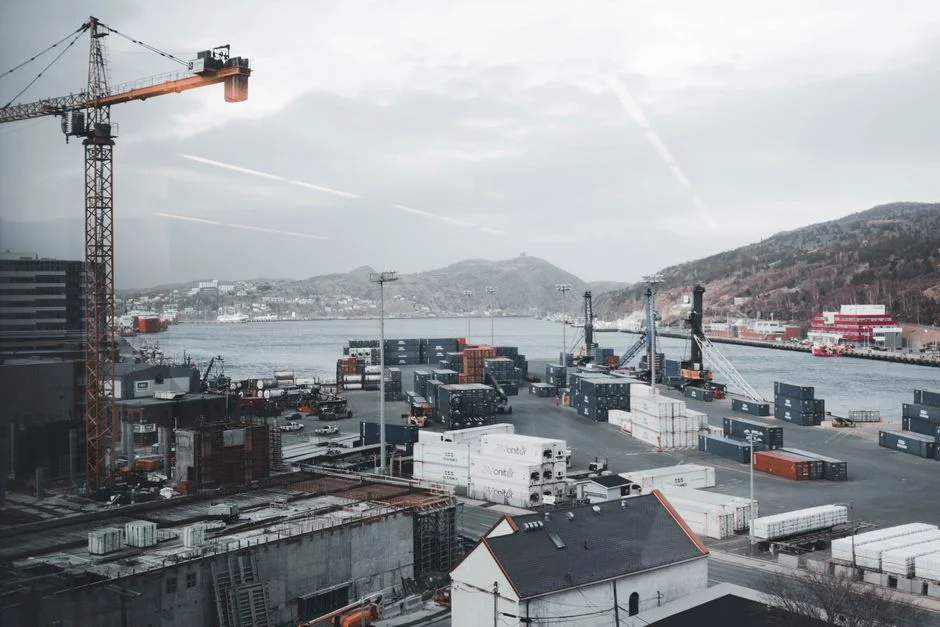
Both MENA-Water and Pure Aqua build their MBR packages into standard 20-ft and 40-ft high-cube (HC) ISO containers with internal stainless-steel tanks, so the envelope is fixed, factory-tested, and shippable to Caracas by sea plus inland truck. Pure Aqua's MBR-C ships with PVDF hollow-fiber UF membranes at a nominal pore size of 0.04 µm, a 1.5 mm drum screen for pre-treatment, fine-bubble diffusers in the aeration tank, and coarse-bubble air scour on the membrane modules, and these features are standard across the container sizes the vendor offers. MENA-Water's containerized MBR literature confirms the same envelope: stainless-steel internal tanks, ISO container exterior, factory quality testing, and plug-and-play site commissioning.
For Caracas residential and camp applications, the practical rule is: flows under roughly 50 m³/day fit a 20-ft HC container, flows above that need a 40-ft HC, and very large residential developments can be served by a single 40-ft ISO unit because MENA-Water documents a ceiling above 1,200 m³/day in one container. The table below is sized against the per-capita baseline from Step 1 and the MENA-Water envelope — use it as a first-pass selection memo to hand to procurement before you request firm quotes.
| Population served (residential, 50 US gal/cap·d) | Average daily flow (m³/day) | Peak hourly flow (m³/h, PF 2.25) | Suggested container config |
|---|---|---|---|
| Up to ~100 | ~19 | ~1.8 | Single 20-ft HC |
| ~250 | ~47 | ~4.4 | Single 20-ft HC (upper end) or 40-ft HC |
| ~500 | ~95 | ~8.9 | Single 40-ft HC |
| ~1,000 | ~189 | ~17.7 | Single 40-ft HC |
| ~5,000 | ~945 | ~88.6 | Single 40-ft HC (large, near MENA-Water ceiling) |
For flows that fall between the discrete container sizes, the engineering decision is whether to add a small equalization tank upstream or to step up to the next container. In dense Caracas urban infill, the equalization tank is often the cheaper option because crane and truck access for a 40-ft unit is the real constraint. The MBR membrane module itself, such as the PVDF flat-sheet MBR membrane module in HydropureWater's DF series, is interchangeable across these container sizes, so the membrane performance assumption is stable while the tank envelope grows.
Step 3 — Choose I-Version, U-Version, or Skid-Mounted Layout
Once the daily flow is fixed and the container size is selected, the next procurement decision is the physical configuration. MENA-Water offers two distinct layouts: the I-Version, which is a fully integrated containerized MBR with all tanks, blowers, and control gear inside the ISO envelope, and the U-Version, which uses underground water tanks for aeration and buffering while the MBR unit itself sits above grade. The I-Version is the natural fit for construction camps, mining camps, and any installation that may need to be redeployed to a new site in 12–24 months, because the entire plant can be lifted off its foundation and trucked elsewhere as a single load.
The U-Version suits permanent residential complexes in Caracas where land is available for buried buffer tanks and where the project team wants to push the visible plant footprint, the noise source, and any odour buffer below grade. Pure Aqua also offers skid-mounted MBR-C configurations that fit inside an existing pump room or purpose-built shelter; this layout is the right call for dense Caracas urban infill where a full ISO container is hard to place or where the architectural treatment of the STP must blend into a residential facade. In all three cases, the underlying MBR process is the same, so your sizing calculation from Step 1 does not change; only the civil and structural scope around the container does.
For a residential tower in Caracas, the U-Version or skid-mounted layout usually wins because crane access to the upper floors or to a basement slab is rarely possible. For a worker camp on a greenfield site with good truck access, the I-Version is the lowest-risk choice because it avoids underground tank excavation in soils that may have a high water table during the wet season.
Caracas-Specific Sizing Considerations: Climate, Power, and Effluent Targets
Caracas sits in a tropical mountain climate, and the Pure Aqua MBR-C is designed for an operating temperature range of 20–30 °C with a 20 °C design point, so the ambient band is inside the vendor envelope and no thermal derating is normally required. The one Caracas-specific derate to confirm is altitude: at roughly 900 m above sea level, the standard-air density correction slightly reduces aeration blower output, and the vendor should be asked to confirm the blower selection against the site elevation. Electrical supply for the MBR-C is 460V/3Ph/60Hz; in Caracas this typically means a step-down transformer from the local distribution voltage, or a diesel generator interface for sites with unreliable grid power, and this transformer or generator should be priced inside the container scope rather than treated as a site extra.
Caracas has intermittent sewer coverage in many districts, which is exactly the use case MENA-Water and HUBER describe when they note that MBR plants are well suited to water-reuse applications, including irrigation. Designing the effluent for irrigation reuse, with downstream UV sterilisation as a polishing step, is a defensible path for residential developments that want to use treated wastewater for landscape irrigation, and it is consistent with the MBR process's documented effluent quality. MENA-Water states that its ultrafiltration membranes "reduce virus and bacteria by 99.9999%" and operate in a 2–100 nm pore-size band; Pure Aqua specifies 0.04 µm (40 nm) PVDF hollow fiber, which falls inside that range. Maintenance is light: MENA-Water notes the membranes "don't need regular chemical cleaning except one or two maintenance clearings per year," and that on-site CIP chemicals, a small sludge handling line, and an emergency overflow path should be priced into the scope.
| Caracas site condition | Vendor baseline | Action for the sizing memo |
|---|---|---|
| Ambient temperature | 20–30 °C operating range, 20 °C design (Pure Aqua) | No derating normally required; confirm with vendor |
| Altitude ~900 m | Standard aeration blower selection | Request altitude-corrected blower sizing |
| Power supply | 460V/3Ph/60Hz (Pure Aqua) | Price step-down transformer or generator interface into container scope |
| Effluent target | Reuse-quality; 99.9999% bacteria/virus reduction (MENA-Water UF) | Confirm reuse vs discharge permit early; add UV polish for irrigation |
| Membrane maintenance | 1–2 chemical cleanings/year (MENA-Water) | Include CIP chemicals, sludge line, and overflow path in scope |
Spec and Compliance Checklist Before You Order
A defensible RFQ for a containerized MBR in Caracas has to do two things at once: lock the process sizing so quotes are comparable, and capture the site conditions so each vendor prices the same scope. State the design flow in m³/day as both average and peak, the influent BOD/COD/TSS/ammonia characterisation (request a sampling campaign if the project is greenfield), the target effluent quality (reuse for irrigation versus discharge to the local collector), the design population, and the per-capita flow assumption you used. A reader working through the same problem for a different tropical city can adapt the framework in containerized MBR sizing for residential and camp projects to their own brief.
Request container dimensions (20-ft versus 40-ft HC), footprint, weight, container material, internal tank material, pump redundancy, and PLC or remote-monitoring options. Confirm the membrane specification against the vendors' published data: Pure Aqua MBR-C uses 0.04 µm PVDF hollow-fiber modules with a 1.5 mm drum-screen pre-treatment, while MENA-Water uses UF membranes in the 2–100 nm pore-size range with 99.9999% bacteria and virus reduction. On the Caracas logistics side, list road access to site, crane capacity for the container lift, transformer or generator sizing for the 460V/3Ph/60Hz supply, and the local discharge or irrigation permits — these are the items that delay PO signature if they are not pinned down in the RFQ. For projects that need chemical dosing for nutrient polishing or pH correction, integrate an automatic chemical dosing system into the same RFQ package so the dosing logic is commissioned with the MBR.
| Checklist item | What to put in the RFQ |
|---|---|
| Design flow | Average and peak m³/day, with peak factor and per-capita assumption |
| Influent | BOD, COD, TSS, NH₃-N, pH, temperature |
| Effluent target | Reuse for irrigation or discharge; required BOD/TSS/fecal coliform limits |
| Container | 20-ft or 40-ft HC, dimensions, weight, internal tank material, insulation |
| Membrane | Pore size (µm or nm), material (PVDF), module type (HF or flat sheet), expected life |
| Power and controls | 460V/3Ph/60Hz, pump redundancy, PLC, remote monitoring |
| Caracas logistics | Road access, crane capacity, transformer/generator, discharge/irrigation permits |
Frequently Asked Questions
How do I turn a population into a design flow for a containerized MBR in Caracas?
Use Pure Aqua's vendor baseline of 50 US gal/person·day, which converts to 0.189 m³/person·day using the IDA Water Security Handbook factor 1 m³ = 264.2 US gal. Multiply by the population, then apply a peak factor of 2.0–2.5 for residential or 2.5–3.0 for camps, and divide by 24 to get peak hourly flow for the feed pumps. Document each step in a sizing memo so the basis survives procurement review.
What is the largest single-container MBR I can ship to Caracas?
MENA-Water documents that more than 1,200 m³/day can be filtered in a single 40-ft ISO container, with plants starting from "a few m³/day" upward. For most Caracas residential and camp projects in 2026, the practical selection window sits between a 20-ft HC for sub-50 m³/day flows and a 40-ft HC for the upper residential range, with the MENA-Water ceiling reserved for very large developments.
What budget should I plan for a containerized MBR in Caracas?
Neither MENA-Water nor Pure Aqua publishes a price list in the sources reviewed, so the right input for a defensible budget is a written quote from at least two vendors on the same RFQ — same flow, same influent/effluent data, same container size, same electrical supply, and same scope of spares. Request itemised pricing for the container, membranes, blowers, pumps, control panel, CIP chemicals, commissioning, and shipping to Caracas so the comparison is honest. If you need an order-of-magnitude sanity check, ask each vendor for a recent reference project of similar flow and request that project's shipping weight and footprint as a proxy for scope.
How do I reduce supplier risk when I issue the PO?
Confirm in writing the membrane specification (Pure Aqua specifies 0.04 µm PVDF; MENA-Water specifies UF in the 2–100 nm band with 99.9999% bacteria/virus reduction), the factory acceptance test scope, the warranty on membranes and tanks, the lead time to ship from the vendor's facility to a Venezuelan port, and whether the vendor provides remote monitoring and on-site commissioning. Ask for a client reference in Latin America or the Caribbean with a comparable flow range, and confirm that spare parts and CIP chemicals can be sourced locally or shipped on a predictable cadence once the plant is running.