
Why Jamshedpur Data Centers Need a Dedicated Blowdown Treatment Train
Approximately 75–90% of data centres worldwide rely on water-based cooling as their primary method, and a 100 MW facility can use up to 2 million litres of water per day, on the order of thousands of households (ide-tech.com, 2026; ketos.co). In a typical evaporative cooling system, 70–80% of that water is lost to evaporation, while the remaining 20–30% leaves the recirculating loop as cooling-tower blowdown; a tower running at 4 cycles of concentration sheds about 25–30% of its makeup water to blowdown (ketos.co; genesiswatertech.com).
Blowdown is a brackish stream, not a clean one. Total dissolved solids typically run 1,200–6,000 mg/L (4–8× the makeup water), suspended solids sit in the 10–50 mg/L band, and the concentrate carries calcium, magnesium, silica, alkalinity, biocides, corrosion inhibitors, scale inhibitors and dispersants (genesiswatertech.com). The industry-average water usage effectiveness (WUE) is roughly 1.8 L/kWh, with a 1–9 L/kWh envelope depending on climate and design, which is the metric the CFO and EHS lead will see on a sustainability disclosure (ketos.co).
For a Jamshedpur build the problem is sharper than the global average. The city sits inside an industrial water-stress zone anchored by the steel, copper and automotive cluster along the Subarnarekha corridor; groundwater across the Chota Nagpur plateau is typically hard, with elevated iron and manganese. Evaporative cooling is still the default thermal strategy, so the 20–30% blowdown fraction has to go somewhere. The Jharkhand State Pollution Control Board (JSPCB) consent regime, set under the Water Act, 1974, will scrutinise both the blowdown stream and the campus domestic wastewater before a hyperscale or colocation campus can commission. Planning reuse and consent in parallel is no longer optional for a 2026 Jamshedpur facility.
Reuse, Discharge, or Zero Liquid Discharge — the Jamshedpur Decision
Three strategic end-uses for cooling-tower blowdown are technically viable, and the choice has to be made before any equipment is specified because each one locks in a different train, a different budget, and a different consent posture. Reuse as cooling-tower makeup targets 60–85% recovery and is the highest-value option in most Indian conditions. Discharge compliance focuses on TDS, metals and biocide neutralisation, and is justified only where reuse is impossible. Zero liquid discharge (ZLD) eliminates liquid waste at 95–99% overall recovery and is the most capital- and energy-intensive path (genesiswatertech.com).
Discharge economics are pushing operators toward reuse. Direct discharge fees in water-stressed regions can exceed $5–15 per thousand gallons, and some jurisdictions have set TDS limits below 1,500 mg/L, effectively banning untreated blowdown discharge (genesiswatertech.com). The technical ceiling on conventional brackish-water reverse osmosis is 75–80% recovery on blowdown before silica, calcium carbonate and calcium sulphate scaling become unmanageable (ide-tech.com, 2026). Pushing past 80% requires either controlled-precipitation (for example, a fluidised-bed reactor that drops sparingly soluble salts out as solids), dynamic-RO operation with high-velocity flushing, MVC evaporation of the RO concentrate, or a combination; IDE Tech reports an industrial case at approximately 95% overall recovery with permeate silica around 1 mg/L (ide-tech.com, 2026).
For Jamshedpur specifically, cooling-tower makeup reuse is the default 2026 recommendation because it cuts freshwater withdrawal and discharge simultaneously and is supported by the cited Indian and global data. ZLD is justified only where JSPCB consent is unobtainable, no alternative water source is available, or the corporate water-stewardship mandate requires it (genesiswatertech.com; ide-tech.com, 2026).
| End-use strategy | Typical recovery | Process core | Indicative driver |
|---|---|---|---|
| Reuse as cooling-tower makeup | 60–85% | Side-stream filtration → UF → RO; permeate blended back into makeup | Cuts freshwater withdrawal and discharge fees; default for Jamshedpur in 2026 |
| Discharge compliance | Variable; depends on consent | TDS, metals and biocide removal to meet local limits | Use only when reuse is not feasible; verify JSPCB TDS and heavy-metal limits first |
| Partial ZLD (RO + MVC) | 85–95% | RO followed by MVC on the concentrate; minimal liquid discharge | Stressed sites where SPCB consent is hard to obtain or discharge is restricted |
| Full ZLD (with crystalliser) | 95–99% | RO → MVC/brine concentrator → crystalliser producing solid salt cake | Only where discharge is prohibited or acute water scarcity applies |
The Core Treatment Train: Side-Stream Filtration, UF and RO
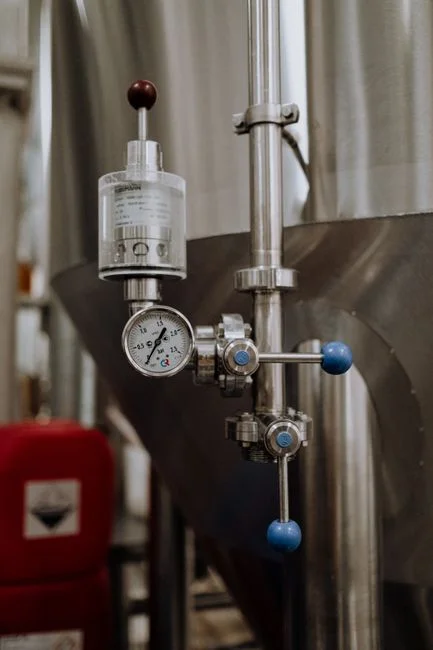
The process flow a Jamshedpur hyperscale plant can paste into a P&ID is straightforward: cooling-tower basin → side-stream filter → UF → antiscalant dose → RO → permeate to cooling-tower makeup, with the RO concentrate routed onward to MVC, partial-ZLD polishing, or discharge-treatment polishing depending on consent.
Side-stream filtration is the foundation. Treating 1–5% of total circulation flow removes suspended solids, reduces biological loading and protects downstream membranes. The current default is a 10–25 µm self-cleaning spiral unit with continuous mechanical scraping; capital cost is in the $50,000–200,000 band for a typical data centre installation (genesiswatertech.com).
Ultrafiltration polishes the side-stream filtrate to a 0.01–0.1 µm range at 10–30 psi, removes bacteria, viruses and high-molecular-weight organics, and achieves 90–95% recovery with chemical cleaning every 1–3 months; it is the workhorse pretreatment for any downstream RO or NF (genesiswatertech.com). The UF skid selected for a Jamshedpur facility should be qualified on monsoon-season feed, when intake suspended solids peak.
Reverse osmosis is the workhorse salt-removal step. It rejects 95–99% of dissolved solids, hardness, silica and most treatment chemicals, producing permeate at 10–50 mg/L TDS at 50–85% recovery on blowdown (higher with advanced antiscalant programmes and periodic cleaning). Operating pressures sit in the 150–400 psi band to overcome osmotic pressure, and a 50,000 GPD RO system costs $250,000–500,000 installed with OPEX of $1.50–3.00 per thousand gallons treated (genesiswatertech.com). Nanofiltration (NF) sits between UF and RO at 75–150 psi, with 70–85% recovery and permeate at 30–50% of feed TDS, and is the right choice when hardness, not total TDS, is the binding constraint (genesiswatertech.com).
| Stage | Function | Operating envelope | Indicative installed cost |
|---|---|---|---|
| Side-stream filtration | Remove suspended solids, protect downstream membranes | 1–5% of circulation flow; 10–25 µm | $50,000–200,000 (genesiswatertech.com) |
| Ultrafiltration | Remove bacteria, viruses, high-MW organics; pretreatment for RO | 0.01–0.1 µm; 10–30 psi; 90–95% recovery | Use a UF pretreatment skid ahead of RO on blowdown; cost scales with permeate flow |
| Reverse osmosis | Reject dissolved solids, hardness, silica, treatment chemicals | 150–400 psi; 50–85% recovery; permeate 10–50 mg/L TDS | $250,000–500,000 for a 50,000 GPD skid (genesiswatertech.com); OPEX $1.50–3.00/kgal |
| Nanofiltration (optional) | Partial softening where hardness is the constraint | 75–150 psi; 70–85% recovery; permeate 30–50% of feed TDS | Lower than RO; suitable when hardness, not total TDS, is the binding limit |
Handling the RO Concentrate: MVC, Evaporation and Partial ZLD
Once recovery is pushed past 80%, the question becomes: where does the RO concentrate go? Mechanical vapour compression (MVC) is the standard polish for that stream, achieving 95–98% recovery and producing distillate with TDS below 10 mg/L. Energy consumption sits at 15–25 kWh per 1,000 US gallons, and capital cost is in the $1–3 million band for 10,000–30,000 GPD systems (genesiswatertech.com).
A combined RO + MVC train reaches 85–95% overall water recovery with minimal liquid discharge and is the practical "partial ZLD" configuration for most Jamshedpur hyperscale sites (genesiswatertech.com). Full ZLD adds a crystalliser that converts the 20–30% TDS MVC concentrate to a solid salt cake for disposal, achieving 95–99% overall recovery; capex is $3–8 million and OPEX is $5–15 per thousand gallons, justifiable only where SPCB consent is unobtainable, water is acutely scarce, or the corporate water-stewardship mandate requires it (genesiswatertech.com).
Solar evaporation ponds are an alternative for the final brine volume in arid Indian sites, but Jamshedpur's monsoon pattern makes them a secondary option rather than the primary control (genesiswatertech.com). For the evaporator body and the concentrate piping, specify corrosion-resistant alloys such as 2205 duplex or FRP; blowdown concentrate is chloride-rich and will attack 304/316 stainless over time, a common failure mode on Indian hyperscale projects that the procurement team should price into the evaporator RFQ.
Domestic Wastewater from the Campus: MBR, Not Just Sewage
A Jamshedpur data centre campus generates a separate domestic wastewater stream from offices, dormitories, kitchens and ablutions, and that stream carries a different JSPCB consent condition and a different design problem from the cooling blowdown. Treating only the blowdown side is a common engineering mistake on Indian data-hall campuses.
A membrane bioreactor (MBR) is the 2026 default for this stream. Submerged PVDF membranes at 0.1 µm deliver <1 mg/L TSS effluent at roughly 60% smaller footprint than conventional activated sludge, with capacity ranges typically from 10–2,000 m³/day. Effluent targets for reuse are BOD <10 mg/L, TSS <5 mg/L and total coliforms <100 MPN/100 mL if the water is used for landscape irrigation or toilet flush, with disinfection by UV or chlorine dioxide on the polish line.
Size the MBR to headcount and shift pattern, not to IT load. A 10 MW hall typically supports 30–80 staff on-site, but a 100 MW campus can carry 500–1,000. Route the MBR permeate to landscaping and toilet flush, not to the cooling tower, unless the water has already been qualified through the same RO/MVC train. The MBR for the data-hall campus domestic wastewater should be specified as a separate consent line and a separate O&M scope from the blowdown plant.
Sizing, Indicative Cost Bands and Jharkhand Compliance
Indicative capex bands (USD-equivalent, 2026 published) for a Jamshedpur build are: side-stream filtration $50,000–200,000; a 50,000 GPD RO skid $250,000–500,000; MVC at 10,000–30,000 GPD $1–3 million; full ZLD with crystalliser $3–8 million (genesiswatertech.com). For a 100 MW facility in the 1–2 million L/day range, expect a turnkey blowdown treatment plant in the low-single-digit USD millions, with the choice between ZLD and partial ZLD driving the largest cost variance.
Operating-cost bands are equally important to the CFO. RO blowdown treatment runs $1.50–3.00 per thousand gallons; MVC under full ZLD adds $5–15 per thousand gallons; avoided discharge fees of $5–15 per thousand gallons can offset RO OPEX in water-stressed sites (genesiswatertech.com). Build a 15–20% design margin on blowdown flow and TDS to absorb monsoon-driven intake hardness peaks and the long-term trend toward higher cycles of concentration (4 → 6+) as water becomes more expensive.
On compliance, Jharkhand State Pollution Control Board consent under the Water Act, 1974 will set site-specific limits. The typical parameters a Jamshedpur data centre should plan around are pH, TDS, TSS, BOD, COD, oil & grease, residual chlorine/biocide, and heavy metals from any on-site power plant or DG-set blowdown. Plan a 6–9 month lead time for skidded RO + UF + MBR plants, and 12–18 months for full ZLD with MVC and crystalliser; the crystalliser is the long-pole item and should be ordered ahead of the balance of plant. For a deeper dive on Indian cost and consent benchmarking, the Jharkhand wastewater treatment plant cost and compliance guide covers the local SPCB fee structure and ROI math, and the data center wastewater management engineering guide covers the broader 2026 train.
| Item | Indicative 2026 band (USD-equivalent) | Source / driver |
|---|---|---|
| Side-stream filtration | $50,000–200,000 | genesiswatertech.com; 1–5% of circulation flow |
| 50,000 GPD RO skid | $250,000–500,000 | genesiswatertech.com; treat an industrial RO system for cooling-tower blowdown reuse sized to 50–85% recovery |
| MVC 10,000–30,000 GPD | $1–3 million | genesiswatertech.com; 95–98% recovery on RO concentrate |
| Full ZLD (with crystalliser) | $3–8 million | genesiswatertech.com; 95–99% overall recovery |
| OPEX — RO blowdown | $1.50–3.00 / kgal | genesiswatertech.com |
| OPEX — full ZLD | $5–15 / kgal | genesiswatertech.com |
| Avoided discharge fees (water-stressed) | $5–15 / kgal | genesiswatertech.com; offsets RO OPEX in many sites |
Frequently Asked Questions
What indicative 2026 budget should a Jamshedpur data centre set aside for blowdown treatment?
For a 100 MW facility in the 1–2 million L/day range, published 2026 bands place a turnkey blowdown treatment plant in the low-single-digit USD millions, with side-stream filtration at $50,000–200,000, a 50,000 GPD RO skid at $250,000–500,000, an MVC unit at $1–3 million and full ZLD at $3–8 million (genesiswatertech.com). The largest cost variance is the choice between partial ZLD (RO + MVC, 85–95% recovery) and full ZLD with crystalliser (95–99% recovery); request a side-by-side capex and OPEX quote from each shortlisted vendor, and ask for a guaranteed OPEX at monsoon-peak feed TDS before committing.
How do we pick the right treatment-train supplier for a Jharkhand hyperscale project?
Shortlist vendors who can deliver a skidded RO + UF + MBR plant on a 6–9 month lead time and a full ZLD with MVC and crystalliser on a 12–18 month lead time, in line with 2026 industry schedules. Ask for at least two Indian hyperscale or colocation references in the last 12 months, documented recovery and permeate TDS on cooling-tower blowdown (not generic brackish water), and evidence of local service coverage for membrane replacement and chemical cleaning. Confirm that the evaporator body and concentrate piping are quoted in 2205 duplex or FRP, since 304/316 stainless fails prematurely on chloride-rich blowdown.
How should blowdown recovery be sized against cycles of concentration?
Design to a 4-cycle baseline and build in 15–20% margin on blowdown flow and TDS for monsoon-driven intake hardness peaks and the move toward 6+ cycles as water becomes more expensive (genesiswatertech.com). A 50,000 GPD RO skid at 50–85% recovery is the right envelope for the cited OPEX band of $1.50–3.00 per thousand gallons, but the recovery ceiling on conventional brackish-water RO is 75–80% before silica, calcium carbonate and calcium sulphate scaling become unmanageable; plan MVC or controlled-precipitation upstream if you intend to push beyond that (ide-tech.com, 2026).
Which JSPCB consent parameters matter most for a Jamshedpur data centre?
JSPCB consent under the Water Act, 1974 is site-specific, but the parameters to plan around for a Jamshedpur data centre are pH, TDS, TSS, BOD, COD, oil & grease, residual chlorine/biocide, and heavy metals from any on-site power plant or DG-set blowdown. The cited industry data also flags jurisdictional TDS caps below 1,500 mg/L that can effectively ban untreated blowdown discharge, and discharge fees in water-stressed regions above $5–15 per thousand gallons (genesiswatertech.com). Submit the blowdown and the domestic wastewater as two separate consent lines; routing MBR permeate to the cooling tower without RO/MVC polish is a common consent failure point and should be qualified before commissioning.