Why Singapore Specifies MBR for Compact Reuse Plants
An MBR wastewater treatment system in Singapore pairs high-MLSS biology with ultrafiltration membranes, cutting footprint 30% to 60% versus conventional activated sludge. NEWater already covers about 40% of national demand, with PUB targeting up to 55% by 2060. Typical industrial MBR effluent reaches BOD below 5 mg/L and TSS below 1 mg/L at 15–25 LMH design flux.
Singapore’s Four National Taps—local catchment, imported water, NEWater, and desalination—are the national supply strategy set out by the Ministry of Sustainability and the Environment. In land-constrained estates at Jurong Island, Tuas, and Changi, secondary clarifiers waste scarce plot area. Membrane solid–liquid separation removes that tankage while holding Mixed Liquor Suspended Solids (MLSS) at 8,000–12,000 mg/L.
Rising non-domestic tariffs push plants toward on-site reuse. Facilities increasingly install an MBR Membrane Bioreactor Wastewater Treatment System to produce RO-ready permeate, cut municipal intake, and reduce trade-effluent surcharges. Most plants we size for food, pharma, and electronics duty in Singapore run at the lower end of the flux band to protect membrane life in 30–35°C wastewater.
How an MBR Wastewater Treatment System in Singapore Works
Submerged MBR trains couple aerobic biodegradation with physical membrane filtration, commonly using submerged PVDF flat sheet MBR modules with a nominal pore size of 0.1 μm. That barrier replaces secondary clarifiers and tertiary sand filters. High MLSS supports nutrient removal while the membrane rejects suspended solids, bacteria, and most pathogens.
Singapore industrial wastewater often sits between 30°C and 35°C, so membrane polymers and seals must stay stable at those temperatures. Typical operating flux is 15–25 LMH (liters per m² per hour). Under normal conditions, Trans-Membrane Pressure (TMP) stays below 0.05 bar. Air scour across the sheets supplies oxygen for biology and shears cake from the membrane surface (HydropureWater field data, 2025).
| Parameter | Typical Influent (Industrial) | MBR Effluent Quality | Removal Efficiency |
|---|---|---|---|
| Biological Oxygen Demand (BOD₅) | 250–500 mg/L | < 5 mg/L | > 98% |
| Chemical Oxygen Demand (COD) | 500–1,200 mg/L | < 30 mg/L | > 94% |
| Total Suspended Solids (TSS) | 200–600 mg/L | < 1 mg/L | > 99% |
| Turbidity | 50–150 NTU | < 0.2 NTU | > 99.5% |
| Silt Density Index (SDI₁₅) | N/A | < 3.0 | Critical for RO Feed |
Flat Sheet vs Hollow Fiber for Singapore Industrial Duty
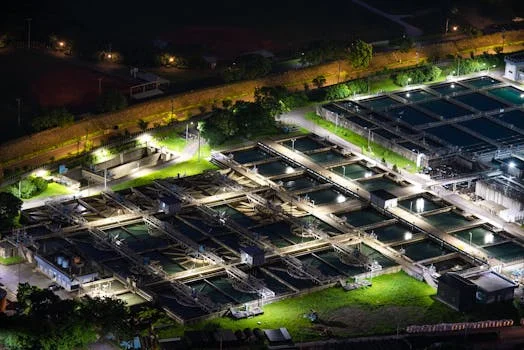
Flat sheet membranes such as the DF Series use 10–20× less energy in the cleaning cycle than external cross-flow loops, which suits decentralized industrial plants. When reviewing the 2025 guide to the best submerged MBR systems for industrial applications, engineers trade hollow-fiber packing density against flat-sheet resilience. Hollow fiber packs more area per cassette but sludges faster on high-solids or oily streams common in Singapore food and petrochemical plants.
Flat sheet PVDF elements allow single-sheet replacement and gravity-driven chemical-in-place (CIP) cleans. On a pharmaceutical line in Tuas, that layout usually cuts OPEX because it avoids whole-module scrap after fiber breaks. Higher sustainable MLSS also shrinks tank volume—exactly what Singapore industrial estates need.
| Feature | Flat Sheet MBR (e.g., DF Series) | Hollow Fiber MBR |
|---|---|---|
| Fouling Resistance | High (Self-cleaning geometry) | Moderate (Prone to hair/fiber clogging) |
| Maintenance | Low (Individual sheet replacement) | High (Requires module-level replacement) |
| Pre-treatment Req. | Standard (2–3 mm screening) | Stringent (1 mm fine screening required) |
| Energy Use | Low-pressure gravity/suction | Moderate to High (Air scouring intensity) |
| Best Application | High-strength industrial wastewater | Large-scale municipal treatment |
Meeting PUB Trade Effluent and NEWater Feedstock Limits
PUB trade-effluent rules for discharge to public sewers set numeric caps that any on-site plant must meet before sewer connection. Some older summaries cite BOD < 100 mg/L and SS < 150 mg/L as sewer limits. PUB Requirements for Discharge of Trade Effluent into the Public Sewers set 5-day BOD at 400 mg/L (20°C), COD at 600 mg/L, and TSS at 400 mg/L (PUB, June 2023). MBR permeate still sits far below those sewer caps, which is why plants use it for reuse rather than mere compliance.
For NEWater-grade internal reuse, MBR is the usual RO pre-treatment stage. At Bedok Water Reclamation Plant, an MBR–RO train handles saline wastewater and protects downstream RO. Keeping Silt Density Index (SDI₁₅) below 3.0 is the practical RO-feed gate; that protects reverse osmosis RO water purification membranes from rapid fouling.
Some integrated trains still keep a multi-media filter for ultrapure water as a safety buffer, though a well-tuned MBR often makes that filter redundant. Holding turbidity below 1 NTU supports both PUB discharge compliance and cooling-tower or boiler-feed reuse.
Cost and ROI Benchmarks for Singapore MBR Plants
For an MBR wastewater treatment system in Singapore sized at 100–500 m³/day, CAPEX typically runs $800–$1,200 per m³/day. That is higher than a simple CAS train, yet Singapore utility pricing shortens payback. With non-domestic water cost (tariff plus Water Conservation Tax and waterborne charges) near about $2.20 per m³, and MBR-reclaimed water near $0.60 per m³, operators can save roughly 73% on each reused cubic meter. The Public Utilities (Tariffs for Water) Regulations were amended again effective 1 April 2025, so bid models should refresh the all-in unit cost against the current Schedule rather than reuse a 2024 quote sheet.
Energy dominates OPEX. Modern submerged flat-sheet MBRs run about 1.2–1.8 kWh/m³, versus older external-loop systems often above 2.5 kWh/m³. For a mid-size food plant, payback usually falls between 2.5 and 4 years, depending on reuse volume and avoided PUB trade-effluent fees on high-strength discharge.
| Cost Component | Benchmark (2025 Estimates) | Notes |
|---|---|---|
| System CAPEX | $800–$1,200 per m³/day | Includes membranes, tanks, and PLC |
| Energy Consumption | 1.2–1.8 kWh/m³ | Submerged flat sheet configuration |
| Chemical OPEX | $0.05–$0.12 per m³ | Cleaning-in-place (CIP) reagents |
| Membrane Lifespan | 5–8 Years | With proper flux management |
| Water Savings | ~$1.60 per m³ saved | Difference between tariff and reuse cost |
Supplier Selection Checklist for Singapore Projects
Vendor choice for Singapore MBR work should weight lifecycle support and documented PUB compliance over brochure flux claims. Most plants we commission in tropical estates see TMP climb first when screening is undersized or CIP is deferred past the manufacturer interval, not when the biology is healthy. Ask for municipal demonstration or large industrial references in the region. Because wastewater stays at 30–35°C year-round, confirm membrane thermal and chemical ratings for at least a 5-year service life.
Procurement teams should score local spare-parts stock and response time. On continuous semiconductor or pharma lines, unplanned downtime can exceed $1,000 per hour. A local membrane inventory plus 24/7 support cuts that risk. For package-plant cost and compliance detail, see the 2025 engineering guide to package wastewater treatment plants in Singapore.
Use this short selection checklist before freezing the bid shortlist:
- Design flux at 15–25 LMH with TMP < 0.05 bar at 30–35°C wastewater
- Screening: 2–3 mm for flat sheet, 1 mm for hollow fiber
- Guaranteed SDI₁₅ < 3.0 and turbidity < 0.2 NTU for RO feed
- CIP chemistry, interval, and chemical OPEX in $/m³ stated in the offer
- Membrane warranty years and local cassette/sheet stock commitment
- Documented path to PUB sewer consent and trade-effluent monitoring
- Energy guarantee in kWh/m³ at the stated MLSS and temperature
Who This Is For / Who Should Look Elsewhere / Next Step
Plant engineers, EPC designers, and procurement managers sizing industrial or compact municipal reuse trains in Singapore are the primary audience for this guide. Look elsewhere if you only need coarse primary treatment with no reuse target, or if a simple septic or grease-trap upgrade already meets your sewer consent. When you are ready to match capacity, membrane type, and PUB limits to a skid or civil package, request an MBR system quotation with influent data and reuse goals.
Frequently Asked Questions
What is the name of Singapore's advanced wastewater reuse product?
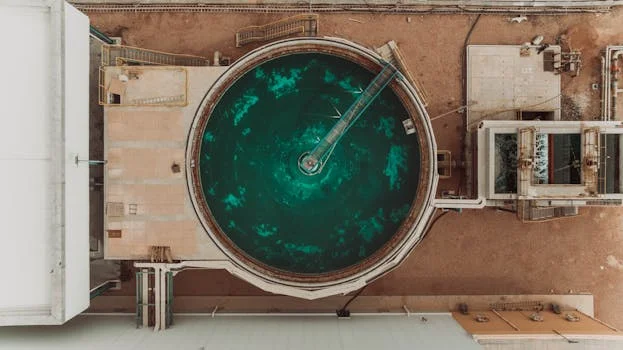
NEWater is Singapore’s high-grade reclaimed water brand. Newer water reclamation plants use MBR or equivalent membrane stages, then reverse osmosis and UV disinfection. According to the Ministry of Sustainability and the Environment, NEWater is produced through microfiltration, reverse osmosis, and disinfection and is supplied mainly to industry, with reservoir top-up during dry periods.
Which is better for industrial reuse: MBBR or MBR?
MBR is the better fit when you need absolute solids barrier, RO-ready SDI, and a small footprint. MBBR is often simpler and can use less energy per cubic meter, but it still needs clarification or tertiary filtration before high-grade reuse. Most Singapore plants targeting cooling or boiler makeup choose MBR when plot space is tight.
What is Singapore’s Four National Taps water strategy?
Singapore’s water supply rests on four sources: local catchment, imported water from Johor, NEWater, and desalinated water. The Ministry of Sustainability and the Environment describes this diversified “Four National Taps” approach as the national resilience strategy. NEWater and desalination are the weather-resilient taps that grow as demand nearly doubles toward 2065.
Can MBR treat industrial wastewater with oil and grease in Singapore?
Yes, MBR treats many industrial streams when pre-treatment is correct. High fats, oils, and grease (FOG) should be cut upstream with dissolved air flotation (DAF) or equivalent, because FOG accelerates membrane fouling. With screening, FOG control, and flux held at 15–25 LMH, MBR can meet sewer limits and reuse targets in food and similar plants.
How much footprint does an MBR system save versus CAS?
MBR plants typically need 30% to 60% less footprint than conventional activated sludge with secondary clarifiers, because membranes replace gravity settling and often tertiary sand filters. Savings are largest on sites that also drop a separate tertiary building. In Singapore estates where land carries a premium, that area reduction often drives technology choice as much as effluent quality.