
In Calgary, hospitals are not required to treat their own wastewater—responsibility falls on The City of Calgary’s Bonnybrook Wastewater Treatment Plant, which handles effluent from all major hospitals. However, hospital wastewater contains unique contaminants (e.g., pharmaceuticals, pathogens, antimicrobial-resistant bacteria) that require specialized pretreatment or on-site treatment systems to meet Alberta’s Environmental Protection and Enhancement Act (EPEA) standards. A 2025 engineering analysis shows that on-site systems can achieve 99%+ pathogen kill rates and 90%+ pharmaceutical removal, with capital costs ranging from $50,000 to $500,000 depending on capacity and technology.
Why Hospital Wastewater in Calgary Needs Special Treatment
In Calgary, hospital wastewater contains high concentrations of pharmaceuticals, multi-drug resistant organisms (MDROs), and diagnostic isotopes that bypass standard biological treatment processes at municipal facilities. While the City of Calgary’s Bonnybrook Wastewater Treatment Plant is a sophisticated facility, it is primarily designed to manage municipal organic loads (BOD and TSS) rather than the complex chemical matrices found in medical effluent. Research from the University of Calgary indicates that a single wastewater sample from a hospital can represent data from approximately 1 million people, highlighting the density of biological and chemical information—and risk—contained within these streams.
The presence of antimicrobial-resistant bacteria (ARB) in hospital effluent poses a significant public health risk. When these pathogens enter the municipal sewer system, they can exchange genetic material with other bacteria, potentially leading to the spread of "superbugs" within the local environment. pharmaceuticals such as antibiotics, analgesics, and cytostatic drugs used in chemotherapy are often recalcitrant to conventional activated sludge processes. Without specialized on-site treatment, these substances are discharged into the Bow River, where they can impact aquatic ecosystems and downstream water quality.
Engineering evaluations of Calgary hospital effluent show that the chemical oxygen demand (COD) and biochemical oxygen demand (BOD) ratios often fluctuate wildly due to the periodic discharge of disinfectants and laboratory reagents. This variability can inhibit the steady-state operation of municipal biological reactors. The following table illustrates the typical contaminant profile of hospital wastewater compared to standard municipal sewage in the Calgary region.
| Parameter | Municipal Wastewater (Typical) | Hospital Wastewater (Calgary Avg) | Primary Concern |
|---|---|---|---|
| BOD5 (mg/L) | 200–300 | 400–700 | High organic load |
| COD (mg/L) | 400–600 | 800–1,500 | Chemical recalcitrance |
| TSS (mg/L) | 200–250 | 300–600 | Solid-phase pathogens |
| Pharmaceuticals (µg/L) | <10 | 100–5,000 | Endocrine disruption |
| Pathogens (CFU/100mL) | 10^5–10^6 | 10^7–10^9 | Antimicrobial resistance |
Alberta’s Regulatory Standards for Hospital Wastewater Treatment
Alberta’s Environmental Protection and Enhancement Act (EPEA) serves as the primary legislative framework governing the discharge of industrial and institutional wastewater, including hospital effluent. Under the EPEA, hospitals that operate their own treatment systems or discharge significant volumes of contaminated water must adhere to strict effluent limits. Standard discharge requirements for treated hospital wastewater typically include BOD levels below 30 mg/L, TSS below 30 mg/L, and fecal coliform counts of less than 200 CFU/100 mL. Failure to meet these standards can result in administrative penalties or prosecution, with fines reaching up to $500,000 for corporate entities under the 2024 Alberta Environment and Parks enforcement guidelines.
In addition to provincial statutes, hospitals must comply with the City of Calgary’s Wastewater Bylaw (14M2012). This bylaw regulates the concentration of specific substances allowed into the municipal sewer system, such as heavy metals (mercury, silver), halogenated hydrocarbons, and radioactive isotopes. For example, the bylaw prohibits the discharge of any liquid that may cause a hazard to the environment or the operation of the municipal treatment plant. Alberta Health Services (AHS) also plays a critical role in monitoring hospital wastewater, specifically focusing on the containment of infectious agents during outbreaks.
The regulatory landscape is shifting toward more stringent requirements for "point-of-source" treatment. As the province updates its water quality objectives, hospitals are increasingly viewed as industrial dischargers rather than standard commercial users. This reclassification necessitates a more robust approach to compliance, moving beyond simple dilution toward advanced oxidation and membrane filtration. The table below compares Alberta’s specific hospital discharge limits against general municipal standards.
| Regulatory Parameter | Alberta Municipal Standard | Alberta Hospital EPEA Limit | Compliance Authority |
|---|---|---|---|
| BOD5 (mg/L) | < 25 | < 20 | AEP / City of Calgary |
| Total Suspended Solids (mg/L) | < 25 | < 20 | AEP / City of Calgary |
| Fecal Coliforms (CFU/100mL) | < 1,000 | < 200 | Alberta Health Services |
| Total Mercury (mg/L) | < 0.01 | < 0.001 | EPEA / Bylaw 14M2012 |
| Pharmaceutical Removal | Not Regulated | Monitoring Required | AEP (Future Mandate) |
Engineering Specs: How Hospital Wastewater Treatment Systems Work
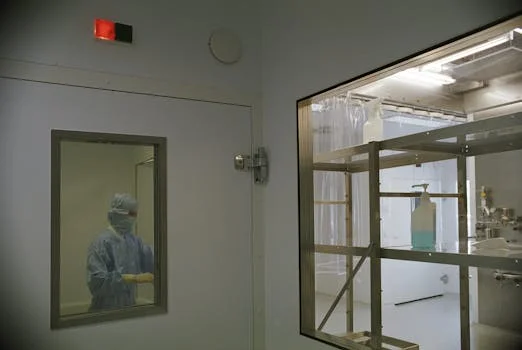
Modern hospital wastewater treatment engineering focuses on a multi-stage process designed to neutralize infectious agents and degrade complex organic molecules. A typical system begins with fine screening (0.5 mm to 1.0 mm) to remove medical debris, followed by an equalization tank that buffers the hydraulic surges common in hospital environments. The core treatment often utilizes a MBR system for hospital wastewater treatment with 99%+ pathogen removal. MBR technology combines biological degradation with ultrafiltration, ensuring that even the smallest bacteria and many viruses are physically strained from the effluent.
Following membrane filtration, the water undergoes advanced oxidation or chemical disinfection. For hospitals in Calgary, a high-purity chlorine dioxide generator for hospital effluent disinfection is often preferred over standard chlorination. Chlorine dioxide (ClO₂) is highly effective at penetrating biofilms and neutralizing antibiotic-resistant genes without forming harmful trihalomethanes (THMs). This is particularly important for meeting the strict fecal coliform limits set by Alberta Health Services. For smaller clinics or specialized wards, a compact hospital wastewater treatment system with ozone disinfection provides a footprint-efficient solution that achieves high levels of pharmaceutical oxidation.
Process parameters for these systems are critical for engineering success. For an MBR-based system, the Hydraulic Retention Time (HRT) typically ranges from 12 to 24 hours, while the Sludge Retention Time (SRT) is maintained between 20 and 50 days to allow for the growth of specialized nitrifying bacteria capable of breaking down pharmaceutical compounds. The removal efficiencies of these technologies are significantly higher than traditional methods, as shown in the engineering data below.
| Technology Type | BOD Removal (%) | Pathogen Kill Rate (%) | Pharmaceutical Removal (%) |
|---|---|---|---|
| Membrane Bioreactor (MBR) | 98% - 99.5% | 99.9% - 99.99% | 85% - 95% |
| Dissolved Air Flotation (DAF) | 60% - 80% | 40% - 60% | 10% - 20% |
| Advanced Oxidation (AOP) | 30% - 50% | 99.99% | 90% - 99% |
| Chemical Dosing (ClO₂) | < 10% | 99.99% | 20% - 40% |
Designers must also consider the "Maine-style" regulatory influence often seen in North American environmental shifts, where Maine’s hospital wastewater treatment regulations and engineering specs have set a precedent for managing PFAS and other emerging contaminants. Incorporating activated carbon polishing stages can further enhance the system's ability to meet future, more stringent Alberta standards.
Cost Breakdown: Hospital Wastewater Treatment Systems in Calgary
The capital expenditure (CAPEX) for a hospital wastewater treatment system in Calgary is influenced primarily by the daily flow volume and the required level of pharmaceutical removal. For a mid-sized facility processing 10 to 50 m³/h, capital costs generally fall between $150,000 and $500,000. This includes the cost of the MBR unit, chemical dosing skids, and automated control systems. Smaller, modular units for specialized clinics can be installed for as little as $50,000. These figures align with advanced hospital wastewater treatment systems in Lagos and other international benchmarks where decentralized treatment is becoming the norm.
Operational expenditure (OPEX) is driven by energy consumption for membrane aeration and the cost of specialized chemicals. In Calgary, energy costs for an MBR system range from $0.15 to $0.35 per cubic meter of treated water. Chemical costs, including ClO₂ precursors and membrane cleaning agents, typically add another $0.10 to $0.20 per cubic meter. Maintenance, including membrane replacement every 5–8 years and annual sensor calibration, should be budgeted at 3% to 5% of the total CAPEX annually.
The Return on Investment (ROI) for on-site treatment is often realized through the avoidance of municipal over-strength surcharges. The City of Calgary applies significant fees to wastewater that exceeds bylaw limits for COD and TSS. By treating on-site, hospitals can reduce these surcharges by 70% to 90%, leading to a typical payback period of 4 to 7 years. Additionally, hospitals may be eligible for funding through Alberta’s Municipal Water Wastewater Program or federal green infrastructure grants, which can offset up to 40% of the initial capital outlay.
| Technology | CAPEX (10 m³/h) | OPEX ($/m³) | Payback Period (Years) |
|---|---|---|---|
| Integrated MBR | $180,000 - $250,000 | $0.25 - $0.45 | 4 - 6 |
| ClO₂ Disinfection Only | $45,000 - $75,000 | $0.05 - $0.15 | 2 - 3 |
| Advanced Oxidation (O₃/H₂O₂) | $120,000 - $190,000 | $0.30 - $0.60 | 5 - 8 |
Comparison: On-Site vs. Municipal Hospital Wastewater Treatment in Calgary
The decision to install an on-site treatment system versus relying entirely on Calgary’s municipal infrastructure involves a trade-off between immediate cost and long-term risk management. Municipal treatment at the Bonnybrook plant is the most convenient option, but it leaves the hospital vulnerable to future regulatory changes and potential environmental liability. On-site treatment provides the hospital with total control over its effluent quality, ensuring that pathogens and pharmaceuticals are neutralized before they ever leave the property.
From a technical standpoint, municipal systems are excellent at bulk organic removal but poor at targeted pharmaceutical degradation. For example, while Bonnybrook may achieve 95% BOD removal, it may only remove 20% of certain antibiotics. On-site MBR and AOP systems reverse this, targeting the most dangerous contaminants at the source. This is similar to the engineering strategies detailed in the engineering guide for hospital wastewater treatment in Brazil, where decentralized systems are used to protect local watersheds from medical waste.
Decision Framework: Should Your Hospital Install an On-Site System?
- Is your facility discharging more than 50 m³ per day? If yes, municipal surcharges likely justify the ROI of an on-site MBR.
- Does your facility house an oncology or infectious disease ward? If yes, on-site advanced oxidation is recommended for pharmaceutical and pathogen neutralization.
- Are you planning an expansion or new build? Integrating wastewater treatment during the design phase reduces installation costs by up to 30%.
- Is the local municipal plant nearing capacity? On-site treatment can help secure building permits by reducing the net load on city infrastructure.
Vendor Selection: Top Hospital Wastewater Treatment Equipment Suppliers in Calgary
Selecting a vendor for hospital wastewater treatment in Calgary requires an evaluation of both technical capability and local support. Because Alberta’s environmental regulations are specific, the vendor must demonstrate a track record of meeting EPEA and City of Calgary bylaw requirements. Key selection criteria should include the system’s automated monitoring capabilities, the availability of local service technicians, and the specific removal efficiencies for MDROs and common hospital pharmaceuticals.
Top suppliers serving the Calgary market include HydropureWater, which specializes in integrated MBR and chlorine dioxide systems, alongside global firms like Veolia and SUEZ. When evaluating proposals, procurement managers should demand pilot study data or performance guarantees specifically for medical effluent. It is also essential to ensure that the equipment is compatible with existing hospital facility management software for real-time compliance reporting.
| Selection Criteria | Essential Requirement | Preferred Specification |
|---|---|---|
| Compliance | Alberta EPEA Standard | City of Calgary Bylaw 14M2012 Certified |
| Automation | PLC Control with Alarms | Remote Monitoring & SCADA Integration |
| Disinfection | 99.9% Kill Rate | 99.999% (Log-5) Reduction |
| Support | 48-hour On-site Response | 24-hour Local Calgary Service |
| Footprint | Modular Design | Containerized/Underground Options |
Frequently Asked Questions

Is on-site wastewater treatment mandatory for Calgary hospitals?
Currently, it is not mandatory for all hospitals to have full on-site treatment, but they must meet the City of Calgary’s Wastewater Bylaw discharge limits. Many hospitals choose pretreatment to avoid heavy surcharges and manage environmental risk.
How much space is required for a hospital wastewater system?
A modular MBR system for a standard hospital typically requires 50 to 100 square meters. Containerized systems can be placed in parking lots or basement mechanical rooms to save space.
What is the most effective technology for removing antibiotics?
Membrane Bioreactors (MBR) combined with Advanced Oxidation Processes (AOP), such as ozone or UV/H₂O₂, are the most effective, typically removing over 90% of pharmaceutical compounds.
How often do the membranes need to be replaced?
In a well-maintained system, high-quality MBR membranes last between 5 and 8 years. Regular chemical cleaning (Clean-In-Place) is required to maintain flux rates.
Can treated hospital wastewater be reused?
Yes, treated effluent can be reused for non-potable applications like cooling tower makeup or landscape irrigation, provided it meets Alberta’s Water Act requirements for water reuse.