DAF systems in Tanzania remove 95%+ of suspended solids (TSS), 90%+ of fats, oils, and grease (FOG), and 85%+ of biochemical oxygen demand (BOD) from industrial wastewater, meeting TZ-EPA discharge limits of 30 mg/L TSS and 50 mg/L BOD. With micro-bubble technology (20–50 μm diameter) and retention times of 20–40 minutes, these systems handle flow rates from 4 m³/h to 300 m³/h, making them ideal for food processing, textiles, and mining industries in Dar es Salaam, Mwanza, and Arusha.
Why Tanzanian Industries Need DAF Systems: Compliance, Costs & Consequences
Industrial wastewater management in Tanzania is governed by the Environmental Management Act of 2004 and the strictly enforced TZ-EPA 2023 guidelines. For plant operators in Dar es Salaam’s industrial zones or Mwanza’s fish processing clusters, the regulatory threshold is clear: discharge limits for treated effluent are capped at 30 mg/L for TSS, 50 mg/L for BOD, and 10 mg/L for FOG. Failure to meet these standards carries severe financial and operational risks. According to TZ-EPA 2023 enforcement data, penalties for non-compliance can reach TZS 50 million (approximately USD 20,000), coupled with the immediate threat of plant shutdowns until remediation is verified.
The industries most affected by these regulations include food processing (dairy and slaughterhouses), textiles (dyeing and finishing), pulp and paper, mining (gold and coal), and petrochemical refineries. In 2023, a textile plant in Dar es Salaam was fined TZS 35 million for exceeding TSS limits, highlighting the increasing vigilance of local authorities. Beyond avoiding fines, DAF systems for high-FOG wastewater in food processing industries offer a path to operational stability. While the initial investment may seem significant, the cost of non-compliance—including legal fees, fines, and lost production time—far outweighs the capital expenditure of a robust treatment system. For a typical 50 m³/h food processing facility, the transition to a DAF-based treatment train often yields a 3-year ROI by eliminating environmental surcharges and optimizing water reuse potential.
How DAF Systems Work: Physics of Flotation, Bubble Generation & Wastewater Clarification
Dissolved Air Flotation (DAF) is a clarification process that relies on the difference in density between suspended contaminants and water. Unlike sedimentation, which relies on gravity to settle particles, DAF uses micro-bubbles to increase the buoyancy of solids, forcing them to the surface for removal. The process begins with coagulation and flocculation, where chemicals are added to the influent to neutralize particle charges and form larger "flocs." Typically, pH is maintained between 6 and 8, with coagulant dosages ranging from 50 to 200 mg/L depending on the waste stream characteristics.
The core of the system is the air saturation and release mechanism. Water is recycled from the effluent side (typically at a 5–10% recycle ratio) and pressurized to 4–6 bar in a saturation vessel. When this air-saturated water is released into the flotation tank at atmospheric pressure, it generates millions of micro-bubbles with diameters of 20–50 μm. The physics of this process is governed by Stokes’ Law, which dictates that the bubble rise velocity (typically 0.2–0.5 cm/s) is optimized when the bubble size is small enough to attach to hydrophobic particles without causing shear. A contact angle of greater than 90° is essential for effective flotation, ensuring the bubble-particle aggregate remains stable as it rises to the surface.
| Process Stage | Key Parameter | Operational Benchmark |
|---|---|---|
| Chemical Pre-treatment | Coagulant Dosage | 50–200 mg/L (e.g., Polyaluminum Chloride) |
| Air Saturation | Saturation Pressure | 4–6 bar (ASME PTC 19.11-2020) |
| Bubble Generation | Bubble Diameter | 20–50 μm |
| Clarification | Retention Time | 20–40 minutes |
| Solids Removal | Skimmer Speed | 0.5–2.0 m/min (Adjustable) |
For optimal performance, PLC-controlled chemical dosing for DAF systems in Tanzania is highly recommended. This ensures that the dosing of polyaluminum chloride (PAC) and anionic polyacrylamide (PAM) remains consistent even as influent concentrations fluctuate. High-efficiency saturation systems achieve 85–95% air dissolution efficiency at 5 bar, which is critical for maintaining high TSS removal rates in high-flow applications.
DAF System Engineering Specs: Flow Rates, Removal Efficiencies & Process Parameters for Tanzanian Applications
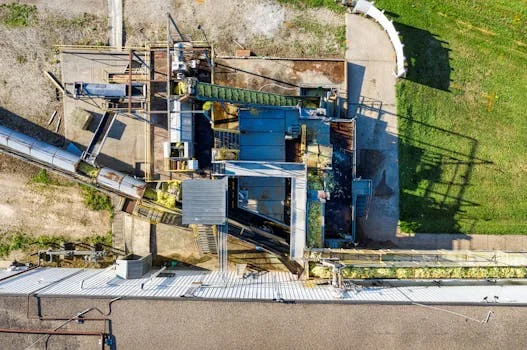
Selecting the right DAF model requires a precise understanding of both the hydraulic load and the mass loading of solids. In Tanzania, industrial effluents vary significantly by sector. For instance, textile wastewater often features high TSS but low FOG, whereas dairy wastewater is characterized by high FOG and BOD levels. DAF systems for Tanzanian industrial wastewater treatment are engineered to handle flow rates from 4 m³/h to 300 m³/h across 13 standard models, providing scalability for both small-scale processors and large industrial estates.
Engineering specifications must account for local environmental conditions, particularly temperature. In regions like Dar es Salaam, where ambient temperatures range from 20°C to 40°C, the viscosity of water decreases, which can slightly increase bubble rise velocity but may also affect the stability of the floc-bubble bond. Hydraulic loading rates for these systems are typically maintained between 5 and 10 m³/m²·h, with an air-to-solids ratio of 0.02 to 0.05, adhering to AWWA B100-20 standards. The following table outlines typical performance benchmarks for DAF systems treating Tanzanian industrial wastewater.
| Parameter | Typical Influent (mg/L) | Removal Efficiency (%) | Effluent (mg/L) | TZ-EPA Limit (mg/L) |
|---|---|---|---|---|
| Total Suspended Solids (TSS) | 500–2,500 | 92–97% | <30 | 30 |
| Fats, Oils, & Grease (FOG) | 50–300 | 90–95% | <10 | 10 |
| Biochemical Oxygen Demand (BOD) | 100–800 | 85–90% | <50 | 50 |
| Chemical Oxygen Demand (COD) | 500–2,000 | 70–85% | <250 | - |
These removal efficiencies are corroborated by EPA 2024 benchmarks and represent the standard for modern flotation technology. For high-concentration waste streams, a 10% recycle ratio is often employed to ensure the air-to-solids ratio is sufficient to float heavy organic loads. This technical precision is what allows Tanzanian factories to remain compliant without over-investing in oversized infrastructure.
DAF vs Alternatives: Sedimentation, MBR & Chemical Treatment Compared for Tanzanian Industries
When evaluating wastewater treatment options, Tanzanian engineers must weigh the trade-offs between capital expenditure (Capex), operational expenditure (Opex), and footprint. The three primary competitors to DAF are conventional sedimentation (clarifiers), Membrane Bioreactors (MBR), and direct chemical treatment (coagulation followed by filtration).
DAF systems offer a distinct advantage in footprint and FOG removal. A DAF unit typically requires 20% less space than an MBR and significantly less than a large sedimentation tank, which is a critical factor for factories in densely populated industrial areas like Mikocheni. While sedimentation is less expensive in terms of Capex (approximately USD 800/m³/h vs USD 1,200/m³/h for DAF), its TSS removal efficiency rarely exceeds 70%, making it insufficient for meeting the strict 30 mg/L TZ-EPA limit without secondary treatment. Conversely, while MBR systems provide reuse-quality effluent, their Opex is often 40–50% higher than DAF due to membrane cleaning and high aeration energy requirements.
| Technology | TSS Removal (%) | FOG Removal (%) | Footprint (m²/m³/h) | Capex (USD/m³/h) | Opex (USD/m³) |
|---|---|---|---|---|---|
| DAF System | 95%+ | 90%+ | 0.5–1.0 | 1,000–1,500 | 0.10–0.20 |
| Sedimentation | 60–75% | 30–50% | 2.5–4.0 | 700–900 | 0.05–0.10 |
| MBR | 99%+ | 95%+ | 1.2–1.8 | 2,000–3,000 | 0.30–0.50 |
| Chem. Treatment | 80–90% | 60–80% | 1.5–2.0 | 800–1,200 | 0.25–0.40 |
For industries dealing with high-FOG wastewater, such as slaughterhouses or dairy plants, DAF is the undisputed technical choice. High-efficiency sedimentation tanks may be suitable for low-TSS municipal or inorganic wastewater, but they fail to address the buoyant nature of oils and greases common in Tanzanian food processing.
DAF System Costs in Tanzania: Capex, Opex & ROI Calculation for Industrial Buyers
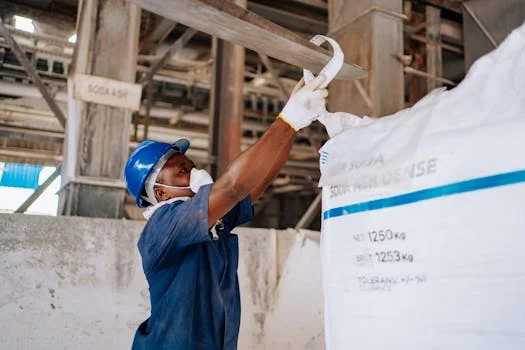
Budgeting for a DAF system in Tanzania involves more than the initial purchase price. Buyers must account for shipping to Dar es Salaam (FOB or CIF terms), local installation, and ongoing operational costs. As of 2025, the Capex for a high-quality DAF system ranges from USD 1,000 to USD 1,500 per m³/h of capacity. For a medium-sized facility requiring a 50 m³/h system, the equipment cost is approximately USD 60,000 to USD 75,000.
Operational costs (Opex) are influenced by electricity prices, chemical consumption, and sludge disposal. In Tanzania, electricity for industrial use is a significant factor, but DAF systems are relatively efficient, consuming about 0.05 kWh per m³ of treated water. Chemical costs (PAC/PAM) average USD 0.03/m³, and labor costs for a dedicated operator average USD 0.05/m³. A critical and often overlooked cost is sludge disposal. Sludge generated by DAF systems is highly concentrated (3–5% solids), but landfill tipping fees in Dar es Salaam can range from USD 50 to USD 100 per ton. Implementing a dewatering step can significantly reduce these disposal costs.
| Cost Component | Estimated Value (50 m³/h System) |
|---|---|
| Equipment Capex (FOB) | USD 60,000–70,000 |
| Annual Electricity Cost | USD 4,000–5,500 |
| Annual Chemical Cost | USD 6,000–8,000 |
| Annual Sludge Disposal | USD 12,000–15,000 |
| Total Year 1 Investment | USD 82,000–98,500 |
The ROI calculation for a Tanzanian food processing plant is compelling. By avoiding a single TZS 50 million fine (USD 20,000) and reducing environmental surcharges by USD 30,000 annually, the system pays for itself in less than three years. the Tanzania Investment Centre (TIC) offers 2025 incentives for "green" industrial investments, which may include VAT exemptions or accelerated depreciation for qualified wastewater equipment. For broader context on regional pricing, readers can compare these figures with DAF system performance and costs in Sub-Saharan Africa.
Selecting a DAF Supplier in Tanzania: Technical Checklist, Compliance & Decision Framework
Choosing a supplier for industrial equipment in Tanzania requires balancing technical capability with local support. While international suppliers offer advanced engineering, local availability of spare parts and technical service is paramount for minimizing downtime. A "red flag" for any supplier is the inability to provide a performance guarantee that specifically references TZ-EPA discharge limits. Use the following framework to evaluate potential DAF providers:
- Technical Checklist: Does the system offer a flow rate range of 4–300 m³/h? Are removal efficiencies for TSS and FOG guaranteed above 90%? For corrosive textile or tannery waste, is the material of construction 304 or 316L stainless steel?
- Automation: Does the unit include PLC-controlled skimmers and automatic chemical dosing? Manual systems often lead to inconsistent effluent quality and higher chemical waste.
- Compliance & Certification: Ensure the supplier provides ISO 9001:2015 certification and CE marking. More importantly, verify if the equipment has been used in other TZ-EPA-certified installations in the region.
- Local Support: Does the supplier have a service partner in Dar es Salaam or Mwanza? Can they provide operator training and a 2+ year warranty?
When comparing local vs. international suppliers, lead times are a critical factor. Local stockists may offer 8–12 week delivery, while custom-engineered international systems can take 16–20 weeks. However, the superior engineering of global DAF system engineering standards and cost benchmarks often results in lower long-term Opex. Always demand a pilot test or a detailed laboratory bench-scale analysis of your specific wastewater before finalizing the purchase.
Frequently Asked Questions
What is the typical lead time for a DAF system in Tanzania?
For standard models (4–50 m³/h), lead times from reputable suppliers range from 8 to 12 weeks. Custom-engineered systems or those imported from international manufacturers may take 16 to 20 weeks, including shipping and customs clearance at the Port of Dar es Salaam.
Can DAF systems handle high-salinity wastewater from tanneries?
Yes, DAF systems are effective for tannery wastewater, but high salinity increases the risk of corrosion. In such cases, the flotation tank and internal components must be constructed from high-grade stainless steel (SS316L) or specialized coatings to ensure a 15–20 year lifespan.
What is the lifespan of a DAF system?
With a rigorous maintenance schedule, a high-quality DAF system has an operational lifespan of 15 to 20 years. Key components like the saturation pump and skimmer motor may require servicing or replacement every 5 to 7 years.
Do DAF systems require chemical dosing?
Yes. While some large particles will float naturally, achieving TZ-EPA compliance (TSS <30 mg/L) requires the use of coagulants and flocculants. These chemicals aggregate fine particles into larger flocs that the micro-bubbles can easily lift to the surface.
What are the maintenance requirements for a DAF system?
Maintenance is divided into three tiers: Weekly inspections of the skimmer assembly and pH probes; Monthly cleaning of the air saturation vessel and calibration of chemical dosing pumps; and Annual comprehensive servicing of all pumps, motors, and electrical control systems.