Package wastewater treatment plants in Illinois offer a compact, compliant solution for municipalities and industries needing 10,000–500,000 GPD capacity. Illinois EPA permits require <30 mg/L BOD and <30 mg/L TSS for most discharges (35 Ill. Adm. Code 309), with stricter limits for sensitive watersheds like Lake Michigan. Pre-engineered systems from HydropureWater deliver 92–97% COD removal in 6–8 weeks from order to commissioning, cutting traditional plant costs by 30–40%. This guide covers Illinois-specific compliance, technology trade-offs, and a 2025 cost calculator for your project.
Why Illinois Facilities Are Switching to Package Wastewater Treatment Plants
The Illinois EPA issued 127 enforcement actions in 2023 for wastewater violations, with 42% of these actions targeting the food processing and metal finishing industries. Regulatory pressure in Illinois is intensifying as the IEPA moves toward more stringent nutrient removal requirements, forcing facilities with aging infrastructure to choose between massive capital upgrades or decentralized, high-efficiency alternatives. Traditional concrete-and-steel plants typically require 12–18 months for design, permitting, and construction; however, pre-engineered package plants reduce this timeline to 8–12 weeks, as demonstrated by the accelerated deployment cycles seen in the Deerfield Water Reclamation Facility (WRF) reconstruction projects.
A recent case in Peoria illustrates the risk of inaction. A mid-sized metal plating facility faced over $250,000 in accumulated fines due to a failing anaerobic lagoon that could no longer meet Illinois’ strict heavy metal and TSS limits. By replacing the lagoon with a 50,000 GPD MBR package plant in early 2024, the facility achieved immediate compliance with a <5 mg/L TSS output. The transition allowed the facility to repurpose 70% of the previous lagoon’s land area for manufacturing expansion, demonstrating the physical efficiency of containerized systems.
Illinois’ extreme climate presents unique challenges for biological wastewater treatment. Package plants in northern Illinois must be designed to maintain biological activity during -15°F winter lows, while southern Illinois systems must manage heat dissipation during 100°F+ summer peaks. To maintain consistent nitrification and denitrification, Illinois-specific package plants utilize insulated R-20 tank walls and submerged process heaters. Without these modifications, biological kinetic rates can drop by up to 50% during January and February, leading to permit violations for ammonia-nitrogen (NH3-N).
Illinois EPA Permit Requirements: What Your Package Plant Must Achieve
Effluent discharge limits in Illinois are governed by 35 Ill. Adm. Code 309, which mandates that most point-source discharges maintain BOD and TSS levels below 30 mg/L. However, these are "floor" requirements; specific NPDES permits often impose much tighter constraints based on the receiving stream's classification. For example, facilities discharging into the Lake Michigan watershed or the Chicago Area Waterway System (CAWS) must adhere to Metropolitan Water Reclamation District (MWRD) 2024 standards, which often require <10 mg/L total phosphorus (TP) and <1 mg/L ammonia-N to prevent eutrophication.
| Parameter | Standard Illinois Limit (General) | Sensitive Watershed Limit (Lake Michigan/CAWS) | Typical Package Plant Performance |
|---|---|---|---|
| BOD5 | <30 mg/L | <10 mg/L | <5 mg/L |
| TSS | <30 mg/L | <12 mg/L | <2 mg/L |
| Ammonia-N | Site-Specific (1.5–4.0 mg/L) | <1.0 mg/L | <0.5 mg/L |
| Total Phosphorus | 1.0 mg/L (if >1.0 MGD) | <0.5 mg/L | <0.1 mg/L (with MBR) |
| Fecal Coliform | 400/100mL (Daily Max) | 200/100mL (Geo Mean) | <10/100mL (UV/MBR) |
Navigating the Illinois EPA permitting process requires a three-step sequence. First, the applicant must submit a Notice of Intent (NOI) at least 180 days before the anticipated start of construction. Second, all engineering plans must be submitted using IEPA Schedule B (Construction Permit) forms, which require a seal from a licensed Illinois Professional Engineer (PE). Finally, an NPDES monitoring plan must be established, detailing the 24-hour composite sampling methods required for compliance. IEPA field offices in Des Plaines, Peoria, and Springfield conduct unannounced inspections 2–4 times per year. Common citations include incomplete discharge monitoring reports (DMRs) and unauthorized bypass events—risks that are significantly mitigated by the automated sensors and remote telemetry found in modern package plants.
For industrial users, local limits are often more restrictive than state levels. In the Chicago metro area, the MWRD Industrial Waste Ordinance sets strict ceilings on Fats, Oils, and Grease (FOG) and heavy metals (Cr, Ni, Zn). A high-efficiency DAF system for Illinois food processing plants is often necessary as a pre-treatment step to avoid heavy sewer surcharges or "cease and desist" orders from municipal authorities.
Package Plant Technologies Compared: DAF vs MBR vs Conventional for Illinois Sites
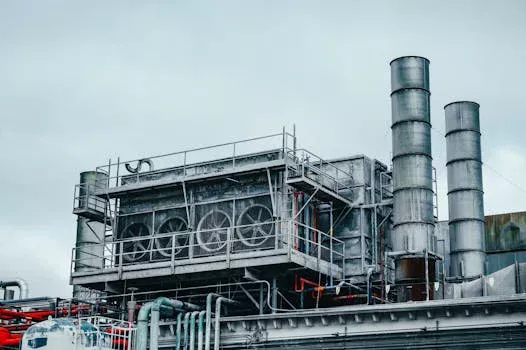
Membrane Bioreactor (MBR) systems provide a 60% smaller physical footprint compared to conventional activated sludge plants, making them the preferred choice for urban infill projects in Chicago and the surrounding suburbs. While conventional systems rely on gravity clarifiers that require significant surface area and are sensitive to bulking sludge, MBR technology uses physical membrane barriers to separate solids. This allows for higher Mixed Liquor Suspended Solids (MLSS) concentrations, which translates to more treatment capacity in a smaller tank. This is critical for Illinois facilities where land costs are high or where the plant must be installed in a parking lot or basement.
| Feature | DAF (Dissolved Air Flotation) | MBR (Membrane Bioreactor) | Conventional Activated Sludge |
|---|---|---|---|
| Primary Use Case | FOG & Heavy Solids (Food/Metal) | High Quality Effluent/Small Space | Low Strength Municipal/Large Land |
| Footprint Index | Smallest | Compact | Large |
| Energy Use (kWh/m³) | 0.3–0.5 | 0.8–1.2 | 0.4–0.6 |
| Effluent Quality | Pre-treatment Grade | Reuse Grade (<2 NTU) | Secondary Grade |
| Cold Weather Resilience | Moderate (requires housing) | High (submerged membranes) | Low (clarifier freezing risk) |
Operational costs in Illinois are heavily influenced by electricity rates (averaging $0.12/kWh) and sludge disposal fees. MBR systems, while more energy-intensive than conventional plants, produce 20–30% less sludge due to higher sludge retention times (SRT). In Illinois, landfill disposal of sludge costs between $50 and $120 per ton, whereas beneficial reuse (land application) can reduce this to $25–$50 per ton. An MBR package plant for space-constrained Illinois facilities often offsets its higher energy draw through these sludge volume reductions and the avoidance of municipal sewer surcharges.
For industrial applications, specifically in the food processing corridor of central Illinois, DAF systems are superior for removing emulsified oils. While an MBR would be blinded by high grease concentrations, a DAF system uses micro-bubbles to float FOG to the surface for mechanical skimming. Understanding detailed DAF vs lamella comparison for industrial users is essential for procurement officers who must balance initial capital outlay with long-term chemical costs. It is also useful to understand how Connecticut’s permit process compares to Illinois, as both states emphasize stringent nutrient removal but differ in their winter operation requirements.
2025 Cost Breakdown: Package Wastewater Treatment Plants in Illinois
Capital expenditures for package wastewater treatment plants in Illinois range from $120,000 to $350,000 for systems between 10,000 and 50,000 GPD. These figures, based on 2024 RSMeans data adjusted for Illinois’ higher-than-average labor rates, cover the core treatment equipment, internal piping, and control systems. Unlike traditional concrete plants, which incur heavy on-site labor costs of $150/GPD or more, package plants are largely factory-assembled, reducing site installation costs to approximately $30–$80/GPD. This shift from field labor to factory manufacturing is the primary driver behind the 30% total project savings.
| Project Component | Traditional Concrete Plant | Package Plant (MBR/WSZ) | Illinois Cost Modifier |
|---|---|---|---|
| Equipment/Materials | $250,000+ | $180,000 | Standard |
| On-site Labor/Civil Works | $400,000+ | $95,000 | +15% (Chicago Metro) |
| Engineering & Permitting | $80,000 | $35,000 | IEPA Fee Schedule |
| Annual OpEx (30k GPD) | $65,000 | $42,000 | $0.12/kWh Power |
| Total Year 1 Cost | $795,000 | $352,000 | Approx. 55% Savings |
The Return on Investment (ROI) for a package system is typically realized within 3 to 5 years. For industrial facilities, the primary "return" is the avoidance of sewer surcharges, which in some Illinois municipalities can exceed $5.00 per 1,000 gallons for high-strength waste. By treating on-site to "domestic" levels, a 30,000 GPD facility can save over $100,000 annually in utility billing. When compared to global cost benchmarks for wastewater treatment, Illinois projects have higher upfront costs due to climate-proofing requirements but offer faster ROI due to high municipal water rates.
Financing these projects is facilitated by the Illinois EPA Clean Water State Revolving Fund (CWSRF). This program offers low-interest loans (historically around 2%) for projects that improve water quality or achieve compliance with NPDES permits. Small communities and non-profit industrial parks may also qualify for "principal forgiveness," effectively turning a portion of the loan into a grant. The application window typically opens annually in the summer, requiring a project plan and a financial capability demonstration.
Procurement Checklist: 12 Steps to Selecting a Package Plant Vendor in Illinois

The Illinois Professional Engineering Practice Act requires that all engineering plans for wastewater treatment facilities be stamped by a licensed Illinois Professional Engineer (PE). This is the most critical hurdle in the procurement process; a vendor may provide a high-quality system, but without the PE stamp, the IEPA will not issue a construction permit. To ensure a smooth transition from procurement to operation, follow this 12-step framework:
- Characterize Influent: Conduct 30-day composite sampling for BOD, TSS, FOG, and pH using IEPA-approved methods.
- Establish Effluent Goals: Identify if your site falls under "General" or "Sensitive Watershed" limits.
- Request Pilot Testing: For flows exceeding 50,000 GPD, request a 4-week rental pilot unit to verify treatment kinetics.
- Evaluate Footprint: Determine if a compact underground package plant for Illinois sites is needed to preserve surface space.
- Verify Illinois PE Stamp: Ensure the vendor provides drawings compatible with Illinois code.
- Review Cold Weather Specs: Confirm the presence of tank insulation and process heaters rated for -15°F.
- Assess Lead Times: Confirm the system can ship within 8–12 weeks to meet permit deadlines.
- Audit Sludge Production: Compare the estimated dry tons of sludge per year across different technologies.
- Check Telemetry: Ensure the control system integrates with local SCADA or provides remote IEPA-compliant logging.
- Negotiate Guarantees: Secure a performance guarantee (e.g., 95% BOD removal) and a 12-month defect warranty.
- Verify Service Support: Confirm the vendor has a service team capable of reaching your Illinois site within 24 hours.
- Finalize CWSRF Paperwork: Submit the vendor’s technical specs to the IEPA for loan approval.
Frequently Asked Questions
Can a package plant handle the high FOG levels from Illinois food processing?
Yes, but it requires a multi-stage approach. A DAF system should be used as primary treatment to remove 90% of Fats, Oils, and Grease before the water enters a biological package plant. Without this, FOG will coat biological media or membranes, leading to rapid system failure and IEPA violations. Next Steps: Request a FOG-loading analysis from HydropureWater.
How does the Illinois winter affect biological treatment in package plants?
Cold temperatures slow down the bacteria responsible for breaking down waste. Illinois plants must be equipped with R-20 insulation and submerged heaters to keep the liquor temperature above 50°F (10°C). Systems without these features often fail to meet ammonia-nitrogen limits in winter. Next Steps: View thermal protection specs for our MBR package plant for space-constrained Illinois facilities.
What are the typical IEPA fines for non-compliance?
IEPA fines can range from $1,000 to $50,000 per day per violation, depending on the severity and duration of the discharge. Beyond financial penalties, the state can issue "Critical Review" status, which prevents any new sewer connections in the service area. Next Steps: Contact HydropureWater for a compliance audit of your current system.
Is an operator required to be on-site 24/7 for a package plant?
No. Most Illinois package plants require a Class 4 or Class 3 certified operator for only a few hours per week. The high level of automation and remote monitoring allows the plant to run autonomously, with alerts sent to the operator's smartphone if parameters drift. Next Steps: Ask about our automated control packages for Illinois municipalities.
Can package plants be installed underground in Illinois?
Yes, the compact underground package plant for Illinois sites is specifically designed for sub-grade installation. This protects the equipment from freezing temperatures and eliminates the visual impact on the surrounding landscape, which is often a requirement for residential developments or parks. Next Steps: Download the WSZ series installation guide.